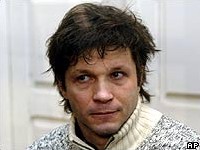
Bertrand Cantat
Homicide Hu Wanlin
Homicide · China · 1997
Hu Wanlin (胡万林), born 1949, was from Mianyang, Sichuan Province. · 1993 — While…
146 victims
Hu Wanlin
Homicide · China · 1997
Hu Wanlin (胡万林), born 1949, was from Mianyang, Sichuan Province. · 1993 — While…
146 victims
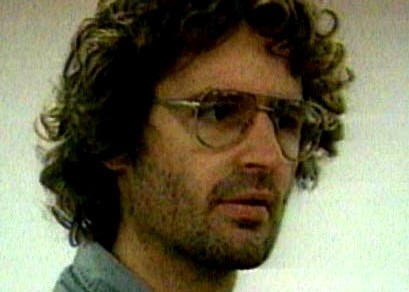 David Koresh
Homicide · USA · 1993
David Koresh (born Vernon Wayne Howell; August 17, 1959 – April 19, 1993) led t…
79 victims
David Koresh
Homicide · USA · 1993
David Koresh (born Vernon Wayne Howell; August 17, 1959 – April 19, 1993) led t…
79 victims
 Todd Hall
Homicide · USA · 1996
Todd Hall was described by neighbors as "mentally slow" and was said to have su…
9 victims
Todd Hall
Homicide · USA · 1996
Todd Hall was described by neighbors as "mentally slow" and was said to have su…
9 victims
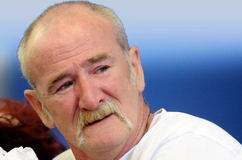 Mick Philpott
Homicide · United Kingdom · 2012
Michael “Mick” Philpott was an Englishman who had gained notoriety as a crimina…
6 victims
Mick Philpott
Homicide · United Kingdom · 2012
Michael “Mick” Philpott was an Englishman who had gained notoriety as a crimina…
6 victims
 Joshua Jenkins
Homicide · USA · 1996
Joshua Jenkins was a 15-year-old American killer who killed five members of his…
5 victims
Joshua Jenkins
Homicide · USA · 1996
Joshua Jenkins was a 15-year-old American killer who killed five members of his…
5 victims
 Miguel Angel Paredes
Murderer · USA · 2000
Miguel Angel Paredes was a Hispanic male who was 19 years old when received on…
3 victims
Miguel Angel Paredes
Murderer · USA · 2000
Miguel Angel Paredes was a Hispanic male who was 19 years old when received on…
3 victims
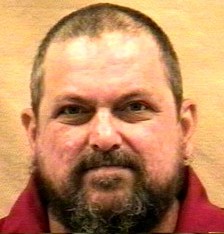 Allen Holman
Murderer · USA · 1997
Allen R. Holman, Sr. (born March 29, 1959) was sentenced to death for the first…
1 victim
Allen Holman
Murderer · USA · 1997
Allen R. Holman, Sr. (born March 29, 1959) was sentenced to death for the first…
1 victim
 Leroy Drayton
Murderer · USA · 1984
Leroy Joseph "Ricky" Drayton was executed by lethal injection in South Carolina…
1 victim
Leroy Drayton
Murderer · USA · 1984
Leroy Joseph "Ricky" Drayton was executed by lethal injection in South Carolina…
1 victim
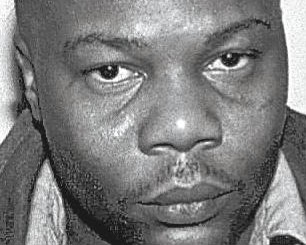 Michael Satcher
Murderer · USA · 1990
Michael Charles Satcher was the petitioner-appellee and petitioner-appellant in…
1 victim
Michael Satcher
Murderer · USA · 1990
Michael Charles Satcher was the petitioner-appellee and petitioner-appellant in…
1 victim
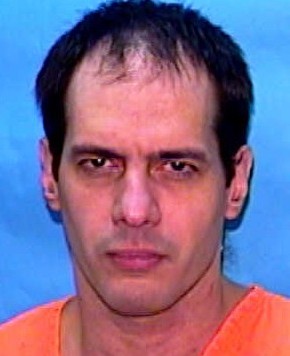 Juan Carlos Chavez
Murderer · USA · 1995
Juan Carlos Chavez was sentenced to death for the kidnapping, sexual assault, a…
1 victim
Juan Carlos Chavez
Murderer · USA · 1995
Juan Carlos Chavez was sentenced to death for the kidnapping, sexual assault, a…
1 victim
- Gender
- male
- Country
- Lit h uania
- Location
- Vilnius, Lit h uania
- Date of birth
- March 5, 1964
- Age at first offence
- 39
- Characteristics
- domestic violence, alcohol, drugs
- Victim profile
- His girlfriend, actress Marie Trintignant, 41
- Method of murder
- Beating
- Date(s) of murder
- July 26, 2003
- Years active
- 2003
- Date of arrest
- Next day
- Status
-
Released
Sentenced to 8 years in prison for murder committed with indirect intent (dolus eventualis) on March 29, 2004; released on parole on October 16, 2007, after serving half of his sentence
Background
Bertrand Lucien Bruno Cantat (born 5 March 1964) was a French singer and songwriter. He was the frontman for the rock band Noir Désir.
Cantat was born in Pau, Aquitaine / Occitania. In 1997, he married Kristina Rady, with whom he had two children. At the height of Noir Désir’s success in the 1990s, he was one of the most prominent figures of French music. Cantat held left-wing political views and took positions against globalisation, fascism, desertification of urban areas in Bordeaux, and the 2003 invasion of Iraq, among other topics.
Cantat’s house in Landes was burned down on 11 September 2003. His ex-wife, Krisztina Rády, committed suicide on January 10, 2010, while he was sleeping in the same house. On November 30, 2010, the group announced it would split up for good and that the era of Noir Desir was over.
The offence
In 2003, following an argument related to infidelity, Bertrand Cantat repeatedly assaulted his girlfriend Marie Trintignant in a hotel room in Vilnius, Lithuania, then tucked her unconscious body into bed. Marie Trintignant died several days later in hospital due to brain swelling.
During the trial, the court heard that Cantat hit Marie Trintignant four times as they rowed in the hotel. Cantat admitted slapping her four times, and said her death was an accident. Prosecutors alleged he rained her 19 blows to her head in a jealous rage. Cantat was said to have flown into a jealous rage after she received an affectionate text message from her former husband.
The British man occupying a hotel room next door to the couple said he heard them arguing on the evening of 26 July shortly before the incident took place but did not understand what was said. A Lithuanian assistant director on the set of the film, Andrius Leliuga, described the couple’s behaviour prior to the argument.
Cantat claimed that the death was the consequence of losing control during the incident, while prosecutors argued he was guilty of murder.
Investigation
On Thursday, 21 August, 2003, Bertrand Cantat was put under investigation by the French authorities in connection with the death of his lover, actress Marie Trintignant. Cantat was in custody in Lithuania and was already under investigation by local prosecutors. He was questioned for the first time on Thursday by a French judge, Nathalie Turquey.
Cantat was suspected of accidentally killing Marie Trintignant. The Associated Press news agency quoted a Lithuanian prosecutor as saying that Cantat would probably stand trial in Vilnius in the middle of September. Romutis Jancevicius said that extradition was not being considered, despite the existence of the separate French inquiry.
Cantat had been arrested after Marie Trintignant was admitted to hospital in a coma suffering head injuries on 27 July. She was pronounced dead in Paris five days later.
At the time of questioning, Cantat arrived in handcuffs with a jacket over his head. His lawyer, Olivier Metzner, said that the singer felt responsible for the death: "Bertrand is not seeking to evade his responsibilities," he said. "He never thought that it could end this way. I have the feeling that... his life no longer has any meaning."
When asked by journalists whether Cantat was still saying he only gave Marie Trintignant a slap, he replied: "He never said that. He never said he only slapped her."
After the meeting, Cantat said his client had given an account of his “extraordinary” year-long relationship with Marie Trintignant, and “why, that evening there, things had unfortunately degenerated”.
Toxicology tests showed Cantat had no drugs in his system on the night in question.
Marie Trintignant had been in Lithuania making a television film with her director mother Nadine Trintignant when the incident happened. She had been staying in a hotel with Cantat, who fronted the band Noir Desir, and her 17-year-old son Roman. She was kept alive on a life-support machine in France after being flown back from Lithuania.
Doctors performed two operations on her brain, but were never hopeful of her chances of survival. Under the French legal system, placing Cantat under formal investigation was a step short of pressing charges.
Arrest and detention
On Monday, 28 July, 2003, Cantat was described as being in hospital after drinking dangerous amounts of alcohol. A hospital changed its mind about releasing him for questioning on Monday, saying he still required medical supervision, and he was expected to be questioned on Tuesday.
Cantat had been detained by police in Lithuania on suspicion of beating Marie Trintignant following a row. He denied beating her and said it had been an accident.
Police spokeswoman Ruta Andriuskaite said Cantat had been admitted to the hospital after drinking dangerous amounts of alcohol. A senior police official, Juozas Kandzezauskas, left open the possibility that Trintignant fell and hit her head after being pushed, saying: "Maybe it will be described as an accident," he was quoted as saying. "We should be in no rush. We will speak to the suspect and everything will be clear."
On Monday, 28 July, 2003, Doctor Robertas Kvascevicius said: "At this point, I cannot promise anything," he said. "In such cases the chances for survival are minimal. The rate of mortality is 90 to 95%. There is little chance she will pull through it."
Marie Trintignant was taken to hospital in the Vilnius area on Sunday morning from the Vilnius Domina Plaza Hotel and underwent surgery to ease pressure on her brain.
On Thursday, 1 August, 2003, it was stated that a judge extended Cantat’s detention until 14 August. Cantat denied beating the actress and said it had been an accident.
Trial
Proceedings before the verdict
On Tuesday, 16 March, 2004, Bertrand Cantat broke down in tears as he went on trial accused of murdering his girlfriend, actress Marie Trintignant. Cantat was accused of causing Trintignant’s death during a violent incident in their hotel room in the Lithuanian capital Vilnius in the previous July. Cantat admitted slapping 41-year-old Trintignant four times, but told the court her death was an accident.
AFP news agency quoted Cantat as saying: "Marie lost control, I lost control..."
He was quoted by AFP news agency as saying: "I should have left, should never have done that of course. I lost control,"
The Associated Press quoted Cantat as saying: "Everything happened very fast," he said. "Never, never did I want things to happen that way. This hand should never have risen. And I do not accept myself having raised this hand,"
Cantat also told the court: "I love Marie's children," he said. "This was a moment that was completely beyond us. "I want to tell them that Marie did not die of hate and I also want to say that there are other people in this story... my wife, my children,"
Later, Nadine Trintignant testified in court and said her impression of Cantat was false, saying: "My impression [of Bertrand Cantat] was false. I thought he was a gentle man."
It was stated that the court in Vilnius had rejected a prosecution request for the trial to be held behind closed doors. Prosecutor Ramutis Jancevicius told AFP: "We are concerned about revelations about the private lives of Bertrand Cantat and especially Marie Trintignant, who cannot defend herself," prosecutor Ramutis Jancevicius told AFP.
Nadine Trintignant told the court she was against a closed-door hearing, saying: "With respect to the children, both the children of Bertrand Cantat and those of my daughter, they have unfortunately read everything about Marie's life in the press... I am against"
Defence and prosecution positions during trial
On Wednesday, 17 March, 2004, Kristina Rady, Cantat’s estranged wife, defended him against charges that he murdered Marie Trintignant. Testifying in Lithuania, she said Cantat was “an honest man, very good and very gentle”. She denied he had ever been violent towards her, saying: "I never told anyone around me that Bertrand had raised his hand against me".
She also said: "I could never have lived with a liar, a macho [man] and a beater,"
It was said that for Trintignant’s husband, director Samuel Benchetrit, Cantat was "jealous". Benchetrit said he “cried for himself more than he did for Marie”. He said Kristina Rady had told him she had been the victim of violence on Cantat’s part, and that he had hit her and even chased her with a knife. He added that the day after Trintignant was beaten up, he said: "Kristina told me that the same thing had happened to her"
On Thursday, 18 March, 2004, prosecutors demanded a nine-year jail term for Cantat for killing Marie Trintignant. The prosecution position was described as murder. Prosecutor Vladimiras Sergejevas said: "I consider that the guilt of the accused has been proved," prosecutor Vladimiras Sergejevas said. "Mr Cantat was "fully aware of his actions and could not have been unaware of their seriousness".
Cantat’s lawyers argued he should serve no more than six years on the grounds that he did not intend to kill her.
On 29 March 2004, it was stated that the presiding judge said the guilt was indisputable and that Cantat “did not want the consequences” of his acts. When asked if he understood the sentence, Cantat replied: "Yes".
Cantat’s lawyer, Olivier Metzner, said Cantat would appeal against the verdict.
Sentencing
On 29 March 2004, Bertrand Cantat was sentenced by Vilnius Regional Court under Article 129 of the Lithuanian Criminal Code to 8 years in prison for murder committed with indirect intent (dolus eventualis). The sentencing outcome was described as acknowledgement by the court that Cantat did not want to kill the victim, but foresaw her death as a probable consequence of his acts and was indifferent with regard to such a consequence.
Appeals
The verdict was at first appealed by Marie Trintignant’s family, who wanted to toughen the sentence. It was also appealed by Bertrand Cantat, who wanted the higher court to reclassify his crime as manslaughter and lessen his sentence. Both parties ultimately decided to cancel their appeals, which rendered the first 8 years judgment final.
Outcome
While in Lukiškės prison of Vilnius, Cantat performed on 11 August 2004 a concert for prisoners and the prison’s administration.
At the request of his lawyers, Cantat was moved from a Lithuanian prison to a prison near Muret, France on 28 September 2004.
Cantat was released on parole on 16 October 2007, after serving half of his sentence.
Aftermath
Nadine Trintignant, Marie’s mother, actively sought a heavy sentence. Cantat’s friends claimed he had been out of his mind and had not intended to cause harm.
It was stated that Cantat’s killing of Marie caused considerable emotion in France.
Nadine Trintignant labelled Cantat a “murderer” in a book she wrote about her daughter.
It was also stated that Cantat cried often in court as he spoke about their “extraordinary love” and that the case sparked a heated debate in France about domestic violence.
It was stated that Marie Trintignant had been in a coma after the incident and that her death was announced by a neurosurgeon at the Hartmann clinic in Neuilly, France, following a cerebral edema, and that her boyfriend Bertrand Cantat was being detained in Lithuania on suspicion of beating her following a row. The neurosurgeon, Stephane Delajoux, said: "Miss Marie Trintignant died this morning at 1020 (0820 GMT) following a cerebral oedema, despite the efforts made to revive her since she arrived at the Hartmann Clinic."
French President Jacques Chirac paid tribute to Marie Trintignant, saying: "served her art with beauty, sensitivity and intelligence". He also said: "We are all dreadfully aware of the injustice of a destiny so brutally shattered."
Other details
Cantat was admitted to the same hospital suffering from a lethal mix of alcohol and sedatives and required an immediate Gastric lavage.
Spotted an error, or have more information about this case?