
Sylvia Seegrist
Murderer Bobbie Sue Terrell
Murderer · USA · 1984
Bobbie Sue Dudley Terrell was a Pinellas County nurse and worked as the night s…
12 victims
Bobbie Sue Terrell
Murderer · USA · 1984
Bobbie Sue Dudley Terrell was a Pinellas County nurse and worked as the night s…
12 victims
 Angela Johnson
Murderer · USA · 1993
Angela Jane Johnson was convicted in federal court of aiding and abetting the m…
5 victims
Angela Johnson
Murderer · USA · 1993
Angela Jane Johnson was convicted in federal court of aiding and abetting the m…
5 victims
 Catherine May Wood
Murderer · USA · 1987
Catherine May Wood was an American caregiver who worked at the Alpine Manor Nur…
5 victims
Catherine May Wood
Murderer · USA · 1987
Catherine May Wood was an American caregiver who worked at the Alpine Manor Nur…
5 victims
 Amy Bishop
Murderer · USA · 1986
Amy Bishop — biology professor and perpetrator · James Anderson — Bishop’s husb…
4 victims
Amy Bishop
Murderer · USA · 1986
Amy Bishop — biology professor and perpetrator · James Anderson — Bishop’s husb…
4 victims
 Martha Ann Johnson
Murderer · USA · 1977
Martha Ann Johnson (also known as Martha Ann Bowen) was an American serial kill…
4 victims
Martha Ann Johnson
Murderer · USA · 1977
Martha Ann Johnson (also known as Martha Ann Bowen) was an American serial kill…
4 victims
 Victor Miller
Murderer · United Kingdom · 1988
Victor Miller was a computer operator in the United Kingdom. He was described a…
1 victim
Victor Miller
Murderer · United Kingdom · 1988
Victor Miller was a computer operator in the United Kingdom. He was described a…
1 victim
 Dalton Prejean
Homicide · USA · 1974
Dalton Prejean Dalton Prejean (December 10, 1959 - May 18, 1990) was an America…
2 victims
Dalton Prejean
Homicide · USA · 1974
Dalton Prejean Dalton Prejean (December 10, 1959 - May 18, 1990) was an America…
2 victims
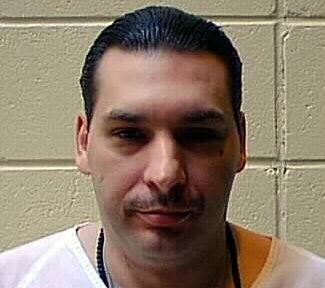 Jack Harold Jones
Murderer · USA · 1991
Jack Harold Jones, Jr. was convicted in the White County Circuit Court of the c…
2 victims
Jack Harold Jones
Murderer · USA · 1991
Jack Harold Jones, Jr. was convicted in the White County Circuit Court of the c…
2 victims
 Ted Bundy
Serial killer · USA · 1973
Ted Bundy (born Theodore Robert Cowell; November 24, 1946 – January 24, 1989),…
14 victims
Ted Bundy
Serial killer · USA · 1973
Ted Bundy (born Theodore Robert Cowell; November 24, 1946 – January 24, 1989),…
14 victims
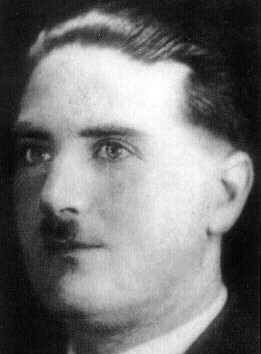 Alfred Arthur Rouse
Murderer · United Kingdom · 1930
Alfred Arthur Rouse (6 April 1894–10 March 1931) was a British murderer. It was…
1 victim
Alfred Arthur Rouse
Murderer · United Kingdom · 1930
Alfred Arthur Rouse (6 April 1894–10 March 1931) was a British murderer. It was…
1 victim
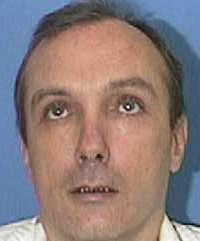 James Blake Colburn
Murderer · USA · 1994
James Blake Colburn Colburn murdered Peggy Murphy in Colburn’s apartment. On th…
1 victim
James Blake Colburn
Murderer · USA · 1994
James Blake Colburn Colburn murdered Peggy Murphy in Colburn’s apartment. On th…
1 victim
- Gender
- female
- Country
- USA
- Location
- Springfield, Delaware County, Pennsylvania, USA
- Date of birth
- July 31, 1960
- Age at first offence
- 25
- Characteristics
- mentally ill, shooting rampage
- Victim profile
- Recife Cosmen, 2 / Dr. Ernest Trout, 67 / Augusto Ferrara, 64
- Method of murder
- Shooting ( Ruger semiautomatic .22 caliber rifle)
- Date(s) of murder
- October 30, 1985
- Years active
- 1985
- Date of arrest
- Same day
- Status
-
Life imprisonment
Found guilty, but insane; sentenced to three consecutive life sentences (one for each victim she killed) and seven consecutive 10-year terms (one for each victim she wounded) in June 1986
Case record: Sylvia Seegrist
Background
Sylvia Wynanda Seegrist (born July 31, 1960) was an American woman diagnosed with paranoid schizophrenia ten years earlier and found guilty but insane for a shooting rampage in Springfield, Pennsylvania on October 30, 1985.
Seegrist had been hospitalized at least twelve times since she was fifteen years old and had been committed and discharged several times. Her case helped spur discussion and legislative efforts about the state’s authority to commit possibly dangerous people versus individual rights.
Her mother, Ruth Seegrist, urged legislators to make changes to the state mental health laws. The existence or nature of changes made by the task force is unknown. In later commentary linked to the December 2012 school shooting at Sandy Hook Elementary School in Newtown, Connecticut, Ruth Seegrist told The Philly Post:
“You know, it’s ironic that people who are irrational are expected under the law to get help on their own. There needs to be something in the law that compels a troubled person to be diagnosed by a psychiatrist. In the 1950s, we were institutionalizing people who weren’t mentally ill. You could institutionalize someone who was just unruly. We’ve gone from one extreme to the other.”
Neighbors described Seegrist as known in her neighborhood as “Ms. Rambo,” and acquaintances described her as always angry. She was said to have frightened others with her frightening comments and behavior.
The offence
On October 30, 1985, Sylvia Seegrist opened fire at a Springfield, Pennsylvania shopping mall, killing three people and wounding seven others before being disarmed by a Volunteer Firefighter/EMT who was shopping at the mall.
Seegrist’s victims included two men and a two-year-old boy. The people she wounded were described as seven others beyond the three killed.
Before entering the mall, she exited her Datsun B-210, retrieved the weapon she had purchased, and then fired at a man approximately 30 yards from where she stood. The man was not hit. After having seen the vehicle, the man flattened one of the Datsun’s tires to prevent an escape in that vehicle.
While Seegrist strode toward the nearest entrance, she fired at a woman using a nearby ATM, also missing. Before entering the mall, she managed to hit and kill two-year-old Recife Cosmen who was with his parents waiting to eat at a local restaurant.
Once inside the mall, Seegrist fired into some stores and ignored others. Many customers fled when they heard the gunfire, but she came across (Ernest) Earl Trout, who became one of the three people killed that day.
Augustus Ferrara was the last person killed in the rampage.
John Laufer, who did not realize Sylvia was firing real bullets, disarmed her as she walked up to him and tried to raise her gun to shoot him. Laufer forced her to a nearby store while he waited for the arrival of mall security. The first guard that responded asked her why she had just done what she did; her reply was “My family makes me nervous”.
At arraignment, she said:
“Hurry up, man, you know I’m guilty. Kill me on the spot.”
Additional details describe that she shot at multiple locations inside and in the parking lot, and that the rampage occurred in the context of the day being near Halloween and “mischief night,” initially leading some people to think it might be a prank.
Investigation
Before the October 30, 1985 rampage, clerks at a local K-Mart told Seegrist they had no rifles in stock when she tried to purchase one. She eventually purchased a Ruger 10/22 at another store.
Clerks at Best Products and the details of her attempt to purchase weapons were described in relation to how she obtained the rifle she would use.
A trial prosecutor later presented statements indicating planning and awareness of wrongdoing, including that she had joined a rifle club six months before the shooting, and had visited a lawyer on October 29, 1985, to have her last will and testament drawn up, as if she was expecting to die.
When asked about the incident, Captain John McKenna, director of the criminal investigations division of the Delaware County DA’s office, said:
“There's no rhyme or reason for this,”
He also stated that Seegrist had a history of aggressive incidents related to mental illness and called the incident a terrible tragedy over which no one has any control.
Arrest and initial court proceedings
Seegrist was disarmed by John Laufer and was placed in a nearby store while awaiting mall security.
At her arraignment that evening around 8:00 P.M., Seegrist attended barefoot, swore at reporters, and was described as being less than cooperative. She was held in jail without bail until she could get a preliminary hearing.
She appeared for about 10 minutes before District Justice Joseph L. DiPietro in Springfield Township on two counts of murder, attempted murder, aggravated assault, possession of an instrument of crime, and carrying a gun without a license.
During the arraignment, she told reporters and the court several statements, including:
“F-- you, I hope you starve, motherf--. I don't like that feeling, but that's the way it is.” She told the judge she was 25 and said that she did not expect to live beyond that.
When asked her phone number, she rattled off a long string of random numbers in a voice charged with anger. She also lashed out by saying she wished she had never been born and attributed the rampage to trouble with her parents, saying:
“My parents beat me, of course,” and “The police never handled my parents.”
She insisted that she had not meant to do it.
Trial
Competency proceedings and insanity
Prior to the competency hearing, Seegrist was transferred to Norristown State Hospital for evaluation.
On March 7, 1986, Seegrist was deemed competent to stand trial for the killings.
A hearing to determine competence was previously set for December 5, and the defense hired Dr. Robert Sadoff to evaluate Seegrist; he said that she was not competent to stand trial. A psychiatrist at Haverford State Hospital, John Fong, also stated that she was severely mentally disabled, and personnel at Mayview believed she needed continued involuntary treatment.
Her preliminary hearing was postponed again, and the DA’s office was permitted access to Sylvia’s mental health records only for competency assessment, not for trial. Director Janis Lee was asked to disclose Seegrist’s reading preferences. The court ordered disclosure and, according to the report, it proved to be a painful ethical ordeal for Janis Lee. The court appointed psychiatrist James H. Ewing to conduct evaluation of competency. Seegrist was transferred to Norristown State Hospital near Philadelphia for evaluation, and she declared competent to stand trial with a proviso that her mental state might deteriorate before or during trial.
Her defense introduced a long note she had written, including:
“The end of commerce, the end of post office, and the end of money!”
During trial, her defense stated that they would use an insanity defense based on paranoid schizophrenia and that her illness had caused the incident.
Charges
The trial record described that Seegrist was charged with three counts of murder and seven counts of attempted murder and assault.
Opening and evidence
The trial opening statements began June 18, 1986, seven months after the shooting.
The prosecutor, William H. Ryan Jr, believed that Seegrist had planned the attack and had done it for attention.
The defense introduced testimony and described early abuse and a breakdown in the mental health system, as well as a long documented history of severe mental disability.
Early testimony came from the security guard at the Springfield Mall. After handcuffing, the security guard reported that Seegrist began talking about negative energy and a black box. The guard stated Seegrist admitted she had done something wrong and should have been shot. The black box was described as containing a Russian dictionary, high school homework, and newspaper articles.
Witnesses described injuries to the victims being graphically recounted.
The defense brought Sylvia’s mother to the stand. She testified that Sylvia’s paternal grandfather had masturbated in front of her when she was only eight and had demonstrated various sexual positions. She stated that at age 15, Sylvia was diagnosed, and following that she had experienced fifteen separate hospitalizations. She also described bizarre behavior such as cutting off all her hair, spray-painting herself, and writing hostile expressions on her walls.
Three mental health professionals, two psychiatrists and one psychologist, testified that Seegrist was too mentally ill to appreciate what she had done on October 30, 1985. The professionals said Seegrist went to the mall with the idea that killing people would put them out of their misery because she believed many people wished they had never been born. They also testified she hoped to teach rescue personnel how to respond to emergencies, to make the Army proud of her, and to become a famous criminal to find her identity. The court-appointed psychiatrist Dr. James Ewing concurred with the defense’s mental state view.
The prosecution introduced contrary testimony from Dr. Park Dietz, who testified that Seegrist knew what she was doing and knew that it was wrong, and that while she had a mental illness it might have been bipolar disorder rather than schizophrenia. The prosecution argued that her shootings were executed in an organized manner and that her statements to the police and security guard directly afterward indicated a planned attack under her control, and she was therefore not legally insane.
The defense closed with the statement that Sylvia was a victim of mental illness, while the prosecution argued that because she was unable to succeed at anything, she blamed society.
The judge instructed the jury that they had four options: to find Seegrist guilty, not guilty, guilty but mentally ill, or not guilty by reason of insanity.
The trial lasted eight days, and the jury of 12 took more than nine hours to deliver a verdict.
Verdict and sentencing
Seegrist was found guilty but mentally ill.
She received three consecutive life sentences (one for each victim she killed) and seven consecutive 10-year terms (one for each victim she wounded). The case summary also stated that the judge had said that Seegrist “should spend the rest of her life in some form of incarceration.”
After sentencing, she was sent to a psychiatric facility for evaluation and was eventually moved to the State Correctional Institution at Muncy.
Sentencing was described as occurring in June 1986.
Appeals
No appeal outcome was provided in the supplied material.
Outcome
The jury found Sylvia Seegrist guilty but insane/mentally ill.
Aftermath
Seegrist’s actions helped spur the state government to form a legislative task force to address better ways to care for the mentally ill in the community. Her mother also urged legislators to make changes to the state mental health laws, but the existence or nature of changes made by the task force is unknown.
In the year after the rampage, Seegrist underwent extensive psychiatric examinations for competency to stand trial and to understand the charges against her and participate in her defense. The defense introduced motion arguments about privacy in psychiatric records and sought return of all records.
Ernest Trout, the man whom Seegrist had shot three times, died December 1 from a blood clot caused by the shooting. He had never regained consciousness, and the prognosis was blindness and paralysis even if he had lived. The material described that Seegrist’s bullet had passed through one of his temples, damaging the frontal lobe of his brain and an eye, and that both of his eyes had been removed.
Civil litigation
In October 1987, relatives of her victims and those who had been wounded filed a gross negligence lawsuit against the owners of the Springfield Mall, Haverford State Hospital, the township police department, the corporation that owned Best Products, and a mental health counselor, based on a failure to take precautions to ensure community safety.
A defense “shadow jury” was assembled by a jury consultant company.
The material described that, in February 1990, a jury awarded damages to the plaintiffs. Insurance companies settled for an undisclosed amount, with rumors placed it at over $3 million. A shadow jury had decided the companies were not financially liable.
Risk assessment and legislative context
In 1989, spurred by the Seegrist case, Congress approved a plan to revise the mental health system to allow involuntary commitment based on clearly expressed threats to people or property. The plan included training for caseworkers, more funding, and improved communication between state and local mental health services. Dissenting voices called it a “blueprint for a nightmare,” unnecessarily overburdening an already overwhelmed system.
Follow-up interviews and later accounts
In 1991, Sylvia Seegrist gave an interview to Reid Kanaley for the Philadelphia Inquirer. With treatment and medication, she stabilized in her behavior and feelings and expressed hope that she might be released. She stated:
“Every time October 30 rolls around,” and “I have a hard time that day. I have a hard time not crying. The idea that I hurt people. It's hard to describe.”
When asked to account for her reasons, Seegrist said:
she had feared that her mother was going to have her hospitalized that day. She stated she hated the side effects of her medication, including weight gain, loss of muscle control, and problems with seeing, and she said she would have done anything to resist that fate.
She said that she hoped to earn a degree in psychology and go into that field, but the DA’s office comments indicated they would oppose her ever being released.
In 1994, another follow-up piece indicated that Seegrist had nearly completed her college degree and was teaching math to fellow prisoners. Her mother commented that the prison structure for Seegrist was “humane.”
In 2001, Julian Walker wrote a piece about Seegrist’s mother and her ideas about the mentally ill.
Ruth Seegrist, described as a freelance writer at the time of Sylvia’s rampage, became director of Friends Hospital Family Resource Center in Philadelphia, created ten years after Sylvia’s rampage. The Friends Hospital Family Resource Center made help and information available to family members and to patients who wanted to know more about their own illness. Ruth and her husband, Don, explored multiple treatment options and helped people in recovery who had been out of the hospital for at least a year.
Ruth Seegrist’s views included that mental illness may be a chemical imbalance, that patients do not want to take medication despite its necessity, and that treatment and compassionate resources should be available and well-coordinated.


Spotted an error, or have more information about this case?