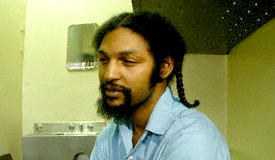
Dalton Prejean
Homicide Edward Charles Allaway
Homicide · USA · 1976
Edward Charles Allaway Edward Charles Allaway was found not guilty by reason of…
7 victims
Edward Charles Allaway
Homicide · USA · 1976
Edward Charles Allaway Edward Charles Allaway was found not guilty by reason of…
7 victims
 Anthony Barbaro
Homicide · USA · 1974
December 30, 1974 — Anthony F. Barbaro left his house with his mother's car, we…
3 victims
Anthony Barbaro
Homicide · USA · 1974
December 30, 1974 — Anthony F. Barbaro left his house with his mother's car, we…
3 victims
 Anthony Banks
Murderer · USA · 1978
Anthony Banks was sentenced to death and later executed by lethal injection in…
2 victims
Anthony Banks
Murderer · USA · 1978
Anthony Banks was sentenced to death and later executed by lethal injection in…
2 victims
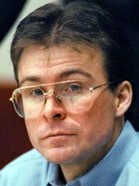 Robert James Acremant
Murderer · USA · 1995
Robert James Acremant was 29 years old when he pleaded guilty last year to aggr…
3 victims
Robert James Acremant
Murderer · USA · 1995
Robert James Acremant was 29 years old when he pleaded guilty last year to aggr…
3 victims
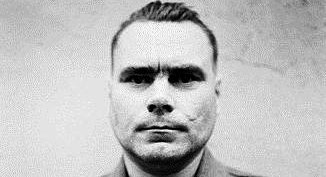 Josef Kramer
Homicide · Germany · 1944
Josef Kramer (November 10, 1906 – December 13, 1945) was the Commandant of the…
Josef Kramer
Homicide · Germany · 1944
Josef Kramer (November 10, 1906 – December 13, 1945) was the Commandant of the…
 David Stephen Middleton
Murderer · USA · 1994
David Stephen Middleton was a one-time Miami police officer who was sentenced t…
2 victims
David Stephen Middleton
Murderer · USA · 1994
David Stephen Middleton was a one-time Miami police officer who was sentenced t…
2 victims
- Gender
- male
- Country
- USA
- Location
- Lafayette Parish, Louisiana, USA
- Date of birth
- December 10, 1959
- Age at first offence
- 15
- Characteristics
- juvenile (17), to avoid arrest, robbery
- Victim profile
- John Doucet (taxi driver) / Donald Cleveland ( Louisiana state trooper )
- Method of murder
- Shooting ( .38 caliber revolver)
- Date(s) of murder
- June 1974 / July 2, 1977
- Years active
- 1974–1977
- Date of arrest
- J uly 2, 1977
- Status
-
Executed
Executed by electrocution in Louisiana on May 18, 1990
Other names
Dalton Prejean
Background
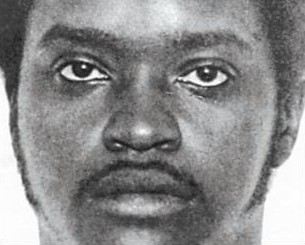
Dalton Prejean (December 10, 1959 - May 18, 1990) was an American murderer. He was tried, convicted, and executed by the electric chair in Louisiana for the murder of Louisiana State Police Trooper Donald Cleveland. Prejean was seventeen years old at the time of the murder.
Prejean was born in December 1959 and was the second of four children. When he was two weeks old, his parents sent him from their home in Lafayette to live with his aunt and uncle in Houston, Texas. He was unaware of his true parentage until the age of eleven.
When Prejean’s father left his mother and moved to Houston, the aunt decided that Prejean had to be told that he was not her child. About this time Prejean began creating problems of an unknown nature, and he was sent to live with his mother in Lafayette. Prejean began skipping his school classes following his return to Lafayette.
In March 1972 Prejean was committed to the Louisiana Training Institute for truancy at the instance of his mother. He was released only seven months later and soon came into conflict with the authorities on charges of burglary, theft and “false firearms.”
In March 1974 Prejean was committed to the Lafayette Juvenile Youth Authority, a residential program for delinquents. He ran away from that facility after a month; upon his return his commitment was terminated and he was released on probation to his mother.
In June 1974 Prejean was arrested for the killing of John Doucet, a taxi driver. Prejean admitted the killing and was committed once again to the Louisiana Training Institute. In a later statement about the incident, Prejean stated that he and two friends called a cab with the intention of robbing the driver. One of his companions was carrying a gun. The three directed the driver to a quiet part of town and persuaded him to stop while they searched for an address. Prejean insisted on taking the gun from his companion because the other youth appeared to be nervous. Prejean approached the driver, and believing that the driver was reaching for a gun of his own, fired twice and began running. While fleeing he told a passerby to call an ambulance because someone had been shot. Prejean later turned himself in to the police and admitted that he had killed the driver.
A psychiatric evaluation of Prejean was performed in 1974. He was found to be intellectually limited and to have very poor judgment. Prejean was diagnosed as having borderline mental retardation, and it was questionable if he knew the difference between right and wrong. The psychiatrist stated that:
“He is a definite danger to himself and others, and his dream content suggests that it is a matter of accident that the cab driver was killed rather than the boy being killed. He is equally likely to get himself killed in the near future.”
The psychiatrist recommended a lengthy confinement, followed by transfer to permanent facilities. The juvenile courts had jurisdiction over Prejean until he was twenty-one. The doctor’s recommendation would have served to keep him confined until December 1980.
In 1976 another doctor conducted a psychiatric evaluation of Prejean and recommended that he be discharged. The doctor concluded that Prejean’s values had changed but cautioned that:
“suitable conditions (should be) imposed to be sure he had adequate supervision and is going to live in a fairly stable environment.”
That doctor also suggested fairly rigid probation requirements be imposed.
On December 10, 1976 Prejean was released to the custody of his aunt in Houston, apparently without any probation requirements. Within seven months he was once more under arrest for killing a human being.
The offence
At about five o’clock in the morning of July 2, 1977, Prejean, his brother Joseph, Michael George and Michael Broussard left Roger’s Nite Club in Lafayette Parish. The four had spent the night drinking in various lounges in the vicinity. They left Roger’s Nite Club in a 1966 Chevrolet driven by Prejean, with his brother in the front seat and the other two in the back. The car’s taillights were not working.
Within a few hundred feet of the lounge, Louisiana State Trooper Donald Cleveland, who was on his way to work driving his police vehicle, signaled the Chevrolet to stop. Prejean and his brother attempted to switch places in the front seat because Prejean had been driving without a license. The trooper noticed the switch and ordered the occupants out of the car. He told Michael George and Michael Broussard to get back in, however, and began to search Joseph Prejean.
Prejean, back in the car, stated:
“I don't like the way he's doing my brother.”
(This was in reaction to the trooper’s pushing Joseph against the car, over Joseph’s protest.) Prejean then took a .38 caliber revolver from under the car seat, got out of the car and approached the officer with the gun hidden against his leg. As he neared the trooper he fired without warning. Trooper Cleveland was struck by two bullets and was killed. Prejean and his companions fled the scene but were apprehended several hours later.
A procedural chronology also described the incident as follows: July 2, 1977: Louisiana State Trooper Donald Cleveland was in the process of conducting a traffic stop when Dalton Prejean pulled a concealed pistol and shot him to death.
Investigation and pretrial proceedings
Prejean was once again given psychological tests during pretrial confinement. Dr. William Hawkins determined that he functioned at the dull normal level in the verbal area but in the borderline mental retardate area in the performance area. Dr. Hawkins found a verbal I.Q. of 82 and a performance I.Q. of 72. His full scale I.Q. was 76, with a full scale mental age of thirteen years and six months.
Prejean was apprehended several hours after fleeing the scene.
Arrest
Prejean’s killing of Trooper Cleveland occurred on July 2, 1977. He was apprehended several hours later.
Trial
Prejean was charged by grand jury indictment with first degree murder in violation of Louisiana Revised Statute 14:30.
The trial was transferred from Lafayette Parish to Ouachita Parish because of pretrial publicity. After a three day bifurcated trial beginning on May 1, 1978, a jury of twelve persons found Prejean guilty as charged and unanimously recommended that the death penalty be imposed.
In a verbiage taken verbatim from the Supreme Court of Louisiana opinion, the crime statement included the same traffic stop, switch attempt, search of Joseph Prejean, Prejean’s reaction statement, taking a .38 caliber revolver, firing without warning, Trooper Cleveland being struck by two bullets and killed, and fleeing and apprehension several hours later.
Sentencing
A May 11, 1978 procedural entry stated that a jury convicted Prejean of capital murder and fixed the death penalty for his crime.
Appeals
United States Court of Appeals for the Fifth Circuit (successive habeas corpus petition)
The United States Court of Appeals for the Fifth Circuit considered Prejean’s case captioned: 889 F.2d 1391 Dalton Prejean, Petitioner-Appellant, v. Larry D. Smith, Warden, Louisiana State Penitentiary, Respondent-Appellee. No. 89-4850.
The decision was issued by the United States Court of Appeals, Fifth Circuit, before CLARK, Chief Judge, and POLITZ and JOHNSON, Circuit Judges, and discussed a successive habeas corpus petition.
The Fifth Circuit stated that it:
“deny both motions.”
It summarized four asserted issues:
- The jury selection procedures were improper.
- He received ineffective assistance of counsel.
- He was a brain-damaged, retarded juvenile whose execution would be unconstitutional.
- State control over aspects of the prosecution denied him a fair trial in connection with his motion for a certificate of probable cause and stay of execution.
It described the crime using the Supreme Court of Louisiana’s verbatim statement.
Procedural chronology cited in the appellate decision
- July 2, 1977 — Louisiana State Trooper Donald Cleveland was in the process of conducting a traffic stop when Dalton Prejean pulled a concealed pistol and shot him to death.
- May 11, 1978 — A jury convicted Prejean of capital murder and fixed the death penalty for his crime.
- November 29, 1979 — The Louisiana Supreme Court affirmed the conviction and sentence.
- January 28, 1980 — The Louisiana Supreme Court denied rehearing.
- October 6, 1980 — The Supreme Court of the United States denied certiorari. Prejean v. Louisiana, 449 U.S. 891, 101 S.Ct. 253, 66 L.Ed.2d 119 (1980).
- December 1, 1980 — The Supreme Court of the United States denied rehearing. Prejean v. Louisiana, 449 U.S. 1027, 101 S.Ct. 598, 66 L.Ed.2d 489 (1980).
- March 31, 1981 — Prejean filed an application for state post-conviction relief, raising 12 claims set out in the margin.
- April 11, 1981 — The Louisiana Supreme Court denied review. Prejean v. Blackburn, 397 So.2d 517 (La.1981).
- April 13, 1981 — Prejean petitioned the United States District Court for the Western District of Louisiana for habeas corpus relief.
- September 2, 1981 — The district court dismissed for lack of exhaustion.
- September 25, 1981 — Prejean sought post-conviction relief in the parish of his conviction, raising five claims set out in the margin.
- October 5, 1981 — The Louisiana Supreme Court denied review. State ex rel. Prejean v. Blackburn, 407 So.2d 1189 (La.1981).
- February 23, 1982 — Prejean filed a second petition for habeas corpus in the United States District Court for the Western District of Louisiana, raising 11 claims set out in the margin.
- August 5, 1983 — The district court denied Prejean’s petition. Prejean v. Blackburn, 570 F.Supp. 985, 999 (W.D.La.1983).
- November 18, 1983 — The Clerk delivered a letter to all counsel requesting them to study the record and to detail any grounds for relief not already presented, specifically including ineffectiveness of present or former counsel.
- December 1, 1983 — State district attorney responded to clerk’s letter stating he was aware of no other grounds.
- December 5, 1983 — Counsel for Prejean responded to clerk’s letter stating they were aware of no other claims.
- December 6, 1983 — At oral argument before this court, counsel were directed to supplement their responses based on future investigation.
- January 3, 1984 — Counsel for Prejean asserted they had begun an investigation to identify any other claims and would promptly pursue them if any were found.
- October 15, 1984 — This court affirmed the district court. Prejean v. Blackburn, 743 F.2d 1091 (5th Cir.1984).
- July 15, 1985 — This court modified its prior opinion and denied rehearing and rehearing en banc. Prejean v. Maggio, 765 F.2d 482 (5th Cir.1985).
- July 3, 1989 — The Supreme Court of the United States denied certiorari. Prejean v. Blackburn, --- U.S. ----, 109 S.Ct. 3259, 106 L.Ed.2d 604 (1989).
- October 4, 1989 — Prejean moved the state court where he was convicted to stay his execution and moved the state trial judge to recuse himself from further consideration of the proceedings.
- October 9, 1989 — After a hearing, another judge in the parish of conviction denied all relief sought and ordered the case returned to Lafayette Parish where the murder had occurred.
- October 16, 1989 — The Supreme Court of Louisiana affirmed but ordered an evidentiary hearing on the jury selection claim raised in plaintiff’s most recent application for post-conviction relief.
- October 17, 1989 — After a hearing, the Lafayette Parish Court denied relief.
- October 19, 1989 — The Louisiana Supreme Court denied review.
- October 19, 1989 — Prejean filed his third petition for federal habeas corpus relief, raising 14 claims set out in the margin.
- October 27, 1989 — The United States District Court for the Western District of Louisiana denied the petition.
- November 14, 1989 — Prejean appealed that decision to this court and moved for a certificate of probable cause and stay.
Claims listed in the appellate decision
The appellate decision included a list of claims included in earlier state proceedings and another summary list. The following claims were described as “Claim I” through “Claim XII”:
- “Claim I: The proportionality review conducted by the Supreme Court of Louisiana was constitutionally inadequate”
- “Claim II: Petitioner's death sentence was disproportionate and excessive under Louisiana law and the eighth and fourteenth amendments to the United States Constitution.”
- “Claim III: The trial court's errors in instructing the jury at the sentencing phase violated Petitioner's eighth and fourteenth amendment rights.”
- “Claim IV: The Louisiana death penalty statute violates the eighth and fourteenth amendments because it fails to provide adequate statutory guidance for the jury's consideration of mitigating and aggravating circumstances.”
- “Claim V: The exclusion of prospective jurors for cause, solely because they opposed capital punishment, deprived Petitioner of his right to a jury representative of a cross-section of the community.”
- “Claim VI: The exclusion for cause of a juror who did not express in unequivocal terms her inability to return a death verdict deprived Petitioner of a fair and impartial jury under the sixth, eighth and fourteenth amendments.”
- “Claim VII: The prosecutor's deliberate use of peremptory challenges to exclude blacks from the jury, and the trial court's denial of a continuance or reasonable opportunity for Petitioner to establish that such exclusion was systematic, violated Petitioner's right to a fair and impartial jury under the sixth and fourteenth amendments, and his right to equal protection under the fourteenth amendment.”
- “Claim VIII: Petitioner was deprived of a fair and impartial jury when the trial court allowed into evidence two photographs of the victim which were gruesome and inflammatory.”
- “Claim IX: The trial court erred in allowing, over Petitioner's objection, the prosecutor to present evidence against the mitigating factor of intoxication during that portion of the trial that dealt solely with aggravating circumstances.”
- “Claim X: Louisiana procedures for executing death warrants violate the Louisiana Constitution.”
- “Claim XI: The general venire in Petitioner's case was selected improperly under Louisiana law.”
- “Claim XII: A stay of execution should be granted until the United States Supreme Court decides Eddings v. Oklahoma.”
The appellate decision also listed another set of claims described as “Claim I” through “Claim V”:
- “The imposition of the death penalty on an individual who was 17 years old at the time of the offense constitutes cruel and unusual punishment”
- “The death penalty imposed upon Petitioner was a direct result of intentional racial discrimination.”
- “The death penalty imposed upon Petitioner resulted from intentional racial discrimination based on the race of the victim and the race of Petitioner.”
- “The Louisiana Supreme Court's reliance in affirming Petitioner's death sentence upon hearsay information not before the jury violated Petitioner's due process rights.”
- “The systematic exclusion of certain persons qualified to serve on the jury denied Petitioner his right to a fair and impartial jury chosen from a cross-section of the community.”
The district court described claims as including: (1) the admission of gory photos, (2) systematic exclusion by the prosecutor of prospective black jurors, (3) the exclusion from the jury venire of a certain socio-economic class, (4) the death qualification of the jury, (5) the exclusion of a prospective juror in violation of Witherspoon, (6) the illegality of the sentencing instructions, (7) the prospective rebuttal of mitigating circumstances, (8) the intentional racial discrimination in the imposition of the death sentence, (9) the limiting of mitigating circumstances, (10) the denial of due process in the affirmance of the death sentence, and (11) the excessiveness and disproportionality of the death sentence. The appellate decision cited those claims as 570 F.Supp. at 990.
Jury selection
Prejean argued that the prosecutor deliberately used peremptory challenges to exclude all blacks from the jury in violation of equal protection under Batson v. Kentucky, 476 U.S. 79, 106 S.Ct. 1712, 90 L.Ed.2d 69 (1986). Prejean acknowledged that the United States Supreme Court held Batson was not retroactively applied to collateral review of the jury’s factual determination of guilt in capital cases, but insisted that the Court had never decided whether Batson applies retroactively to a jury’s capital sentencing determination.
The appellate decision described the court’s rejection of Prejean’s contention that Batson should apply retroactively to capital sentencing determinations. It also rejected sixth amendment and eighth amendment claims directed to discriminatory peremptory challenges.
The decision described the Louisiana Supreme Court’s Batson rulings and rejected the argument that the district court erred by refusing to try the Batson claim on the merits because of the state court’s decision to order a Batson hearing based on an assumption that Batson applies retroactively to a jury’s sentencing determination.
Ineffective assistance of counsel
Prejean claimed that Thomas E. Guilbeau’s ineffective representation deprived him of his sixth amendment right to counsel. The appellate decision listed specific deficiencies claimed by Prejean:
- Guilbeau did not present mitigating factors of Prejean’s family life such as the rejection he suffered from his mother and his aunt, the physical abuse he suffered from his aunt, and the devotion he held for his brother.
- Guilbeau failed to present evidence that Prejean suffered damage to the front and parietal lobes of his brain which rendered him unable to control his violent impulses.
- Guilbeau neither investigated nor presented evidence that Prejean had been diagnosed as suffering from paranoia and schizophrenia.
- Guilbeau did not present sufficient evidence of Prejean’s intoxication on the night of the shooting.
- Guilbeau failed to present evidence of the abusive treatment of Prejean’s brother by the state trooper.
- Guilbeau did not emphasize to the jury Prejean’s age at the time of the shooting.
- Guilbeau failed to object to the omission of mitigating evidence from the Sentence Investigation Report.
The appellate decision stated that these claims had been reviewed and denied by the state of Louisiana in an evidentiary hearing in the Fifteenth Judicial District Court and also denied by the federal district court.
It applied Strickland v. Washington, 466 U.S. 668, 104 S.Ct. 2052, 80 L.Ed.2d 674 (1984) and included the quoted standard:
“To establish a claim of ineffective assistance of counsel, a defendant must show that his counsel was actually deficient and that he was actually prejudiced by that deficiency.”
For the family-life mitigating evidence claim, it discussed that counsel would have taken a tremendous risk by placing members of Prejean’s family on the stand, and described that cross-examination would have disclosed violent tendencies including an incident where he hit his aunt with a metal tool, bruising her ribs. It also discussed prior arrests and convictions and his adjudication as a delinquent for the murder of a taxi driver. It concluded that counsel’s failure to present character evidence through family members did not meet either Strickland prong.
For the mental condition, age, and cognitive ability claims, the appellate decision described Dr. William Hawkins’s testimony and the jury sentencing phase. It included Dr. Hawkins’s qualifications:
“held a Ph.D in psychology from Louisiana State University and a certificate in alcoholism from Yale University”
It stated Dr. Hawkins testified that alcohol would affect a person of lowered mental ability more than the average person. It also described Guilbeau’s closing argument during sentencing that the death penalty was not appropriate and did not serve the intent of the Louisiana death penalty statute “in this case at hand where you have a person who functions at the level of a dull mental retard.”
For intoxication evidence, the appellate decision described cross-examinations of witnesses including Michael George and Michael Broussard, including the following verbatim exchange during cross-examination:
Q. Michael, it's a fact, isn't it, that Joe--that my client, Dalton Prejean, was intoxicated, under the influence of liquor, when all of this went on that you described. Isn't that true?
A. Right. * * * * * *
Q. It's a fact, isn't it, that when you all left the Harlem [night club] to go and drop Joseph Prejean, his brother,--to drop the girlfriend off, that Dalton Prejean was under the influence of alcohol then? He had been drinking, and he showed it, didn't he?
Q. Michael Broussard bought a fifth of White Port wine, didn't he?
Q. You divided it equally between the four (4) of you, each an equal portion in a cup?
Q. And, you drank that White Port wine from the Seven/Eleven store in Lafayette ...
A. Yes. * * * * * *
Q. And the whole time there Dalton Prejean was drinking, wasn't he?
A. Yeah, he was drinking.
The appellate decision also described a cross-examination excerpt of Deborah Thibodeaux:
Q. What, if anything, did you observe about Dalton Prejean when he came into your house that night after twelve o'clock?
A. I can tell you he was under the influence of alcohol.
Q. I want to know if he had anything with him?
A. A cup of beer.
Q. How did his eyes look?
A. Red.
Q. How do they normally look? Are they normally red?
A. No.
On the state trooper’s actions and abusive treatment of Prejean’s brother by Officer Donald Cleveland, the appellate decision described a quoted exchange during trial testimony through questioning of Michael George:
Q. You heard the officer arguing with Joseph, didn't you?
Q. How did that officer sound to you?
A. Mean, because he was cursing.
Q. What effect, if any, did that have on Dalton? Do you know?
A. I don't know what kind of effect it had on him.
MR STANSBURY (prosecuting attorney) I didn't hear your answer.
A. I said that I don't know what kind of effect it had on him. It was his brother. I don't know.
The appellate decision also addressed the “Failure to Object to the Sentence Investigation Report” claim and discussed the Louisiana Supreme Court proportionality review process, including that it considered whether the death sentence was imposed under the influence of passion, prejudice, or any other arbitrary factor; whether evidence supported the jury’s finding of a statutory aggravating circumstance; and whether the sentence was disproportionate to the penalty imposed in similar cases.
Retardation and youth argument
Prejean argued that the death penalty as applied to him was cruel and unusual punishment because he was mentally retarded and seventeen years old. The appellate decision stated that he did not qualify as “mentally retarded” under an American Association on Mental Retardation definition using an IQ of seventy or below, noting that his expert testified to a full scale I.Q. of seventy-six and “border-line mentally retarded.” It also discussed Penry v. Lynaugh and Stanford v. Kentucky, and included an argument that it did not require a new constitutional assessment if the jury could consider combined force of both claims where the defendant was mentally retarded (or borderline mentally retarded) and seventeen years old.
State control
Prejean claimed state control deprived him of a fair, impartial trial. He asserted that the prosecutor handpicked the jury; the judge improperly chose Ouachita Parish; the judge continued presiding after transferring the case out of his own parish; and there were improper ex parte communications with the judge. He argued that no adequate evidentiary hearing was held.
The appellate decision described an evidentiary hearing in the context of a recusal motion. It also described witness testimony at the recusal hearing by Defense Counsel Guilbeau, District Attorney Stansbury, and Trial Judge Hugh E. Brunson. It discussed claims regarding judge-picking, venue choice, whether it was unusual for the judge to stay with a case after transferring it, and ex parte communications. It included details that:
- At the recusal hearing, defense attorney Guilbeau stated a deputy clerk told him that the district attorney’s office controlled docketing and in that manner had picked Judge Brunson, but that the clerk declined to sign an affidavit.
- The district attorney and Judge Brunson denied that the district attorney’s office picked Judge Brunson to try Prejean’s case and attributed selection to routine procedures because he was the only judge then on the court trying criminal cases full time.
- The district court found Prejean’s allegations completely unsubstantiated and found no indication that the prosecution did not follow Louisiana law.
It described the venue choice issue as a decision to move to Monroe “to get as far away from Lafayette as possible,” and noted that Shreveport was considered first but was unavailable because of courtroom construction.
On ex parte communications, it described research memoranda relating to admissibility of Prejean’s prior juvenile murder conviction and stated that the judge testified it was his usual practice to share research with both sides so they would be better prepared for litigation. It stated that state courts and the federal district judge accepted the explanation and affirmed.
Abuse of the writ
The appellate decision addressed “abuse of the writ,” stating it denied habeas corpus relief for abuse of the writ. It stated:
“There comes a time when even death penalty litigation must end, and it now has been reached in this case.”
It discussed Rule 9 of the Rules Governing Section 2254 Cases and that the state had attempted no showing under Rule 9(a). It stated that under Rule 9(b) repeated claims should have been asserted earlier and that nothing in traditions of habeas corpus required courts to tolerate piecemeal litigation or collateral proceedings intended to delay, quoting the Sanders v. United States quotation included in the decision:
“ '[N]othing in the traditions of habeas corpus requires a court to tolerate needless piecemeal litigation, or to entertain collateral proceedings whose only purpose is ... to delay.' ”
The appellate decision concluded that Prejean had failed to meet the burden shifted to him and that counsel’s proffer of current affidavits was “a transparent device that has no merit,” and found “a clear abuse of the writ of habeas corpus.”
It also stated that no intimation of less than fully effective representation by Guilbeau was suggested by anyone until present counsel recast the substance of prior claims as constitutional ineffectiveness.
It included additional quotations attributed to comments from court-affiliated writing, including that “any defense in the guilt-innocence phase of trial would be futile,” and a quoted statement that:
“I wish I could have done better.”
Conclusion of the appellate decision
The appellate decision concluded that the motion for a certificate of probable cause and stay of execution was denied:
“The motion for a certificate of probable cause and stay of execution is DENIED.”
It also stated:
“JOHNSON, Circuit Judge, concurs in the result, only.”
Execution
Prejean was executed by the electric chair at Louisiana State Penitentiary at Angola on May 18, 1990. He was pronounced dead at 12:17 A.M.
His final statement was:
“Nothing is going to be accomplished. I have peace with myself. I'd like to thank all of those who supported me all these years. I'd also like to thank my loved ones for being strong. . . . My son will be a better person for not letting something like this bring down his life. . . . Keep strong, keep pushing, keep praying. They said it wasn't for the revenge, but it's hard for me to see, to understand. I hope they're happy. So I forfeit my life. I give my love to all. God bless.”
Timeline
- March 1972 — Prejean was committed to the Louisiana Training Institute for truancy.
- 1974 (March) — Prejean was committed to the Lafayette Juvenile Youth Authority.
- 1974 (March) — Prejean ran away from the Lafayette Juvenile Youth Authority; upon return his commitment was terminated and he was released on probation to his mother.
- June 1974 — Prejean was arrested for the killing of John Doucet, a taxi driver.
- 1974 — A psychiatric evaluation of Prejean was performed.
- 1976 — Another doctor conducted a psychiatric evaluation and recommended discharge with conditions and rigid probation requirements.
- December 10, 1976 — Prejean was released to the custody of his aunt in Houston.
- July 2, 1977 — Trooper Donald Cleveland was killed during a traffic stop after Prejean shot him with a concealed .38 caliber revolver.
- May 1, 1978 — A three day bifurcated trial began.
- May 11, 1978 — A jury convicted Prejean of capital murder and fixed the death penalty.
- October 6, 1980 — The United States Supreme Court denied certiorari. Prejean v. Louisiana, 449 U.S. 891.
- December 1, 1980 — The United States Supreme Court denied rehearing. Prejean v. Louisiana, 449 U.S. 1027.
- March 31, 1981 — Prejean filed an application for state post-conviction relief.
- Prejean v. Blackburn, 397 So.2d 517 (La.1981).
- April 13, 1981 — Prejean petitioned the United States District Court for habeas corpus relief.
- September 25, 1981 — Prejean sought post-conviction relief in the parish of conviction.
- State ex rel. Prejean v.
- February 23, 1982 — Prejean filed a second habeas corpus petition in federal district court.
- Prejean v. Blackburn, 570 F.Supp. 985, 999 (W.D.La.1983).
- November 18, 1983 — The Clerk delivered a letter to all counsel requesting detail of any grounds not already presented.
- December 1, 1983 — State district attorney responded to the clerk’s letter.
- December 5, 1983 — Counsel for Prejean responded to the clerk’s letter.
- December 6, 1983 — Counsel were directed to supplement responses based on future investigation.
- January 3, 1984 — Counsel asserted they had begun an investigation.
- October 15, 1984 — The Fifth Circuit affirmed the district court. Prejean v.
- July 15, 1985 — The Fifth Circuit modified its prior opinion and denied rehearing and rehearing en banc. Prejean v.
- July 3, 1989 — The United States Supreme Court denied certiorari. Prejean v. Blackburn, --- U.S. ----.
- October 4, 1989 — Prejean moved to stay his execution and moved the state trial judge to recuse himself.
- October 9, 1989 — After a hearing, a judge denied relief sought and ordered the case returned to Lafayette Parish.
- October 16, 1989 — The Supreme Court of Louisiana affirmed but ordered an evidentiary hearing on the jury selection claim.
- October 17, 1989 — The Lafayette Parish Court denied relief after the evidentiary hearing.
- October 19, 1989 — Prejean filed his third petition for federal habeas corpus relief.
- November 14, 1989 — Prejean appealed and moved for a certificate of probable cause and stay.
- May 18, 1990 — Prejean was executed by electrocution by the electric chair in Louisiana at Louisiana State Penitentiary at Angola.
Other details
A procedural entry stated that Prejean had been on death row since 1978, longer than anyone else in his state’s history, and that the execution followed the Supreme Court refusing to step in again.
A New York Times related narrative included that Prejean was executed early that day despite protests that he was dying for a crime committed as a brain-damaged teen-ager; it described that his death would serve no purpose as he said in his final statement “Nothing is going to be accomplished. I have peace with myself.”
The New York Times related narrative also stated:
- Prejean was 30 years old.
- He was condemned for the 1977 murder of Donald Cleveland.
- He was the first to die under the Supreme Court’s ruling last year that allowed the death penalty for crimes committed by 16- and 17-year olds.
- He won 10 delays of execution in his persistent legal fight reaching the Supreme Court four times.
- He had been on Louisiana death row for 10 years, longer than any other inmate.
- Governor Buddy Roemer of Louisiana rejected the recommendation of his pardon board that he should commute the sentence to life in prison.
It included a quote attributed to Steve Herrick, southern regional director for Amnesty International:
“I doubt that in documented recent world history there is an execution” with “such a pile of reasons not to do it,”
It included other quotations attributed to Prejean’s attorney John Hall:
“Dalton's lack of control over his behavior is so obvious that it is hardly ennobling to the people of Louisiana what will happen tonight. I'd feel differently if it were Charlie Manson or Ted Bundy. There are truly evil people out there. But Dalton is not that kind of person.”
It included Governor Buddy Roemer’s quotation:
“The murder of a police officer in this state is a crime punishable by death,”
and also:
“So on behalf of 780 state troopers, and thousands of police officers who put their lives on the line every day, the execution will proceed.”
It included quotes attributed to attorney Andrea Robinson in a call to Governor Roemer shortly before 10 p.m.:
“I told the Governor I wasn't there to make legalistic arguments, but that we were killing a child.”
It included quotes attributed to Prejean:
“I'd like to have a chance at life,” “To live with my mistakes. We all make mistakes in life. Some bigger than others. I'd like to give something back to society. I've changed. There's a whole difference between being 17 and 30.”
It included a quote attributed to attorney John Hall about what Governor Roemer said:
“Of course, the person having a terrible time tonight was Dalton.”
It included a passage read aloud by Governor Roemer from novelist John Fowles’ book The Aristos:
“In the whole, nothing is unjust. It may, to this or that individual, be unfortunate.”
In the Fifth Circuit decision, it described Prejean had impaired mental ability and included discussion of IQ values, borderline mental retardation, and intoxication. It also described Prejean’s appearance of intoxication at the time and the existence of psychological tests and sentencing evidence.
In the Fifth Circuit decision, it described the jury selection and related legal arguments including references to:
- Batson v. Kentucky,
- Williams v. Florida,
- Swain v. Alabama,
- Witherspoon,
- Penry v. Lynaugh,
- Teague v. Lane,
- Stanford v. Kentucky,
- Sawyer v. Butler,
- Allen v. Hardy,
- Edwards v. Scroggy,
- Esquivel v. McCotter.
The Fifth Circuit decision included descriptions of a recusal hearing and testimony. It also included quoted procedural letter text from the Clerk requesting counsel identify constitutional error grounds not included, including the following letter text:
“No later than the day on which this case is set for oral argument, each counsel appearing for a party in this appeal shall, based upon a reasoned and studied professional judgment arrived at after familiarizing themselves with the state court trial and appellate record in this proceeding, state in writing filed with the Clerk, whether any ground or grounds may be present for asserting error of constitutional dimension, cognizable by a court of the United States in habeas corpus that is not included in the instant cause. If any such ground is known by counsel to exist or thought by counsel to be a possible ground for relief, counsel shall state the ground, the basis for this knowledge or belief, and why it is not now presented. By the same date, the petitioner and respondent shall state in writing whether to the best of their knowledge any present or former counsel for petitioner has withheld any ground for habeas corpus relief suggested by the petitioner to exist in this cause or in any way failed to represent competently the interests of petitioner in this cause.”
It included the text of a counsel response letter beginning:
“In accordance with the direction of the Clerk of Court, Counsel for Frank C. Blackburn, Respondent, states that although other claims have been made in both State and Federal Court proceedings, which said claims are not urged in the present Writ, it is assumed that said claims are abandoned.”
It also included the text of another counsel letter responding further, including:
“We previously advised the Court that we are not aware of any unasserted claims which would warrant the issuance of a writ of habeas corpus for Mr. Prejean that may now be presented to a federal court.”
The Fifth Circuit decision described its conclusion regarding Prejean’s repeated habeas corpus litigation and characterized counsel’s attempt to reframe old facts as:
“a transparent device that has no merit.”
It stated the case involved “ironies” including the claim that Louisiana released Prejean from juvenile detention too soon after he murdered the cab driver.
Spotted an error, or have more information about this case?