
Katherine Seeber
Murderer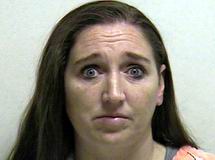 Megan Huntsman
Murderer · USA · 1996
Megan Huntsman was 40 at sentencing. She was a mother of three children who wer…
6 victims
Megan Huntsman
Murderer · USA · 1996
Megan Huntsman was 40 at sentencing. She was a mother of three children who wer…
6 victims
 Angela Johnson
Murderer · USA · 1993
Angela Jane Johnson was convicted in federal court of aiding and abetting the m…
5 victims
Angela Johnson
Murderer · USA · 1993
Angela Jane Johnson was convicted in federal court of aiding and abetting the m…
5 victims
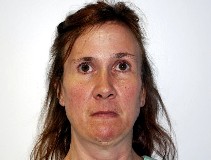 Michele Kalina
Murderer · USA · 1996
Michele Kalina pleaded guilty to murder for one of five infants she initially w…
5 victims
Michele Kalina
Murderer · USA · 1996
Michele Kalina pleaded guilty to murder for one of five infants she initially w…
5 victims
 Tiffany Hall
Murderer · USA · 2006
Tiffany Hall was 24 when she was charged in September 2006. She later entered a…
5 victims
Tiffany Hall
Murderer · USA · 2006
Tiffany Hall was 24 when she was charged in September 2006. She later entered a…
5 victims
 Banita Jacks
Murderer · USA · 2007
Banita Jacks was a Washington, DC resident convicted of murdering her four daug…
4 victims
Banita Jacks
Murderer · USA · 2007
Banita Jacks was a Washington, DC resident convicted of murdering her four daug…
4 victims
 Susan Eubanks
Murderer · USA · 1996
Susan Dianne Eubanks, also referred to as Susan Eubanks, was convicted by a jur…
4 victims
Susan Eubanks
Murderer · USA · 1996
Susan Dianne Eubanks, also referred to as Susan Eubanks, was convicted by a jur…
4 victims
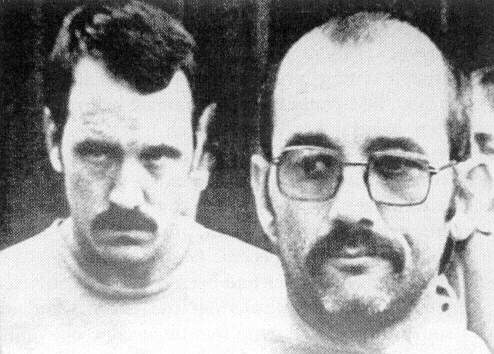 Patrick Kearney
Serial killer · USA · 1975
Patrick Kearney was an electronics engineer from Los Angeles who was involved i…
28 victims
Patrick Kearney
Serial killer · USA · 1975
Patrick Kearney was an electronics engineer from Los Angeles who was involved i…
28 victims
 David Hotyat
Mass murderer · France · 2003
David Hotyat was convicted of murdering the five members of the Flactif family…
5 victims
David Hotyat
Mass murderer · France · 2003
David Hotyat was convicted of murdering the five members of the Flactif family…
5 victims
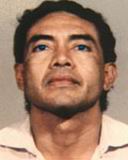 Roberto Solis
Murderer · USA · 1969
Roberto Solis (born 1945) was an armored car robber, convicted murderer, and po…
1 victim
Roberto Solis
Murderer · USA · 1969
Roberto Solis (born 1945) was an armored car robber, convicted murderer, and po…
1 victim
 Gwynne Evans
Murderer · United Kingdom · 1964
Gwynne Evans was convicted for the capital murder of John Alan West, committed…
1 victim
Gwynne Evans
Murderer · United Kingdom · 1964
Gwynne Evans was convicted for the capital murder of John Alan West, committed…
1 victim
 Robert Anthony Murray
Murderer · USA · 1985
Robert Anthony Murray was convicted of two counts of first-degree murder and se…
2 victims
Robert Anthony Murray
Murderer · USA · 1985
Robert Anthony Murray was convicted of two counts of first-degree murder and se…
2 victims
- Gender
- female
- Country
- USA
- Location
- Stillwater, Saratoga County, New York, USA
- Date of birth
- December 27, 1981
- Age at first offence
- 19
- Characteristics
- domestic violence
- Victim profile
- Ruth Witter, her 91-year-old step-great-grandmother
- Method of murder
- Strangulation with an electrical cord
- Date(s) of murder
- February 12, 2000
- Years active
- 2000
- Date of arrest
- —
- Status
-
Released
Released on July 16, 2012; Katherine Seeber was stabbed to death on June 4, 2013 at her Woodside home by deranged jealous boyfriend Pedro Sanchez
People
- Katherine Seeber (defendant)
- Pedro Sanchez (accused in Queens County Criminal Court; boyfriend of Katherine Seeber)
- Ruth Witter (victim)
- Jeffrey Hampshire (co-defendant; ex-boyfriend of Katherine Seeber)
- John Ciulla Jr. (public defender; handled Katherine Seeber's case)
- Ben Ostrer (attorney; worked on Katherine Seeber's appeal pro-bono in conjunction with John Ciulla and Saratoga County Public Defender)
- James A. Murphy III (District Attorney)
- Jerry Scarano (Saratoga County Judge)
- Richard Wendling (Assistant District Attorney; former Assistant District Attorney)
- Jennifer Buckley (Assistant District Attorney; read a statement prepared by members of Witter's family)
- Gary Veeder (state forensic analyst/fiber analyst)
- Peter Cutler (Corrections spokesman)
- Sharyl Seeber (Witter's granddaughter; stepmother of Katherine Seeber)
- W. Donald Carola (defense attorney)
- Jeffrey Bagnoli (defense attorney)
Background
Katherine Seeber was convicted of killing her step-great-grandmother, Ruth Witter, in Saratoga County. She later pleaded guilty in a case relating to Witter’s death, testified against her co-defendant and ex-boyfriend, Jeffrey Hampshire, and later successfully had her plea vacated and obtained a reduced plea before release.
The offence
Ruth Witter killing (2000; Saratoga County)
Ruth Witter was strangled in her home with an electrical cord, and her body was dumped in Saratoga National Historical Park in Stillwater.
Katherine Seeber pleaded guilty to second-degree murder for her role in Witter’s death and later pleaded guilty to first-degree manslaughter and third-degree burglary, related to Witter’s death. In her testimony and statements, Seeber maintained that Jeffrey Hampshire strangled Witter and that she assisted him and later helped dump Witter’s body in a snow bank in Stillwater. During her initial plea, she also admitted transporting Witter’s body into Saratoga County and dumping it in Saratoga National Historical Park in Stillwater. During her later guilty plea, she also stated she helped Hampshire dump Witter’s body in a snow bank in Stillwater.
Witter’s family described the plea agreement as troubling, stating that “the defendant has never apologized for her actions or for the death of Ruth Witter,” and that “They have never heard her say 'I'm sorry.'”
Investigation
Fibers found on duct tape around Witter’s mouth and hands were said to be “identical” to fibers from gloves worn by Seeber and Hampshire. Gary Veeder later admitted to forging lab tests during that analysis and committed suicide amid the investigation into his conduct.
Arrest
Police took an electrical cord into evidence. Katherine Seeber’s comments to a friend—who in turn told Mechanicville Police—led police to Witter’s body six days later. The same day her body was found, state and Colonie police arrested Jeffrey Hampshire and Katherine Seeber.
Police said the pair fenced the stolen jewelry and other items and used the money to party in hotel rooms over the Valentine’s Day weekend.
Trial
Jeffrey Hampshire murder trial (acquittal)
Jeffrey Hampshire was charged with second-degree murder in Witter’s February 2000 death, and he was acquitted after seven days of testimony and approximately 16 hours of jury deliberation.
Katherine Seeber was sentenced to 20 years to life in prison after her plea to second-degree murder and was described as a witness for the prosecution during Hampshire’s murder trial.
Sharyl Seeber said outside the courtroom:
"He was acquitted on the murder. That one's over and done. He'll get what he gets for the burglary," she added. "It won't be 20 years, but it will be something."
Katherine Seeber plea and later vacatur
Katherine Seeber pleaded guilty to second-degree murder and third-degree burglary in an earlier case relating to Witter’s death. Saratoga County Judge Jerry Scarano denied motions to change her guilty plea to not guilty and ignored a request to lighten the front end of her sentence.
After evidence issues involving Gary Veeder were raised, Seeber’s attorneys appealed and her guilty plea was vacated. The decision to vacate the plea was upheld by the state's highest court, setting the stage for Seeber to stand trial for the crime.
In lead-up to the new trial, Seeber pleaded guilty via an Alford plea to the lesser charge of manslaughter. The Alford plea allowed her to plead guilty while maintaining her innocence, and it reflected an admission that prosecutors could likely prove the case. District Attorney James A. Murphy III said the decision involved allowing the Alford plea because Seeber’s version of the crime—where Hampshire strangled Witter with an electrical cord—could not be effectively explored at trial because the earlier jury found Hampshire innocent of the charge in a 2001 trial. Murphy also said he could not talk about accomplice liability or a co-conspirator because of the acquittal in that case.
The Saratoga County District Attorney’s office had sought review of Scarano’s decision, and Murphy said the appellate decision explicitly stated that the prosecutor from Murphy’s office committed no wrongdoing, placing fault at Veeder’s feet.
Sentencing
2001 sentencing
Katherine Seeber was sentenced to 20 years to life in state prison. Saratoga County Judge Jerry Scarano denied her motion to change her guilty plea to not guilty and ignored a request to lighten the front end of the sentence to 18 years.
Assistant District Attorney Richard Wendling said that, at the time of Seeber’s plea, she reserved her right to file a waiver of appeal on the murder charge, and that she had 30 days to do so, with Wendling expecting a notice of appeal likely related to concerns regarding suppression hearings and evidence that Scarano ruled could be used at trial.
Seeber also received a sentence of two to six years for burglary in the third degree, to be served concurrently with the murder sentence.
2012 sentencing
Katherine Seeber sobbed as she apologized to the family of Ruth Witter and was sentenced to 14-1/2 years for the crime; she had already served 11 of the 14-1/2 years and became eligible for release on July 18 based on time served, conduct, and the new sentence.
At her sentencing, Seeber made the following statement:
"I am very sorry for your loss and the pain and suffering I've caused you," Seeber said, struggling to make it through the statement she had prepared for her sentencing. "I'm sorry for all of my actions and inactions."
District Attorney James A. Murphy III said his office asked for a 17-year sentence and was satisfied with the sentence Seeber received.
Katherine Seeber pleaded guilty May 1 to first-degree manslaughter and third-degree burglary, both felonies related to Witter’s death. She pleaded guilty under an Alford plea, pleading guilty without actually admitting culpability in the crime. She admitted helping Hampshire dump Witter’s body in a snow bank in Stillwater.
Post-release supervision planning
Ben Ostrer and John Ciulla described that the prison sentence was capped at 17 years as part of the plea agreement. Ciulla explained that Seeber would serve 6/7 of the prison sentence and then be released and placed on post-release supervision for up to five years; if she did not get in trouble during post-release supervision, she would not have to serve the remaining 1/7.
Seeber said she intended to move to Washington to be with her brother, but permission would be needed from New York and Washington to serve her 2-1/2 years of post-release supervision there.
Appeals
Saratoga County Judge Jerry Scarano vacated Seeber’s guilty plea and granted her a trial after the forensic evidence produced by Gary Veeder was discredited due to forgery. A year later in June 2011, her plea was tossed. The decision to vacate was upheld by the state's highest court.
Murphy said his office appealed Scarano’s decision to vacate the plea on the basis that there was no wrongdoing on the part of the prosecutor, former Assistant District Attorney Richard Wendling. Murphy said Wendling was “an outstanding professional.”
In oral arguments before the appeals court, Broderick said Veeder was acting on behalf of the prosecution when he faked the results of his tests, which “amounted to a 'Brady violation.'” Murphy said he informed the defense of Veeder's corner-cutting when he learned about it in 2008.
Outcome
Katherine Seeber was released on July 16, 2012 after serving about 12 years. Her release ended her incarceration that began after her 2001 plea. Her case history included a later guilty plea to manslaughter and burglary, and a vacatur and new trial proceedings after forged forensic evidence was discovered.
Pedro Sanchez’s case was pending in Queens County Criminal Court, with charges including second-degree murder, third-degree criminal possession of a weapon, and tampering with evidence, plus resisting arrest as a misdemeanor. He also faced charges of robbery in an unrelated case and remained in custody.
Aftermath
John Ciulla Jr. said during sentencing and in subsequent comments that Seeber was a model of someone rehabilitated by prison, participated in educational programs, and became heavily involved in the Catholic Church in Bedford Hills Correctional Facility despite being a member of the Church of Jesus Christ and Latter Day Saints. Ciulla said she participated in domestic violence programs in prison and tearfully admitted during sentencing that she was a victim of domestic violence.
At her sentencing, Seeber said her time in prison had been spent learning about and teaching classes on how to break the cycle of domestic violence, and that she had been heavily involved in the Church of Jesus Christ and Latter Day Saints and participated in domestic violence programs.
Ciulla said Seeber told the court and Witter’s family during sentencing: she said Hampshire “had a hold of my life.” Ciulla also said he watched Seeber mature from the 18-year-old who pleaded guilty to the 31-year-old woman released from prison in 2012.
Ben Ostrer said:
"This is someone who was really doing all she could to improve her lot in life. When you spoke to her she was always upbeat and full of optimism," Ostrer said. "This is an unspeakable tragedy; to think about the life she led from where she was to now."
Seeber got a job as an office manager four months before her death; before that, she was a nanny. Ciulla said she had trouble finding work because her conviction was technically only last year, but that she had “overcame that.”
Seeber accumulated a few citations for misconduct while incarcerated; Corrections spokesman Peter Cutler said they were “minor infractions,” such as disobeying an order and smoking. Murphy said Seeber had also been cited while incarcerated at Saratoga County Jail and that jail records were not public; corrections officials would take citations into account when evaluating her release in July.
Katherine Seeber was stabbed to death on June 4, 2013 at her Woodside home by deranged jealous boyfriend Pedro Sanchez.
Pedro Sanchez pending charges
Pedro Sanchez was on parole at the time of his arrest for first-degree criminal contempt, a felony. His pending charges included second-degree murder, third-degree criminal possession of a weapon, and tampering with evidence—felonies—and resisting arrest—a misdemeanor—along with charges of robbery in an unrelated case.
Other details
- Katherine Seeber was described as 18 at the time she pleaded guilty and 19 at sentencing in 2001.
- In May 2012, she was described as 30.
- John Ciulla said Seeber’s father died during her original trial and her mother died in spring while she waited for an appeal.
- A spokesperson for the Department of Corrections and Community Services said she was eligible for release in seven weeks—on July 18—based on time served, conduct in state prison, and the new sentence.


Spotted an error, or have more information about this case?