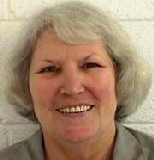
Lois Nadean Smith
Murderer Bobbie Sue Terrell
Murderer · USA · 1984
Bobbie Sue Dudley Terrell was a Pinellas County nurse and worked as the night s…
12 victims
Bobbie Sue Terrell
Murderer · USA · 1984
Bobbie Sue Dudley Terrell was a Pinellas County nurse and worked as the night s…
12 victims
 Marybeth Tinning
Murderer · USA · 1972
Marybeth Tinning (née Roe, born on September 11, 1942) was an American prisoner…
9 victims
Marybeth Tinning
Murderer · USA · 1972
Marybeth Tinning (née Roe, born on September 11, 1942) was an American prisoner…
9 victims
 Debbie Fornuto
Murderer · USA · 1972
Deborah Fornuto was the mother of six children whose deaths were initially rule…
7 victims
Debbie Fornuto
Murderer · USA · 1972
Deborah Fornuto was the mother of six children whose deaths were initially rule…
7 victims
 Catherine May Wood
Murderer · USA · 1987
Catherine May Wood was an American caregiver who worked at the Alpine Manor Nur…
5 victims
Catherine May Wood
Murderer · USA · 1987
Catherine May Wood was an American caregiver who worked at the Alpine Manor Nur…
5 victims
 Amy Bishop
Murderer · USA · 1986
Amy Bishop — biology professor and perpetrator · James Anderson — Bishop’s husb…
4 victims
Amy Bishop
Murderer · USA · 1986
Amy Bishop — biology professor and perpetrator · James Anderson — Bishop’s husb…
4 victims
 Patrick Lane Moody
Murderer · USA · 1994
Patrick Lane Moody was an inmate with an execution date set by the North Caroli…
1 victim
Patrick Lane Moody
Murderer · USA · 1994
Patrick Lane Moody was an inmate with an execution date set by the North Caroli…
1 victim
 Liz Carroll
Murderer · USA · 2006
Liz Carroll was sentenced to 54 years to life in prison on February 22, 2007. M…
1 victim
Liz Carroll
Murderer · USA · 2006
Liz Carroll was sentenced to 54 years to life in prison on February 22, 2007. M…
1 victim
 Donald Jones
Murderer · USA · 1993
Defendant: Donald Jones · Victim: Dorothy Knuckles · 1993 03/06 — Donald Jones…
1 victim
Donald Jones
Murderer · USA · 1993
Defendant: Donald Jones · Victim: Dorothy Knuckles · 1993 03/06 — Donald Jones…
1 victim
 Sef Gonzales
Murderer · Australia · 2001
Sef Gonzales (born September 16, 1980) was an Australian man who was convicted…
3 victims
Sef Gonzales
Murderer · Australia · 2001
Sef Gonzales (born September 16, 1980) was an Australian man who was convicted…
3 victims
- Gender
- female
- Country
- USA
- Location
- Sequoyah County, Oklahoma, USA
- Date of birth
- September 12, 1940
- Age at first offence
- 42
- Characteristics
- revenge, alcohol, drugs
- Victim profile
- Cindy Baillee, 21 ( her son's ex-girlfriend )
- Method of murder
- Shooting (handgun)
- Date(s) of murder
- July 4, 1982
- Years active
- 1982
- Date of arrest
- —
- Status
-
Executed
Executed by lethal injection in Oklahoma on December 4, 2001
Case summary
Lois Nadean Smith was convicted of the July 4, 1982 murder of 21-year-old Cindy Baillee in Gans. Baillee was the former girlfriend of Smith's son, Greg. Smith, along with her son and another woman, picked up Baillee from a Tahlequah motel early on the morning of the murder. As they drove away from the motel, Smith confronted Baillee about rumors that Baillee had arranged for Greg's murder; Baillee denied the charges. Smith choked Baillee and stabbed her in the throat with a knife while they drove to the home of Smith's ex-husband, Jim Smith, in Gans, Oklahoma.
At the Jim Smith house, Smith forced Baillee to sit in a recliner, threatened to kill her, and taunted her with a pistol. Smith fired a shot into the recliner near Baillee's head. Baillee fell to the floor. As Greg Smith reloaded the pistol, Smith laughed while jumping on Baillee's neck. Smith took the pistol from Greg and fired four more bullets into Baillee's body.
An autopsy revealed nine gunshot wounds to Baillee's body. Five of the gunshot wounds were potentially fatal, and the knife wound was also potentially fatal. Another account described Baillee as having been shot five times in the chest, twice in the head, and once in the back. Five of these gunshot wounds were fatal, and the knife wound was also potentially fatal.
Smith testified at trial. She was described as having testified that she stabbed Cindy and fired shots at her but did not mean to kill her. The jury found Smith guilty of murder in the first degree. In the second-stage proceedings, the jury found two aggravating factors: (1) the murder was especially heinous, atrocious or cruel; and (2) Smith knowingly created a great risk of death to more than one person, and fixed Smith's sentence at death. Smith was formally sentenced by the state district court on December 29, 1982. The Oklahoma Court of Criminal Appeals affirmed Smith's conviction and sentence on direct appeal.
During federal habeas proceedings, Smith challenged her death sentence on several grounds, including ineffective assistance of counsel based on an alleged conflict of interest in defense counsel's representation of Smith and her son, the admission of expert testimony regarding blood spatter evidence, alleged due process violations tied to the use of allegedly false forensic evidence, and alleged Brady violations involving exculpatory or impeachment evidence. The U.S. Court of Appeals for the Tenth Circuit affirmed the district court's denial of Smith's habeas petition, and the judgment of the district court was affirmed.
Timeline
- July 4, 1982 — Lois Nadean Smith, her son Greg Smith, and another woman picked up Cindy Baillee from a Tahlequah motel; Smith confronted Baillee about rumors Baillee had arranged Greg Smith's murder; Smith choked Baillee and stabbed her in the throat as they drove to Jim Smith's home in Gans; Smith forced Baillee to sit in a recliner, threatened her, taunted her with a pistol, and fired multiple shots; Smith jumped on Baillee's neck during the shooting and then fired additional bullets.
- December 6, 1982 — Smith's case proceeded to trial on murder in the first degree.
- December 29, 1982 — Smith was formally sentenced by the state district court.
- April 14, 1997 — Smith filed her petition for writ of habeas corpus in federal district court.
- December 19, 2000 — The U.S. Court of Appeals for the Tenth Circuit decided Lois Nadean Smith v. Neville Massey, Warden, Oklahoma State Penitentiary.
- December 4, 2001 — Lois Nadean Smith was executed by lethal injection in Oklahoma.
The offence
Victim
Cindy Baillee was 21 years old when she was murdered. She was described as the former girlfriend of Smith's son, Greg.
Events leading to the killing
Smith, her son, and another woman picked up Baillee from a Tahlequah motel early on the morning of the murder. As they drove away from the motel, Smith confronted Baillee about rumors that Baillee had arranged for Greg's murder. Baillee denied those charges.
Assault and shooting
While traveling, Smith choked Baillee and stabbed her in the throat with a knife found in the victim's purse. The car traveled to the home of Jim Smith, Smith's ex-husband and Greg's father in Gans, Oklahoma. Present at the house were Smith and Jim Smith's wife, Robyn; Robyn left shortly after the group arrived.
While at the Smith house, Smith forced Ms. Baillee to sit in a recliner chair. Smith threatened to kill Ms. Baillee and taunted her with a pistol. Smith fired a shot into the recliner near Ms. Baillee's head. Smith then fired a series of shots at Ms. Baillee, and the wounded victim fell to the floor. As Greg Smith reloaded the pistol, Smith laughed while jumping on the victim's neck. Smith took the pistol from Greg and fired four more bullets into the body.
Injuries and autopsy findings
A subsequent autopsy showed Ms. Baillee had been shot five times in the chest, twice in the head, and once in the back. Another description stated that an autopsy revealed nine gunshot wounds to Baillee's body, with five gunshot wounds potentially fatal and the knife wound potentially fatal.
Investigation
No specific investigation procedures were described in the provided material.
Arrest
No specific arrest date was described in the provided material.
Trial
Charges and venue
Smith and her son, Greg, were charged in the District Court of Sequoyah County, Oklahoma with murder in the first degree. Pursuant to defense counsel's motion, the cases against Smith and her son were severed for purposes of trial.
Trial date and findings
Smith's case proceeded to trial on December 6, 1982. At the conclusion of the first-stage proceedings, the jury found Smith guilty of murder in the first degree. At the conclusion of the second-stage proceedings, the jury found two aggravating factors:
- The murder was especially heinous, atrocious or cruel.
- Smith knowingly created a great risk of death to more than one person.
The jury fixed Smith's sentence at death. Smith was formally sentenced on December 29, 1982.
Evidence described at trial
The underlying facts were recounted as follows. Smith and her son and another woman picked up Cindy Baillee in Tahlequah early on July 4, 1982. Smith confronted her about rumors involving Greg's murder. When Baillee denied making any threats or arrangements, Smith choked the victim and stabbed her in the throat with a knife found in the victim's purse.
The group traveled to Jim Smith's home in Gans, Oklahoma. Smith forced Baillee to sit in a recliner chair, threatened to kill her, and taunted her with a pistol, firing at the recliner near Baillee's head. Smith fired more shots. She then fired four more bullets into Baillee's body. The autopsy findings were consistent with multiple gunshot wounds and a knife wound.
Witnesses and mitigation
Smith presented eight mitigation witnesses during the second-stage proceedings. Jim Smith testified about his marriage to Smith and described abuse. Three of Smith's children and one of her daughters-in-law testified that Smith was a good mother and grandmother. Sequoyah County Sheriff Sam Lockhart testified that Smith had been a model prisoner since the time of her arrest on the murder charges. DeMoss testified that she lived with Smith for a brief period of time and that during that time she was not allowed to eat meals with Smith and her family.
The trial court overruled Smith's demurrer as to the “heinous, atrocious or cruel” aggravator and the “creation of risk or danger to others” aggravator, but sustained the demurrer as to the continuing threat aggravator.
The trial court instructed the jury that the mitigating circumstances alleged by Smith included:
- Defendant is a good, loving mother to her children and it has been left up to her completely to raise and provide for them.
- The extent of her education consists of public schools and business college.
- Defendant has held steady employment during most of her adult life.
- During her adolescent years was active in Sunday School and church and during the early part of her adult years was active in Sunday School and church and played the piano to accompany the choir.
- During the years of marriage to James Hork Smith while she was raising and providing for the children she was beaten at the hands of her alcoholic husband and in fact suffered a broken leg as a result thereof.
- She was responsible for the children's involvement in church.
- Since her incarceration she has been a model prisoner.
The jury found both aggravating factors, “that the murder was heinous, atrocious or cruel” and “that Smith created a great risk of death to more than one person,” and fixed punishment at death.
Sentencing
Her punishment was death.
Appeals
Direct appeal and state post-conviction
Smith also filed an application for state post-conviction relief, which was denied after an evidentiary hearing. The denial of post-conviction relief was affirmed by the Oklahoma Court of Criminal Appeals.
In the post-conviction proceedings, Smith challenged the constitutionality of the trial court's jury instruction regarding the “especially heinous, atrocious or cruel” aggravating circumstance. After the Supreme Court struck down Oklahoma’s “especially heinous, atrocious or cruel” aggravating circumstance as vague and overly broad, the Oklahoma Court of Criminal Appeals narrowed the aggravator to murders preceded by torture or serious physical abuse.
The state district court reexamined the evidence under the narrowing instruction and concluded it was sufficient to support the aggravator. The Oklahoma Court of Criminal Appeals agreed and affirmed the heinous, atrocious or cruel aggravating circumstance.
Federal habeas corpus proceedings
Smith filed her petition for writ of habeas corpus in federal district court on April 14, 1997. She asserted six grounds for relief and later amended her petition to assert ten grounds for relief. The magistrate court conducted an evidentiary hearing on whether Smith was advised by trial counsel of a potential conflict of interest and, if so, whether Smith knowingly and voluntarily waived any such conflict.
The magistrate court found Smith was adequately advised of the potential for a conflict of interest and knowingly and voluntarily waived any such conflict. The district court adopted the magistrate’s findings and recommendations and denied Smith’s petition in its entirety. The district court granted a certificate of appealability with respect to four issues, and the certificate was expanded to include two additional issues.
On December 19, 2000, the U.S. Court of Appeals for the Tenth Circuit affirmed the denial of Smith’s habeas petition.
Ineffective assistance of counsel—conflict of interest
Smith contended that she was denied effective assistance because her attorney, Monte Strout, simultaneously represented Smith and her son Greg against the murder charges. Smith argued that there was ample evidence that Greg wanted Baillee killed and manipulated Smith’s maternal protective instincts to accomplish that end, and that Strout failed to develop this theme, attempted to exclude evidence pointing to Greg’s culpability, and underemployed evidence that came in naturally as witnesses related events. Smith argued that the State asserted she embodied maniacal evil, which resulted in the jury sentencing her to death.
The Tenth Circuit discussed that a defendant who raised no objection at trial must demonstrate that an actual conflict of interest adversely affected counsel’s performance. The Oklahoma Court of Criminal Appeals held that there was no evidence that a conflict of interest arose during the course of Smith’s trial, and that Smith speculated on the possibilities rather than showing an actual conflict of interest.
The Tenth Circuit further discussed evidence developed in the habeas record about counsel’s advice and the consistency of the stories. It concluded there was no actual conflict of interest arising out of Strout’s representation of both Smith and her son.
Admission of expert testimony and due process/falsity
Smith contended that her due process rights were violated by the prosecution's introduction of testimony from Kenneth Ede, a chemist with the Oklahoma State Bureau of Investigation (OSBI). Ede testified about blood and biological tissue analysis, hair analysis, and interpretation of blood spatter evidence. He examined a blouse worn by Smith at the time of Baillee’s murder and found approximately twenty small blood spatters on the blouse of the same type as Baillee’s. Ede also testified he “geometrically interpreted” the blood spatters on the front of the blouse and concluded that the person wearing the blouse was standing parallel to Baillee at the time she was shot and was responsible for the shooting.
Smith argued that subsequent evidence showed Ede was not qualified to interpret blood spatter evidence and that his interpretation was “well outside the bounds of science.” The Tenth Circuit described that, in Oklahoma post-conviction proceedings, erroneous admission of Ede’s testimony was subject to harmless error analysis and relief was denied because the jury would still find guilt beyond a reasonable doubt without using the evidence.
The Tenth Circuit also discussed Smith’s Napue-based theory regarding allegedly false expert testimony. It addressed whether Ede’s testimony was false and whether the prosecution knew it was false, concluding that it was unable to conclude the Oklahoma decision was contrary to or an unreasonable application of clearly established federal law as determined by the Supreme Court.
Brady claims—DeMoss tape and DeMoss immunity
Smith argued that the prosecution violated due process under Brady by failing to disclose exculpatory evidence to impeach eyewitness DeMoss and expert witness Ede. Smith argued that the prosecution failed to disclose that DeMoss was promised immunity in return for her testimony and failed to disclose the existence of a tape-recorded statement DeMoss gave to police and assistant district attorney Donn Baker prior to trial.
The Tenth Circuit stated that the immunity-deal disclosure claim was procedurally barred because it was not raised in Smith’s direct appeal or in her application for post-conviction relief. It also addressed the Brady claim regarding the DeMoss tape-recorded statement, explaining that the Oklahoma Court of Criminal Appeals treated it as an ineffective assistance of appellate counsel claim and concluded the details were not exculpatory and that DeMoss’s credibility was not material due to corroboration. The Tenth Circuit discussed that the deference standards applied and concluded there was no merit to the issue as analyzed.
The Tenth Circuit also discussed Smith’s related arguments about alleged incompleteness of the tape transcript and rejected assumptions she made in support of those claims.
Brady claims—Ede’s report
Smith contended that the prosecution violated Brady by failing to provide Ede’s report prior to trial and by failing to inform her of Ede’s lack of qualifications. The Tenth Circuit discussed depositions and concluded that Strout’s inability to remember whether he received the report did not establish suppression. It also reasoned that even if the report were suppressed, it was not persuaded there was a reasonable probability that the results of either stage would have been different.
Ineffective assistance of counsel—failure to investigate and prepare
Smith argued that trial counsel was ineffective for failing to adequately investigate and prepare for both first and second stages, including countering Ede’s testimony and presenting meaningful second-stage mitigation evidence such as evidence of below-average intelligence, organic brain injury, impairment by intoxicants, and lack of sleep.
The Tenth Circuit discussed the Strickland standard. It reviewed how Oklahoma rejected claims. It addressed Smith’s argument that counsel failed to emphasize second-stage evidence of alcohol impairment and lack of sleep, and concluded counsel’s decision was proper under circumstances and that Smith was not prejudiced.
Further reweighing of “especially heinous, atrocious or cruel” aggravator
After Smith’s conviction became final, the Supreme Court struck down Oklahoma’s “especially heinous, atrocious or cruel” aggravating circumstance as vague and overly broad. Oklahoma narrowed it to murders preceded by torture or serious physical abuse. The state district court reexamined the evidence and determined it supported the aggravator under the narrowing instruction. On federal habeas review, the Tenth Circuit stated that it rejected Smith’s arguments regarding reweighing and sufficiency standards, affirming the denial of relief.
U.S. Supreme Court and execution scheduling
A U.S. Supreme Court denial of further appeals was described, and Attorney General Drew Edmondson requested execution dates. The material described Smith as the lone female remaining on Oklahoma's death row at the time her final appeals were denied, alongside Sahib Al-Masawi.
Outcome
Lois Nadean Smith was executed by lethal injection in Oklahoma on December 4, 2001.
Aftermath and statements
Brandy Fields, the victim’s daughter, witnessed the execution. She made a statement: “You do something of this magnitude, torturing somebody, you're going to have to pay the price for it,” and “She chose her path in life.”
Before the drugs were administered, Smith thanked her attorneys and asked for forgiveness. Smith said:
“To the families, I want to say I'm sorry for the pain and loss I've caused you,” Smith said. “I ask that you forgive me. You must forgive to be forgiven.”
Smith was described as having been pronounced dead at 9:13 p.m., shortly after a lethal mix of chemicals was administered.
Other details
Other execution and protests described in the provided material
The provided material described the existence of other scheduled executions in Oklahoma and described protests occurring outside or connected to the execution site, including arrests of women protesting Smith’s execution.
Representation and counsel roles described
The provided material described that Smith argued she had a conflict of interest with trial counsel Monte Strout, who also represented her son Greg Smith. In the Tenth Circuit decision, Gregory R. Piche represented the appellant and Jennifer B. Miller appeared for the appellee.
Names as used in the habeas recitation
The Tenth Circuit’s recitation identified additional individuals, including Kenneth Ede as the OSBI chemist, Teresa Baker DeMoss as an eyewitness, and Donn Baker as an assistant district attorney associated with tape-recorded statements discussed in the Brady claims. The recitation also identified Jim Smith as Smith’s ex-husband and Greg’s father, and Robyn as Jim Smith’s wife who left shortly after the group arrived.

Spotted an error, or have more information about this case?