John Norris Hanks
Murderer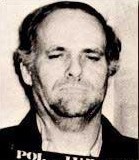 Ervil LeBaron
Murderer · USA · 1972
Ervil Morrell LeBaron (1925 to August 16, 1981) was the leader of a polygamous…
35 victims
Ervil LeBaron
Murderer · USA · 1972
Ervil Morrell LeBaron (1925 to August 16, 1981) was the leader of a polygamous…
35 victims
 Marvin Gray
Murderer · USA · 1975
Marvin Gray was convicted killer who claimed responsibility for 23 slayings and…
23 victims
Marvin Gray
Murderer · USA · 1975
Marvin Gray was convicted killer who claimed responsibility for 23 slayings and…
23 victims
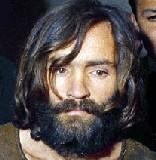 Charles Manson
Murderer · USA · 1969
Charles Milles Manson (born November 12, 1934) was an American criminal and mus…
9 victims
Charles Manson
Murderer · USA · 1969
Charles Milles Manson (born November 12, 1934) was an American criminal and mus…
9 victims
 Robert Reldan
Murderer · USA · 1974
Name: Robert Reldan Robert Reldan was sentenced to life in prison on two counts…
8 victims
Robert Reldan
Murderer · USA · 1974
Name: Robert Reldan Robert Reldan was sentenced to life in prison on two counts…
8 victims
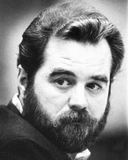 Dennis Duane Webb
Murderer · USA · 1973
Defendant: Dennis Duane Webb · Victims: John Rainwater and Lori Rainwater · Cou…
7 victims
Dennis Duane Webb
Murderer · USA · 1973
Defendant: Dennis Duane Webb · Victims: John Rainwater and Lori Rainwater · Cou…
7 victims
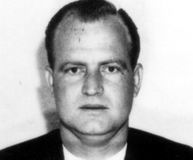 Gary Gene Tison
Murderer · USA · 1967
Gary Gene Tison was serving life sentences at the Arizona state prison. He had…
7 victims
Gary Gene Tison
Murderer · USA · 1967
Gary Gene Tison was serving life sentences at the Arizona state prison. He had…
7 victims
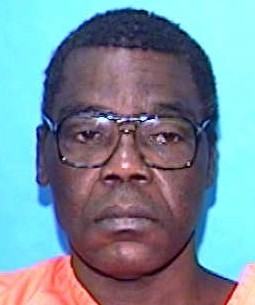 Dean Kilgore
Murderer · USA · 1978
Dean Kilgore (DOB: 10/16/50) was the appellant in Dean Kilgore, Appellant, vs.…
2 victims
Dean Kilgore
Murderer · USA · 1978
Dean Kilgore (DOB: 10/16/50) was the appellant in Dean Kilgore, Appellant, vs.…
2 victims
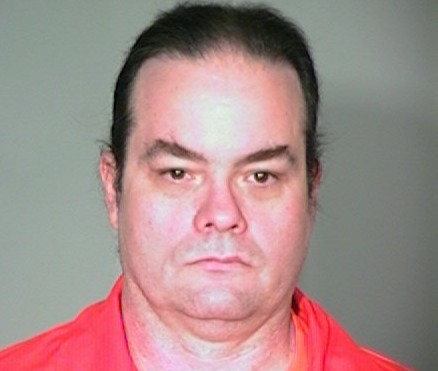 Jasper McMurtrey
Murderer · USA · 1979
Jasper Newton McMurtrey (also identified as Jasper McMurtrey). McMurtrey was a…
2 victims
Jasper McMurtrey
Murderer · USA · 1979
Jasper Newton McMurtrey (also identified as Jasper McMurtrey). McMurtrey was a…
2 victims
 Joseph Ernest Atkins
Murderer · USA · 1969
Joseph Ernest Atkins was convicted of the 1985 murders of his father Benjamin A…
3 victims
Joseph Ernest Atkins
Murderer · USA · 1969
Joseph Ernest Atkins was convicted of the 1985 murders of his father Benjamin A…
3 victims
 Amanda Bennett
Murderer · USA · 2011
Amanda Bennett was an Indiana woman who shot her three children and set the fam…
3 victims
Amanda Bennett
Murderer · USA · 2011
Amanda Bennett was an Indiana woman who shot her three children and set the fam…
3 victims
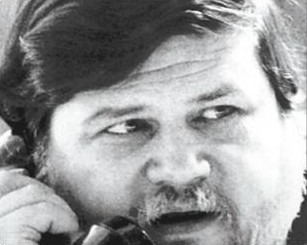 David Mark Pruett
Murderer · USA · 1975
David Mark Pruett · February 12, 1985 — Pruett went to the home of friends Rich…
2 victims
David Mark Pruett
Murderer · USA · 1975
David Mark Pruett · February 12, 1985 — Pruett went to the home of friends Rich…
2 victims
- Gender
- male
- Country
- USA
- Location
- California, USA
- Date of birth
- 1947
- Age at first offence
- 19
- Characteristics
- rape, torture
- Victim profile
- His sister in law / Arnetta Oakes, 30
- Method of murder
- St abbing with knife / Strangulation
- Date(s) of murder
- 1966 / 1980
- Years active
- 1966–1980
- Date of arrest
- September 1982
- Status
-
Vacated and remanded; the petition for federal habeas relief was ordered to be dismissed without prejudice
Case overview
John Norris Hanks was a California state prisoner who appealed pro se to the United States Court of Appeals for the Ninth Circuit following the district court’s denial of his 28 U.S.C. § 2254 habeas corpus petition. His habeas petition challenged his conviction for first degree murder with special circumstance.
Hanks was convicted of first-degree murder with special circumstance and was sentenced to prison for life without possibility of parole in 1986.
Timeline
- 1966 — Hanks fatally stabbed his sister-in-law and was convicted of second-degree murder, serving five and a half years before being freed on parole.
- 3 March 1977 — Hanks was arrested for questioning in the murder of Patricia Crawford; charges were dismissed for lack of evidence when his ex-wife refused to testify in court.
- 21 June 1980 — The strangled body of 30-year-old Arnetta Oakes, a Palo Alto woman, was found in a creek bed near San Jose.
- September 1982 — Seattle police picked up Hanks and charged him with twice assaulting his wife by choking her unconscious each time.
- 1986 — Hanks was sentenced to prison for life without possibility of parole.
- September 1982 to fourteen months later — Fourteen months elapsed before Hanks was indicted on another murder charge.
- Submitted 21 March 1995 — Hanks’s appeal was submitted to the Ninth Circuit.
- Decided 27 March 1995 — The Ninth Circuit vacated and remanded the district court’s decision with instructions to dismiss the petition without prejudice.
Background
Hanks was a native of San Francisco.
Investigators believed Hanks was responsible for eight known slayings in San Francisco.
The offence
Hanks was convicted of first-degree murder with special circumstance.
Hanks had fatally stabbed his sister-in-law in 1966 and was convicted of second-degree murder.
In connection with Arnetta Oakes, the strangled body of 30-year-old Arnetta Oakes, a Palo Alto woman, was found in a creek bed near San Jose.
Hanks was charged with twice assaulting his wife, choking her unconscious each time. The wife testified that the attacks were only the most serious of seven recent attacks.
Investigation
On 3 March 1977, Hanks was arrested for questioning in the murder of Patricia Crawford. Charges were dismissed for lack of evidence when his ex-wife refused to testify in court.
On 21 June 1980, the strangled body of 30-year-old Arnetta Oakes was found in a creek bed near San Jose. Police suspected Hanks again, and it would take three years for police to make their case.
In September 1982, Seattle police picked up Hanks and charged him with twice assaulting his wife by choking her unconscious each time. After the wife’s testimony, detectives widened their probe and uncovered new evidence naming Hanks as a close acquaintance of Arnetta Oakes in California.
Fourteen months elapsed before Hanks was indicted on another murder charge. Hanks was philosophical about the case and declared he would provide detectives with the details of "numerous other murders."
San Francisco homicide investigators believed Hanks was responsible for eight known slayings in their city.
Arrest
In September 1982, Seattle police picked up Hanks.
Trial
Hanks was convicted of first-degree murder with special circumstance and sentenced to prison for life without possibility of parole in 1986.
Hanks appealed to the state court of appeals, which affirmed the judgment, and to the California Supreme Court, which denied review.
Sentencing
Hanks was sentenced to prison for life without possibility of parole in 1986.
Appeals
Federal habeas corpus petition
Hanks filed a federal habeas corpus petition under 28 U.S.C. § 2254 challenging his conviction for first degree murder with special circumstance.
The district court:
- dismissed two of Hanks’s claims without prejudice for failure to exhaust;
- found Hanks’s other claims to be without merit.
The Ninth Circuit stated that it vacated and remanded.
The Ninth Circuit explained the exhaustion requirement, stating:
- Generally, a state prisoner must exhaust available remedies in state court before seeking federal habeas review.
- A claim is considered exhausted when it has fairly been presented to the state’s highest court.
- A district court must dismiss without prejudice a “mixed” habeas petition containing both exhausted and unexhausted claims.
The Ninth Circuit described Hanks’s federal habeas grounds as:
- prosecutorial misconduct;
- insufficient evidence;
- improper jury instructions;
- admission of improper evidence, including evidence of past spousal abuse, past homicides, damage to defendant's automobile, and testimony about defendant's state of mind.
The Ninth Circuit held that:
- because Hanks did not include two of the claims in his state appeal, he had failed to exhaust available state court remedies;
- therefore, the district court should have dismissed Hanks’s petition because it contained both exhausted and unexhausted claims.
Disposition
The Ninth Circuit outcome was: VACATED AND REMANDED.
The panel unanimously found the case suitable for decision without oral argument, referencing Fed.R.App.P. 34(a) and 9th Cir. R. 34-4.
The Ninth Circuit noted: “This disposition is not appropriate for publication and may not be cited to or by the courts of this circuit except as provided by 9th Cir.R. 36-3”.
Outcome
The district court order denying Hanks’s habeas petition was vacated and remanded with instructions to enter an order dismissing the petition for federal habeas relief without prejudice.
Aftermath
The appeal resulted in dismissal without prejudice of the federal habeas petition, following the Ninth Circuit’s instructions on remand.
Other details
Hanks was held as a California state prisoner in the federal appeal.
The case caption included: John Norris Hanks, Petitioner-Appellant, v. R.G. Borg, Warden, Folsom State Prison, Respondent-Appellee.
The Ninth Circuit case number was No. 94-15625.
The Ninth Circuit panel included Circuit Judges Sneed, Poole, and Brunetti.
Hanks acted pro se in the federal appeal.
The Ninth Circuit stated the district court dismissal and merits review occurred despite the failure to exhaust.
Hanks declared he would provide detectives with the details of "numerous other murders."


Spotted an error, or have more information about this case?