Patricia Ann Jackson
Murderer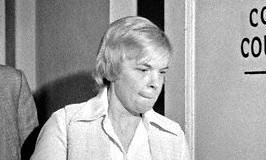 Marybeth Tinning
Murderer · USA · 1972
Marybeth Tinning (née Roe, born on September 11, 1942) was an American prisoner…
9 victims
Marybeth Tinning
Murderer · USA · 1972
Marybeth Tinning (née Roe, born on September 11, 1942) was an American prisoner…
9 victims
 Debbie Fornuto
Murderer · USA · 1972
Deborah Fornuto was the mother of six children whose deaths were initially rule…
7 victims
Debbie Fornuto
Murderer · USA · 1972
Deborah Fornuto was the mother of six children whose deaths were initially rule…
7 victims
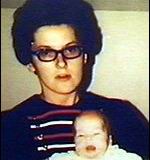 Waneta Ethel Hoyt
Murderer · USA · 1965
Waneta Ethel (Nixon) Hoyt was born in Richford, New York, and died in prison on…
5 victims
Waneta Ethel Hoyt
Murderer · USA · 1965
Waneta Ethel (Nixon) Hoyt was born in Richford, New York, and died in prison on…
5 victims
 Debra Sue Tuggle
Murderer · USA · 1974
Debra Sue Tuggle was an African American woman born in Arkansas. She had a hist…
4 victims
Debra Sue Tuggle
Murderer · USA · 1974
Debra Sue Tuggle was an African American woman born in Arkansas. She had a hist…
4 victims
 Josephine Gray
Murderer · USA · 1974
Josephine Virginia Gray, also known as Josephine Stribbling and Josephine Mills…
3 victims
Josephine Gray
Murderer · USA · 1974
Josephine Virginia Gray, also known as Josephine Stribbling and Josephine Mills…
3 victims
 Patricia Columbo
Murderer · USA · 1976
Patricia Columbo and Frank DeLuca were convicted after a jury trial of three co…
3 victims
Patricia Columbo
Murderer · USA · 1976
Patricia Columbo and Frank DeLuca were convicted after a jury trial of three co…
3 victims
 Anthony LaMarca
Murderer · USA · 1995
Anthony LaMarca was convicted of first-degree murder. He was sentenced to death…
1 victim
Anthony LaMarca
Murderer · USA · 1995
Anthony LaMarca was convicted of first-degree murder. He was sentenced to death…
1 victim
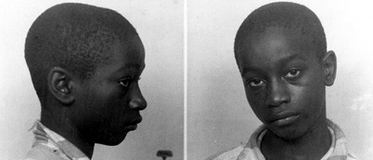 George Stinney
Homicide · USA · 1944
George Junius Stinney Jr. was executed by electrocution on June 16, 1944. He wa…
2 victims
George Stinney
Homicide · USA · 1944
George Junius Stinney Jr. was executed by electrocution on June 16, 1944. He wa…
2 victims
 Ronnie Keith Williams
Murderer · USA · 1984
Name: Ronnie Keith Williams · Sex: Male · Race: Black · Hair color: Black · Eye…
2 victims
Ronnie Keith Williams
Murderer · USA · 1984
Name: Ronnie Keith Williams · Sex: Male · Race: Black · Hair color: Black · Eye…
2 victims
 William Minnick
Murderer · USA · 1981
William Minnick was convicted of Murder, Rape, and Robbery following the death…
1 victim
William Minnick
Murderer · USA · 1981
William Minnick was convicted of Murder, Rape, and Robbery following the death…
1 victim
 Nicholas Wiley
Serial killer · USA · 2004
Nicholas Wiley was a high-risk Level 3 sex offender and worked as a handyman in…
3 victims
Nicholas Wiley
Serial killer · USA · 2004
Nicholas Wiley was a high-risk Level 3 sex offender and worked as a handyman in…
3 victims
- Gender
- female
- Country
- USA
- Location
- Tuscaloosa, Alabama, USA
- Date of birth
- 1949
- Age at first offence
- 17
- Characteristics
- alcohol, domestic violence, arguments, torture
- Victim profile
- Her boyfriend / Bonnie Mae Walker
- Method of murder
- Stabbing with knife
- Date(s) of murder
- 1966 / February 28, 1981
- Years active
- 1966–1981
- Date of arrest
- —
- Status
-
Sentenced to death
Death sentence affirmed; conviction affirmed; rehearing denied; certiorari denied; habeas relief granted by U.S. district court on conviction and, alternatively, sentence; Eleventh Circuit reversed habeas relief as to conviction and Swain claim, and affirmed habeas relief as to sentencing ineffective assistance
Case record: Patricia Ann Jackson
Background
Patricia Ann Thomas Jackson was indicted and tried for the capital murder of Bonnie Walker. She was also identified as Patricia Jackson and Patricia Anne Thomas Jackson.
In an earlier matter, Patricia Jackson killed two victims in 1966 and 1981. She slashed her boyfriend with a razor, and then stabbed a female bartender. She received 12 years for second degree murder in 1966 and was paroled in 1970. She was sentenced to death in 1981, and her sentence was commuted to life on appeal.
The offence
Patricia Ann Thomas Jackson was indicted pursuant to § 13A-5-31(a)(13), Code of Alabama 1975, for “murder committed by a defendant who has been convicted of murder in the first or second degree in the 20 years preceding the crime.” She was tried for the capital murder of Bonnie Walker.
The conviction was based on proof that, on February 28, 1981, shortly after 1:00 p.m., the appellant stabbed Bonnie Walker once through the heart and Ms. Walker died as a result of this wound.
The facts and circumstances surrounding the stabbing incident were in dispute.
Investigation
Charlotte Archibald testified that she was visiting the victim, Bonnie Walker, on the day of the stabbing and witnessed an argument between the appellant and the victim. Archibald heard the appellant talking loudly and cursing in front of Sallie B. Hollifield’s house, next door to the duplex in which the victim lived. Archibald went to the victim’s screen door to look outside and see what was “going on” next door. The appellant walked over in front of the victim’s residence and began hollering inside to the victim.
Archibald testified that the appellant and the victim engaged in a heated argument through the victim’s screen door. Archibald prevented any physical contact by holding the screen door, thereby preventing entry by the appellant and preventing the victim from going outside at appellant’s request. Archibald testified that the appellant then, apparently, left the premises.
After the appellant disappeared, Archibald left the victim’s duplex, entered her van, and prepared to leave. She was unable to leave because other automobiles had her “blocked in.” As she sat in her van, Archibald witnessed a second confrontation between the victim and the appellant. They were on the victim’s porch arguing with each other and calling each other names.
Archibald testified that the appellant dared the victim to insult appellant’s mother, and that after the victim refused, the appellant hit the victim in the chest with a closed fist. Archibald testified she did not realize at that time that the appellant had stabbed the victim. Archibald saw the appellant run away and saw the victim disappear inside her residence.
Archibald testified that the victim quickly reappeared with a knife in her hand. Archibald then saw blood all over the victim’s blouse and ran to assist her. The victim exclaimed, “That bitch has cut me.”
On cross-examination, Archibald admitted that she could not say for certain when the victim was stabbed, but testified she did see the appellant “whop” the victim in the chest with a closed fist. Archibald further stated that the victim did not have a knife until after the appellant had disappeared, that the victim did not have a knife when the appellant stabbed her.
Pelma Smith testified that he lived in the adjoining residence in the same duplex as the victim. He arrived home during the middle of the argument between the appellant and the victim. Smith testified that the appellant was the aggressor in the argument while the victim was trying to stop it.
Smith testified that he witnessed the appellant reach in her purse as she approached the victim. He saw her “cup” a knife in her hand with the blade concealed on the underside of her arm. When the victim, at appellant’s insistence, would not insult appellant’s mother, the appellant stepped forward and stabbed her in the chest. Smith testified that the victim was unarmed when the appellant stabbed her.
Immediately after the stabbing, Smith testified that the appellant ran off the porch and stated “I told you I’ll kill you.” The victim went inside. Smith heard the victim in the kitchen and saw her return to her porch with a butcher knife. Smith heard her say that the appellant had stabbed her.
On cross-examination, Smith stated he did not warn the victim about appellant’s knife because he was afraid the appellant might have attacked him, too.
Jimmy Little testified that he saw the appellant at Sallie B. Hollifield’s house before her argument with the victim. Little testified that the appellant was upset and mad before she left Hollifield’s house. Little saw the appellant walk over to the victim’s home and start “bamming” on the door. He heard the appellant “cussing” the victim for being too slow in coming to the door. Little witnessed part of the argument, and at one point pulled the appellant off the victim’s porch in an attempt to stop it. When his efforts to stop the argument failed, he went back over to, and went inside, Hollifield’s house.
Little testified he did not witness the stabbing, but he did hear the victim exclaim that the appellant had stabbed her.
Arrest
Jackson voluntarily surrendered to the police the next day after the stabbing.
Trial
The trial was conducted in compliance with the standards and procedures outlined in Beck v. State, 396 So. 2d 645 (Ala. 1980).
The indictment charged capital murder under § 13A-5-31(a)(13), and the trial proceeded with a bifurcated structure under Alabama law: separate guilt-innocence and sentencing phases.
At the guilt phase, the jury returned a verdict of “guilty as charged in the indictment.” After a separate sentencing-phase hearing, the jury fixed appellant’s punishment at death.
The trial court, after its separate sentencing-phase hearing and in accordance with the jury’s verdict, sentenced the appellant to death by electrocution.
Appellant’s defence
Appellant’s defence at trial was self-defence.
Patricia Ann Thomas Jackson testified that she went to the victim’s residence to purchase some whiskey from the victim. She testified that the victim invited her inside, where the victim agreed, initially, to sell her some whiskey. According to the appellant, the victim suddenly changed her mind, began cussing, and told the appellant to leave her home.
The appellant testified that before she could leave, Archibald drew a pistol and began cursing, and the appellant told Archibald that she, the appellant, could “cut” Archibald before Archibald could shoot the appellant.
The appellant testified:
“Bonnie [the victim] went to go up with her knife... And that’s when I came down with mine.”
The appellant explained that the knife with which she stabbed the victim was a “steak knife” that she, the appellant, picked up off the victim’s night table when Archibald drew her pistol.
The appellant also testified that after she stabbed the victim, the victim threatened to kill her, the appellant. Other insulting words were exchanged and the appellant left.
The appellant testified that she did not know she had inflicted a fatal would at that time and did not know that the victim had died until the next afternoon.
The appellant testified she voluntarily went to the police station and “turned herself in.”
Prior conviction used for the capital charge
In support of the capital murder charged, the state presented proof that the appellant had been previously convicted in 1966 of second-degree murder. The state introduced a certified copy of a judgment entry of the conviction and presented testimony of the prior victim’s sister, who identified the appellant as the person convicted in 1966 for the murder of her brother, Andrew Hughes.
The appellant objected at trial and argued on appeal that her 1966 conviction was not a valid conviction because she was not informed, at that time, by counsel or the trial court, that she had a right to appeal the conviction. The issue was decided against the appellant in a proceeding on her petition for writ of error coram nobis seeking relief from the 1966 conviction, and was affirmed on appeal. See Jackson v. State, [Ms. 6 Div. 160, November 29, 1983], So. 2d (Ala. Crim. App. 1983).
In the related coram nobis findings, the trial court concluded that in 1966, faced with a capital charge of first-degree murder and to avoid a possible death sentence, the appellant made an agreement to accept a sentence of twelve years’ imprisonment in exchange for what was, in effect, a plea of guilty to second-degree murder. The trial court found that the appellant agreed to the negotiated “settlement,” including rejecting appellant’s testimony that she did not agree and that she was not informed of her right to appeal as not credible. The trial court found she was adequately represented and that her best interests were properly considered.
The prior conviction was properly proven at trial and was admitted by the appellant on cross-examination. The state’s evidence—including proof of the 1966 murder conviction and testimony from three eyewitnesses—was held sufficient to support the jury’s verdict convicting her of capital murder.
Prosecutor closing arguments and dispute over prejudice (coram nobis and federal review)
During coram nobis proceedings, the petitioner specified prosecutor sentencing-phase arguments alleged to be objectionable, including:
“I promise you - - and I don’t mean this in any way in a macabre fashion - - if it is necessary that she be executed someone has to understand the severity of what is done and I will be there and I will be a part of that because I think that’s necessary and in order to ask that I have to promise you that I will be there. (S.R. 72-73 ['S.R.' refers to the supplemental transcript of argument introduced at the coram nobis hearing.]).”
“This woman has killed once; she has killed twice. You have heard evidence that she would kill again were she given half the chance. (S.R. 73).”
“Ladies and gentlemen, the prison that women are sent to is not full of murderesses. It’s full of a lot of people, and down there there’re people that are down there for one year for possession of drugs; two years for having stolen something. If you send this woman down there and she kills again, then it is the next jury to be asked, ‘Well, is that enough?’ Are you going to vote to sentence now or will you send her back and let her kill again? (S.R. 73-74).”
“She has no more care or compassion for human life than a reptile. (S.R. 74).”
Judge Colquitt found counsel were not ineffective for failing to object and that Jackson was not prejudiced by the prosecutor’s argument.
Sentencing
State sentencing order and findings
After the jury fixed punishment at death, the court ordered a presentence investigation and report and set a third-stage, non-jury sentencing hearing for December 23, 1981, at 9:00 A.M.
The court accepted the jury verdict and sentenced Patricia Ann Thomas to death.
The sentencing order found, beyond a reasonable doubt, that Patricia Ann Thomas unlawfully and with malice aforethought killed Bonnie Walker by stabbing her with a knife, and that within the 20 years preceding the crime, she had been convicted of murder in the second degree to-wit: November 9, 1966.
The court also found beyond a reasonable doubt that at the time of the capital crime, the defendant previously had been convicted of a felony involving the use or threat of violence to the person, namely murder in the second degree on, to-wit: November 9, 1966.
Aggravating circumstances
The court found the only aggravating circumstance to be that the defendant was previously convicted of another capital felony or a felony involving the use or threat of violence to the person, proven beyond a reasonable doubt.
Mitigating circumstances
The court found no mitigating circumstances present, and discussed each proposed mitigating circumstance.
- The court found “The defendant has no significant history of prior criminal activity” was not present because she had a 1966 murder conviction and additional convictions for:
- Assaulting a Police Officer
- Resisting Arrest
- Seven convictions for disorderly conduct
- One conviction of malicious destruction of property
- One conviction of leaving the scene of an accident
- Several traffic infractions
- The court found no “extreme mental or emotional disturbance,” stating that evidence failed to support this finding and that the victim was unarmed and the defendant acted unlawfully and with malice aforethought.
3-5. The court found none of the proposed circumstances regarding participation/consent, minor participation, accomplice, and duress/substantial domination were present.
The court found no substantial impairment in her capacity to appreciate criminality or conform conduct to law, rejecting the defence argument that she was an alcoholic as failing to show impairment.
The court found the defendant’s age did not mitigate, stating she was 33 years of age at the time of the murder charged.
The court found that the state’s evidence supported the aggravating circumstance and that there were no mitigating circumstances, and concluded it was unable to find sufficient reason to refuse the death penalty as fixed by the jury.
The trial judge was Joseph A. Colquitt, Circuit Judge, and the sentencing order was dated the 28th day of December, 1981.
Subsequent federal review of sentencing and mitigating evidence
In federal habeas review, the Eleventh Circuit described the sentencing-phase strategy as involving:
- No mitigating evidence presented other than a stipulation that Jackson was 33 years old.
- Two subsequent sentencing hearings before the judge, with counsel presenting no mitigating evidence.
The federal review discussed counsel’s failure to investigate or present mitigating evidence, including evidence described in that record about Jackson’s background, mother’s alcoholism and abuse, early pregnancy, limited schooling, employment history, and psychological evaluations. The federal appeals court affirmed the district court’s grant of habeas relief as to the sentence.
Appeals
Alabama direct appeal
On appeal, the Alabama Court of Criminal Appeals affirmed the conviction and the death sentence. The rehearing was denied, and court of criminal appeals noted concurrence by all judges.
The opinion also addressed:
- The sufficiency of the evidence supporting the jury verdict.
- The use of the 1966 conviction after coram nobis proceedings.
- Rejected constitutional arguments regarding Beck’s rewrite of Alabama’s death penalty statute, referencing Clisby v. State and its progeny.
- Challenges to the excessiveness of the death penalty, including claims about mitigating circumstances and the presence of prior criminal activity.
- The finding that only one aggravating circumstance existed under § 13A-5-35(2), and that no mitigating circumstances were supported.
Alabama appellate procedural history: coram nobis petitions
Jackson filed a petition for writ of error coram nobis challenging her 1966 murder conviction. Denial was affirmed on appeal (Jackson v. State, 446 So.2d 691 (Ala. Crim. App. 1983)).
Jackson later filed a coram nobis petition challenging her 1981 capital conviction. The petition was denied after an evidentiary hearing, with a lengthy written order by Tuscaloosa County Circuit Judge Joseph A. Colquitt. The Alabama Court of Criminal Appeals affirmed, with concurrence by all judges.
United States Supreme Court certiorari
In the federal appellate discussion, it was stated that Jackson’s conviction and death sentence were affirmed and certiorari was denied by the Alabama Supreme Court and by the Supreme Court of the United States.
Federal habeas corpus and Eleventh Circuit decision
Jackson filed a petition for writ of habeas corpus in the U.S. District Court for the Northern District of Alabama under 28 U.S.C. § 2254, challenging her conviction and death sentence.
The district court granted habeas relief on the conviction and, alternatively, on the sentence. The district court held that the jury was unconstitutionally comprised because the prosecution used peremptory challenges to exclude all blacks from service on her jury, violating Swain v. Alabama. The district court also held Jackson overcame procedural default by showing counsel was ineffective for failing to object and by showing prejudice, and held she was entitled to guilt-phase relief on ineffective assistance for failure to object.
The district court additionally granted relief on Jackson’s claim that counsel was constitutionally ineffective at sentencing for failing to present any mitigating evidence, ordering that conviction and sentence be set aside without prejudice.
On appeal, the Eleventh Circuit:
- REVERSED the district court’s grant of habeas relief as to Jackson’s substantive claim under Swain because Jackson did not overcome procedural default.
- REVERSED the district court’s grant of habeas relief as to ineffective assistance of counsel at guilt phase because the claim was defaulted.
- AFFIRMED the district court’s ruling as to ineffective assistance of counsel at sentencing phase.
- AFFIRMED denial of relief as to grounds raised on cross-appeal.
- REMANDED for proceedings consistent with the opinion.
Outcome
Jackson’s guilt conviction and death sentence were affirmed by the Alabama Court of Criminal Appeals. Rehearing and certiorari were denied.
In the federal habeas proceedings:
- The U.S. district court granted relief and set aside the conviction and sentence without prejudice.
- The Eleventh Circuit reversed the grant of habeas relief as to conviction and Swain claim and affirmed the grant of habeas relief as to sentencing ineffective assistance.
Other details
Charges and statutory provisions noted in proceedings
- Capital murder indictment: § 13A-5-31(a)(13), Code of Alabama 1975 (“murder committed by a defendant who has been convicted of murder in the first or second degree in the 20 years preceding the crime.”)
- Beck v. State procedural compliance was cited.
- Aggravating factor under § 13A-5-35(2) was the only aggravator found.
- Mitigating circumstances discussed under § 13A-5-36(1)-(7) and referenced as relevant, including “The defendant has no significant history of prior criminal activity,” “extreme mental or emotional disturbance,” and “capacity... substantially impaired.”
- The trial court referenced ALA. CODE § 13A-5-33 (Supp. 1978) for weighing aggravating and mitigating circumstances and for the judge’s review.
Evidence described about the killing and dispute over victim’s weapon
The federal appellate summary stated that:
- On February 28, 1981, Jackson stabbed Bonnie Walker during or immediately after an argument.
- Jackson testified Walker was armed with a knife and threatening her.
- Two witnesses testified Walker was unarmed.
- After the stabbing, Walker reappeared covered with blood and holding a knife, yelling that Jackson had “cut” her.
- Paramedics were called, and Walker’s wound proved fatal.
- Jackson voluntarily surrendered the next day.
Trial counsel at sentencing phase (federal description)
At sentencing phase, co-counsel Joel Sogol and Ralph Burroughs presented arguments. Burroughs’ argument was described verbatim as:
“Ladies and gentlemen of the jury, I guess I’m the oldest lawyer here. This has never happened to me before in my career. I’m sorry. I didn’t mean to be emotional, but I can’t help it. I ask you to consider all the circumstances because my biggest worry is whether or not I’ve done my job. And I’m not begging for mercy or anything. I just think that if you'll remember to look at Patricia Ann Jackson and think of the circumstances surrounding the crime. She didn't get to choose her lawyer, and I hope I haven't done anything to influence you. And all I can do is just to humbly ask you between the two verdicts that you have to not take her life. Tr. R-224.”
People mentioned in the record
- Bonnie Walker (victim)
- Charlotte Archibald (witness)
- Sallie B. Hollifield (house next door; referenced in testimony)
- Pelma Smith (witness)
- Jimmy Little (witness)
- Pelma Smith’s account included mention that he did not warn the victim because he was afraid the appellant might have attacked him too.
- Calvin Winn (rebuttal witness; claimed the appellant told him at the preliminary hearing she had killed twice and intended to kill Archibald)
- Ralph Burroughs (trial counsel; also Public Defender for Tuscaloosa County)
- Joel Sogol (co-counsel)
- Dennis Balske (witness called in coram nobis context)
- Ralph Burroughs and Joel Sogol testified in coram nobis and federal proceedings
- Joseph A. Colquitt (Circuit Judge who issued sentencing findings and coram nobis order)
- Patricia Jackson’s sister and family members were referenced in the federal proceedings, including Julia Lee Thomas and “Ms. Thomas,” as well as her daughter and grandchild in the coram nobis context.
Additional details about prior convictions and mitigation
- The sentencing order referenced that Jackson had been convicted in 1966 and sentenced to twelve years imprisonment.
- The sentencing order included the finding that she had poor reputation for drinking and fighting.
- The federal appellate discussion included testimony described about Jackson’s background and the abuse and alcoholism of her mother, along with her work history including washing cars, washing dishes, and cutting the liver from chickens at Peco Foods.


Spotted an error, or have more information about this case?