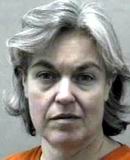
Julia Surbaugh
Murderer Miranda Barbour
Murderer · USA · 2013
Miranda Barbour, 19, defendant. · Elytte Barbour, 22, defendant and husband of…
100 victims
Miranda Barbour
Murderer · USA · 2013
Miranda Barbour, 19, defendant. · Elytte Barbour, 22, defendant and husband of…
100 victims
 Tiffany Hall
Murderer · USA · 2006
Tiffany Hall was 24 when she was charged in September 2006. She later entered a…
5 victims
Tiffany Hall
Murderer · USA · 2006
Tiffany Hall was 24 when she was charged in September 2006. She later entered a…
5 victims
 Banita Jacks
Murderer · USA · 2007
Banita Jacks was a Washington, DC resident convicted of murdering her four daug…
4 victims
Banita Jacks
Murderer · USA · 2007
Banita Jacks was a Washington, DC resident convicted of murdering her four daug…
4 victims
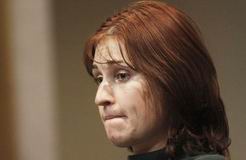 Holly Grigsby
Murderer · USA · 2011
Holly Grigsby was sentenced to life in prison without parole on July 15, 2014.…
4 victims
Holly Grigsby
Murderer · USA · 2011
Holly Grigsby was sentenced to life in prison without parole on July 15, 2014.…
4 victims
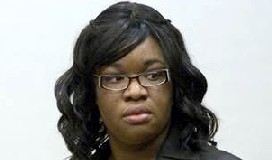 Jessica Tata
Murderer · USA · 2011
Jessica Tata was a Houston home day care owner who fled to Nigeria after a fire…
4 victims
Jessica Tata
Murderer · USA · 2011
Jessica Tata was a Houston home day care owner who fled to Nigeria after a fire…
4 victims
 Amanda Bennett
Murderer · USA · 2011
Amanda Bennett was an Indiana woman who shot her three children and set the fam…
3 victims
Amanda Bennett
Murderer · USA · 2011
Amanda Bennett was an Indiana woman who shot her three children and set the fam…
3 victims
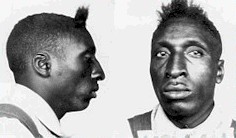 Grady Cole
Murderer · USA · 1942
Grady Cole was one of three defendants named as C. Levice, Charles Sanders, and…
1 victim
Grady Cole
Murderer · USA · 1942
Grady Cole was one of three defendants named as C. Levice, Charles Sanders, and…
1 victim
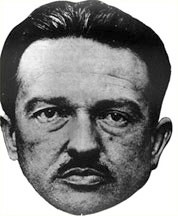 Dr. Pierre Marie Bougrat
Murderer? · France · 1925
Dr. Pierre Marie Bougrat was a doctor in France. He had been awarded the Milita…
1 victim
Dr. Pierre Marie Bougrat
Murderer? · France · 1925
Dr. Pierre Marie Bougrat was a doctor in France. He had been awarded the Milita…
1 victim
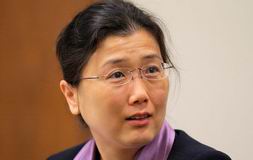 Tianle Li
Murderer · USA · 2011
Tianle Li was convicted of fatally poisoning her husband, Xiaoye Wang, with tha…
1 victim
Tianle Li
Murderer · USA · 2011
Tianle Li was convicted of fatally poisoning her husband, Xiaoye Wang, with tha…
1 victim
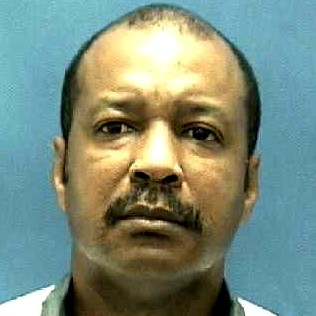 Dennis Charles Hall
Murderer · USA · 1990
September 12, 1990 — Dennis Charles Hall was sentenced to death. · August 1990…
1 victim
Dennis Charles Hall
Murderer · USA · 1990
September 12, 1990 — Dennis Charles Hall was sentenced to death. · August 1990…
1 victim
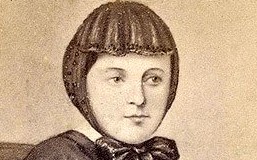 Constance Kent
Homicide · United Kingdom · 1860
Constance Kent was named Constance Emily Kent and was born 6 February 1844. She…
1 victim
Constance Kent
Homicide · United Kingdom · 1860
Constance Kent was named Constance Emily Kent and was born 6 February 1844. She…
1 victim
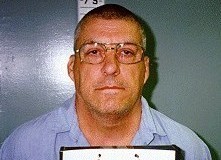 Douglas Franklin Wright
Serial killer · USA · 1969
Douglas Franklin Wright (born 1940-03-25) was executed by lethal injection in O…
7 victims
Douglas Franklin Wright
Serial killer · USA · 1969
Douglas Franklin Wright (born 1940-03-25) was executed by lethal injection in O…
7 victims
- Gender
- female
- Country
- USA
- Location
- Webster County, West Virginia, USA
- Date of birth
- 1962
- Age at first offence
- 47
- Characteristics
- parricide, domestic violence
- Victim profile
- Her husband, Michael Surbaugh
- Method of murder
- Shooting (.22 caliber pistol)
- Date(s) of murder
- August 6, 2009
- Years active
- 2009
- Date of arrest
- Same day
- Status
-
Life imprisonment
Sentenced to life in prison on June 4, 2010; reversed on November 20, 2012; sentenced to life in prison without parole on March 7, 2014
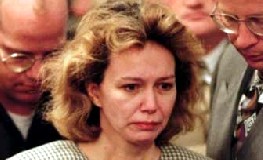
Case record: Julia Surbaugh
Background
Julia Ann Surbaugh was married to Michael Surbaugh at the time of the shootings. Michael Surbaugh had told Surbaugh that he wanted a divorce and had announced his intentions to leave the home. The decedent and his girlfriend planned a weekend trip together, intending to depart for a fishing and camping trip later in the day of the shooting. He told his wife that he intended to leave the petitioner's home after he returned from his weekend trip. After he was shot, the decedent left a message for his girlfriend stating that he thought he would be a little late to pick her up for the trip, but that he'd see her in a while.
Surbaugh testified that the relationship began to deteriorate in 2008 when her husband began abusing alcohol. She testified that problems escalated when Michael Surbaugh, a schoolteacher, began an adulterous relationship with a co-worker. Michael Surbaugh's girlfriend was a fellow teacher who had become addicted to methamphetamine. The girlfriend testified that while the relationship started out with Michael Surbaugh supporting her as she attempted to break her addiction to drugs, the relationship soon grew into romance. Surbaugh admitted that she was aware of this relationship, and the paramour confirmed this testimony.
In the two years prior to the shootings, Michael Surbaugh was arrested twice, once while with his girlfriend and once after a drug sweep at the school where he worked, on charges of possession of drug paraphernalia and possession of drugs. At the time of his death, Michael Surbaugh was unemployed, having been discharged by the school board for misconduct.
Surbaugh testified that on the night prior to the shootings, she and her husband argued about his desire to have their children around his girlfriend and other matters. She testified that the children were at the neighbor's house for the evening, so there were no witnesses other than herself and her husband. She testified that the argument ended when she walked away and went to bed in her room, leaving him in the living room.
The offence
On the morning of August 6, 2009, Michael Surbaugh was shot three times in the face. The jury found that a firearm was used in the commission of the incident, and it returned a guilty verdict on the charge of first degree murder.
Surbaugh testified to her account of events. She testified that she awoke, made coffee, and went into the bedroom then occupied by her husband for the purpose of retrieving something from a dresser. She testified that Michael Surbaugh was awake, sitting on the edge of the bed and crying. She testified that she and Michael Surbaugh crawled into bed together beside one another with her head resting on his chest, and they remained in this position for approximately 30 seconds. She testified that Michael Surbaugh got up, leaned over and retrieved a gun. Surbaugh testified that Michael Surbaugh pointed the gun at her, put it in her face, and told her:
“Bitch, you're not going to destroy me, you're not going to destroy Janet.”
She testified that she froze, and that Michael Surbaugh cocked the gun. She testified that as he cocked the gun, he said:
“Bitch, you're going to stop setting me up.”
She testified that she then swung her hand toward the gun, causing him to become unbalanced, and that he fell toward the top of the bed and the gun fell from his hand. She testified that she grabbed the gun, slipped backward off the bed, and ended up in the corner of the bedroom. She testified that Michael Surbaugh continued to come toward her “in a rage.” She testified that she then pulled the trigger and fired off a shot that may have ended up in a closet. She testified that Michael Surbaugh continued to come toward her and she fired a second shot that hit him in the cheek.
Surbaugh testified that Michael Surbaugh grabbed her and got the gun out of her hand. While stating “you're not going to get me for this, bitch,” she testified that the gun went off. She testified that she did not see where the bullet landed. Afterward, Michael Surbaugh was bleeding from his face and requested that Surbaugh get a doctor. Surbaugh testified that Michael Surbaugh then left the room and went into the bathroom, keeping the gun with him. The gun was later retrieved by law enforcement from a laundry basket near the bathroom.
During cross-examination, Surbaugh was asked questions about Michael Surbaugh's violence. She testified that he was a loud and physically violent person but not to her. She denied any prior episodes of domestic violence and related that she had viewed tapes of Michael Surbaugh's divorce from his first wife in which his ex-wife detailed episodes of physical violence. She stated that she was “not trying to make Mike out as a physically violent person that harmed me.” In earlier statements to law enforcement, she denied any physical violence at the hands of her husband.
Investigation
After the shootings, Surbaugh contacted 911 immediately. There were four telephone calls between the 911 dispatchers and Surbaugh, or persons acting on her behalf and at her direction.
In the first brief call, Surbaugh advised authorities that Michael Surbaugh was trying to shoot himself, and she hung up. In the second call initiated by the 911 dispatcher, Surbaugh stated “Mike shot himself” before hanging up. In the third call, initiated by the 911 dispatcher and answered by Surbaugh, she stated again that her husband shot himself, and the call ended when she hung up again.
The fourth call was initiated by the 911 dispatcher and was answered by Surbaugh's neighbor, Ann Wilson. Wilson relayed information from Surbaugh to the dispatcher, including that Michael Surbaugh was trying to shoot her, that the gun accidentally discharged and struck him, and later that he intentionally shot himself in the head.
Immediately after he was shot, Michael Surbaugh was able to talk and to walk. He walked out of the home where the shooting took place, and was initially helped by Ann Wilson. When emergency medical personnel arrived at the Surbaugh home, the decedent was seated outside of the home bleeding from wounds to his face and head.
Ann Wilson heard Michael Surbaugh report to emergency medical personnel that his wife shot him. Michael Surbaugh requested that his two cell phones, his glasses, his wallet, his smokeless tobacco, and a plastic bag be brought out of the house.
Corporal E.L. Loughridge of the West Virginia State Police assisted in the investigation. While at the scene, Cpl. Loughridge overheard Michael Surbaugh state, to no one in particular, that “the bitch shot me.” Cpl. Loughridge testified that at the time of this statement, Michael Surbaugh was being treated by emergency services personnel. Loughridge later heard the decedent ask for his smokeless tobacco. Michael Surbaugh also told Deputy D. Vandevender of the Webster County Sheriff's Department that “my wife shot me.” At the time of this statement, Michael Surbaugh was sitting in a lawn chair in front of his house talking on his cell phone.
Treating paramedic Dan Moran testified that Michael Surbaugh was medically stable at the scene. Moran testified that he arrived to find Michael Surbaugh sitting in a lawn chair in front of the house with several penetrating wounds to the head and bleeding from injuries on the right and left side of his head near his ears. Moran testified that Michael Surbaugh was alert and oriented to who he was, where he was, and what day it was. Moran testified that while Michael Surbaugh appeared worried, he was relatively calm. Moran testified that because the original dispatch message was that this was an attempted suicide, he questioned Michael Surbaugh about what he tried to shoot himself with, and Michael Surbaugh replied that “she did,” which Moran understood to mean his wife.
Dan Moran testified that Michael Surbaugh was hemodynamically stable, with good blood pressure, good pulse rate, and an appropriate level of consciousness. Michael Surbaugh was transported to Webster County Memorial Hospital. He was treated by nurse Sara Wolverton, who testified that Michael Surbaugh stated he was asleep and felt as though someone had hit him in the head with a baseball bat. Wolverton testified that Michael Surbaugh spoke about wanting to go camping and fishing, and also about his general condition including asking whether he was going to die. Wolverton testified that she told him he was not going to die, because he was walking and talking when he arrived at the emergency room.
Michael Surbaugh was also treated by physician's assistant John Blake. Blake testified that the decedent told him, “I'm not crazy. I didn't do this. This bitch shot me.” Surbaugh also spoke to treating physician Jamie Miller, who testified that the decedent stated he was lying in bed asleep and he felt as though he got hit with a baseball bat.
Deputy Vandevender later went to Webster County Hospital to take a recorded statement from Michael Surbaugh. At the time, Michael Surbaugh was being treated in the emergency room for the gunshot wounds and was being prepared to be flown by helicopter to a larger hospital more suited for this type of injury.
Deputy Vandevender testified that Michael Surbaugh stated to several different people on three to four occasions that his wife shot him, sometimes referred to as “that bitch.” The deputy later took a formal recorded statement from the decedent while he was in the emergency room, in which he repeated that his wife shot him. In that recorded statement, Michael Surbaugh told Deputy Vandevender that he had been asleep in his bed and felt like someone hit him beside the head with a baseball bat. He saw Surbaugh with the gun and then took the gun from her. In the recorded statement, however, he did not say whether Surbaugh shot him. Deputy Vandevender testified that at the time of this formal statement, Michael Surbaugh appeared upset and mad and physically tired.
Deputy Vandevender testified that Michael Surbaugh died four and a half hours after being shot.
The evidence at trial was that Michael Surbaugh suffered three gunshot wounds from a .22 caliber bullet directly to his face. None of the bullets penetrated his skull, but the gunshots did damage his sinus cavity area. The State presented the medical examiner testimony that Michael Surbaugh's death was a result of an air embolism caused by the gunshot wounds. The petitioner presented testimony of another pathologist opining that Michael Surbaugh's death was a result of self-inflicted gunshot wounds. The petitioner's pathologist sought to cast doubt upon the probability that the death was the result of an air embolism.
Michael Surbaugh was transferred by ambulance from Webster County Memorial Hospital to a location in Lewis County where he was scheduled to be flown to Ruby Memorial Hospital's trauma center for further treatment. He was in the helicopter, ready to be flown to Morgantown, when he went into cardiac arrest. He was taken to Stonewall Jackson Hospital in Lewis County where he was pronounced dead. At trial, Dan Moran expressed surprise that Michael Surbaugh died later in the morning of these injuries.
Arrest
Trooper Jordan met with the prosecuting attorney to review initial results from the medical examiner. Based on that meeting and the review of evidence, Trooper Jordan obtained a warrant for the arrest of Surbaugh.
Surbaugh sought to suppress a portion of her third recorded statement given on August 12, 2009, in which she explained her motivation to shoot her husband and wherein she admitted that she shot him, despite earlier statements to the 911 operator that Michael Surbaugh was trying to kill himself. The petitioner initiated the recorded statement by going to the sheriff's office to speak with investigating officers. This statement was given after she gave two previous statements to law enforcement.
In the third statement, Surbaugh sought to exclude the portion of the statement given after West Virginia State Trooper Jordan entered the room. At that time, Surbaugh was answering questions from Webster County Sheriff's Deputy Clayton and Deputy Vandevender. She requested an attorney on three separate occasions during the third statement but continued to voluntarily talk afterward without encouragement, coercion, or other involvement by the interviewing officers.
The first reference about an attorney was after Deputy Clayton informed Surbaugh that Michael Surbaugh's death had been ruled a homicide by the medical examiner. Surbaugh continued her statement after that declaration and asked whether she was going to be placed under arrest. Deputy Clayton responded that an arrest would be coming and said he wanted to give her a chance to help herself by being honest and forthright. Surbaugh then made a second request for counsel by stating “I need to talk to a lawyer.” Deputy Clayton attempted to end the interview, but Surbaugh asked him to wait a minute. She then attempted to stop the tape recorder but Surbaugh stopped him from doing so and voluntarily continued giving her statement. Shortly thereafter, she made a third request for counsel. After she ended her statement, she was served with the warrant and arrested.
After being arrested, Surbaugh was taken to be arraigned by a magistrate. The magistrate was not immediately available, so Surbaugh had to wait in the company of Trooper Jordan and Deputy Clayton. While neither officer was questioning her, she nonetheless continued to make statements. The circuit court found neither Trooper Jordan nor Deputy Clayton was actively questioning Surbaugh at the time of these statements.
After being arraigned, Surbaugh was taken to the sheriff's office for processing. Corporal Loughbridge took her to her neighbor's house to see her children before returning her to the sheriff's office and transporting her to Central Regional Jail. During this time, she continued to make statements to the sheriff, Deputy Vandevender, and Corporal Loughbridge. The circuit court concluded that these statements were unsolicited and were not made in response to any question designed to elicit an incriminating statement. The circuit court found Surbaugh knowingly and intelligently waived her right to counsel after she asserted that she wanted counsel. The court found she had above average intelligence and understood she was permitted to have an attorney present if she chose. She was read her Miranda rights prior to each statement.
In terms of whether Surbaugh was in custody for the purpose of requiring additional Miranda warnings, the circuit court found that while she could have conceivably been under de facto arrest at the time Trooper Jordan arrived in the room, it was Surbaugh who chose to continue the interviews. The circuit court found that the interviewing officers attempted to stop the interview but that Surbaugh affirmatively wanted to keep talking.
Deputy Vandevender was the brother of the prosecuting attorney for Webster County.
Trial
At trial, the State proceeded on a theory that the shootings were the result of Michael Surbaugh's intention to leave his wife to start a life with his paramour. The State introduced evidence of a financial motivation for the killing including receipt of retirement benefits and an insurance policy. Surbaugh argued self-defense and introduced evidence of her good character.
Before trial, Surbaugh sought to suppress statements made by Michael Surbaugh from use at trial. She argued that their use violated Crawford v. Washington because the declarant was deceased and not available for cross-examination, and because the statements were testimonial in nature. The State argued statements came in under hearsay exceptions including dying declarations, statements made in anticipation of death, or alternatively excited utterances.
The circuit court found that Michael Surbaugh was not under the belief his death was imminent when he made his statements, and therefore they were not admissible under the dying declaration exception in Rule 804(b)(2). The court found the statements were admissible under Rule 803(2) as excited utterances because they were made within a short time frame after the decedent received his injuries and while he was still under the stress of the event. The circuit court concluded without further explanation that admission of the statements did not violate Crawford v. Washington. The circuit court also found the purpose for which the State sought to admit Michael Surbaugh's statements was material and that the statements were more probative than any other evidence the State could obtain through reasonable efforts.
Surbaugh also sought to exclude portions of her August 12, 2009 statement to law enforcement explaining her motivation and admitting she shot him. She was given Miranda warnings before each statement, and the circuit court found her waiver of counsel was knowing and intelligent, and that her continued statements were not made in response to questions designed to elicit incriminating statements in the periods after arrest and during processing.
Evidence of Surbaugh's good character was introduced without objection by the State. There was no contest to the assertions of having a good reputation, being peaceful, non-violent, a good mother, and a supportive wife to her husband.
At trial, Surbaugh testified on her own behalf. She acknowledged she had made many different statements about the shootings and admitted that she first told authorities that her husband had committed suicide because “I could not tell my boys that I shot their daddy twice, even if it was in self-defense.”
She testified that the relationship began to deteriorate in 2008 when her husband began abusing alcohol. She testified that she and her husband argued about his desire to have their children around his girlfriend and other matters the night prior to the shootings and that there were no witnesses other than her and her husband.
She testified to the gun-related events in the bedroom as described above and stated that Michael Surbaugh continued to come toward her and that she fired two shots. She stated that after he grabbed her and got the gun out of her hand, the gun went off while he said “you're not going to get me for this, bitch.”
During trial, Surbaugh sought a Harden instruction to allow evidence of Michael Surbaugh's alleged abuse or threats to be considered. The State argued the instruction was not relevant because there was no evidence presented that Michael Surbaugh abused Surbaugh. The State also argued Surbaugh was attempting to “sneak in” a battered woman defense without evidence. Surbaugh countered that evidence of abuse existed through testimony of neighbors and through the sheriff's testimony about her peaceful nature. The circuit court found that a Harden instruction was not warranted. The court stated it “believed that the facts of this case [don't] juxtapose or even closely relate to the heart of the case.” It stated that it did not hear evidence that Surbaugh was previously threatened by Michael Surbaugh. It concluded nothing would prevent her from arguing emotional abuse to the jury, but that a Harden-based instruction would be inconsistent with the facts adduced at trial.
On May 20, 2010, the jury returned a guilty verdict on first degree murder. The jury did not recommend mercy and made a specific finding that a firearm was used.
Sentencing
Surbaugh was sentenced to life in prison without the possibility for parole and ordered to pay all costs and court-appointed attorney fees.
By order dated Febuary 22, 2011, Surbaugh was resentenced for the purpose of perfecting an appeal and for appointment of appellate counsel.
Appeals
The Supreme Court of Appeals of West Virginia decided Surbaugh's appeal by reversing the judgment and remanding for a new trial.
The appeal was from Surbaugh's sentence of life without mercy, imposed in the Circuit Court of Webster County by order entered on June 4, 2010, as recommended by the jury which found her guilty of first degree murder. Surbaugh assigned four errors, including admission of the decedent's statements, failure to give a Harden 1 instruction, failure to give a good character instruction, and failure to suppress her third statement to police.
In its analysis, the Supreme Court addressed the admission of statements made by Michael Surbaugh to various persons. It concluded the statements were non-testimonial because there was a medical emergency and law enforcement had a present need to know what happened from the decedent's point of view to aid the investigation and ensure household and neighborhood safety. It also concluded the circuit court's admission was correct and found no reversible error under Crawford.
The Supreme Court also addressed the admission of Surbaugh's third recorded statement portion about motive. It found no error in the circuit court's decision not to suppress that portion and concluded the circuit court's decision to admit the entire third statement was not an abuse of discretion.
Regarding instructional errors, the Supreme Court addressed the failure to give a Harden instruction and a good character instruction. It found no reversible error in declining to give a Harden instruction because there was not sufficient evidence of the alleged threats and abuse requiring the instruction. For the good character instruction, the Supreme Court discussed the petitioner's requested instruction and concluded that it was error not to give a proper good character instruction because there was no guidance to the jury on how to interpret evidence of good character. It held the instructional error was sufficient enough to warrant reversal of the conviction and remand for a new trial.
The Supreme Court reversed the order of the Circuit Court of Webster County entered May 20, 2010 and remanded for a new trial. It stated: “The instructional error is sufficient enough to warrant a reversal of the conviction and a remand for a new trial.”
The Supreme Court's decision was issued and decided on November 20, 2012.
A date for the new trial had not been set at the time referenced in the material.
Outcome
Surbaugh's first degree murder conviction and life sentence were reversed by the Supreme Court of Appeals of West Virginia and remanded for a new trial.
A new trial was expected to begin. The material also references that Surbaugh had been facing a life sentence for the first degree murder conviction in the death of her husband Michael Surbaugh and that she had been indicted in January 2010 and convicted in May 2010.
Surbaugh was again sentenced to life in prison without parole on March 7, 2014 after the jury found her guilty of first degree murder. The guilty verdict was handed down around 8:45 on Thursday night after two weeks of testimony and nearly four hours of deliberation.
Other details
Surbaugh made inconsistent statements about how her husband was shot. In the initial call to 911, she stated Michael Surbaugh was going to shoot himself. In another conversation with 911 dispatchers, she stated he had already shot himself. She later stated that she and Michael Surbaugh were in bed when he suddenly pulled out a gun and stated he was going to kill her; she claimed that in the ensuing struggle the gun discharged and he was shot in the face. According to Surbaugh, he then used the gun to again shoot himself in the head. In her final statement to law enforcement, she stated she shot him twice in the face, and then he shot himself in the head. At trial, she was cross-examined over these inconsistencies.
At trial, the medical examiner testified about air embolism, describing it as occurring when air gets into the heart, blocks the flow of blood and causes sudden death. The doctor referred to an air embolism as “bullets of air.”
Spotted an error, or have more information about this case?