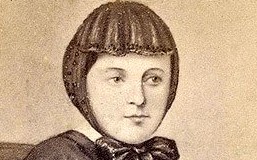
Constance Kent
Homicide Lorraine Thorpe
Homicide · United Kingdom · 2009
Lorraine Thorpe was 15 at the time of the killings and was later 16. Desmond Th…
2 victims
Lorraine Thorpe
Homicide · United Kingdom · 2009
Lorraine Thorpe was 15 at the time of the killings and was later 16. Desmond Th…
2 victims
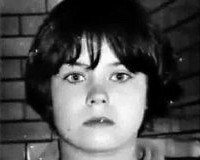 Mary Bell
Homicide · United Kingdom · 1968
Mary Flora Bell was convicted of manslaughter on the grounds of diminished resp…
2 victims
Mary Bell
Homicide · United Kingdom · 1968
Mary Flora Bell was convicted of manslaughter on the grounds of diminished resp…
2 victims
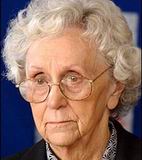 Audrey Hingston
Homicide · United Kingdom · 2003
Audrey Hingston stabbed her husband Eric Hingston to death at their flat. Eric…
1 victim
Audrey Hingston
Homicide · United Kingdom · 2003
Audrey Hingston stabbed her husband Eric Hingston to death at their flat. Eric…
1 victim
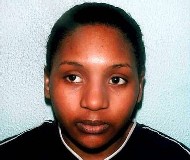 Kemi Adeyoola
Homicide · United Kingdom · 2005
Kemi Adeyoola was convicted of murdering 84-year-old Anne Mendel. Adeyoola had…
1 victim
Kemi Adeyoola
Homicide · United Kingdom · 2005
Kemi Adeyoola was convicted of murdering 84-year-old Anne Mendel. Adeyoola had…
1 victim
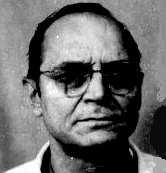 Robert Excell White
Spree killer · USA · 1974
Robert Excell White was executed by lethal injection in Texas on March 30, 1999…
4 victims
Robert Excell White
Spree killer · USA · 1974
Robert Excell White was executed by lethal injection in Texas on March 30, 1999…
4 victims
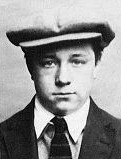 Harold Jones
Homicide · United Kingdom · 1921
Harold Jones was a 15-year-old shop worker at the time of the offences. In Febr…
2 victims
Harold Jones
Homicide · United Kingdom · 1921
Harold Jones was a 15-year-old shop worker at the time of the offences. In Febr…
2 victims
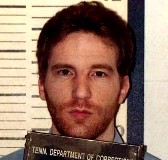 Henry Eugene Hodges
Murderer · USA · 1989
Defendant: Henry Eugene Hodges (appellant) · Victim: Ronald A. Bassett (Nashvil…
3 victims
Henry Eugene Hodges
Murderer · USA · 1989
Defendant: Henry Eugene Hodges (appellant) · Victim: Ronald A. Bassett (Nashvil…
3 victims
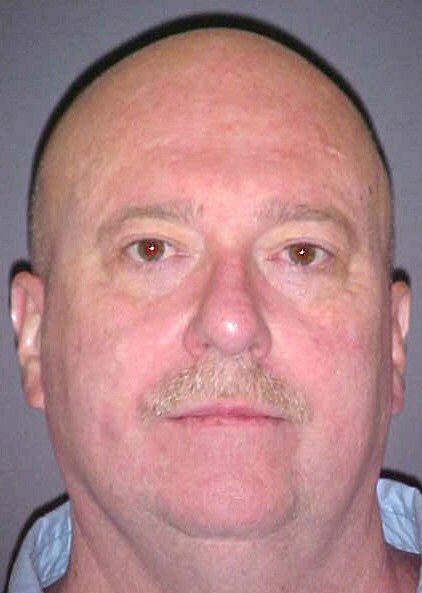 Jimmie Ray Slaughter
Murderer · USA · 1991
Jimmie Ray Slaughter was executed by lethal injection in Oklahoma on March 15,…
2 victims
Jimmie Ray Slaughter
Murderer · USA · 1991
Jimmie Ray Slaughter was executed by lethal injection in Oklahoma on March 15,…
2 victims
 Russell Eugene Weston
Homicide · USA · 1998
Russell Eugene Weston Jr. was born December 28, 1956 and used the nickname “Rus…
2 victims
Russell Eugene Weston
Homicide · USA · 1998
Russell Eugene Weston Jr. was born December 28, 1956 and used the nickname “Rus…
2 victims
 Alfred Cline
Serial killer? · USA · 1930
Alfred Cline was an American “Bluebeard” who was linked with at least nine homi…
9 victims
Alfred Cline
Serial killer? · USA · 1930
Alfred Cline was an American “Bluebeard” who was linked with at least nine homi…
9 victims
- Gender
- female
- Country
- United Kingdom
- Location
- Rode, Whiltshire, England, United Kingdom
- Date of birth
- February 6, 1844
- Age at first offence
- 16
- Characteristics
- child killer, juvenile (16), abuse, history of mental illness
- Victim profile
- Francis "Saville" Kent, 4 (her half-brother)
- Method of murder
- Cutting his throat with a razor
- Date(s) of murder
- June 30, 1860
- Years active
- 1860
- Date of arrest
- July 16, 1860
- Status
-
Died in custody
Sentenced to death on July 19, 1865; commuted to life in prison owing to her youth at the time and her confession on July 25, 1865; released on July 18, 1885; died on April 10, 1944
Case record: Constance Kent
Background
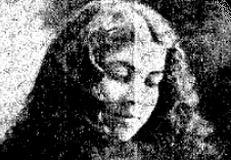
Constance Kent was named Constance Emily Kent and was born 6 February 1844. She was an English woman who confessed to a child murder committed when she was sixteen years old and later changed her name to Ruth Emilie Kaye.
Her parentage was given as Mary Ann Kent (1808-1852) and Samuel Saville Kent (1801-1872), described as an Inspector of Factories for the Home Office. Another biography material described Samuel Savill Kent as the son of Samuel Luck Kent, a carpet manufacturer, and stated that Constance Emily Kent was the daughter born 6 February 1844.
The family history also included the earlier marriage of Samuel Saville Kent to Mary Ann Windus, with the family later employing a governess, Mary Drew Pratt, described as Mary Drewe Pratt. The household included various servants, and the account described a high turnover of servants in the Kent household.
In later proceedings and discussion of motive, it was stated that the murder was viewed as revenge against the second Mrs Kent for her treatment of Constance’s mother.
The offence
The murder occurred during the night of 29 June and the morning of 30 June 1860 at Road Hill House. Francis “Saville” Kent, described in the material as almost four (and also elsewhere described as three years and ten months), disappeared from his home in the village of Rode (Road was also used as a spelling in the material) in Wiltshire.
His body was found in a vault of an outhouse (a privy) on the property. The body was described as still dressed in a nightshirt and wrapped in a blanket. The injuries were described as knife wounds on the chest and hands, and his throat was slashed so deeply that the body was almost decapitated. Additional narrative material described a cut across the neck and that the head was almost severed.
A window in the drawing room had been found open despite it being stated that servants had closed it the night before.
Investigation
An initial inquest returned a verdict of “murder by some person, or persons, unknown.”
The material described that the household’s nursemaid, Elizabeth Gough, was initially arrested and released soon afterward through lack of evidence.
Detective Inspector Jack Whicher of Scotland Yard was sent to assist. Whicher concentrated on a missing nightdress possibly blood stained belonging to Constance, and the investigation included interviewing household servants. The material described circumstantial evidence including that Constance slept alone in her own room, and that Constance had used the privy as a hiding place before.
The material stated that during the investigation Whicher learned from a maid that on the Monday following the murder Constance approached the maid while she was preparing the laundry to go to the local washerwoman. Constance asked for her night-gown, and the narrative stated that by the time the maid returned the night-gown had gone. The inference given in the material was that Constance had distracted the maid to remove the gown, including the idea of needing a bloodstained gown and cover for the missing garment. Whicher re-interviewed servants and concluded Constance had more to do with the death than she was saying.
Constance was arrested and then later released on bail when the evidence was considered too thin to stand in court. It also stated that after Whicher’s involvement she was released without trial.
The narrative also included that there had been much speculation about Constance’s confession being false, with public discussion in the press.
Arrest
Constance Kent was arrested on 16 July (in one section of the material) and later arrested on 20 July (in another part of the material). The material also stated that she was released without trial.
Trial
Constance Kent was prosecuted in 1865, and the material stated that she made a statement confessing her guilt to an Anglo-Catholic clergyman, the Rev. Arthur Wagner, who also provided evidence of the statement before magistrates. The material described debate about priest–penitent privilege, including that Wagner prefaced evidence by declaring he must withhold further information because it was received under the seal of “sacramental confession,” and that he was lightly pressed by magistrates because it was stated that the prisoner was not defending the charge.
The material stated that Constance pleaded guilty and her plea was accepted so that Wagner was not again called.
The material included the substance of Constance’s confession, describing that she waited until the family and servants were asleep, went down to the drawing-room, opened shutters and a window, took the child from his room wrapped in a blanket, left the house, and killed him in the privy with a razor stolen from her father. It also stated that she conducted her movements before the killing with the child in her arms, and that she had hidden matches in the privy beforehand for a light to see by during the act of murder. The material also described that the murder was suggested to be revenge rather than spontaneous, and that speculation about her mental state existed, described as being suggested that Constance had, at certain times, been mentally unbalanced.
The material stated that she was brought to trial at Salisbury Assizes, with the trial described as taking place on July 21, 1865, and that at the Assizes Constance pleaded guilty. The materials also described that the trial lasted only a few minutes. The judge was stated as Mr Justice Willes in one part of the material, and another section referred to Sir Thomas Henry, the Chief Magistrate.
The material included a statement about timing of her confession: it stated she confessed on July 25, 1865 (as reflected in the case status line provided by the user) and also stated she confessed on 25 April (as another part of the material described), with later statements that she attended Bow Street magistrates court and confessed after a period abroad and in a religious institution.
Sentencing
Constance Kent was sentenced to death. The material stated that her sentence was commuted to penal servitude for life because of her youth at the time of the crime and her confession. The material also stated that her sentence was commuted by the Home Secretary, Sir John Grey, after consulting with the Cabinet.
The status field provided by the user also stated she was sentenced to death on July 19, 1865 and that commutation occurred owing to her youth at the time and her confession on July 25, 1865.
Appeals
No appeals were described in the provided material.
Outcome
Constance Kent served twenty years in a number of gaols including Millbank Prison. She was released on July 18, 1885, at the age of 41. She died on April 10, 1944 at the age of 100.
During her incarceration, the material stated that she produced mosaics for a number of churches, including work for the crypt of St. Paul’s cathedral. It also stated there was discussion of a “myth of the mosaics.”
Aftermath
The material stated that she emigrated to Australia early in 1886 and joined her brother William in Tasmania, where he worked as a government adviser on fisheries.
She changed her name to Ruth Emilie Kaye and trained as a nurse at the Alfred Hospital, Prahran, Melbourne. She was then appointed sister-in-charge of the Female Lazaret at the Coast Hospital, Little Bay, in Sydney. She worked for a decade at the Parramatta Industrial School for Girls from 1898 to 1909. She was domiciled in Mittagong for a year, and then became matron of the Pierce Memorial Nurses’ Home at East Maitland, serving there from 1911 until she retired in 1932.
The material also stated that she lived at the Loreto Rest Home in Strathfield and died in a private hospital in the Sydney suburb of Strathfield at age 100, on 10 April 1944. The Sydney Morning Herald (on 11 April 1944) reported she was cremated at nearby Rookwood Cemetery.
It also stated that her last words in the Sydney Document were: “After her release she changed her name and went overseas and single handed fought her way to a good position and made a home for herself where she was well liked and respected before she died.”
Other details
Confession and priest–penitent privilege dispute
The material described parliamentary comment, including statements in the House of Lords by Richard Bethell, 1st Baron Westbury, Lord Chancellor. Lord Westbury stated: “...there can be no doubt that in a suit or criminal proceeding a clergyman of the Church of England is not privileged so as to decline to answer a question which is put to him for the purposes of justice, on the ground that his answer would reveal something that he had known in confession. He is compelled to answer such a question, and the law of England does not even extend the privilege of refusing to answer to Roman Catholic clergymen in dealing with a person of their own persuasion.”
Lord Westmeath, in reply to Lord Westbury’s statement, described that there had been two recent cases including a priest in Scotland committed to prison for refusing to give evidence and referenced “R v Hay.”
Henry Phillpotts, then Bishop of Exeter, wrote a letter maintaining the privilege claimed by Mr Wagner. The material also stated that Edward Lowth Badeley wrote a pamphlet on the question of priest–penitent privilege.
Family and household details described
The narrative material included details that Samuel Kent employed a governess, Miss Pratt, and later married her. It also described that by 1860 his second wife had produced three more offspring and had another on the way, with Francis Savile Kent described as a favourite of his father.
The account described Francis Savile Kent’s nurse as Elizabeth Gough and described bedrooms on the same floor occupied by Constance and William in separate rooms.
It also described that on the morning of 30 June 1860 Miss Gough awoke at about 5am, checked the baby, and found Francis missing from his cot. It described that a frantic search ensued and that villagers found the child’s body in a disused servant’s outhouse.
A further section described that local men including William Nutt and Thomas Benger found the body in the servants’ privy and described the discovery and injuries.
Death and name changes
The material stated that in later life Kent changed her name to Ruth Emilie Kaye.
Cultural references and later dramatizations
The material included the following references:
- 1862: Elements of the case were used by Mary Elizabeth Braddon in Lady Audley’s Secret (1862).
- 1868: Elements of the case were used by Wilkie Collins in The Moonstone (1868).
- 1870: Charles Dickens based the flight of Helena Landless in The Mystery of Edwin Drood (1870) on Kent’s early life.
- 1945: The film Dead of Night, UK Ealing 1945, included a story called “Christmas Party” loosely based on the Constance Kent case.
- 1980: The case was dramatised for television by the BBC over eight episodes, starring Prue Clarke as Constance Kent, and Joss Ackland as Samuel Kent, as part of the series A Question of Guilt (1980).
- 1980: The Constance Kent case played a central role in William Trevor’s novel Other People’s Worlds (1980).
- 1983: Francis King’s 1983 novel Act of Darkness is a fictional re-imagining of the Constance Kent case, transferring the setting to 1930’s India.
- 1989: James Friel’s novel Taking the Veil (1989) was inspired by Kent’s life.
- 1991: Sharyn McCrumb’s 1991 novel Missing Susan referred to this case.
- 2008: Kate Summerscale’s book The Suspicions of Mr Whicher about this case was read as BBC Radio 4’s Book of the Week from 7 to 11 April 2008, and it won Britain’s Samuel Johnson Prize for Non-Fiction in 2008.
- 2010: An episode of Deadly Women, “A Daughter’s Revenge,” featured a segment on Constance Kent.
- 2011: The case featured as a drama on ITV under the title The Suspicions of Mr Whicher on 25 April 2011.
Spotted an error, or have more information about this case?