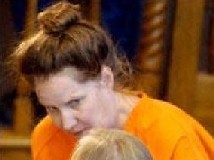
Jeanette Swanson
Homicide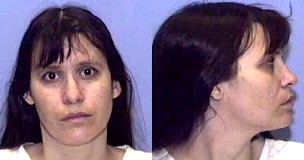 Andrea Yates
Homicide · USA · 2001
Andrea Pia Yates (born Andrea Pia Kennedy on July 2, 1964) was a former Houston…
5 victims
Andrea Yates
Homicide · USA · 2001
Andrea Pia Yates (born Andrea Pia Kennedy on July 2, 1964) was a former Houston…
5 victims
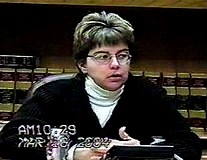 Coleen Thompson
Homicide · USA · 2002
Coleen Thompson was a former intensive care nurse at Shady Grove Adventist Hosp…
5 victims
Coleen Thompson
Homicide · USA · 2002
Coleen Thompson was a former intensive care nurse at Shady Grove Adventist Hosp…
5 victims
 Christine Paolilla
Homicide · USA · 2003
Christine Marie Paolilla was an American woman born on Long Island, New York on…
4 victims
Christine Paolilla
Homicide · USA · 2003
Christine Marie Paolilla was an American woman born on Long Island, New York on…
4 victims
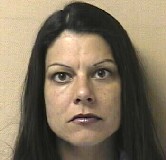 Melissa Marvin
Homicide · USA · 1999
Melissa Lynn Marvin was a 29-year-old waitress and amateur surfer at the time o…
4 victims
Melissa Marvin
Homicide · USA · 1999
Melissa Lynn Marvin was a 29-year-old waitress and amateur surfer at the time o…
4 victims
 Erin Caffey
Homicide · USA · 2008
Erin Caffey (juvenile daughter of Terry Caffey and Penny Caffey; charged in con…
3 victims
Erin Caffey
Homicide · USA · 2008
Erin Caffey (juvenile daughter of Terry Caffey and Penny Caffey; charged in con…
3 victims
 Lashaun Harris
Homicide · USA · 2005
Oct. 19, 2005 — A jury trial later concerned the drownings of three young sons…
3 victims
Lashaun Harris
Homicide · USA · 2005
Oct. 19, 2005 — A jury trial later concerned the drownings of three young sons…
3 victims
 Michael Wayne Ryan
Murderer · USA · 1984
Michael Wayne Ryan (born 3 August 1948) was an American white supremacist and m…
2 victims
Michael Wayne Ryan
Murderer · USA · 1984
Michael Wayne Ryan (born 3 August 1948) was an American white supremacist and m…
2 victims
 Anton Krawczuk
Murderer · USA · 1990
Anton Krawczuk (born 06/08/59) was tried in the Twentieth Judicial Circuit, Lee…
1 victim
Anton Krawczuk
Murderer · USA · 1990
Anton Krawczuk (born 06/08/59) was tried in the Twentieth Judicial Circuit, Lee…
1 victim
 George Putt
Spree killer · USA · 1969
George Putt was born in New Orleans, Louisiana in the mid-1940s. His parents we…
5 victims
George Putt
Spree killer · USA · 1969
George Putt was born in New Orleans, Louisiana in the mid-1940s. His parents we…
5 victims
 David Francis Brom
Homicide · USA · 1988
David Francis Brom (born October 3, 1971) killed his parents, brother, and sist…
4 victims
David Francis Brom
Homicide · USA · 1988
David Francis Brom (born October 3, 1971) killed his parents, brother, and sist…
4 victims
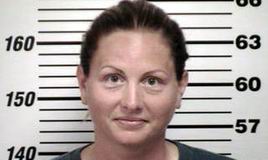 Holly McFeeture
Murderer · USA · 2006
Holly McFeeture was convicted of poisoning Matthew Podolak with antifreeze and…
1 victim
Holly McFeeture
Murderer · USA · 2006
Holly McFeeture was convicted of poisoning Matthew Podolak with antifreeze and…
1 victim
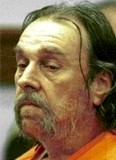 Thomas Howard Wendt
Murderer · USA · 2002
Defendant: Thomas Howard Wendt Victims: Vicki Sue Keller-Wendt, 44; Brandie Lea…
3 victims
Thomas Howard Wendt
Murderer · USA · 2002
Defendant: Thomas Howard Wendt Victims: Vicki Sue Keller-Wendt, 44; Brandie Lea…
3 victims
- Gender
- female
- Country
- USA
- Location
- Lewis and Clark County, Montana, USA
- Date of birth
- 1956
- Age at first offence
- 46
- Characteristics
- parricide, child killer, history of mental illness
- Victim profile
- H er 10-year-old daughter, Louisa, and her 14-year-old son, Swen
- Method of murder
- Shooting ( .38-caliber handgun)
- Date(s) of murder
- August 26, 2002
- Years active
- 2002
- Date of arrest
- Same day
- Status
-
Life imprisonment
Sentenced to life commitment to the Montana State Hospital on January 2, 2003
Case details
Jeanette Swanson was convicted of deliberate homicide for killing her two children while they slept.
People
- Jeanette Swanson — mother, defendant
- Swen Swanson — 14-year-old son, victim
- Louisa (Louisa Ann) Swanson — 10-year-old daughter, victim
- Gene Swanson — husband of Jeanette Swanson
- Two older sons (ages 16 and 20) — children of Jeanette Swanson who were not harmed
Offence
Jeanette Swanson shot her children in their beds.
- She took a revolver and fired one bullet into the back of Swen’s head.
- She then shot Louisa seven times, stopping once to reload.
- After the shootings, she changed from her pajamas to her clothes and called 911 to report that she had just shot her children.
Both victims were shot with a .38-caliber handgun that investigators recovered at the family’s ranch house.
- Autopsies showed 10-year-old Louisa Ann Swanson and 14-year-old Swen Swanson were shot with a .38-caliber handgun.
- A coroner said the fatal bullet wounds were consistent with a .38-caliber handgun recovered at the ranch.
- Another account said authorities said a .38-caliber handgun was found at the scene.
- A coroner said he would not say how many times the children were shot.
Investigation and police findings
- Jeanette Swanson told deputies she shot the children while they slept that morning.
- The children’s bodies were taken to the State Crime Lab in Missoula for an autopsy.
- Coroner Mickey Nelson said the fatal bullet wounds were consistent with a .38-caliber handgun recovered at the ranch.
- Investigators said Jeanette Swanson told deputies she shot the children while they slept that morning.
Arrest and initial custody
Jeanette Swanson was arrested after calling 911.
- She called 911 to say she had shot her 10-year-old daughter Louisa and her 14-year-old son Swen.
- Sheriff Sam McCormick said at the time that Louisa and Swen were attending public school for the first time that year, and that this was a point of contention between their parents who had previously home-schooled their children.
- One account said she was arrested quietly in her home on Elk Creek Road about six miles southwest of Augusta around 6 a.m. Monday after she called 9-1-1, and that she was held without bail and under a suicide watch.
- Another account said she was arrested soon after she called 911 and was returned to jail after a brief hearing.
Custody and legal proceedings included a suicide watch and handcuffing at court.
- She told District Judge Thomas Honzel: “I shot my two children,” when she appeared in court.
- She was handcuffed after the brief hearing and returned to jail.
Charges and plea
Jeanette Swanson faced two murder counts.
- She was charged with two counts of deliberate homicide.
- At a brief initial appearance, she answered “yes, your honor” to questions about whether her name was spelled correctly on the affidavit, whether she knew she was entitled to a bail hearing, and whether she understood the two counts of murder were both felonies.
- Judge Honzel asked if she understood she was charged with killing her son and daughter, and she responded with a quieter, almost choked back “yes, your honor.”
- She later pleaded guilty to two counts of deliberate homicide in October.
Trial court proceedings
Initial appearance and arraignment setting
- Judge Thomas Honzel set Jeanette Swanson’s arraignment for Sept. 19, after her attorney, Randi Hood, requested a three-week delay to give her time to follow up on evaluations Swanson underwent.
- At that time, Swanson would enter a plea.
- Judge Honzel told Swanson that the possible punishment for murder ranges from 10 to 100 years in prison to the death penalty, although prosecutors said earlier they did not believe the death penalty applied in the case.
- Public defender Randi Hood twice asked for Swanson’s arraignment to be postponed to allow for psychiatric evaluations.
Discussion of death penalty applicability
Lewis and Clark County prosecutors said the case may not meet death-penalty law requirements.
- Prosecutors said Montana law required them to identify one of several aggravating factors before seeking capital punishment, and officials said it did not appear any of those factors had been met.
- Deputy County Attorney Carolyn Clemens said: “We’re waiting for the autopsies, we’re waiting for the information from the crime lab about the gun. We certainly need to get more information about what the mother’s situation was, based on what her mother said, and try to figure what and why.”
- Officials also said they expected Swanson would make an initial appearance before District Judge Thomas Honzel.
Plea hearing
On October 17, 2002, Jeanette Swanson pleaded guilty in District Court.
- She told District Judge Thomas Honzel: “I shot my two children.”
- She was sentenced later to life commitment to the Montana State Hospital.
- Lewis and Clark County Attorney Leo Gallagher said: “There’s no plea agreement here.” He also said: “I guess I need to know more about her before I can make a recommendation,” and “This is as serious an offense as there.”
Sentencing
Mental health testimony and sentencing hearing content
At the sentencing hearing, mental health professionals testified about Jeanette Swanson’s mental state and the effect of her illness.
- Dean Gregg, one of the professionals who evaluated Swanson after the shootings, testified that: “She knew that other people would think (murdering her children) was a crime,” and added: “But in her own mind, she was doing it for a higher purpose.”
- Gregg testified that after years of silently spiraling into mental illness, Swanson slipped into a depressed, delusional state last summer.
- Gregg said voices in her mind convinced her that her children were in imminent danger from unnamed people in the Augusta community.
- Gregg said Swanson enrolled her children in public school in Augusta because she believed she couldn’t continue to teach them at home while fatigued and confused from lack of sleep and recurring hallucinations.
- Gregg testified that Swanson’s mental illness reached a flashpoint on the morning of Aug. 26.
- Gregg said Swanson told him her original plan was to shoot herself after calling 911, and that one of her surviving children intervened before she could carry it out.
- Gregg said: “She perceived herself as saving them from future suffering,” and explained Swanson thought the only way to protect the children was to send them to heaven.
A staff psychologist described Swanson’s understanding and treatment prospects.
- Virginia Hill said Swanson still believes killing her children was the only option open to her.
- Hill said: “Her knowledge base was completely irrational.”
- Hill described her prognosis as “guarded.”
- Hill testified that the fact that Swanson’s mental illness had been festering for a long period of time, combined with the harsh reality that she murdered her own children, may make breaking through the psychotic haze difficult.
- Hill said: “It will be years,” adding that Swanson’s mental illness can be controlled, but not cured.
- Hill said: “I believe it will be something she will deal with for the rest of her life.”
- Hill said a commitment through the Montana Department of Public Health and Human Services would mean Swanson would remain under supervision of hospital doctors on some level for the rest of her life.
- Hill also described that if doctors decided at some point that no possibility of recovery exists, doctors could request that she be transferred to the Women’s Correctional Facility in Billings.
Court sentencing order and supervision provisions
Judge Honzel added provisions to the sentencing order.
- Honzel said that before moving Swanson into a community setting or to prison, the court must be notified.
- Honzel said that if Swanson was moved to the women’s prison, she would not be eligible for parole.
- Honzel said: “Without successful treatment, she cannot be released into the community at large,” and he also said it was intended for public safety.
Sentencing request positions
- Randi Hood, Swanson’s public defender, requested the mental hospital commitment and the opportunity to attain a lower level of supervision if doctors determined it was appropriate.
- Lewis and Clark County Attorney Leo Gallagher thought the sentence was appropriate given the facts, although he said he would have liked to give the surviving family members a better sense of closure through a more definitive sentence.
- Gallagher said: “They don’t want her to be on the street again, to be in a position where she could hurt anybody, ever,” and he also said that if changes in Swanson’s status of supervision require court hearings, it could rip off the family’s emotional wounds in the future.
Swanson’s husband and other two children did not attend the sentencing hearing.
Background and mental health history
Jeanette Swanson’s mental health and treatment history were discussed.
- Gregg testified that after years of silently spiraling into mental illness, Swanson entered a depressed, delusional state last summer.
- Gregg said she allowed voices in her mind to convince her that her children were in imminent danger from unnamed people.
- Gregg testified that after fearing unnamed danger, Swanson still enrolled her children in public school because she believed she couldn’t continue homeschooling due to fatigue, confusion, lack of sleep, and recurring hallucinations.
Evidence of seeking help was described in the period before the shootings.
- Gregg said that prior to shooting her children, Swanson approached numerous service-related agencies in Helena and Great Falls, including the Friendship Center and Benefis Hospital, about several issues.
- Gregg said Swanson was prescribed some medication for depression at Benefis and doctors recommended follow-up counseling.
- Gregg said Swanson never fully disclosed the depth of her symptoms to anyone.
A mother described recent changes and medication.
- Swanson’s mother, Marjorie Linzbach of Great Falls, said Swanson had recently become meek and withdrawn and sought medical help for depression.
- Linzbach said Swanson was prescribed an antidepressant.
- Linzbach said Swanson was taken to Benefis Healthcare last week for depression and chronic tiredness.
- Linzbach said Swanson was prescribed sleeping pills and a mild anti-depressant and sent home.
- Linzbach said doctors prescribed sleeping pills and the anti-depressant Paxil, which takes weeks to become effective.
- Linzbach said: “I noticed that she was tired, very passive and quiet,” and: “She was very, very meek. You couldn’t help but notice that something was wrong.”
- Linzbach said: “She should have been hospitalized and not allowed to go home,” and: “She was willing to go for help. She was just very, very tired.”
- Deputy Undersheriff Cheryl Liedle said a motive had not been fully developed for why a mother would shoot two of her children.
Another account said Swanson was under a suicide watch after arrest.
Outcome and status
- On October 17, 2002, Jeanette Swanson pleaded guilty to two counts of deliberate homicide.
- She was sentenced to life commitment to the Montana State Hospital on January 2, 2003.
Spotted an error, or have more information about this case?