
George Putt
Spree killer Paul John Knowles
Spree killer · USA · 1974
Paul John Knowles (April 17, 1946 – November 18, 1974) was an American spree ki…
35 victims
Paul John Knowles
Spree killer · USA · 1974
Paul John Knowles (April 17, 1946 – November 18, 1974) was an American spree ki…
35 victims
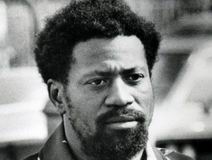 Bobby Joe Maxwell
Spree killer · USA · 1978
Name: Bobby Joe Maxwell Sex: M Race: B Type: T Motive: PC-nonspecific Method of…
11 victims
Bobby Joe Maxwell
Spree killer · USA · 1978
Name: Bobby Joe Maxwell Sex: M Race: B Type: T Motive: PC-nonspecific Method of…
11 victims
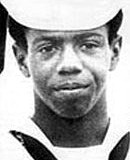 Mark Essex
Spree killer · USA · 1973
Mark James Robert Essex was a Navy veteran who engaged in a shooting and arson…
9 victims
Mark Essex
Spree killer · USA · 1973
Mark James Robert Essex was a Navy veteran who engaged in a shooting and arson…
9 victims
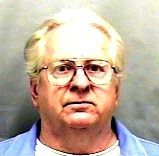 Allen Leroy Anderson
Spree killer · USA · 1976
Allen Leroy Anderson was a 34-year-old vagrant with a long record of felony arr…
8 victims
Allen Leroy Anderson
Spree killer · USA · 1976
Allen Leroy Anderson was a 34-year-old vagrant with a long record of felony arr…
8 victims
 Dennis Whitney
Spree killer · USA · 1960
Dennis Whitney was convicted and sentenced in Florida after a course of killing…
7 victims
Dennis Whitney
Spree killer · USA · 1960
Dennis Whitney was convicted and sentenced in Florida after a course of killing…
7 victims
 Kenneth Wilson
Murderer · USA · 1993
Kenneth L. Wilson was put to death by injection at the Greensville Correctional…
1 victim
Kenneth Wilson
Murderer · USA · 1993
Kenneth L. Wilson was put to death by injection at the Greensville Correctional…
1 victim
 James Eugene Hunter
Murderer · USA · 1992
James Eugene Hunter was sentenced to death on August 18, 1993. The case involve…
1 victim
James Eugene Hunter
Murderer · USA · 1992
James Eugene Hunter was sentenced to death on August 18, 1993. The case involve…
1 victim
 Lloyd Maurice Crosbie
Murderer · Australia · 2001
Lloyd Maurice Crosbie was convicted in Victoria. · March 11, 2003 — The Supreme…
2 victims
Lloyd Maurice Crosbie
Murderer · Australia · 2001
Lloyd Maurice Crosbie was convicted in Victoria. · March 11, 2003 — The Supreme…
2 victims
 Jürgen Bartsch
Serial killer · Germany · 1962
Jürgen Bartsch was born out of wedlock in post-war Germany. He lost his mother…
4 victims
Jürgen Bartsch
Serial killer · Germany · 1962
Jürgen Bartsch was born out of wedlock in post-war Germany. He lost his mother…
4 victims
 David Lee Sanders
Murderer · USA · 1987
David Lee Sanders (DOB 8-8-60) was sentenced to death on June 5, 1987. Sanders…
2 victims
David Lee Sanders
Murderer · USA · 1987
David Lee Sanders (DOB 8-8-60) was sentenced to death on June 5, 1987. Sanders…
2 victims
 Ronald Lott
Murderer · USA · 1986
Ronald Clinton Lott was the petitioner-appellant in Lott v. Trammell before the…
2 victims
Ronald Lott
Murderer · USA · 1986
Ronald Clinton Lott was the petitioner-appellant in Lott v. Trammell before the…
2 victims
- Gender
- male
- Country
- USA
- Location
- Memphis, Tennessee, USA
- Date of birth
- 1946
- Age at first offence
- 23
- Characteristics
- rape, convicted rapist, domestic violence, kidnapping, mutilation, torture
- Victim profile
- Roy Dumas, 58, and Bernalyn Dumas, 46 / Leila Jackson, 80 / Glenda Harden, 21 / Mary Pickens, 59
- Method of murder
- Strangulation - St abbing with knife
- Date(s) of murder
- August -September 1969
- Years active
- 1969
- Date of arrest
- September 11, 1969
- Status
-
Imprisoned
Sentenced to death; commuted to 99 years in prison in 1972; sentenced to 398 years in prison in 1973; parole denied with eligibility to seek parole again on Aug. 1, 2011
Background
George Putt was born in New Orleans, Louisiana in the mid-1940s. His parents were drifters who brought him and his siblings up amid abuse and neglect. His father was a petty criminal and drifter, frequently away from home and brutal to his children when in residence. One of his numerous arrests, on June 4, 1946, involved a charge of cruelty to a minor; the victim was George, still shy of three months old, who had been severely beaten with a leather strap.
Putt’s family moved repeatedly throughout the latter 1940s and the early 1950s. In January 1947, he was dropped off with a family friend in Tupelo, Mississippi, where he remained, without word from his parents, for the next year. In 1954, when both his parents went to jail for forgery, Putt and his six siblings were sent to live with their grandparents in Richmond, Virginia.
Putt and an elder brother were arrested in November 1957, after shooting out a neighbor’s windows with a stolen air rifle. Fed up, his grandparents sent Putt and four of his brothers to a rural orphan’s school, where fundamentalist religion was enforced with frequent beatings. Putt handled discipline poorly. With a brother, Clifford, he twice ran away from the school and was rewarded with expulsion on his second failed attempt. Returned to the custody of his grandparents, Putt was packed off to the Richmond Home for Boys.
During a football game, Putt was kicked in the forehead and was knocked unconscious for “many minutes,” and he may have sustained permanent damage. In months to come, he began sleepwalking with his eyes open, suffering blackouts that alternated with violent seizures, throwing furniture and ripping towel racks from the walls, professing amnesia after the fact.
The summer after his injury, Richmond police arrested Putt for attacking two young girls. One of them was stripped naked and forced to suck his penis. After being arrested at his grandparents’ home, he was delivered to juvenile authorities. Psychological tests revealed Putt’s “morbid preoccupation with blood and gore.” This led authorities to consider placing him in a mental institution. Terrified by the prospect, he fled from custody one night, clad only in his undershorts, teaming up with brother Clifford for several days before he was recaptured. He was diagnosed as a “sociopathic personality,” created by “almost unbelievable physical and emotional deprivation,” and was ruled fit for trial on a sodomy charge.
Putt escaped from custody again on December 22, 1961. Two weeks later, he abducted a 30-year-old Richmond woman at knifepoint, robbed her of $35, and raped her. A warrant was issued for his arrest, but he fled Virginia, hoping to locate his father somewhere in Mexico.
On January 13, 1962, he kidnapped a woman from Laredo, Texas, at gunpoint, forcing her to drive him out of town, and he escaped on foot when she deliberately crashed her car. Two days later, he climbed through the window of a Laredo apartment, abducting the female tenant by threatening to kill her children if she failed to cooperate. George was driving the woman out of town in her own car when he spotted a police van and crashed; he then fled on foot. He was captured the next day as he emerged from a local theater. He spent thirteen months in the Webb County jail.
Putt was transferred to the Terrace School in Laredo on February 28, 1963. He escaped in October, was recaptured, and sent to the more secure Hilltop School, where he passed his eighteenth birthday. In June 1964, following exposure of his plan to kidnap the school’s librarian and escape in her car, he was transferred to an “adjustment center.” He was diagnosed as possessing the “earmarks of a psychopath in his makeup” and was shipped on from there to the maximum-security juvenile lockup at Gatesville. A 1965 report termed him psychotic. He was routinely discharged from custody on his twenty-first birthday in 1967.
Returning to Tupelo, where his grandparents now lived, Putt found work as a hospital orderly. A few days later he was fired for stealing $100 from a nurse’s handbag, but he escaped prosecution by repaying the money. From Tupelo, he moved back to his native New Orleans, and was charged with stealing a checkbook from a room at the Roosevelt Hotel. On May 5, 1967, he was picked up for pilfering $46 from the till of a local cafe; the owner declined to prosecute when his money was recovered from Putt’s stocking.
In the fall of 1967, Putt married a Mississippi woman, insisting on six to eight bouts of intercourse every night, although he rarely climaxed. In public, he erupted into violent fits of jealousy whenever his wife spoke to another man, including co-workers, and by 1968 his violence was not confined to his marriage.
On October 16, 1968, police in Memphis, Tennessee arrested Putt after he forced his way into a black woman’s car and began beating her with his fists.
The offence
Putt settled in Jackson, Mississippi, with his brother Clifford and their wives. He tried to rape his mother-in-law on three separate occasions in early 1969.
Police believed he committed his first murder in Jackson shortly after the third rape attempt, when a socially-prominent bachelor was slain on April 27, 1969. The victim was stabbed fifteen times at his home, a short distance from the gas station where Putt was employed. George was never charged in the crime, but authorities remained convinced of his involvement.
Putt and his wife moved back to Memphis in the summer of 1969. He then launched a one-man reign of terror shortly after their arrival.
On August 14, Roy and Bernalyn Dumas were found dead in their home. The woman was spread-eagle on her bed, gagged, with wrists and ankles bound to the bedposts. Both victims had been bludgeoned and strangled; Bernalyn Dumas had also been raped and her anus and vagina had been mutilated with a pair of surgical scissors. Saliva samples taken at the scene revealed a blood type different from that of the victims.
On August 25, Leila Jackson, an 80-year-old widow, was found strangled in her home with a nylon stocking tied around her neck. Her genitals had been mutilated with a butcher knife.
Four days later, Glenda Harden, 21, was abducted and murdered in Riverside Park. She was stabbed fourteen times as she lay helpless, with her hands bound behind her back. Her body was discovered on August 30, which touched off a panic in Memphis as police scrambled to identify the killer.
On September 9, an anonymous caller fingered George Putt as a suspect in the crimes. Two days later, the slayer struck again. Mary Pickens was ambushed inside her apartment returning from work and stabbed nineteen times by a man wielding his knife with desperate speed. Neighbors heard her screams and called police, providing officers with the description of a young man spotted running from the scene. The suspect led patrolmen and civilians on a wild, winding chase before two officers ran down George Putt. His clothing was smeared with blood and he was taken into custody. Before the day was out, he confessed to all five homicides.
Investigation
Police believe Putt committed his first murder in Jackson shortly after the third rape attempt; the victim was stabbed fifteen times at his home, a short distance from the gas station where Putt was employed.
An anonymous caller fingered George Putt as a suspect in the crimes on September 9. Detectives were still working through other leads two days later when Mary Pickens was murdered.
Arrest
Putt was arrested after the chase following Mary Pickens’ murder. Two officers ran down George Putt with his clothing smeared with blood and took him into custody.
Trial
Putt was convicted of the Pickens murder on October 27, 1970. He was sentenced to die for that murder. He confessed to all five homicides and thereby sealed his fate.
The sentencing and later prosecution included the other homicides after his Pickens conviction and death sentence were commuted.
Sentencing
Putt’s sentence for the Pickens murder was altered to a term of 99 years when the Supreme Court struck down the death penalty in 1972.
A double conviction in the Dumas case during April 1973 added 398 years to his term, making his accumulated prison time 497 years.
Judge William H. Williams ordered the sentences to be served consecutively for a total of 497 years.
Appeals
The Supreme Court struck down the death penalty in 1972, and Putt’s sentence was altered to a term of 99 years.
A ruling that parole hearings could not be denied more than six years at a time affected how future parole denials were scheduled. A state court ruling in 1992 made defendants sentenced to more than 50 years under an old law eligible for parole after serving 30 years regardless of their total sentence.
Outcome
Putt was sentenced to death, and his sentence was later commuted to 99 years in prison in 1972. In 1973, he was sentenced to 398 years in prison, for a total of 497 years. His parole was denied.
Putt denied parole August 22, 2005. Officials said he had been denied parole and that he was a convicted serial killer who terrorized Memphis during the summer of 1969. George Howard Putt, 59, had killed five people over a 29-day period in August and September of 1969 and was sentenced to 497 years. His release date was in 2436. He had had three chances before the Tennessee Probation and Parole Board. The board reviewed his case on Aug. 11 at the Turney Center Industrial Prison and Farm in Only, and on Friday a fourth board member’s vote to deny parole made the decision final, said spokesman Jack Elder.
Putt was eligible to seek parole again on Aug. 1, 2011.
Aftermath
Michael Dumas urged the state parole board not to release Putt during the parole hearing. After a 30-minute hearing, the two members of the Tennessee Board of Probation and Parole who heard from Dumas denied parole for Putt because of the seriousness of the crimes. Concurring votes from two of the five other board members made the decision final.
Dumas was accompanied by his grown son, a friend and two ministers from Christ United Methodist Church. Dumas said:
“When I found out about this hearing I was sort of speechless,”
Dumas also said:
“Few people know what went on. I did because I saw it. The judge made his sentences consecutive so I would not have to be here today.”
He added:
“I'm trying to go forward, but it's hard to put George Howard Putt out of my mind. The past does hurt.”
Parole board chairman Charles Traughber said:
“There are some offenders the public expects should never get out and Mr. Putt falls into that category,”
Traughber also said:
“He was unmerciful on his victims.”
Traughber explained that the parole hearing was actually the second for Putt, who was denied parole in 1993. Traughber said the hearings were required because of the 1992 state court ruling that made defendants sentenced to more than 50 years under an old law eligible for parole after serving 30 years regardless of their total sentence.
Dumas said in a letter earlier this year:
“I discovered the crime scene and death beds of my parents when they failed to show up at a birthday party in honor of my wife,”
He added:
“The murders were a mystery with no motives or clues, and I, my wife and unborn family lived in both grief and fear.”
He said at the hearing:
“I'm not here to speak against George Howard Putt because I've prayed for him for 30 years,”
He also said:
“I certainly oppose parole for George Howard Putt, though I have forgiven him and placed the forgiveness of his sins at the cross of Jesus. I hope he seeks salvation.”
Putt waived his appearance at the parole hearing and no one spoke on his behalf.
Putt’s next parole hearing was to be in 30 years when he would be 87.
Putt was serving his sentence at the Turney Center Industrial Prison in Only, Tennessee. Behind bars, he worked a variety of jobs, including as an office technician, an athletic equipment custodian, an industrial cleaner, a utility worker and most recently a quality control technician in the prison’s industries. His custody level was listed as minimum restricted.
An additional detail stated that Putt officially had a sentence expiring March 1, 2437. It also stated that he had been denied parole and that parole hearings were scheduled in line with the relevant ruling about denial timing.
Victims
Roy K. Dumas
- Found dead in their home on August 14, 1969.
- He was disabled from wounds suffered in World War 2 and was bludgeoned and strangled.
Bernalyn Dumas (also referred to as Bernalyn Dumas)
- She was spread-eagle on her bed, gagged, wrists and ankles bound to the bedposts.
- She was bludgeoned and strangled; she was raped and her anus and vagina were mutilated with a pair of surgical scissors.
Leila Jackson
- Found strangled on August 25, 1969.
- She was an 80-year-old widow.
- A nylon stocking was tied around her neck; her genitals were mutilated with a butcher knife.
Glenda Harden (also referred to as Glenda Sue Harden)
- Abducted and murdered four days after August 25, 1969, and her body was discovered on August 30.
- She was 21 years old.
Christine Pickens (also referred to as Mary Pickens)
- Ambushed inside her apartment returning from work and stabbed nineteen times.
- She died following an event sequence culminating in Putt’s arrest after a footchase and confession.
Timeline
- June 4, 1946 — Putt’s father was arrested on a charge of cruelty to a minor involving Putt, who was severely beaten with a leather strap.
- January 1947 — Putt was dropped off with a family friend in Tupelo, Mississippi, and remained there for the next year without word from his parents.
- 1954 — Putt’s parents went to jail for forgery; Putt and his six siblings were sent to live with their grandparents in Richmond, Virginia.
- November 1957 — Putt and an elder brother were arrested after shooting out a neighbor’s windows with a stolen air rifle.
- December 22, 1961 — Putt escaped from custody.
- Two weeks later (after December 22, 1961) — Putt abducted a 30-year-old Richmond woman at knifepoint, robbed her of $35, and raped her.
- January 13, 1962 — Putt kidnapped a woman from Laredo, Texas, at gunpoint.
- Two days later (after January 13, 1962) — Putt climbed through a window in a Laredo apartment and abducted the female tenant by threatening to kill her children if she failed to cooperate; he later crashed while driving her.
- Next day (after the crash) — Putt was captured as he emerged from a local theater.
- February 28, 1963 — Putt was transferred to the Terrace School in Laredo.
- October 1963 — Putt escaped from Terrace School.
- April 27, 1969 — A socially-prominent bachelor was slain at his home; police believed Putt committed his first murder in Jackson shortly after the third rape attempt.
- August 14, 1969 — Roy and Bernalyn Dumas were found dead.
- August 25, 1969 — Leila Jackson was found strangled in her home.
- August 30, 1969 — Glenda Harden’s body was discovered in Riverside Park.
- September 9, 1969 — An anonymous caller fingered George Putt as a suspect in the crimes.
- September 11, 1969 — Christine Pickens was stabbed to death in her apartment and Putt was arrested after a footchase.
- October 27, 1970 — Putt was convicted of the Pickens murder and sentenced to die.
- 1972 — The Supreme Court struck down the death penalty; Putt’s punishment was altered to a term of 99 years.
- April 1973 — A double conviction in the Dumas case added 398 years to Putt’s term.
- Aug. 11, 2005 — The board reviewed Putt’s case at the Turney Center Industrial Prison and Farm in Only.
- August 22, 2005 — Putt denied parole.
- Aug. 1, 2011 — Putt was eligible to seek parole again.
- March 1, 2437 — Putt’s sentence was stated to expire.
Other details
- Putt was described as “sociopathic personality,” created by “almost unbelievable physical and emotional deprivation,” and ruled fit for trial on a sodomy charge.
- In one account, by age 16 he was under arrest for his second attempted rape, after escaping from a first arrest; the second attempt occurred when he forced a woman into his car in Texas and wrecked the vehicle.
- A psychiatrist described Putt as “a pyschopath capable of committing almost any crime.”
- Putt reportedly escaped from custody one night while terrified of being placed in a mental institution, and he fled clad only in his undershorts.
- Putt’s later life included claims that he worked at a gas station and that his wife worked at a local hotel; it also included information that he faced burglary charges and other theft incidents before the 1969 killings.
- Putt was denied parole and was described as having a release date in 2436.
- Putt was said to have confessed in detail to all the killings; later he was described as recanting his confession in one account but being tried and sentenced to death for Christine Pickens’ murder.
- It was stated that the judge made the sentences consecutive so that Michael Dumas would not have to be in court again; later consecutive sentences produced a combined total of 497 years.

Spotted an error, or have more information about this case?