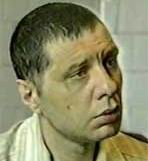
Ilshat Kuzikov
Homicide Sergey Gordeyev
Homicide · Russia · 2014
Sergey Gordeyev (also spelled as Sergei Gordeev; Russian: Сергей Гордеев) was a…
2 victims
Sergey Gordeyev
Homicide · Russia · 2014
Sergey Gordeyev (also spelled as Sergei Gordeev; Russian: Сергей Гордеев) was a…
2 victims
 Hu Wanlin
Homicide · China · 1997
Hu Wanlin (胡万林), born 1949, was from Mianyang, Sichuan Province. · 1993 — While…
146 victims
Hu Wanlin
Homicide · China · 1997
Hu Wanlin (胡万林), born 1949, was from Mianyang, Sichuan Province. · 1993 — While…
146 victims
 Jack Kevorkian
Homicide · USA · 1990
Jack Kevorkian (born May 26, 1928) was a controversial American pathologist. He…
130 victims
Jack Kevorkian
Homicide · USA · 1990
Jack Kevorkian (born May 26, 1928) was a controversial American pathologist. He…
130 victims
 David Koresh
Homicide · USA · 1993
David Koresh (born Vernon Wayne Howell; August 17, 1959 – April 19, 1993) led t…
79 victims
David Koresh
Homicide · USA · 1993
David Koresh (born Vernon Wayne Howell; August 17, 1959 – April 19, 1993) led t…
79 victims
 Leszec Pekalski
Homicide · Poland · 1984
1984–1992 — Leszek Pękalski was believed to have killed at least 17 people. · 1…
17 victims
Leszec Pekalski
Homicide · Poland · 1984
1984–1992 — Leszek Pękalski was believed to have killed at least 17 people. · 1…
17 victims
 Todd Hall
Homicide · USA · 1996
Todd Hall was described by neighbors as "mentally slow" and was said to have su…
9 victims
Todd Hall
Homicide · USA · 1996
Todd Hall was described by neighbors as "mentally slow" and was said to have su…
9 victims
 Kenneth Chad Charm
Murderer · USA · 1993
Kenneth Chad Charm was tried and convicted for the 1993 rape and murder of 14-y…
1 victim
Kenneth Chad Charm
Murderer · USA · 1993
Kenneth Chad Charm was tried and convicted for the 1993 rape and murder of 14-y…
1 victim
 Obie Weathers
Murderer · USA · 2000
Name: Obie Weathers · TDCJ number: 999396 · Date of birth: 08/11/1981 · Age at…
1 victim
Obie Weathers
Murderer · USA · 2000
Name: Obie Weathers · TDCJ number: 999396 · Date of birth: 08/11/1981 · Age at…
1 victim
 Elizabeth Potts
Murderer · USA · 1888
Elizabeth Potts (née Atherton) was convicted of murder in 1889 and was hanged t…
1 victim
Elizabeth Potts
Murderer · USA · 1888
Elizabeth Potts (née Atherton) was convicted of murder in 1889 and was hanged t…
1 victim
 George Quesinberry
Murderer · USA · 1989
George Adrian Quesinberry Jr. was executed by lethal injection at the Greensvil…
1 victim
George Quesinberry
Murderer · USA · 1989
George Adrian Quesinberry Jr. was executed by lethal injection at the Greensvil…
1 victim
 Rick Allan Rhodes
Murderer · USA · 1991
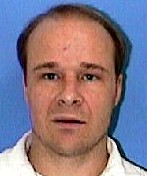
Rick Allan Rhodes was born on 05/10/64. He was a white male with blonde hair. H…
2 victims
Rick Allan Rhodes
Murderer · USA · 1991
Rick Allan Rhodes was born on 05/10/64. He was a white male with blonde hair. H…
2 victims
 Catherine Flannagan
Murderer · United Kingdom · 1883
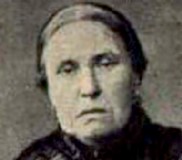
Catherine Flannagan and her sister Margaret Higgins used arsenic to poison peop…
1 victim
Catherine Flannagan
Murderer · United Kingdom · 1883
Catherine Flannagan and her sister Margaret Higgins used arsenic to poison peop…
1 victim
- Gender
- male
- Country
- Russia
- Location
- St. Petersburg, Russia
- Date of birth
- 1962
- Age at first offence
- 30
- Characteristics
- cannibal, alcohol, former mental patient
- Victim profile
- Sasha Pichonkin / Misha Bochkov, 37 / Edik Vassilevski, 43 ( male acquaintances)
- Method of murder
- St abbing with knife
- Date(s) of murder
- 1992 / 1995 / 1996
- Years active
- 1992–1996
- Date of arrest
- February 1997
- Status
-
Found insane; sentenced to closed psychiatric confinement in 1997
Ilshat Kuzikov
Ilshat Kuzikov was a St Petersburg resident who was suspected of killing three vodka-drinking partners and eating their internal organs. He confessed to cannibalism.
The offence
Kuzikov was accused of murdering three men among his vodka drinking buddies and cannibalizing them by eating internal organs. Police described his confessed account as involving invitations to his flat for a nightcap, after which he killed his victims, dismembered their bodies, and disposed of parts in dumps, communal bins, and other locations.
Police said he was selective in his choices of cuts, stating that he did not eat limbs, heads, bowels or genitals. A police video from his one-room apartment focused on a bag near the door containing two legs severed from below the knee and two forearms cut from the elbow. Police said he had already dumped the head and remaining parts of his last victim in communal bins.
Police also said forensic identification had been hindered by a heavy vinegar and onion marinade that he favoured.
Investigation
Police searched Kuzikov’s St Petersburg flat and found human organs and severed limbs, along with items associated with cooking and storage of human remains. Investigators found Fanta bottles full of blood, an old gherkin jar used to store pieces of dried skin and ears, and on the balcony an aluminium pot containing shashliki (Russian kebabs) skewered with onions and ready to cook. Police found the old Soviet favourite “Man In The Kitchen” among the materials connected with his eating and cooking.
A police video showed the bag near the door with severed legs and forearms.
Police identified Kusikov’s name and those of his first and last victims by finding them on the register of the same mental hospital, which led police to take action. Police cut off Kuzikov’s water and knocked on his door posing as plumbers. Police said they had to batter down the door in the end, but Kuzikov was not evasive and “He did not try to deny it,” and he “was quite open when we asked about what we saw.”
Arrest
On February 14, 1997, police arrested the St Petersburg resident Ilshyat Kuzikov. He was suspected of killing three vodka drinking buddies and eating their internal organs.
Trial
Kuzikov was found to be insane.
Sentencing
Kuzikov was sentenced to closed psychiatric confinement in 1997.
Outcome
Kuzikov was ruled insane and was sentenced to closed psychiatric confinement in 1997.
Background
Kuzikov was described as a heavy drinker and as a sometime outpatient of a local psychiatric hospital. He had been known to be on the register at the local psychiatric hospital.
Police psychiatrist Dr Valery Ivanov interviewed Kuzikov during interrogation before trial proceedings “later this year.” After two days of interrogation, Dr Ivanov said he had made a breakthrough by convincing Kuzikov that he understood and could empathise with the crimes. Dr Ivanov used Kuzikov’s first-name diminutive, saying: “No, Igariok, I haven't tried that recipe. Do you think it's good?”
Kuzikov was described as having an acrid smell during interrogation. He drew on a cigarette while ignoring questions except those from Dr Ivanov.
Confession and account of method
In his confession, Kuzikov described that “The murders always took place on the day he received his disability pension from the hospital,” as related by St Petersburg police inspector Mikhail Baluhka. Baluhka described that Kusikov asked a friend up for vodka, “the first was Sasha Pichonkin.” Baluhka said that “When both were very drunk, Kusikov would make a homosexual advance, which, if refused, sent him into a murderous rage.”
Baluhka described the fate of Sasha Pichonkin. Kusikov struck him on the back of the head with a knife handle before slitting his throat. Police said he then stripped himself and his victim, selected one of a dozen cleavers from a cardboard box above the bath, and began dismembering the body.
During the interview, Kusikov had “only a loaf of bread, brought to him by Ivanov, to gnaw on.” Kuzikov said: “You know, I always wanted to be a surgeon, but it's better to be a cannibal,” and he continued: “If you are a surgeon, you have to put the body back together and you stop having any control over it. But a cannibal kills and then he can do what he wants with the body. After he kills, he owns it for ever.”
Mental health and prior psychiatric diagnosis
Kuzikov was diagnosed schizophrenic in the 1980s and received a monthly payment of about R120.
Dr Ivanov said he used psychiatric investigations that would be undertaken before Kusikov faced trial. The case described that Kusikov was found insane and sent to a maximum-security psychiatric hospital.
Family history and early life
The case described records from Tadzhikistan, where Kuzikov grew up. When Kuzikov was 11, police and psychiatric commentary described that “his father strangled his young wife, Kusikov's mother.” Dr Ivanov said: “The effect this had on Kusikov, we do not yet know.”
Dr Ivanov said Kusikov admitted that around that time he and his brother started an incestuous homosexual relationship. Dr Ivanov also said Kusikov became obsessed with the human body and was able to orgasm while watching surgical operations on television hospital shows.
Education and employment
Kuzikov’s poor school record made it impossible for him to realize his medical ambitions. The case said that by the time his family moved to St Petersburg in the early 1970s, he was barely able to graduate from a low-grade technical college. He worked as a welder before claiming his pension.
Records described that more than once he was turned down for work at a nearby morgue; he had applied to wash the corpses.
Domestic and personal life
The case described that when killings started, Kuzikov’s life was in turmoil. It said his wife, “also a former patient at the mental hospital,” walked out on their two-year marriage after he attacked her with a knife. It also said his drinking was at alcoholic level and that he was sexually confused.
The case stated that Kusikov was married and had worked as a street sweeper at the local market.
Neighbour accounts and daily life
Police said that to families living at Block 22, Ordzhonikidze Street, in a bleak St Petersburg suburb, Kuzikov was an inoffensive neighbour. He was known to be a heavy drinker and a sometime outpatient of a local psychiatric hospital. The case described that he had visitors rarely and that his only distinguishing feature was “the large canvas bag he always seemed to have with him.” The canvas bag was found in his flat full of human bones.
Neighbour Luyba Vasilevna, who was described as 69-year-old, said: “He was good with his hands,” and that “If you ever needed help with changing a lock or a shelf, he would always muck in.” She added: “He was very quiet and didn't often seem to have visitors.”
Neighbour Olga Petrovna, who lived downstairs, said: “The dogs must have smelt it. It was horrible. There were also jars with other stuff that I thought were just old bits of meat. You couldn't imagine it was human.”
Other details
Neighbours’ recollections of early discoveries
The case described an earlier discovery in November 1992 when neighbours made “the gruesome discovery of a human torso in the basement of a local house,” and that “no-one linked it to him.” Olga Petrovna said: “It was an open basement - anyone could have come and dumped stuff there.”
The case said the net did not close on Kusikov three years later when “the severed head of a vagrant, 37-year-old Misha Bochkov, was found dumped with his block's communal rubbish,” or when arms from the same body were discovered in a nearby burnt-out car.
The case described that a month later, in August last year, “another severed head, later identified as that of a fellow mental patient, 43-year-old Edik Vassilevski,” was found by Olga Petrovna while she was walking her dogs. The case included Olga Petrovna’s quote: “It was about 7am and already quite hot,” and “The dogs must have smelt it. It was horrible.
People named in the case
The case named multiple victims and associates: Sasha Pichonkin, Misha Bochkov (a 37-year-old vagrant), Edik Vassilevski (a 43-year-old fellow mental patient), and other vodka drinking partners killed and eaten for internal organs.
It also named neighbours: Luyba Vasilevna (69-year-old) and Olga Petrovna (72-year-old).
The case named investigators and clinicians including police inspector Mikhail Baluhka and psychiatrist Dr Valery Ivanov.
The case also named psychologist and other psychiatrists and serial killers as comparison, including Sergei Dzhumagalayev (once a paratrooper, described as the Kazakh Cannibal), Andrei Chikatilo (the Rostov Ripper and a schoolteacher), Andrei Tkachenko (director of the Serbsky Psychiatric Centre in Moscow), Alexander Bukhanovsky, and Alexander Bukhanovsky’s described role in the capture of Chikatilo.
Disposition and remarks attributed during interview
Kuzikov told Dr Ivanov: “Come on, we understand each other. You could get me out of here. We will go off together and do things that we like to do.”
Kuzikov said to Ivanov: “He has invented that excuse, used by many serial killers,” as described by Dr Ivanov.
Dr Ivanov believed Kusikov was a sadist and said: “For a sadist, the most important thing is to have complete control of their victims and they have ultimate control over them when they eat them. That is cannibalism.”
Kuzikov told Ivanov: “You know, I am a nurse of society. I am cleaning up all the rubbish. At work, I swept streets. Now I'm just cleaning up a different kind of rubbish.”
Kuzikov also joked at the end of the interview, saying: “Hey, I like the look of that lawyer: he's nice. Good strong body. What do you think?”
Statements on victim selection and missing female remains
Mikhail Baluhka said: “He told me he preferred the taste of men to women - though we never found any female remains,” and added: “Then he asked us if we would let him go if he let us taste a bit. He offered us some liver.”
Cat association
The case described that Kusikov was kind and devoted to his cat Dasha. It also said Kusikov later claimed at one stage that the cat “told” him to murder.
Spotted an error, or have more information about this case?