
Lynn Turner
Murderer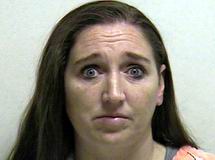 Megan Huntsman
Murderer · USA · 1996
Megan Huntsman was 40 at sentencing. She was a mother of three children who wer…
6 victims
Megan Huntsman
Murderer · USA · 1996
Megan Huntsman was 40 at sentencing. She was a mother of three children who wer…
6 victims
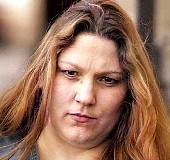 Angela Johnson
Murderer · USA · 1993
Angela Jane Johnson was convicted in federal court of aiding and abetting the m…
5 victims
Angela Johnson
Murderer · USA · 1993
Angela Jane Johnson was convicted in federal court of aiding and abetting the m…
5 victims
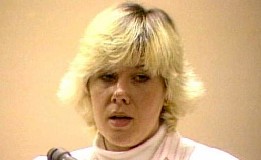 Catherine May Wood
Murderer · USA · 1987
Catherine May Wood was an American caregiver who worked at the Alpine Manor Nur…
5 victims
Catherine May Wood
Murderer · USA · 1987
Catherine May Wood was an American caregiver who worked at the Alpine Manor Nur…
5 victims
 Michele Kalina
Murderer · USA · 1996
Michele Kalina pleaded guilty to murder for one of five infants she initially w…
5 victims
Michele Kalina
Murderer · USA · 1996
Michele Kalina pleaded guilty to murder for one of five infants she initially w…
5 victims
 Amy Bishop
Murderer · USA · 1986
Amy Bishop — biology professor and perpetrator · James Anderson — Bishop’s husb…
4 victims
Amy Bishop
Murderer · USA · 1986
Amy Bishop — biology professor and perpetrator · James Anderson — Bishop’s husb…
4 victims
 Susan Eubanks
Murderer · USA · 1996
Susan Dianne Eubanks, also referred to as Susan Eubanks, was convicted by a jur…
4 victims
Susan Eubanks
Murderer · USA · 1996
Susan Dianne Eubanks, also referred to as Susan Eubanks, was convicted by a jur…
4 victims
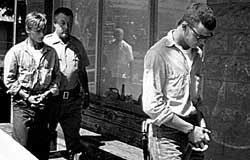 Leonard Maine
Spree killer · USA · 1967
Leonard Maine was convicted in connection with multiple violent offences involv…
4 victims
Leonard Maine
Spree killer · USA · 1967
Leonard Maine was convicted in connection with multiple violent offences involv…
4 victims
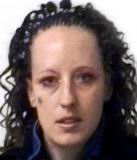 Joanna Dennehy
Murderer · United Kingdom · 2013
Name: Joanna Dennehy · March 2013 — Three murders were carried out in the Unite…
3 victims
Joanna Dennehy
Murderer · United Kingdom · 2013
Name: Joanna Dennehy · March 2013 — Three murders were carried out in the Unite…
3 victims
 Robert Anthony Carter
Homicide · USA · 1981
Robert Anthony Carter was executed by lethal injection in Texas on May 18, 1998…
2 victims
Robert Anthony Carter
Homicide · USA · 1981
Robert Anthony Carter was executed by lethal injection in Texas on May 18, 1998…
2 victims
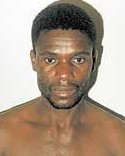 Maoupa Maake
Serial killer · S outh Africa · 1996
Maoupa Maake (Maoupa Cedric Maake; also known as the Wemmer Pan Killer) was a s…
27 victims
Maoupa Maake
Serial killer · S outh Africa · 1996
Maoupa Maake (Maoupa Cedric Maake; also known as the Wemmer Pan Killer) was a s…
27 victims
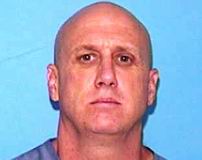 James Michael Randall
Murderer · USA · 1995
James Michael Randall (born August 28, 1954) was an American criminal whose con…
2 victims
James Michael Randall
Murderer · USA · 1995
James Michael Randall (born August 28, 1954) was an American criminal whose con…
2 victims
- Gender
- female
- Country
- USA
- Location
- Cobb County/Forsyth County, Georgia, USA
- Date of birth
- July 13, 1968
- Age at first offence
- 27
- Characteristics
- poisoner, financial gain
- Victim profile
- Her husband, police officer Maurice Glenn Turner, 31 / Her boyfriend, firefighter Randy Thompson, 32
- Method of murder
- Poisoning ( ethelyn glycol, the active ingredient in antifreeze)
- Date(s) of murder
- March 3, 1995 / January 22, 2001
- Years active
- 1995–2001
- Date of arrest
- November 1, 2002
- Status
-
Life imprisonment
Sentenced to life in prison without parole on March 27, 2007; found dead in prison on August 30, 2010
Case record: Lynn Turner
Identifying information
- Name: Lynn Turner
- Also known as / birth name: Julia Lynn Womack Turner
- Lifespan: July 13, 1968 – August 30, 2010
- Status: Serving a life sentence at Metro State Prison.
Timeline
- Aug. 21, 1993 — Cobb County police Officer Maurice Glenn Turner marries Julia Lynn Womack.
- Mar. 3, 1995 — Glenn Turner is discovered dead in bed by his wife.
- Jan. 30, 1996 — Lynn Turner gives birth to a daughter.
- Jan. 22, 2001 — Randy Thompson is found dead in his Cumming apartment.
- June 22, 2001 — Cobb police begin investigating Glenn Turner's death as a possible homicide; Cumming police begin a probe into Thompson's death and call in the GBI for assistance.
- July 30, 2001 — The GBI announces it has changed Thompson's cause of death to antifreeze poisoning; it is later ruled a homicide; Cobb officials exhume Turner's body to test for poisons.
- Oct. 17, 2001 — The Cobb medical examiner announces a second autopsy shows Turner died of ethylene glycol poisoning.
- June 27, 2002 — Cobb medical examiner Dr. Brian Frist rules Glenn Turner's death a homicide.
- Nov. 1, 2002 — Lynn Turner is arrested and charged with the murder of Glenn Turner.
- Feb. 2, 2004 — Jury selection begins in Marietta in Lynn Turner's first trial.
- Feb. 4, 2004 — Unable to seat an impartial jury in Marietta, a judge orders Turner's trial moved; the case is moved to Houston County.
- May 14, 2004 — A Houston County jury returns a guilty verdict against Turner in the murder of Glenn Turner.
- Jan. 8, 2007 — Jury selection begins in Forsyth County in Turner's second murder trial.
- Jan. 16, 2007 — Judge Jeffrey S. Bagley orders the trial moved out of Forsyth County because of difficulty seating an impartial jury; the trial is ordered moved to Dalton, in Whitfield County, and the location is kept a secret until Feb. 14.
- March 24, 2007 — A jury in Whitfield County finds Turner guilty of murdering Randy Thompson.
- March 27, 2007 — Jurors give Turner life in prison with no chance of parole.
- Aug. 30, 2010 — Turner is found unresponsive in her cell at Metro State Prison in Atlanta at 6:55 a.m.; prison medical staff are unable to revive her and she is pronounced dead 40 minutes later.
Background
Lynn Turner was an American woman and a convicted murderer. She was born Julia Lynn Womack Turner on July 13, 1968.
She was adopted as an infant by Helen Womack, a legal secretary, and her husband. When Lynn was five, Helen divorced and raised her daughter on her own until remarrying some years later. There were tensions between Lynn and her stepfather, D.L. Gregory.
As a young teenager, Lynn’s problems grew. She was admitted to an Atlanta drug clinic for treatment.
In her early 20s, Lynn began pursuing a job in law enforcement. She worked as a 911 operator and took a civilian position with an undercover narcotics unit in Chattanooga, Tennessee.
Outside of work, she spent time clubbing, hot-tubbing and shooting pool. It was at the apartment of a suburban Atlanta patrolman where a group of officers had gathered before a night out dancing that Lynn met Glenn.
Shortly after Lynn’s introduction to Glenn, she began pursuing him, buying him items including exotic snakeskin cowboy boots and tickets to sporting events.
Glenn’s friends included officers who jokingly called themselves the Rat Pack. Glenn’s circle of cop friends were not sure about Lynn’s intentions. Witnesses described Lynn as a big spender and someone who needed to be the center of attention. Glenn’s friends described her as having a brittle temper and being able to “go from being sweet to being hateful within seconds.”
Lynn and Glenn were NASCAR fans. Lynn bought an expensive pace car and attended races together.
In 1992, Lynn applied to become a police officer. She failed the psychological exam. Afterward, she told Glenn that it was humiliating to remain as a dispatcher and began scheming to find a higher-paying and more prestigious position. When nothing turned up, she began regularly calling in sick at work.
Glenn told his buddies he was in love and showed them an engagement ring he had gotten Lynn for Christmas. Two months later, Glenn moved in with Lynn and they set a wedding date for August 1993. Glenn named Lynn the beneficiary on his insurance policies.
During the wedding ceremony, the couple were unable to light the unity candle. Glenn’s brother James gave a best man’s toast at the reception stating: “I feel like I’m more at a funeral than a wedding,” and “I don’t see this working out, but I hope for the best.”
Before the honeymoon was over, the relationship frayed. Glenn booked them on a family cruise; Lynn was furious that it was not the luxury version. Soon after, Glenn complained that Lynn was suffering from “female problems” and could no longer participate in their once very active sex life. Six months into the marriage, the couple slept in separate bedrooms.
Glenn continued to cater to Lynn. David Dunkerton, a riding partner, said: “He’d call her while we were working and say, ‘Hey, can I bring you something to eat?’” and “Most of the time she was downright rude to him.” Dunkerton said: “He’d hang up and say, ‘Why do I even bother?’”
Lynn continued to spend, buying a Datsun 240Z on a credit card and booking out-of-town pleasure trips. To keep up with bills, Glenn began to work an extra job at a gas station. Linda, Glenn’s sister, recalled Lynn putting Glenn on a budget in the last year of his life: “Twenty bucks a week.”
Eventually Glenn took steps toward divorce.
Ten days before Glenn’s death, which occurred on the day he was to move out, Glenn told a friend that Lynn threatened to shoot him with his service revolver. Glenn told Dunkerton: “If anything happens to me,” and “look at Lynn.”
After Glenn’s death, Glenn’s mother Kathy Turner refused to accept medical findings and sought further testing. She said she could not afford a private autopsy.
After Glenn’s funeral, Lynn reportedly collected nearly a quarter of a million dollars from Glenn’s estate and from insurance proceeds and death benefits as the primary beneficiary under Glenn’s insurance policies.
Four days after Glenn’s funeral, Lynn moved in with Randy Thompson, with whom she had been having an affair prior to her husband’s death.
The offence
Murder of Maurice Glenn Turner (1995)
Glenn Turner, a Cobb County police officer, died unexpectedly on March 3, 1995.
For several months before Glenn’s death, he had marital problems with Turner. Glenn confided to two close friends and colleagues that if he ended up dead, Turner probably would have had something to do with it.
Glenn had decided he would move out of their home on the weekend of March 3, 1995, but a few days before the planned move he became ill. He went to a hospital complaining of nausea and flu-like symptoms. He was given fluids for dehydration, medicine for nausea, and was discharged.
The next morning, Turner served Glenn green Jell-O. Glenn died within a few hours after being left at home after feeding him Jell-O.
Glenn’s autopsy revealed signs of antifreeze poisoning, but the Cobb County medical examiner concluded at that time that Glenn died of a heart attack.
Glenn’s mother said the couple were unable to light the unity candle and later described that Glenn had no known health problems. Glenn had survived a near-fatal motorcycle wreck eight years before his March 3, 1995 death, returning to his job after waking from a coma.
Kathy Turner said that in the days before his death Glenn had severe flu-like symptoms, including vomiting and diarrhea, and he missed three days from work.
She described Glenn being admitted to Kennestone Hospital’s ER, where he was given intravenous fluids and medications, then released.
Kathy Turner also referenced Glenn’s friends noticing Lynn’s statements at Glenn’s funeral, including overhearing her saying, “I’ve got to get the hell out of here.”
Murder of Randy Thompson (2001)
Randy Thompson died on January 22, 2001. The timeline describes him as found dead in his Cumming apartment. He was 32.
Glenn and Randy were described as dying six years apart with identical circumstances as described in the case narrative: both reportedly became violently ill after flu-like symptoms, were treated at an emergency room, and then died after being served Jell-O.
Three days before Randy’s death, he spent the evening with Lynn and had dinner with her. A few hours later, he became violently ill. The next day, he went to the emergency room complaining of flu-like symptoms. He was treated and discharged. The following night, Turner fed him Jell-O, and Thompson was found dead the next morning.
After learning that Glenn’s body also showed antifreeze poisoning, authorities exhumed Glenn’s body and tested for poison. A Cobb medical examiner revised Glenn’s death certificate to show the cause of death was ethylene glycol toxicity rather than heart-related disease. Turner was then charged with murdering Glenn.
In the second prosecution, Turner faced the death penalty for the 2001 murder of Randy Thompson but was instead sentenced to life in prison without parole.
Investigation
Initial medical examiner findings and reopening
After Glenn Turner’s death in 1995, the autopsy revealed signs of antifreeze poisoning, but the Cobb County medical examiner concluded Glenn died of a heart attack. Authorities initially thought the death was natural causes.
In 2001, the investigation reopened after Randy Thompson was found to have been poisoned.
The GBI toxicologist studied urine and blood samples from Thompson and discovered the presence of ethylene glycol. When further tests confirmed antifreeze in Thompson’s body, a GBI medical examiner determined Thompson’s death to be ethylene glycol toxicity.
Following these findings, the medical examiner ordered slides of Glenn Turner’s kidneys. The slides revealed the same signs of antifreeze poisoning that were present in Glenn’s first autopsy.
Cobb County authorities exhumed Glenn’s body and performed additional tests that confirmed ethylene glycol in Glenn’s tissues.
Charges
Turner was indicted by a Cobb County grand jury on November 1, 2002, and was charged with malice murder.
A Houston County jury found her guilty on May 14, 2004.
Turner was indicted for Randy Thompson’s death and later faced trial for that offense, which resulted in a conviction in 2007.
Arrest
Lynn Turner was arrested on Nov. 1, 2002 and charged with the murder of Glenn Turner.
Trial
Trial for murder of Glenn Turner (first trial)
Jury selection began in Marietta on Feb. 2, 2004.
Unable to seat an impartial jury in Marietta, a judge ordered the trial moved on Feb. 4, 2004. The case was moved to Houston County.
On May 14, 2004, a Houston County jury returned a guilty verdict against Turner for the murder of Glenn Turner, and Turner was sentenced to life imprisonment.
During Turner’s 2004 trial, the prosecution introduced similar transaction evidence related to Randy Thompson’s death. Turner contended the trial court erred in admitting the death of Randy Thompson as a similar transaction.
The trial court also admitted evidence including hearsay statements and expert medical testimony about homicide.
Turner also filed a motion for new trial, which was denied on January 11, 2006.
A timely notice of appeal was filed on January 13, 2006.
Appeal in Turner v. the State (Georgia Supreme Court)
The Georgia Supreme Court case appeared as TURNER v. The STATE. No. S06A1971. February 26, 2007.
The Supreme Court stated:
- “Following a jury trial, Julia Lynn Turner was convicted of malice murder in connection with the poisoning death of her husband, Glenn Turner.”
- “Turner appeals from the denial of her motion for new trial.”
- “1 We affirm.”
The Court described evidence in the light most favorable to the jury’s verdict. It addressed admission of the Randy Thompson death as similar transaction evidence, jury instructions on similar transactions, admission of hearsay, and testimony of experts.
The Court stated the trial court did not clearly err in admitting the Thompson death as a similar transaction:
- It referenced the admission of similar transaction evidence and concluded: “The trial court did not clearly err in admitting into evidence Thompson's death as a similar transaction.”
- It also addressed the charge on similar transaction evidence and found “We find no error.”
The Court also concluded:
- “Judgement affirmed.”
The Court included footnote material that stated: “The crime occurred on or about March 3, 1995.” It further listed indictment and procedural dates and stated the timing of the motion for new trial and appeal.
Trial for murder of Randy Thompson (second trial)
Jury selection began in Forsyth County on Jan. 8, 2007.
On Jan. 16, 2007, Judge Jeffrey S. Bagley ordered the trial moved out of Forsyth County due to difficulty seating an impartial jury. The trial was ordered moved to Dalton, in Whitfield County, but the location was kept a secret until Feb. 14, when the AJC published its location.
On March 24, 2007, a jury in Whitfield County found Turner guilty of murdering Randy Thompson.
Sentencing
On March 27, 2007, jurors gave Turner life in prison with no chance of parole.
The case narrative also described prosecutors seeking the death penalty for the 2001 murder of Randy Thompson, and that jurors chose a life sentence.
Appeals
Turner appealed the denial of her motion for new trial following her first conviction.
The Georgia Supreme Court affirmed the judgment in TURNER v. The STATE, No. S06A1971, February 26, 2007.
- The Court stated “We affirm.”
- The Court concluded “Judgement affirmed.”
The case narrative also described that Turner had lost an appeal to overturn her first conviction and was still appealing the second.
Outcome
Convictions
- Turner was convicted in 2004 of malice murder in connection with the poisoning death of her husband, Glenn Turner.
- Turner was convicted in 2007 of murdering Randy Thompson.
Death in prison
Turner was found dead in prison on August 30, 2010.
She was found unresponsive in her cell at Metro State Prison in Atlanta at 6:55 a.m., and prison medical staff were unable to revive her. She was pronounced dead 40 minutes later.
The death was described with references in the narrative:
- An autopsy could not determine what killed her and foul play was ruled out.
- The cause was described as an apparent suicide by toxic overdose of blood pressure medication.
- The narrative also described “much speculation” about whether her death was suicide or due to an accidental overdose of prescription blood pressure medication.
- An episode of Murder She Solved described her as intentionally accumulating prescription medication to cause an overdose.
Aftermath
Turner’s mother Helen Gregory was described as having visited Turner at the prison. The narrative stated Gregory said Turner’s mother saw Turner seemed fine physically but was concerned for her safety.
The narrative included a quote attributed to Gregory:
- “As I started to leave her yesterday, she said, 'Momma, those girls are going to get me. I just know they will,'” Gregory said.
Turner’s mother-in-law Kathy Turner told The Atlanta Journal-Constitution: “I think she just didn't have anything to live for,” and “It comes around, doesn’t it?” A quote also attributed to the Thompson family included:
- “If she committed suicide, all she’s doing is telling the world that she’s guilty,” said Nita Thompson, the mother of Turner's second victim.
Another quote attributed to Brandie McNeal, Thompson’s sister, was:
- “There’s never really any closure,” and “My brother’s gone.”
Turner’s attorney Don Samuel, who represented her in an unsuccessful appeal of her first conviction, described her as dedicated to her defense and maintained her innocence. He said: “I was very sad to see it,” and “It was the most unusual case.”
Turner’s last team of trial lawyers Jimmy Berry and Vic Reynolds were described as learning of Turner’s death after a morning phone call from a family member. Reynolds said:
- “It just seems to be a tragic ending to a tragedy,” and “There were a lot of good folks affected by it. The Turner family and Thompson family were all good folks, and Lynn’s family was a decent, salt-of-the-earth type of family.”
The narrative described prosecutors’ motivation as financial gain from life insurance policies and pensions.
The Supreme Court record also included a quoted statement attributed to Cobb County DA Patrick Head:
- “If she hadn’t done it twice, she would have gotten away with it.”
In the narrative about the second trial, Penny Penn, Forsyth County district attorney, was quoted:
- “I don't think it's unreasonable to think there might have been a third victim.”
- “With anything, the more you do it, the easier it gets. You get emboldened. By locking her up, you could argue other people were protected.”
People mentioned in the case
- Lynn Turner (Julia Lynn Womack Turner; convicted murderer)
- Maurice Glenn Turner (husband; Cobb County police officer; died March 3, 1995)
- Randy Thompson (boyfriend; Forsyth County firefighter; died January 22, 2001)
- Helen Womack (adoptive mother; legal secretary)
- D.L. Gregory (stepfather)
- Kathy Turner (Glenn’s mother; also described as Turner’s mother-in-law)
- Nita Thompson (mother of Randy Thompson)
- Kimberly Savage (epileptic; sister of Randy Thompson)
- Amber (daughter of Lynn Turner and Randy Thompson)
- Blake (son of Lynn Turner and Randy Thompson)
- Paul Adams (fellow firefighter who arrived when Randy called for help)
- Barry Head (firefighter who discovered Randy dead)
- Mike Archer (Glenn Turner’s former sergeant; temporarily working at a car dealership)
- Donald Cawthon (friend from Glenn’s circle)
- Silvia Browning (Roswell, Georgia, police detective)
- Donald F. Samuel; Jimmy Dodd Berry; D. Victor Reynolds (listed as counsel in the Supreme Court materials)
- Thurbert E. Baker; Edwina M. Watkins; Patrick H. Head; Dana J. Norman (listed in the Supreme Court materials)
- Jeffrey S. Bagley (judge who ordered the second trial moved)
- MELTON, Justice (listed on the Georgia Supreme Court decision)
- John Bankhead (Georgia Bureau of Investigation spokesman, per narrative)
Other details
Insurance and money
The narrative stated that Turner collected death benefits and insurance proceeds after both deaths, including:
- nearly a quarter of a million dollars after Glenn Turner’s death,
- around $153,000 in death benefits for Glenn Turner’s death and $36,000 for Randy Thompson’s death,
- a total of $200,000 referenced in relation to life insurance policies and pensions,
- and additional amounts described in witness testimony, including “more than $140,000” in insurance benefits and $700 per month from Glenn’s police pension after his death, and “$36,000” with hope of another policy valued at $200,000 that had lapsed.
The narrative also described that Turner was in substantial debt prior to Thompson’s death.
Poisoning method and findings
The prosecutions described ethylene glycol as the poison, described as a chemical found in antifreeze. The narrative described that it was odorless and sweet.
The Georgia Supreme Court described that Turner served Glenn “green Jell-O” that would not show signs of being laced with antifreeze if it contained such a poison, and that Glenn died within a few hours.
For Thompson, the narrative described that Turner fed him Jell-O the night before his death and he died the next morning.
Hearsay and similar transaction evidence in the appeal decision
The Georgia Supreme Court addressed multiple evidentiary issues including:
- similar transaction evidence: admission of Randy Thompson’s death during the Glenn Turner trial,
- jury charge on similar transaction evidence,
- admission of hearsay statements allegedly made by Glenn prior to his death, including statements made to police officers that Turner argued were inadmissible under Crawford v. Washington,
- admission of Randy Thompson’s diary, with the Supreme Court describing its admission as harmless.
The Court also addressed expert testimony and concluded there was no harmful error.
The Supreme Court’s final disposition included: “Judgement affirmed.”

Spotted an error, or have more information about this case?