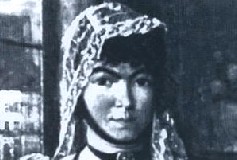
Sophie Charlotte Elisabeth Ursinus
Murderer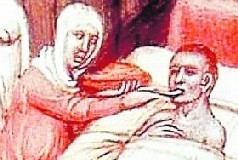 Anna Zwanziger
Murderer · Germany · 1808
Anna Margaretha Zwanziger was executed by a sword in Nuremberg on September 17,…
3 victims
Anna Zwanziger
Murderer · Germany · 1808
Anna Margaretha Zwanziger was executed by a sword in Nuremberg on September 17,…
3 victims
 Sabine Hilschenz
Murderer · Germany · 1988
Sabine Hilschenz was a German woman convicted of infanticide involving eight of…
9 victims
Sabine Hilschenz
Murderer · Germany · 1988
Sabine Hilschenz was a German woman convicted of infanticide involving eight of…
9 victims
 Sabine Radmacher
Murderer · Germany · 2010
Sabine Radmacher Sabine Radmacher was fatally shot by special police units the…
3 victims
Sabine Radmacher
Murderer · Germany · 2010
Sabine Radmacher Sabine Radmacher was fatally shot by special police units the…
3 victims
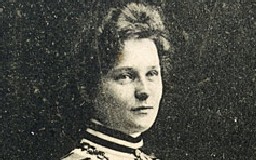 Grete Beier
Murderer · Germany · 1907
Marie Margarethe (Grete) Beier was executed by guillotine on July 23, 1908. She…
1 victim
Grete Beier
Murderer · Germany · 1907
Marie Margarethe (Grete) Beier was executed by guillotine on July 23, 1908. She…
1 victim
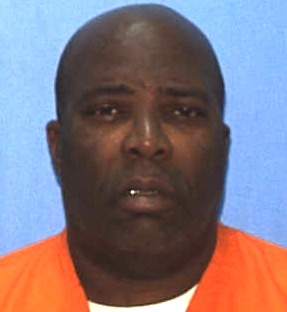 Charles L. Anderson
Murderer · USA · 1994
Charles L. Anderson was convicted and sentenced to death for the January 16, 19…
1 victim
Charles L. Anderson
Murderer · USA · 1994
Charles L. Anderson was convicted and sentenced to death for the January 16, 19…
1 victim
 Juan Segundo
Murderer · USA · 1986
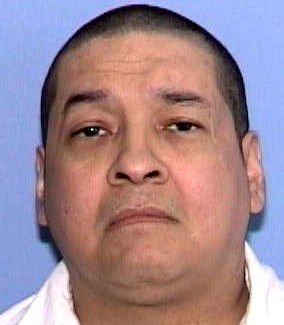
Juan Segundo was a Hispanic male. He had black hair, was 5' 5" tall, weighed 18…
1 victim
Juan Segundo
Murderer · USA · 1986
Juan Segundo was a Hispanic male. He had black hair, was 5' 5" tall, weighed 18…
1 victim
 Tracy Garrison
Murderer · USA · 2001
Tracy Garrison was convicted of first degree murder in 2004. She was sentenced…
1 victim
Tracy Garrison
Murderer · USA · 2001
Tracy Garrison was convicted of first degree murder in 2004. She was sentenced…
1 victim
 Derek Bentley
Murderer? · United Kingdom · 1952
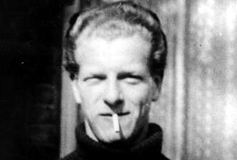
Derek William Bentley (30 June 1933 – 28 January 1953) was a British teenager h…
1 victim
Derek Bentley
Murderer? · United Kingdom · 1952
Derek William Bentley (30 June 1933 – 28 January 1953) was a British teenager h…
1 victim
 Mitchell Scott Johnson
Mass murderer · USA · 1998
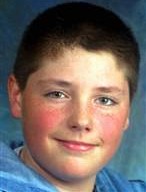
Mitchell Scott Johnson was born August 11, 1984. He lived in Jonesboro with his…
5 victims
Mitchell Scott Johnson
Mass murderer · USA · 1998
Mitchell Scott Johnson was born August 11, 1984. He lived in Jonesboro with his…
5 victims
 Vasily Petrovich Losev
Murderer · USA · 1999
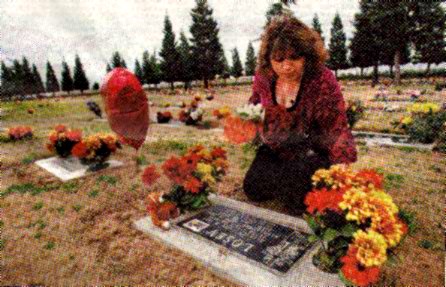
Vasily Petrovich Losev, 45, was the father who killed his three sons and set th…
3 victims
Vasily Petrovich Losev
Murderer · USA · 1999
Vasily Petrovich Losev, 45, was the father who killed his three sons and set th…
3 victims
- Gender
- female
- Country
- Germany
- Location
- Berlin, Germany
- Date of birth
- May 5, 1760
- Age at first offence
- 38
- Characteristics
- poisoner
- Victim profile
- A young Dutch officer named Rogay (her lover) / Theodor Ursinus (her husband) / Christina Witte (her aunt)
- Method of murder
- Poisoning (arsenic)
- Date(s) of murder
- 1798 - 1801
- Years active
- 1798–1801
- Date of arrest
- February 1803
- Status
-
Died in custody
Sentenced to life imprisonment on September 12, 1803; pardoned in 1833; died on April 4, 1836
Name
Sophie Charlotte Elisabeth Ursinus
Status
Sophie Charlotte Elisabeth Ursinus was sentenced to life imprisonment on September 12, 1803. She was pardoned in 1833 and died on April 4, 1836.
Background
Sophie Charlotte Elisabeth Ursinus was born Sophie Weingarten in Glatz (now Kłodzku), a city in Lower Silesia, Prussia, on 5 May 1760. She was the daughter of the secretary of the Austrian legation. After her father lost his position, at the age of 19 she married the much older counselor of the Supreme Court Theodor Ursinus. She lived with him in Stendal until 1792, and afterwards in Berlin. Privy Counsellor Ursinus died there suddenly on 11 September 1800, a day after celebrating his birthday.
During her marriage, Sophie Ursinus started an affair with a Dutch officer named Rogay, possibly with the consent of her elderly husband. Rogay later left Berlin for a time and then returned, and he died three years before her husband. At the time his death was attributed to tuberculosis. Shortly before her husband’s death, it was later discovered that Sophie Ursinus had purchased a quantity of arsenic.
On 24 January 1801, her aunt, Christiane Witte, died in Charlottenburg after a short illness, leaving her a large inheritance. It was later discovered that Sophie Ursinus had purchased a large quantity of arsenic shortly before her aunt had died.
In late February 1803, her servant, Benjamin Klein, became ill after having quarreled with her sometime earlier. Sophie Ursinus gave him an emetic and then soup, which made him worse. Klein became suspicious when she gave him some plums and he secretly had them examined by a chemist, who confirmed they contained arsenic.
The offence
Sophie Ursinus was believed to have been responsible for poisoning her husband, aunt and lover, and for attempting to poison her servant. Her trial led to a method of identifying arsenic poisoning.
Sophie Ursinus was charged in connection with the death of her aunt and with attempting to poison her servant.
Investigation
After Sophie Ursinus was arrested and came under suspicion of having poisoned her husband, her husband’s body was exhumed. At the autopsy, examiners including the chemist Martin Heinrich Klaproth and his assistant Valentin Rose could not confirm that he had been poisoned with arsenic, though there was suspicion from the general condition of the bodily organs and convulsive contraction of the limbs that arsenic had been used.
Because she was next charged with murdering her aunt, the body was exhumed again. This time, the examiners, contrary to what the doctors had said at her death, had no doubt that the aunt had died from arsenic poisoning and that Sophie Ursinus had administered the poison.
Arrest
Sophie Ursinus was arrested and soon came under suspicion of having poisoned her husband.
Detectives served the warrant for her arrest at a villa near Berlin, disrupting a game of whist.
In custody, Sophie Ursinus admitted poisoning Klein and bestowed a generous pension upon him.
Trial
The murder trial ended on 12 September 1803. In her attempt to save her life and honour, Sophie Ursinus disputed every point. She was found guilty of the murder of her aunt and the attempted murder of her servant, and she was sentenced to life imprisonment.
Sentencing
On 12 September 1803, Sophie Ursinus was sentenced to life imprisonment.
She was allowed a certain amount of comfort while in prison in Glatz, including being allowed to have parties with guests and dress in fine clothes. She was transported to the prison at Glatz on the Silesian frontier and was lodged in a deluxe suite of rooms normally reserved for the warden, with comfortable furniture and servants to wait on guests at her frequent dinner parties.
Money was allowed to be no problem because the court allowed her to keep both her husbands estate and her inheritance from Aunt Christina.
Appeals
There were no details provided of appeals or appeal outcomes.
Outcome
Sophie Ursinus remained imprisoned until she was pardoned after thirty years in 1833.
Aftermath
After her pardon, Sophie Ursinus rejoined the upper-class society of Glatz until her death on 4 April 1836.
In 1836, the Marsh test, a highly sensitive method in the detection of arsenic, was developed by the chemist James Marsh.
The work of Valentin Rose in proving that the victims in this case were actually poisoned showed that the evidence of doctors present at death was not sufficient.
Sophie was laid to rest with great pomp in Glatz cemetery, serenaded by a children’s choir while clergymen lined up to praise her generosity. If anyone recalled her victims, they refrained from mentioning such awkward matters at the graveside service.
Other details
Sophie Ursinus was named as being born Sophie Charlotte Elisabeth Ursinus (born Weingarten) (5 May 1760 – 4 April 1836). Her lover was named Rogay. Her aunt was named Christiane Witte. Her servant was named Benjamin Klein. The chemist Martin Heinrich Klaproth and his assistant Valentin Rose examined the bodies during the autopsies. Her servant Klein had quarreled with her sometime earlier before becoming ill. Her aunt’s death was described as occurring after a short illness. The trial was associated with disputing every point by Sophie Ursinus. Her sentence allowed comfort and parties while in prison in Glatz. Her pardon occurred after thirty years, in 1833.


Spotted an error, or have more information about this case?