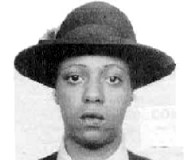
Corrine Sykes
Murderer Marie Noe
Murderer · USA · 1949
Marie Noe was convicted in June 1999 of murdering eight of her children. Betwee…
8 victims
Marie Noe
Murderer · USA · 1949
Marie Noe was convicted in June 1999 of murdering eight of her children. Betwee…
8 victims
 Earle Dennison
Murderer · USA · 1952
Earle Dennison was a widow and worked as a surgical nurse. She worked at the We…
2 victims
Earle Dennison
Murderer · USA · 1952
Earle Dennison was a widow and worked as a surgical nurse. She worked at the We…
2 victims
 Barbara Graham
Murderer · USA · 1953
Barbara Graham (June 26, 1923 – June 3, 1955) was an American criminal and conv…
1 victim
Barbara Graham
Murderer · USA · 1953
Barbara Graham (June 26, 1923 – June 3, 1955) was an American criminal and conv…
1 victim
 William Chester Minor
Homicide · United Kingdom · 1872
William Chester Minor was found not guilty on grounds of insanity on April 6, 1…
1 victim
William Chester Minor
Homicide · United Kingdom · 1872
William Chester Minor was found not guilty on grounds of insanity on April 6, 1…
1 victim
 Alexander Pogosyan
Mass murderer · USA · 1998
Alexander Pogosyan was convicted murderer in the so-called Labor Day Massacre i…
5 victims
Alexander Pogosyan
Mass murderer · USA · 1998
Alexander Pogosyan was convicted murderer in the so-called Labor Day Massacre i…
5 victims
 Henry Martinez Porter
Murderer · USA · 1975
July 9, 1985 — Henry Martinez Porter was pronounced dead at 12:31 a. m. followi…
1 victim
Henry Martinez Porter
Murderer · USA · 1975
July 9, 1985 — Henry Martinez Porter was pronounced dead at 12:31 a. m. followi…
1 victim
 Alec Kreider
Homicide · USA · 2007
Alec Devon Kreider (born February 4, 1991) was a Lancaster County, Pennsylvania…
3 victims
Alec Kreider
Homicide · USA · 2007
Alec Devon Kreider (born February 4, 1991) was a Lancaster County, Pennsylvania…
3 victims
- Gender
- female
- Country
- USA
- Location
- West Oak Lane, Philadelphia, Pennsylvania , USA
- Date of birth
- 1924
- Age at first offence
- 20
- Characteristics
- robbery
- Victim profile
- Freda Wodlinger (her employer)
- Method of murder
- Stabbing with a carving knife
- Date(s) of murder
- December 7, 1944
- Years active
- 1944
- Date of arrest
- Same day
- Status
-
Executed
Executed by electrocution in Pennsylvania on October 14, 1946
Background
Corrine Sykes was 20 years old when she worked as a housemaid for Mrs. Wodlinger in Pennsylvania. She used an alias when she was hired and provided phony references because she had just been released from prison for stealing jewelry. She was described as low intelligence, illiterate, and prone to hysteria.
Mrs. Wodlinger was described as an older housewife from a prominent White family in West Oak Lane. Corrine worked for her during a period when “young Black maids” were considered “girls.”
The offence
Mrs. Wodlinger was found dead after being stabbed several times. Three rings, $50 in cash, and a fur piece were missing from the house. Another account described the murder as happening on Dec. 7, 1944, and described it as “apparently in a terrific struggle to protect her jewelry and cash from a robber who hacked her unmercifully with a heavy kitchen knife before fleeing.”
Corrine was arrested soon after the death.
Investigation
After an extensive search, police arrested Corrine. She told conflicting stories and blamed different men. One account said she implicated her boyfriend, J.C. Kelly, saying that he had threatened to kill her and her mother if she didn’t steal the valuables for him. Another account described that when Corrine’s boyfriend learned of her arrest he “raced to his boarding house, burned the sable, and dumped the diamonds.”
Corrine ultimately admitted she was the murderer, retracted her admission, and then signed a confession. She later led detectives to the missing murder weapon under a piano in the house.
At the time of the case, there were doubts expressed about whether Corrine had inflicted the severity of the knife wounds that killed Wodlinger. There were also later rumors that Wodlinger’s husband made a deathbed confession that he had killed his wife; one account said there was no truth to it and that no article could be found containing such a confession.
Arrest
Corrine Sykes was arrested after police found Mrs. Wodlinger dead and an extensive search was carried out.
Trial
Corrine’s court-appointed lawyer was Raymond Pace Alexander, who later became a city councilman and judge. The jury was described as all-white. Alexander told the jury: “We will make no attempt to exculpate Corrine in this shocking crime.”
Alexander tried to mitigate the crime by arguing that Sykes was mentally slow, emotionally unstable, and under the influence of a boyfriend who put her up to the crime. A psychiatrist told the jury she was a “constitutional psychopathic inferior.” A School District witness testified that Sykes was tested at age 13 and found to have an IQ of 63, giving her a mental age of about 7.
Corrine’s boyfriend, James “Jayce” Kelly, denied any part in the crime and denied Sykes’s claim that he had threatened to kill her and her mother if she did not rob the house.
A jury convicted Corrine of first-degree murder. Another account stated that she was convicted of using a carving knife to murder her employer, Freda Wodlinger, on Dec. 7, 1944, and taking jewelry, a fur, and some cash. She was described as having been hired only three days before the slaying under a false name used to conceal a criminal record for petty crimes.
Sentencing
The judge was described as a “hanging judge.” The trial judge sentenced Corrine to die in the electric chair. She was described as the last woman executed in Pennsylvania.
Appeals
Both the state and U.S. Supreme Court rejected Alexander’s appeals.
In a final plea to Gov. Edward Martin, Alexander said it was her race that doomed Sykes. A publication headlined “Death Penalty Unlikely For Maid In Murder Case” and stated that psychiatrists “showed the girl is at least temporarily unbalanced . . . in this particular case folks who are still HUMAN would not want to see punishment meted out where TREATMENT is needed. ” The publication also stated: “The facts stare us in the face that a SUBNORMAL CHILD and NOT A WOMAN committed what we smugly say is an atrocious crime.”
Outcome
On October 14, 1946, Corrine Sykes was executed by electrocution in Pennsylvania. She was taken to the Pennsylvanian electric chair. The electric chair was described as being built in 1913 and nicknamed “Old Smokey.”
Her age was stated as 22 years old at the time of execution in one account. Another account described her as a “slow-witted 20-year-old black maid.” Her last meal was described as a special menu prepared in the superintendent’s private kitchen. The state agreed only to shave a spot on the back of Corrine’s head for the electrode to make contact.
Corrine walked straight to the electric chair without showing fear, placed her arms on the armrests, and looked slowly around everyone there. She watched everything and never blinked once. After the black hood was placed over her head and the switch was pulled, at 12.31 a.m. she was dead.
Aftermath
At the viewing, which was described as open only to the family and close friends, more than 10,000 people stood in line in vain to see her body. A crowd estimated at 3,000 attended Sykes’s funeral.
One account described her as having been the first black woman executed in Pennsylvania. Another account described that she became the last woman executed in Pennsylvania.
Soul Searching By Kia Gregory reported that rumors spread that Mrs. Wodlinger's husband made a deathbed confession but that no one, including Tina Morton, could find the article; it described the story as a “tangle of unanswered questions” including “Who really killed Mrs. Wodlinger? What part did Corrine's wily boyfriend play? Why did the black community remain silent? Why was Corrine executed so swiftly? And was there really a printed deathbed confession by Mrs. Wodlinger's husband?”
A separate account said the Tribune ran a story headlined “Ghost of Corrine Sykes Walks Streets of the City” concerning rumors “sweeping the city” that someone else had confessed to the slaying, and that there was no substance to the rumors. It also reported that another African-American publication pointed the finger of guilt at Sykes’s boyfriend, implying that police protected him because he bribed them to overlook his bootlegging.
It was also reported that on the day of her execution, most housemaids in the city went home early from their jobs.
Other details
Corrine Sykes was described as having a prior conviction for stealing jewelry. One account described her as being “a known shoplifter” and “quite good at it.” She was also described as “shy and petite” and from North Philadelphia.
The article content mentioned Rowdiva.com and USprisonculture.com and a Philly.com article by Ron Avery as part of narrative context, but the core case details stated that Corrine was convicted, sentenced to death by electrocution, and executed on October 14, 1946.
Spotted an error, or have more information about this case?