
Mary Winkler
Murderer Miranda Barbour
Murderer · USA · 2013
Miranda Barbour, 19, defendant. · Elytte Barbour, 22, defendant and husband of…
100 victims
Miranda Barbour
Murderer · USA · 2013
Miranda Barbour, 19, defendant. · Elytte Barbour, 22, defendant and husband of…
100 victims
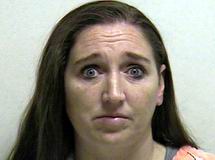 Megan Huntsman
Murderer · USA · 1996
Megan Huntsman was 40 at sentencing. She was a mother of three children who wer…
6 victims
Megan Huntsman
Murderer · USA · 1996
Megan Huntsman was 40 at sentencing. She was a mother of three children who wer…
6 victims
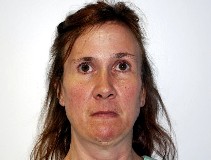 Michele Kalina
Murderer · USA · 1996
Michele Kalina pleaded guilty to murder for one of five infants she initially w…
5 victims
Michele Kalina
Murderer · USA · 1996
Michele Kalina pleaded guilty to murder for one of five infants she initially w…
5 victims
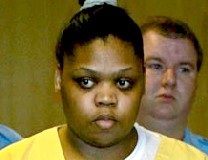 Tiffany Hall
Murderer · USA · 2006
Tiffany Hall was 24 when she was charged in September 2006. She later entered a…
5 victims
Tiffany Hall
Murderer · USA · 2006
Tiffany Hall was 24 when she was charged in September 2006. She later entered a…
5 victims
 Banita Jacks
Murderer · USA · 2007
Banita Jacks was a Washington, DC resident convicted of murdering her four daug…
4 victims
Banita Jacks
Murderer · USA · 2007
Banita Jacks was a Washington, DC resident convicted of murdering her four daug…
4 victims
 Holly Grigsby
Murderer · USA · 2011
Holly Grigsby was sentenced to life in prison without parole on July 15, 2014.…
4 victims
Holly Grigsby
Murderer · USA · 2011
Holly Grigsby was sentenced to life in prison without parole on July 15, 2014.…
4 victims
 Jesse Morrison
Murderer · USA · 1989
Jesse Morrison was sentenced to death on October 30, 1991. The California Supre…
1 victim
Jesse Morrison
Murderer · USA · 1989
Jesse Morrison was sentenced to death on October 30, 1991. The California Supre…
1 victim
 Antonio Richardson
Homicide · USA · 1991
Defendant: Antonio Richardson Co-defendants mentioned: Marlin Gray, Reginald Cl…
2 victims
Antonio Richardson
Homicide · USA · 1991
Defendant: Antonio Richardson Co-defendants mentioned: Marlin Gray, Reginald Cl…
2 victims
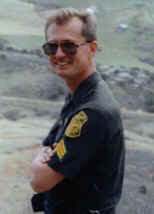 Albert Petrosky
Murderer · USA · 1995
Albert Petrosky was sentenced to life in prison without parole. He was awaiting…
3 victims
Albert Petrosky
Murderer · USA · 1995
Albert Petrosky was sentenced to life in prison without parole. He was awaiting…
3 victims
 Yasuaki Uwabe
Mass murderer · Japan · 1999
Yasuaki Uwabe (Japanese: 上部康明) was born in Shimonoseki, Yamaguchi. After gradua…
5 victims
Yasuaki Uwabe
Mass murderer · Japan · 1999
Yasuaki Uwabe (Japanese: 上部康明) was born in Shimonoseki, Yamaguchi. After gradua…
5 victims
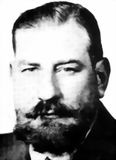 John Donald Merrett
Homicide - Murderer · United Kingdom · 1926
John Donald Merrett (also known as Ronald Chesney) was born in New Zealand in 1…
3 victims
John Donald Merrett
Homicide - Murderer · United Kingdom · 1926
John Donald Merrett (also known as Ronald Chesney) was born in New Zealand in 1…
3 victims
- Gender
- female
- Country
- USA
- Location
- Selmer, McNairy County, Tennessee , USA
- Date of birth
- December 10, 1973
- Age at first offence
- 33
- Characteristics
- parricide, abuse, disputes, domestic violence, financial gain
- Victim profile
- Her husband, Matthew Winkler, 31 (the pulpit minister at the Fourth Street Church of Christ)
- Method of murder
- Shooting (12 gauge shotgun)
- Date(s) of murder
- March 22, 2006
- Years active
- 2006
- Date of arrest
- Next day
- Status
-
Released
Sentenced to 3 years in prison for the conviction of voluntary manslaughter on June 8, 2007; released on August 14, 2007
Case details
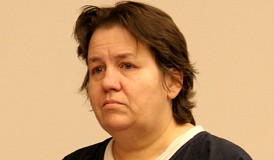
Mary Carol Winkler (Mary Carol Freeman; born December 10, 1973) was an American woman convicted of voluntary manslaughter in the 2006 shooting of her husband, Matthew Winkler, the pulpit minister at the Fourth Street Church of Christ in Selmer, Tennessee.
Timeline
- March 22, 2006 — Matthew Winkler was fatally shot in the back with a 12 gauge shotgun in their home; church members found his body after he missed that evening’s service.
- March 23, 2006 — An Amber Alert was issued due to fears of kidnapping; Mary Winkler was arrested in Orange Beach, Alabama, driving the family minivan with their three young daughters inside.
- April 9, 2007 — Trial began.
- April 18, 2007 — Mary Winkler took the stand in her own defense.
- April 19, 2007 — The jury returned a guilty verdict for voluntary manslaughter.
- May 18, 2007 — Sentencing was set to begin but was delayed due to a scheduling conflict by one of the attorneys.
- June 8, 2007 — A Tennessee judge sentenced Mary Winkler to 210 days in prison for the conviction of voluntary manslaughter; she received credit for already serving 5 months and was permitted to spend up to 60 days in a Western State Mental Health Facility in Bolivar, Tennessee.
- August 14, 2007 — Mary Winkler was released after spending a total of seven months in custody, including time in a county jail and a mental health facility.
- August 2008 — Mary Winkler was granted full custody of her three daughters.
The offence
Matthew Winkler was shot in the back with a 12 gauge shotgun as he lay in bed.
Mary Winkler confessed to the fatal shooting. In her statement to investigators, she said that she and her husband had argued throughout the evening about family finances and that she did not remember getting the gun but knew he kept a shotgun in their home. She said the next thing she heard was a loud boom and that Matthew Winkler was shot in the back. In the statement, she described Matthew Winkler as rolling from the bed onto the floor and, while still alive, asking his wife, "Why?" to which she responded, "I'm sorry." She also said that when she left the home, Matthew Winkler was still alive in the bedroom and the phone had been disconnected from its socket.
The prosecution described the shooting as not accidental and sought a first-degree murder conviction. Defense counsel argued that Mary Winkler fired accidentally.
Victims and affected persons
Matthew Winkler was the victim and was 31 years old.
Mary Winkler’s three daughters were affected:
- Patricia (then 8)
- Mary Alice (then 6)
- Breanna (then 1)
The children were later described as being in the custody of their paternal grandparents, Dan and Diane Winkler.
Investigation
Police found Matthew Winkler’s body in their home after he missed a regular Wednesday night prayer meeting and after he failed to show up for that service.
Police issued an Amber Alert due to fears of kidnapping.
Orange Beach police personnel entertained the daughters after Mary Winkler’s arrest.
Mary Winkler’s demeanor at arrest and in her police mug shot appeared to indicate depression, repressed feelings, shock, or some combination of each. Police and prosecutors expressed puzzlement about her lack of emotional reaction as she was taken into custody. Greg Duck, assistant police chief in Orange Beach, said:
- "There were no tears shed that I know of," and the arresting officer said the woman seemed:
- "relieved".
Tennessee police interviewed Mary Winkler after midnight.
In her statement to police, Mary Winkler said she accepted abuse from her husband "like a mouse" for many years and that her "ugly came out." She said she was beaten down over "stupid stuff" until she was bullied to the brink of insanity. She said:
- "I love him dearly, but gosh, he just nailed me in the ground,"
- "and I was real good for quite, quite some time."
She told investigators that she and her husband had argued about money and that "I guess that's when my ugly came out."
A grand jury indicted Mary Winkler on Monday, June 12, 2006, accusing her of first-degree murder.
Allegations of abuse and threats
A neighborhood family reported that Matthew Winkler had repeatedly threatened to shoot that family’s dog after it strayed onto the Winklers’ lawn.
Friends and Mary Winkler’s family alleged that Matthew Winkler had been abusive to Mary.
During trial, Mary Winkler testified that her husband had physically and sexually abused her, and she also testified that he forced her to wear "slutty" costumes for sex.
Arrest and pretrial
After police issued an Amber Alert, Mary Winkler and her children were discovered in Orange Beach, Alabama.
Mary Winkler was placed into custody there and later extradited to Tennessee to stand trial.
Bond hearing and bail-related events
A Tennessee Bureau of Investigation agent read a statement Mary Winkler gave to authorities in Alabama, where she was arrested a day after her husband’s body was found.
A bond hearing was held on Friday, June 30, 2006.
Bond was later set at $750,000. Steve Farese Sr. claimed the amount was excessive and "tantamount to no bond at all".
A plea for reduction of bond was filed and subsequently denied.
Mary Winkler’s lawyers, Leslie Ballin and Steve Farese Sr., also filed motions to throw out her confession on a technicality, to require prosecutors to state whether or not they would seek the death penalty (they did not), to give potential jurors an extensive questionnaire, and other motions relating to voir dire.
Mary Winkler’s defense team included Attorneys Steve Farese Sr., Leslie Ballin, Tony Farese, Steve Farese, Jr. and Investigator Terry Cox, who represented her pro bono throughout the entire criminal case.
In August 2006, after five months behind bars, Mary Winkler posted $750,000 bail with help from her father, who mortgaged his property. She moved to McMinnville, Tennessee, to live with Kathy Thomsen, an old church friend. She lived and worked at a dry cleaning shop for eight months while she was free on bail and awaiting trial.
Farese said Mary Winkler was headed to McMinnville, about 65 miles southeast of Nashville, where she lived and worked at a dry cleaning shop for eight months while she was free on bail and awaiting trial.
Trial
Jury and trial start
The jury consisted of two men and ten women.
Trial observers described the trial as beginning April 9, and the jury selection process included questions about spousal abuse and whether emotional abuse could be as damaging as physical abuse.
Jurors were sequestered at a motel during the trial.
Mary Winkler’s testimony and described circumstances
On April 18, 2007, Mary Winkler took the stand in her own defense. She told a jury of ten women and two men that her husband often "berated" her and forced her to wear "slutty" costumes for sex. She displayed a pair of high-heeled shoes and a wig to which those in attendance gasped.
Mary Winkler claimed that she only shot her husband accidentally. She testified that she went to the bedroom closet and retrieved a shotgun because she wanted to force him to work through their problems. She said:
- "I just wanted him to stop being so mean," and she said through tears that she did not intend for the gun to go off.
Mary Winkler denied she ever actually pulled the trigger and testified:
- "something went off". She said she heard a boom and ran from the house because she thought he would be mad at her.
Mary Winkler also testified that her husband pressed her to engage in oral and anal sex and that she viewed those requests as unnatural.
She testified that her husband insisted she dress up "slutty" in an Afro wig, miniskirts, and footwear.
Defense attorneys entered the wig and shoes into evidence.
During cross-examination and testimony, Mary Winkler said her husband did nothing for which he deserved to die.
Mary Winkler’s lawyers argued that her testimony was decisive, and Steve Farese said:
- "They had to hear it from Mary; there was no other source,"
Mary Winkler stated that her husband punched her in the face, kicked her at times, and refused to grant her a divorce. She also said she hid bruises and did not tell anyone about abuse.
Mary Winkler testified she felt ashamed for not disclosing abuse earlier and said:
- "I was ashamed," and:
- "I didn't want anybody to know about Matthew." A discrepancy was described between her initial statement to police after her arrest, in which she specifically said that Matthew had not abused her in any way, and her later testimony at trial.
Walt Freeland, Assistant District Attorney General, asserted the prosecution’s position regarding banking and motive and said:
- "a good daddy who didn't abuse anybody."
Leslie Ballin, defense attorney, responded:
- "If you look up spousal abuse in the dictionary, you're going to see Mary Winkler's picture."
Prosecution witnesses and child testimony
Prosecution witnesses described Matthew Winkler as a good husband and father. Mary Winkler’s 9-year-old daughter testified she never saw her father mistreat her mother.
Matthew Winkler’s father, Dan Winkler, thanked the jury and thanked God for being "our rock and our shield" during the trial.
Mary Winkler’s oldest child, Patricia (then a fourth-grader), appeared as a prosecution witness and testified. Patricia said:
- "Yes, sir," when asked whether Matthew had been a good father. When asked whether he had ever been "ugly" with her mother, she responded:
- "No, sir." Patricia described hearing a "big boom or something" and said she crept into her parents’ bedroom and found her father on the floor groaning. She said her mother was just walking around, closed the door, and that "Me and Allie was scared." She also testified that she had seen her mother only once since the arrest and said:
- "I didn't want to see her." She added:
- "I mean, I still love her, I just don't want to."
Matthew Winkler’s mother, Diane, later testified that during the children’s first visit with Mary Winkler, Diane told them that she had not killed Matthew, and that both Diane and the children were angered by what they saw as a bald-faced lie.
Verdict
On April 19, 2007, the jury returned a verdict of guilty of voluntary manslaughter.
The jury deliberated for eight hours and returned the lesser charge after deliberating.
Prosecutors had asked that Mary Winkler be convicted of first-degree murder.
Mary Winkler showed no emotion as the verdict was read, and later she hugged her family and her attorneys.
Sentencing
The sentencing phase was set to begin on May 18, 2007, but it was delayed due to a scheduling conflict by one of the attorneys.
On June 8, 2007, a Tennessee judge sentenced Mary Winkler to 210 days in prison for the conviction of voluntary manslaughter. She received credit for already serving 5 months.
The judge permitted Mary Winkler to spend up to 60 days in a Western State Mental Health Facility in Bolivar, Tennessee, and the judge set the remainder of the sentence to be spent on probation.
Appeals
No appeals information was included as a distinct appellate history.
Outcome
Mary Winkler was released on August 14, 2007, after serving 67 days in custody. The release was described as coming after she had been released from a mental health facility where she had been undergoing treatment for about two months. Steve Farese Sr. declined to identify the facility.
It was reported that she served 12 days in jail and the rest in the mental health facility, and that the remainder of her term would be spent on probation.
Other details
Pretrial custody and children’s care
A day after Matthew Winkler’s body was found, Mary Winkler was arrested 340 miles away on the Alabama coast while driving the family minivan with their three young daughters inside.
Since her arrest, her children lived with their paternal grandparents, Dan and Diane Winkler.
Farese’s law firm assisted Mary Winkler in trying to regain custody of the children.
Custody after release
In August 2008, Mary Winkler was granted full custody of her three daughters.
Civil litigation and family proceedings
Dan and Diane Winkler filed a wrongful death lawsuit against Mary Winkler.
The defendants were also described as seeking permanent custody of their three grandchildren.
Mary Winkler sought custody through a petition to seek immediate custody and sought to respond to efforts to terminate her parental rights. The case was pending in Chancery Court in Jackson, Tennessee.
Mental health evidence
A psychologist testified that Mary Winkler could not have formed the intent to commit a crime because of her compromised mental condition.
Dr. Lynne Zager testified that Mary Winkler suffered from mild depression and post-traumatic stress disorder, which started at age 13 when her sister died and got worse because her husband abused her.
Financial motive-related evidence and interviews
Assistant District Attorney General Walt Freeland stated that bank managers were closing in on a check-kiting scheme that Mary Winkler wanted to conceal from her husband.
Mary Winkler admitted she had deposited checks from "unidentified sources" in Canada and Nigeria into bank accounts belonging to her and her husband and that the checks amounted to more than $17,000.
Mary Winkler became caught up in a swindle known as the "Nigerian scam", described as promising riches to victims who send money to cover processing expenses.
Mary Winkler had become involved in a "check-kiting scheme" and had withdrawn $500 cash by the time bank officials caught on.
Mary Winkler told investigators that some of the problems were "her fault" and that she had lost money in what her lawyer said was a scam.
Conflicts, pleas, and negotiation
Prosecutors tried several times to negotiate a guilty plea. Farese and Ballin said they declined offers, even after prosecutors decided not to seek the death penalty.
Farese said:
- "We were offered 35 years,"
- "We were offered 20 years."
- "We were offered 15 years."
- "We're now looking at three to six years."
- "My reaction is the verdict was most probably just."
Ballin said:
- "There are no winners," and:
- "We're left with the memory of Matthew Winkler." He said there had been negative things said about Matthew during the trial but there was a good side to him as well and that Mary Winkler testified:
- "He could be so good at times."
Jury foreman comments
Jury foreman Bill Berry commented that he believed justice was not done. Berry said:
- "I don't think justice was done," and:
- "It's the times we're living in. People are getting away with murder today." He described the jury’s gender makeup as "unbalanced" and "unfair" and stated that after first seven hours of deliberations, nine of the 10 women appeared ready to vote for acquittal and wanted her to "just walk free". Berry also said the verdict of voluntary manslaughter was a compromise:
- "We had to settle on something,"
Berry said he believed Winkler was "not completely" truthful about physical, sexual and mental abuse, and that he doubted the physical abuse and was not sure about sexual abuse but conceded mental abuse may have occurred.
Berry said he had hoped Judge McCraw would sentence Winkler to the maximum time in prison and said she "doesn't deserve" to regain custody of her daughters.
Sentencing remarks
It was reported that Judge McCraw recited from a written script and that he considered the seriousness of the offense, the jury’s verdict, and the testimony about allegations of abuse.
Judge McCraw said the offense met the state’s legal definition of a "violent, shocking and reprehensible" act.
During the sentencing hearing, Mary Winkler bowed her head and closed her eyes for about 20 seconds as if in prayer.
Statements and quotations from the sentencing proceedings
Mary Winkler read a statement at sentencing in which she said:
- "I've suffered the loss of someone I loved,"
- "I've lost my freedom."
- "I've lost my children,"
- "and I've had my life be put on public display." She said:
- "I think of Matthew every day, and the guilt," and:
- "and I always miss him and love him." She said she acknowledged there were both good and bad times in the marriage and that she wished she could have that good Matthew and live together forever. She also stated:
- "I hope this situation sheds light on unhealthy relationships,"
- "and that others will find the strength and have the courage to seek help before such a tragedy occurs again."
Outside court, Steve Farese said:
- "I'm quite happy," and:
- "I think in the end he (Judge McCraw) did what was right."
Victim impact statements
Victim impact statements were described as being given by Matthew Winkler’s brother and mother.
Dan Winkler Jr. testified:
- "I've watched as the life of my brother has been turned into a circus." He added:
- "I don't see any remorse."
Diane Winkler testified and said:
- "You broke your girls' hearts,"
- "Mary, you have destroyed your husband's character."
- "You have destroyed his good name..."
- "You have accused him of being a monster who abused and belittled you."
Statements about legal issues and reactions
Discussion after the verdict included comments by advocates and observers questioning sentencing and gendered perceptions of victimizers.
Tom Flowers said he was stunned by the prosecution’s strategy pressing for a conviction of premeditated, first-degree murder. He said:
- "So when the verdict came out, I was satisfied that justice had been served."
Jennifer Johnson, spokeswoman for the Tennessee Bureau of Investigation, said:
- "At the end of the day, this probably won't make much more sense to the public than it does right now" and:
- "I think most people will be thinking...'I just don't get it.'"
Dr. Kathy Seifert said there were unanswered questions about Mary Winkler’s "massive overreaction" and said:
- "My suspicion is that someone who uses violence as a means of a resolving domestic problem has a model of that violence, abuse or neglect somewhere in her background," and described Mary Winkler’s profile as fitting "the classic profile of a 'hot' violent female." Seifert said:
- "These often are passive victims of abuse who 'get to the point where they can't take it anymore, and something snaps, and they finally seek their revenge.'" Seifert also said:
- "I can see a very conservative lady not exposed to the world very much becoming very, very upset and psychologically damaged by that," and that:
- "But when it comes to killing somebody over something like that, it feels like there's a piece of information missing some other component that causes the massive overreaction." Seifert added possible missing components and said:
- "Maybe it's an insurance policy. Maybe it's childhood abuse. Maybe it's something else."
Bail, release, and time served details
Mary Winkler was described as having been sentenced June 8 to three years in prison but having served only 67 days because of credit for time in jail before her trial, the nature of the offense, and lack of a criminal record.
It was reported that the remainder of her term would be spent on probation.
Custody and later release locations and employment
It was reported that Mary Winkler lived and worked in McMinnville, about 65 miles southeast of Nashville, while she was free on bond until her sentencing and while she awaited release.
Names and relationships mentioned
Mary Winkler’s father was Clark Freeman.
Mary Winkler’s mother was Mary Nell Freeman.
Mary Winkler’s husband was Matthew Winkler.
Matthew Winkler’s parents were Dan Winkler and Diane Winkler.
Mary Winkler’s defense attorneys included Leslie Ballin and Steve Farese Sr., and the defense team included Tony Farese, Steve Farese, Jr. and Investigator Terry Cox.
Kathy Thomsen was described as an old church friend with whom Mary Winkler moved to live after bail.
Spotted an error, or have more information about this case?