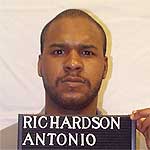
Antonio Richardson
Homicide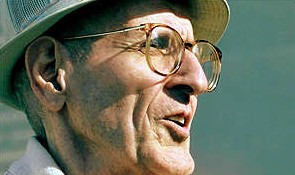 Jack Kevorkian
Homicide · USA · 1990
Jack Kevorkian (born May 26, 1928) was a controversial American pathologist. He…
130 victims
Jack Kevorkian
Homicide · USA · 1990
Jack Kevorkian (born May 26, 1928) was a controversial American pathologist. He…
130 victims
 David Koresh
Homicide · USA · 1993
David Koresh (born Vernon Wayne Howell; August 17, 1959 – April 19, 1993) led t…
79 victims
David Koresh
Homicide · USA · 1993
David Koresh (born Vernon Wayne Howell; August 17, 1959 – April 19, 1993) led t…
79 victims
 Todd Hall
Homicide · USA · 1996
Todd Hall was described by neighbors as "mentally slow" and was said to have su…
9 victims
Todd Hall
Homicide · USA · 1996
Todd Hall was described by neighbors as "mentally slow" and was said to have su…
9 victims
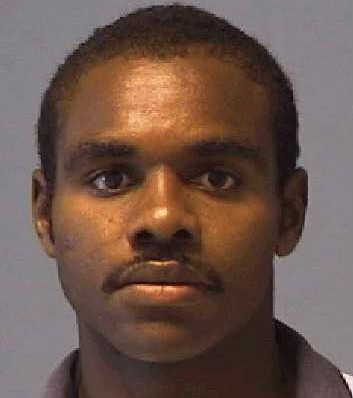 Clinton Bankston
Homicide · USA · 1987
15 August 1987 — Ann Morris (63), her sister Sally Nicholson (59), and Sally’s…
5 victims
Clinton Bankston
Homicide · USA · 1987
15 August 1987 — Ann Morris (63), her sister Sally Nicholson (59), and Sally’s…
5 victims
 Joshua Jenkins
Homicide · USA · 1996
Joshua Jenkins was a 15-year-old American killer who killed five members of his…
5 victims
Joshua Jenkins
Homicide · USA · 1996
Joshua Jenkins was a 15-year-old American killer who killed five members of his…
5 victims
 Anthony Quinn Cook
Murderer · USA · 1988
November 10, 1993 — The execution date was recorded as November 10, 1993. · Nov…
1 victim
Anthony Quinn Cook
Murderer · USA · 1988
November 10, 1993 — The execution date was recorded as November 10, 1993. · Nov…
1 victim
 Marshall Lee Gore
Murderer · USA · 1988
Marshall Lee Gore (also known as Mars; W/M; DC# 401256; DOB: 08/17/63) was sent…
2 victims
Marshall Lee Gore
Murderer · USA · 1988
Marshall Lee Gore (also known as Mars; W/M; DC# 401256; DOB: 08/17/63) was sent…
2 victims
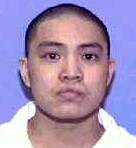 Son Vu Khay Tran
Homicide · USA · 1997
Tran was sentenced to death on January 4, 2001. His sentence was commuted to li…
4 victims
Son Vu Khay Tran
Homicide · USA · 1997
Tran was sentenced to death on January 4, 2001. His sentence was commuted to li…
4 victims
 Lutrische Dancy
Murderer · USA · 2003
Lutrische Dancy was linked to the death of a 51-year-old man. Dancy was charged…
1 victim
Lutrische Dancy
Murderer · USA · 2003
Lutrische Dancy was linked to the death of a 51-year-old man. Dancy was charged…
1 victim
 Ivan Ray Murphy
Murderer · USA · 1989
January 9, 1989 — Ivan Ray Murphy and Douglas Stoff went to Lula Mae Denning’s…
1 victim
Ivan Ray Murphy
Murderer · USA · 1989
January 9, 1989 — Ivan Ray Murphy and Douglas Stoff went to Lula Mae Denning’s…
1 victim
 Armin Meiwes
Murderer · Germany · 2001
Armin Meiwes was a German man who became known as the “Rotenburg Cannibal” or “…
1 victim
Armin Meiwes
Murderer · Germany · 2001
Armin Meiwes was a German man who became known as the “Rotenburg Cannibal” or “…
1 victim
- Gender
- male
- Country
- USA
- Location
- St. Louis County, Missouri, USA
- Date of birth
- September 3, 1974
- Age at first offence
- 17
- Characteristics
- juvenile (16), rape
- Victim profile
- Julie Kerry, 20, and her sister, Robin Kerry, 19
- Method of murder
- Pushing them off a bridge
- Date(s) of murder
- April 4, 1991
- Years active
- 1991
- Date of arrest
- —
- Status
-
Sentenced to death
Sentence commuted to life in prison without parole on October 28, 2003 after a death sentence was imposed on July 2, 1993
Case identification
Defendant: Antonio Richardson Co-defendants mentioned: Marlin Gray, Reginald Clemons, Daniel Winfrey
Timeline
- April 4, 1991 — Antonio Richardson with co-defendants Marlin Gray, Reginald Clemons and David Winfrey raped and killed Julie and Robin Kerry by pushing them off the Chain of Rocks Bridge in St. Louis.
- June 21 — Richardson was charged by indictment with murder first degree.
- March 15, 1993 — Richardson’s trial began in the St. Louis City Circuit Court.
- July 2, 1993 — Richardson was sentenced to death.
- July 6 — Richardson filed a notice of appeal.
- January 6, 1994 — Richardson filed a motion for post-conviction relief.
- May 2, 1995 — The St. Louis City Circuit Court denied the motion for post-conviction relief.
- May 28, 1996 — The Missouri State Supreme Court affirmed the conviction and sentence and the denial of post-conviction relief.
- November 4 — The United States Supreme Court denied certiorari review.
- December 3, 1996 — Richardson filed a petition for writ of habeas corpus in the U.S. District Court for the Eastern District of Missouri.
- July 20, 1998 — The District Court denied the petition for writ of habeas corpus.
- August 17, 1999 — The U.S. Eighth Circuit Court of Appeals affirmed the denial of relief.
- May 15, 2000 — The U.S. Supreme Court declined discretionary review.
- May 16 — The State requested the Missouri Supreme Court to set an execution date.
- February 6, 2001 — The Missouri State Supreme Court set Richardson’s execution date for March 7, 2001.
- October 28, 2003 — Death sentence commuted to life without parole by the Missouri Supreme Court.
Background
Antonio Richardson was convicted of murder and sentenced to death in Missouri state court. He was also described as a mentally impaired teenager and as juvenile at the time of the crimes.
The Amnesty.org materials described his scheduling for execution on 7 March 2001 and stated that international law prohibits the use of the death penalty against those who were under 18 at the time of the crime. It also stated that he was convicted in 1993 of first-degree murder in the death of Julie Kerry and second-degree murder in the death of her sister, Robin. The materials also stated that he rejected a prosecution offer of a life sentence in return for a guilty plea, against the advice of his lawyer, and that this was allegedly persuaded by a local activist who assigned racial motives to the prosecution.
The U.S. Court of Appeals narrative stated that Richardson’s trial court became the sentencer after the jury could not agree on punishment, pursuant to Missouri law.
The offence
On the night of April 4, 1991, Richardson, Reginald Clemons, Marlin Gray, and Daniel Winfrey went to the Chain of Rocks Bridge, an abandoned bridge spanning the Mississippi River between Missouri and Illinois, to smoke marijuana. They parked on the Missouri side and walked across to the Illinois side to do the drugs. The marijuana would not light.
While walking back across the bridge, the group observed Julie Kerry, age twenty-one, her nineteen-year-old sister Robin Kerry, and the Kerrys’ cousin Thomas Cummins, also age nineteen, walking toward the Illinois side. The groups spoke briefly and then continued toward opposite ends of the bridge.
After reaching the Missouri side, Clemons said, “Let’s rob them.” Gray responded, “Yeah, I feel like hurting somebody.” Richardson, Clemons, Gray, and Winfrey then walked back toward the Illinois side and intercepted the Kerrys and Cummins at a bend in the middle of the bridge.
Gray ordered Cummins to the ground, and Richardson and Clemons grabbed the Kerrys. Both girls began screaming and crying, whereupon one of the assailants said, “If you don’t stop screaming, I’ll throw you off this bridge.”
Clemons told Winfrey to keep watch over one sister as he and Richardson took turns holding down and raping the other sister. At some point, one of the assailants said, “You stupid bitch, do you want to die?”
After they had finished raping her, Richardson led the first sister through a manhole to a concrete pier under the bridge. Clemons and Gray then took turns holding down and raping the second sister as Winfrey kept watch over Cummins. When finished, Clemons ordered the second sister through the same manhole.
Gray walked to the Missouri end of the bridge in search of Richardson, unaware that he was under the bridge. Clemons then robbed Cummins and ordered him through the manhole. Clemons then told Winfrey to get Gray and joined Richardson and the others under the bridge.
Either Richardson or Clemons then pushed the sisters from the pier and ordered Cummins to jump into the river seventy feet below. Clemons said, “We pushed them off. Let’s go.”
The group returned to a lookout point over the river. As they watched, Gray remarked that the Kerrys and Cummins would “never make it back to shore,” and told Clemons that Richardson was “brave for doing that.” Afterward, Clemons and Gray warned they would kill anyone who said anything about the crimes.
Following his plunge, Cummins came to the surface near Julie. She attempted to hold onto him, but he immediately started to go under in the swift current. He let go of her and struggled to shore. After wandering through a deserted part of the city, he came to a highway and was assisted by a passing motorist.
Julie’s body was found downstream three weeks later. Robin’s body had not been found to that day.
Winfrey pleaded guilty to two counts of second-degree murder and agreed to testify against the other assailants in exchange for a recommended thirty-year sentence. Gray and Clemons were convicted of first-degree murder and sentenced to death.
Richardson was convicted of first-degree murder for Julie Kerry’s death and second-degree murder for Robin Kerry’s death.
Additional factual details from the case narrative
The case narrative also stated that Gray showed Cummins and the Kerrys how to climb down a manhole on the deck of the bridge to a metal platform that led to a concrete pier supporting the bridge. Gray told Cummins the platform was a good place to be alone with a woman.
It stated that Clemons suggested that they rob the Kerrys and Cummins, and Gray replied that he felt like hurting someone and the group turned around and walked east.
Richardson yelled something at some campers on the bank below and the Kerrys and Cummins started walking west toward Missouri.
As the groups passed a bend in the bridge, Gray put his arm around Cummins and told him, “This is a robbery. Get down on the ground.” Cummins complied and Richardson, Clemons and Winfrey grabbed the Kerrys.
It stated that one of the assailants told the girls to stop screaming or they would be thrown off the bridge. Richardson held the first sister’s shoulders down while Clemons ripped off her clothing and raped her, and then Richardson raped the first sister while Clemons held her down.
It stated that Winfrey held the second sister down and covered her face with her coat. One of the assailants told Cummins that he would be killed if he looked up from the ground. Gray then told Winfrey to watch Cummins. Gray and Clemons tore off the second sister’s clothes and each raped her.
It stated that Richardson forced the first sister into the manhole and followed her while Gray raped the second sister. When Gray had finished he asked Winfrey where Richardson had gone and Winfrey indicated he had gone west. Gray then went in search of Richardson and the first sister.
It stated that Clemons then forced the second sister down the manhole through which Richardson had taken the first sister. Clemons then robbed Cummins of his wallet, wristwatch, cash and keys. Clemons then forced Cummins into the manhole.
Winfrey went to the entrance of the bridge to Fred Gray. Under the bridge, the Kerrys and Cummins were told to step out onto the concrete pier below the metal platform. The three were told not to touch each other. The Kerrys were pushed from the pier falling a distance of about 70 feet. Cummins was told to jump and did so.
When Cummins came to the surface he saw Julie Kerry nearby in the water and called for her to swim. The current brought the two together and Julie grabbed Cummins who broke free after he started drown. Cummins did not see Julie Kerry again.
It stated that Richardson and Clemons met Winfrey and Gray near the entrance to the bridge, and Clemons said, “We pushed them off. Let's go.” The group ran to their cars and drove to Alton, Illinois for gas, cigarettes and sandwiches. The group then drove back to an observation point near the river where Gray and Clemons speculated that the three would never make it to the shore. Gray told Clemons that Richardson was brave to push the Kerry sisters off the bridge.
Investigation and arrest
The materials did not provide separate investigative or arrest details beyond describing that Richardson contacted the police the next day and confessed his involvement in the crime while saying that he had not pushed the sisters off the bridge.
Trial
Richardson’s trial began in the St. Louis City Circuit Court on March 15, 1993. On July 2, 1993, he was sentenced to death.
At the penalty phase, the jury could not agree on punishment. Under Missouri law, the court became the sentencer and assessed punishment at death.
The materials also stated that the jury convicted Richardson, but were unable to agree on his punishment, and that the judge became the sentencer and condemned the teenager to death.
The materials stated that the Confrontation Clause issues arose from allowing Winfrey to testify that after the killings Gray said Richardson was “brave for doing that” and that the victims would “never make it back to shore.”
They also stated that Richardson appealed and challenged several issues, including striking three venire persons who were biased against the death penalty, admission of certain statements, and limitations on closing argument.
Jury-related issue
Richardson argued that the trial court erred in striking three venire persons who stated that they would not consider imposing the death penalty if the State did not prove that Richardson was the person who pushed the victims off the bridge. The appellate court described that the Supreme Court held that a juror may be stricken for cause if their views would prevent or substantially impair performance in accordance with instructions and oath.
Confrontation Clause / co-defendant statements
Richardson argued that the Confrontation Clause was violated when the trial court allowed Winfrey to testify about Gray’s remarks and that admitting various inculpatory statements of Clemons and Gray was unconstitutional under Bruton v. United States.
Sentencing
Richardson was sentenced to death on July 2, 1993.
The materials further stated that when he was 13, his IQ was measured at 70 and he was described as “learning disabled” and “easily lead by others.” They stated that after his arrest, the expert hired by the defense found he “did not know the difference between an ocean and a lake, did not know the season that came after winter, did not know what made a sailboat move through the water, did not know simple nursery rhymes, did not know the country or even the state in which he lived... It is quite apparent from the test results that Mr Richardson is significantly compromised... in all complex mental activity. Most noteworthy are severe impairments in attention and concentration, memory, learning..., speech and language skills, spacial and perceptual skills...”.
They stated that in 1993, Richardson’s IQ was assessed at 73 within the borderline retardation range. They stated that in 1994, a psychologist found that the then 19-year-old Richardson operated at the level of a seven-year-old in communication and social skills, and functioned as a 12-year-old in daily living skills.
The appellate decision narrative described penalty-phase issues concerning testimony and additional mitigating evidence, including testimony by Stephanie Whitehorn and the decision not to present Dr. Eric Engum’s testimony initially.
Appeals
Missouri direct appeal and post-conviction relief
Richardson filed a notice of appeal on July 6, 1993.
Richardson filed a motion for post-conviction relief on January 6, 1994. The St. Louis City Circuit Court denied the motion for post-conviction relief on May 2, 1995.
The Missouri State Supreme Court affirmed the conviction and sentence and the denial of post-conviction relief on May 28, 1996.
On November 4, the United States Supreme Court denied certiorari review.
Federal habeas corpus
Richardson filed a petition for writ of habeas corpus in the U.S. District Court for the Eastern District of Missouri on December 3, 1996. The District Court denied the petition on July 20, 1998.
On August 17, 1999, the U.S. It stated that rehearing and rehearing en banc were denied on Oct. 8, 1999.
The materials stated that the U.S. Supreme Court declined discretionary review on May 15, 2000, and that on May 16 the State requested the Missouri Supreme Court to set an execution date.
U.S. Court of Appeals decision content (verbatim excerpts included)
The U.S. Court of Appeals narrative described that it affirmed and referenced standards for federal habeas review, including that it could grant relief only if the state court’s adjudication resulted in a decision contrary to or an unreasonable application of clearly established federal law, as determined by the Supreme Court.
It also listed the district court issues for certificate of appealability: (1) strike three venire persons biased against the death penalty; (2) admit evidence of remarks made by the other assailants; (3) limit the scope of trial counsel’s closing argument; (4) admit the testimony of Stephanie Whitehorn at the penalty phase; and (5) deny Richardson’s request to present additional mitigating evidence prior to assessment of punishment.
The U.S. Court of Appeals narrative included the following statements:
“before a federal constitutional error can be held harmless, the court must be able to declare a belief that it was harmless beyond a reasonable doubt.”
It also included:
“must show 'a reasonable probability that the error affected the trial's outcome.'”
“A wide scope of evidence and argument is admissible during the penalty phase of a capital murder trial, provided that such evidence is not 'constitutionally impermissible or totally irrelevant to the sentencing process.'”
“The Sixth Amendment does not guarantee, however, that criminal defendants may call every witness they choose.”
“A defendant 'does not have an unfettered right to offer testimony that is incompetent, privileged, or otherwise inadmissible under standard rules of evidence.'”
It also included:
“Clearly established federal law holds that states may not 'preclude the sentencer from considering any mitigating factor.'”
Outcome
The district court denied the petition for a writ of habeas corpus, and the U.S. Eighth Circuit affirmed the denial. The materials also stated that the U.S.
The Missouri Supreme Court commuted the death sentence to life in prison without parole on October 28, 2003.
Aftermath
The materials stated that Richardson was scheduled for execution in Missouri on 7 March 2001, and that his death sentence was commuted to life without parole by the Missouri Supreme Court on October 28, 2003. The materials also stated that he remained on death row for co-defendants Marlin Gray and Reginald Clemons.
Spotted an error, or have more information about this case?