
Misty Witherspoon
Murderer
1known / alleged victims
Similar offenders
 Miranda Barbour
Murderer · USA · 2013
Miranda Barbour, 19, defendant. · Elytte Barbour, 22, defendant and husband of…
100 victims
Miranda Barbour
Murderer · USA · 2013
Miranda Barbour, 19, defendant. · Elytte Barbour, 22, defendant and husband of…
100 victims
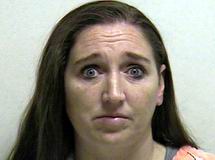 Megan Huntsman
Murderer · USA · 1996
Megan Huntsman was 40 at sentencing. She was a mother of three children who wer…
6 victims
Megan Huntsman
Murderer · USA · 1996
Megan Huntsman was 40 at sentencing. She was a mother of three children who wer…
6 victims
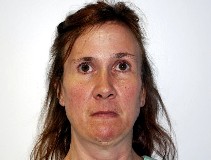 Michele Kalina
Murderer · USA · 1996
Michele Kalina pleaded guilty to murder for one of five infants she initially w…
5 victims
Michele Kalina
Murderer · USA · 1996
Michele Kalina pleaded guilty to murder for one of five infants she initially w…
5 victims
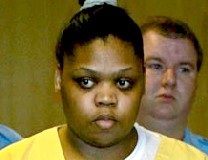 Tiffany Hall
Murderer · USA · 2006
Tiffany Hall was 24 when she was charged in September 2006. She later entered a…
5 victims
Tiffany Hall
Murderer · USA · 2006
Tiffany Hall was 24 when she was charged in September 2006. She later entered a…
5 victims
 Banita Jacks
Murderer · USA · 2007
Banita Jacks was a Washington, DC resident convicted of murdering her four daug…
4 victims
Banita Jacks
Murderer · USA · 2007
Banita Jacks was a Washington, DC resident convicted of murdering her four daug…
4 victims
 Holly Grigsby
Murderer · USA · 2011
Holly Grigsby was sentenced to life in prison without parole on July 15, 2014.…
4 victims
Holly Grigsby
Murderer · USA · 2011
Holly Grigsby was sentenced to life in prison without parole on July 15, 2014.…
4 victims
Random profiles
 Robert Lee Massie
Murderer · USA · 1965
Defendant: Robert Lee Massie · Status/Outcome: Executed by lethal injection in…
2 victims
Robert Lee Massie
Murderer · USA · 1965
Defendant: Robert Lee Massie · Status/Outcome: Executed by lethal injection in…
2 victims
 Shelby Shamblin
Homicide · USA · 1980
Shelby Glenn Shamblin was a Homeland man. He was convicted in June of first-deg…
1 victim
Shelby Shamblin
Homicide · USA · 1980
Shelby Glenn Shamblin was a Homeland man. He was convicted in June of first-deg…
1 victim
 Michael Anthony Cohen
Murderer · USA · 1985
Michael Anthony Cohen, 40, was sentenced to death in Glynn County in December 1…
1 victim
Michael Anthony Cohen
Murderer · USA · 1985
Michael Anthony Cohen, 40, was sentenced to death in Glynn County in December 1…
1 victim
 Linda Hazzard
Homicide · USA · 1911
Linda Burfield Hazzard was an alternative medicine practitioner who promoted fa…
1 victim
Linda Hazzard
Homicide · USA · 1911
Linda Burfield Hazzard was an alternative medicine practitioner who promoted fa…
1 victim
 Laurel Schlemmer
Murderer · Pennsylvania · 2014
Laurel Michelle Schlemmer was accused of drowning two young boys in a bathtub i…
2 victims
Laurel Schlemmer
Murderer · Pennsylvania · 2014
Laurel Michelle Schlemmer was accused of drowning two young boys in a bathtub i…
2 victims
 Fritz Moen
Murderer? · Norway · 1976
Fritz Yngvar Moen (December 17, 1941 – March 28, 2005) was a Norwegian man wron…
2 victims
Fritz Moen
Murderer? · Norway · 1976
Fritz Yngvar Moen (December 17, 1941 – March 28, 2005) was a Norwegian man wron…
2 victims
Case Facts
- Gender
- female
- Country
- USA
- Location
- Mooresville, Iredell County, North Carolina , USA
- Date of birth
- 1973
- Age at first offence
- 32
- Characteristics
- parricide, financial gain
- Victim profile
- Quinn Jackson Witherspoon (her police officer husband)
- Method of murder
- Shooting (40 caliber Beretta)
- Date(s) of murder
- September 13, 2005
- Years active
- 2005
- Date of arrest
- October 5, 2005
- Status
-
Life imprisonment
Sentenced to life in prison without parole on July 15, 2007
Case Summary
Parties and roles
- Misty Witherspoon — defendant; her husband was Quinn Witherspoon (a Concord Police Officer with the Concord Police Department and a K-9 officer); Misty Witherspoon also addressed the financial crimes connected with her church and pleaded guilty to embezzlement and financial identity fraud counts.
- Quinn Witherspoon — victim; Concord Police Officer; he was shot in the head while he slept on the family’s living room couch.
- Sabrina Barnes — Quinn Witherspoon’s sister; she spoke about the impact of the verdict on the Witherspoons’ children.
- Andrew Jennings — defense attorney.
- Alan B. Martin — Iredell County Assistant District Attorney; involved in the plea agreement for the financial crimes and addressed the death-penalty decision.
- Roy Cooper — Attorney General, appearing through a Special Deputy Attorney General.
- Valerie B. Spalding — Special Deputy Attorney General.
- Ann B. Petersen — attorney for defendant-appellant.
- Christopher Collier — Iredell Superior Court Judge who set bond.
- Dr. Donald Jason — medical examiner who performed the autopsy.
- Dr. Page Hudson — forensic pathologist who provided defense expert testimony.
- Dr. Jerry Noble — clinical psychologist who testified for the defense.
- Officer Corey Barnette — first officer to arrive at the scene; entered the house and observed Quinn Witherspoon lying face down on the couch.
- Trooper Jason Fleming — North Carolina Highway Patrol; drove to the house after hearing something had happened and spoke with Witherspoon.
- Detective Todd Marcum — Mooresville Police Department detective; interviewed Witherspoon and secured the scene for processing.
- EMTs — emergency medical technicians who went into the house and checked Quinn Witherspoon.
- Guy Smith — Concord Police Deputy Chief; commented after the verdict.
Timeline
- Sept. 13, 2005 — Misty Witherspoon called the Iredell County 911 call center after stating she tripped and fell while bringing Quinn Witherspoon’s service pistol to him, and the gun discharged; Officer Corey Barnette arrived and observed Quinn laying face down on a couch.
- 14 September 2005 — officers asked Misty Witherspoon to do a re-enactment of what happened because of inconsistencies between physical evidence and her story, particularly location of the shell casing and blood flow patterns.
- 23 September 2005 — officers asked for another written statement from Misty Witherspoon after the re-enactment did not resolve concerns.
- 3 October 2005 — police interviewed Misty Witherspoon at the police station.
- 5 October 2005 — police interviewed Misty Witherspoon again at the police station; during the interview she described intending to kill herself and later said different reasons for pulling the trigger; Misty Witherspoon was arrested on this date and charged with first degree murder.
- 30 April 2007 — as part of a plea agreement, charges for obtaining property by false pretenses were dismissed and she pled guilty to the remaining 40 property offenses.
- May 1, 2007 — Misty Witherspoon pleaded guilty to embezzlement and financial crimes at the Iredell County Courthouse.
- June 25, 2007 — she was to be sentenced for the financial crimes at the same time she went before a judge for the homicide charges.
- 25 June 2007 — the murder case proceeded to trial.
- July 15, 2007 — Misty Witherspoon was sentenced to life in prison without parole.
- July 16, 2007 — a jury verdict of first-degree murder was reported as read early Monday, with the verdict read just before noon.
- August 18, 2009 — the Court of Appeals of North Carolina upheld her first degree murder conviction; no error was found.
Background
- Misty Witherspoon and Quinn Witherspoon had been married for 11 years and had three children.
- At the time of Quinn Witherspoon’s death, the couple was experiencing financial problems.
- In 2004, it was discovered that defendant had taken approximately $18,000.00 from the family’s church, where Quinn served as the church’s treasurer as well as a deacon; the pastor and deacons met and it was agreed that defendant would repay the money and no police report would be filed.
- Defendant was responsible for paying the family’s bills and was behind on paying utility bills and making mortgage payments.
- Utility companies threatened to cut off service to the house.
- Quinn had to borrow money from his supervisor to make the mortgage payment on one occasion.
- In March 2005, Quinn went to his credit union to discuss a delinquent credit card account; he believed defendant had a spending problem and was concerned that monthly bills were not being paid promptly.
- Quinn had defendant taken off of his credit card account and had the spending limit reduced.
- Quinn paid off some debt with a personal loan that was repaid in monthly installments from his paycheck, so he did not have to worry about defendant making payments on time.
- When the credit union manager went over Quinn’s credit report with him, Quinn became upset when he found out that there were credit cards and finance companies he did not know about listed on the report.
- Defendant confided in her best friend, Leslie Burgess, that she and Quinn “had a lot of bills.”
- Defendant would carry the home phone around with her in the house so she could answer the phone.
- When Quinn and defendant were out of town, Burgess would come over, write down messages from the answering machine on paper, delete the messages, and put the note in the microwave so Quinn would not see who had called.
- There would often be eight to 15 calls a day from creditors.
- On 22 August 2005, Duke Power sent a letter stating the Witherspoons owed $894.02, and on 6 September 2005, Duke Power sent a notice that power would be shut off.
- Defendant called Duke Power around 1:36 p.m. on 13 September 2005 promising to pay the delinquent bill, and Duke Power stated the bill needed to be paid that day or the power would be turned off next day.
The offence
- Misty Witherspoon shot Quinn Witherspoon in the head with his service pistol while he slept on the family’s living room couch in Sept. 2005.
- The prosecution argued Witherspoon killed her husband because their power was about to be turned off and she could not reveal the full extent of their financial distress.
- The defense argued it was a suicide attempt that went horribly wrong, ending in an accident.
- The jury convicted Witherspoon of first degree murder.
Investigation
- Officer Barnette entered the house and walked into the living room where he saw Quinn laying face down on a couch.
- Quinn’s pistol was on the floor beside the couch along with a yellow children’s book.
- Defendant was standing roughly five feet away from the couch facing it, with blood on her shorts and shirt.
- Defendant told Officer Barnette:
- “I was bringing him his gun and tripped on something and accidentally shot him in the head[.]”
- Officer Barnette checked Quinn for a pulse but noticed the blood on Quinn’s head was already drying.
- Trooper Jason Fleming arrived quickly and went up to defendant; she told him she had accidentally shot Quinn, and she repeated this statement verbatim multiple times:
- She told him she was getting something off a shelf and Quinn’s gun fell on the floor.
- She said the gun did not look safe to her and she was carrying it to Quinn to make sure it was safe before she put it back.
- She slipped on a book, fell against Quinn, and the gun went off.
- EMTs arrived and went into the house; they went over to the couch and checked Quinn’s carotid artery for a pulse; Quinn was dead.
- Detective Todd Marcum arrived and saw defendant sitting in the front yard with blood on her shirt and hands.
- Detective Marcum entered the house; Officer Barnette advised him of the situation, and they asked the EMTs to leave so they could secure the scene for processing.
- During the walk-through, Detective Marcum noticed Quinn’s duty belt and some other gear on the floor of the hallway bathroom.
- Detective Marcum drove defendant to the police station for an interview about “what happened in the house.”
- During the interview, defendant told Detective Marcum that Quinn kept his gun in the holster of his gun belt and kept his gun belt in the hallway bathroom closet; she said she was looking in the closet for lotion.
- She said that as she was looking through a basket on the back of the shelf, she pulled it forward to see into it better and Quinn’s gun fell out of its holster, and then both the gun and belt fell out of the closet onto the floor.
- She said she thought the flashlight on the gun might have broken and decided to take the gun to her husband to make sure everything was functioning properly before putting it back.
- She said she picked up the gun carrying it away from herself in her right hand.
- She said she walked about half way across the living room, slipped on a book, stumbled forward, and fell into Quinn; she heard a gunshot.
- She said she looked down and saw blood coming from Quinn’s mouth and ears.
- She said she began looking for the phone, dropped the gun near the loveseat next to the couch when she found the phone in the cushions.
- She said she put her right hand over the wound on the back of Quinn’s head and stayed on the phone next to him until police arrived.
- Detective Marcum wrote out a statement of what defendant had told him; she read it and signed it.
- Detective Marcum photographed blood drops on defendant’s feet and hands, and defendant gave Detective Marcum her clothes.
- After defendant left with family members, Detective Marcum listened to the 911 call; instead of immediately requesting help, defendant initially described bringing the gun to her husband, tripping and falling into her husband, and the gun going off.
- When the operator asked about what type of gun had been involved, there was approximately 15 seconds of silence, during which time there were sounds of doors opening and closing and something falling and hitting the floor.
- Detective Marcum went back to the Witherspoons’ home; he and other officers performed a walk-through of the house based on what defendant told him.
- As the medical examiner and police rolled Quinn’s body off the couch onto the floor, a shell casing that had been stuck to Quinn’s right arm fell onto the couch and rolled onto the floor.
- In the pillow under Quinn’s head, which was face down, they found a bullet.
- Detective Marcum testified that he was surprised by the location of the shell casing because Quinn’s service weapon was a right-ejecting semi-automatic pistol.
- The police expected to find the shell casing toward Quinn’s feet, not toward his head, based on defendant’s statement that she had been standing at the middle of the front of the couch with the gun in her right hand when it discharged and Quinn’s head resting on the left side of the couch.
- The investigating officers asked defendant next day, 14 September 2005, to do a re-enactment due to inconsistencies between physical evidence and defendant’s story, particularly the location of the shell casing and blood flow patterns indicating Quinn’s head was not face down when he was shot.
- On 23 September 2005, the officers asked for defendant to make another written statement.
- During the 5 October 2005 interview, defendant claimed she had intended to kill herself.
- She explained that at about 1:30 p.m. on 13 September 2005, she had a conversation with Duke Power about their bill, which was several months overdue.
- She said that after that, when she was looking through the bathroom closet for the lotion and the gun fell out, “she saw that as a sign” and picked up the gun and went outside.
- She said she went into a workshop off the back of the house and was going to shoot herself, but Quinn’s K-9 dog, Tank, came in and would not stop nudging her.
- She said she went back into the house and was standing at the middle of the backside of the couch where Quinn was sleeping.
- She said she was praying and her legs got weak, so she put her hands on the back of the couch for support.
- She said one of the family’s cats jumped up onto the back of the couch and ran across her arms, causing her to pull the trigger.
- She said she did not tell police what happened when they arrived because she believed they would take her children away if they thought she was suicidal.
- When Detective Marcum asked her to repeat what happened with the cat, defendant said that although the cat did run across her hand, that was not why she pulled the trigger; she said she did not know why she had pulled the trigger.
- When asked about the location of the shell casing, defendant said that after she heard the gunshot and was walking around the head of the couch to find the phone, she almost stepped on it, so she picked it up; she said it was still warm and she tossed it toward Quinn’s body laying on the couch.
- Defendant was arrested on 5 October 2005 and charged with first degree murder.
Arrest and charges
- After defendant’s death call and the initial accounts, officers sought re-enactment and further statements.
- On 5 October 2005, she was arrested and charged with first degree murder.
- Subsequently, she was also charged with three counts each of identity theft and obtaining property by false pretenses, and 37 counts of embezzlement.
- A plea agreement resulted in obtaining property by false pretenses charges being dismissed on 30 April 2007, and she pled guilty to the remaining 40 property offenses.
Trial
- The case proceeded to trial on 25 June 2007.
- The jury returned a first degree murder conviction after deliberating “just a few hours,” with the verdict read just before noon.
- In opening accounts of events at trial, Witherspoon did not testify.
- Instead, her defense presented expert testimony and testimony from family and friends.
Medical evidence and forensic testimony
- Dr. Donald Jason testified that he found a gunshot entrance wound on the left side of the head, just above and slightly in front of the ear, with stippling around the entrance wound.
- Dr. Donald Jason testified that the exit wound was just below the nose on the right side.
- Dr. Donald Jason stated that after he had removed the brain and inserted a probe in the entrance wound and out through the exit wound to track trajectory, the bullet passed through Quinn’s skull “from left to right 25 degrees and downward by 40 degrees.”
- Dr. Donald Jason stated that, in his opinion, Quinn was shot from less than six inches away.
- Detective Todd Marcum testified over defendant’s objection that he and other officers obtained a mannequin and inserted wooden dowels in the head corresponding to the entrance and exit wounds and trajectory.
- The officers used the crime scene photographs to position the mannequin on a couch purchased for trial to recreate Quinn’s head position as found.
- Detective Marcum testified that based on the reconstruction, defendant could not have been standing where she claimed when the gun discharged.
- He testified that for the bullet to have entered Quinn’s head at the correct angle, defendant would have had to have been standing over Quinn at the arm of the couch rather than at the middle of the couch.
- He testified that the approximately 45-degree downward trajectory indicated the shot was fired from behind the couch rather than the front.
- He testified that photographs of the blood flow patterns on Quinn’s head indicated his head had to have been “almost level or [at] a slight incline” when shot, and otherwise “the blood would have been flowing uphill․”
- Based on blood flow patterns and reconstruction, police believed Quinn’s head had been repositioned after he was shot but before police arrived.
Defense experts and other testimony
- Dr. Page Hudson testified that based on his review of Quinn’s autopsy photographs and reports, he believed the gun was fired from more than two feet away.
- Dr. Jerry Noble testified that defendant suffered from depression, anxiety, and stress disorders at the time of the shooting.
- Dr. Jerry Noble expressed the opinion that defendant could not “form the specific intent to shoot and kill her husband because she was severely depressed and anxious and [sic] affecting her ability to think, concentrate, and make decisions.”
Financial beneficiary evidence in the murder trial
- State presented evidence that after Quinn’s death:
- survivors received $82,102.27 in government death benefits,
- $91,000.00 in life insurance,
- $24,138.68 from a 401(k),
- and in total defendant received $197,240.95 as a result of Quinn’s death.
Sentencing
- The trial court sentenced defendant to life imprisonment without parole for the murder conviction.
- The court followed with:
- three consecutive presumptive-range terms of 13 to 16 months for the identity theft charges,
- and two consecutive presumptive-range terms of 6 to 8 months for the embezzlement charges.
- The sentences for the financial crimes were to be served concurrently with each other.
- She was sentenced to life in prison without parole on July 15, 2007.
Appeals
- The conviction was appealed.
- In August 18, 2009, the Court of Appeals of North Carolina upheld the first-degree murder conviction and found “No Error.”
- The appellate decision stated the defendant’s sole argument was that the trial court should have excluded testimony using a mannequin’s head and a newly-purchased couch to refute defendant’s version of events.
- The appellate court concluded the evidence was a demonstration not requiring substantially similar conditions, and it held no error occurred.
Outcome
- The jury convicted defendant of first degree murder.
- The appellate court upheld her first degree murder conviction.
- She received a life sentence without parole for the murder conviction.
Other details
- Death penalty not sought: Prosecutors said they would not seek the death penalty; the evidence that Misty Witherspoon stood to financially gain was not “sufficiently strong” to warrant seeking the death penalty, and the assistant district attorney also stated that because Witherspoon was not on-duty at the time of death, another reason for seeking death penalty did not apply.
- Bond and conditions: Judge Christopher Collier set a $500,000 secured bond; if she made bond, she had to remain in Iredell County, see her children only when supervised, and not contact any of the state’s witnesses who were not immediate family.
- Witnesses speaking at proceedings:
- Quinn Witherspoon’s family supported Misty Witherspoon throughout the trial; their stance did not change after the verdict.
- Bob Witherspoon said: “We’re still behind her 100 percent.”
- While Misty Witherspoon was led to jail, Sabrina Barnes gave a plea:
- “Please pray for those children. Nobody understands how hard this is going to be for them,”
- Sabrina Barnes also stated:
- “If they think this is a big celebration for the judicial system, it's not, because we have to go home and face those three children and she's got to face the rest of her life without them and them without her,”
- Concord Police Deputy Chief Guy Smith stated:
- “We’re certainly satisfied there's some closure to this case,”
- “But certainly this is not going to bring Quinn back to us.”
- Defense counsel Andrew Jennings stated:
- “Gave a statement, then changed that statement, that was an incredibly damaging piece of evidence for any person in any situation,”
- “No matter what you've done ahead of time, no matter how many times you've considered the jury could give a verdict of first-degree murder, it's still stunning when it hits you,”
- Assistant District Attorney Alan Martin stated about the plea:
- “Things went as expected today,”
- “She entered the pleas that we negotiated, we entered the dismissals that we negotiated, and the court accepted the agreement.”
- Financial crimes plea details:
- Misty Witherspoon pleaded guilty to 37 counts of embezzlement and three counts of financial identity fraud.
- She was charged with embezzling more than $27,000 from Whitman Park Baptist Church in Mooresville.
- She was also charged with getting credit cards in her sister’s name.
- Misty Witherspoon said:
- “This has been a very hard year and a half for us as a family,”
- “I'm glad to put an end to this part of it today. I'm ready to face the next part and put an end to that,”
- Her attorney Andrew Jennings said she pleaded guilty because she wanted to take responsibility for crimes against her church and sister.
- Jennings added that the case against his client was suspect because in 2004, she paid back restitution to her church and neither her sister nor her church filed any charges against her, and Jennings explained:
- “They want to make her look as bad as they can – go to her credibility in what she says happened on the day of her husband's death,”
- Misty Witherspoon said:
- “I have put that in the Lord's hands and we're going to be OK and we're ready,”
- Pretrial bond hearing participants included Misty Witherspoon’s mother Sandra Keller and Quinn Witherspoon’s father Robert Witherspoon, both of Mooresville.
- Investigation re-enactment and interviews included police interviewing her on 3 October 2005 and again on 5 October 2005.
- The appellate caption listed the case as: State of North Carolina v. Misty Keller Witherspoon, Defendant. No. COA08-1003.

Spotted an error, or have more information about this case?