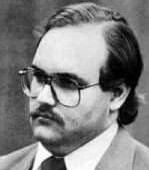
Richard Angelo
Serial killer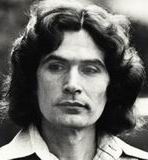 Rodney Alcala
Serial killer · USA · 1977
Rodney James Alcala (born August 23, 1943) was also known as Rodrigo Jacques Al…
100 victims
Rodney Alcala
Serial killer · USA · 1977
Rodney James Alcala (born August 23, 1943) was also known as Rodrigo Jacques Al…
100 victims
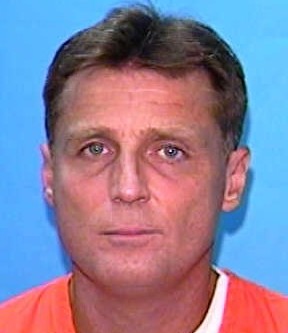 Glen Edward Rogers
Serial killer · USA · 1993
Glen Edward Rogers was a spree killer whose cross-country rampage in 1994-95 le…
70 victims
Glen Edward Rogers
Serial killer · USA · 1993
Glen Edward Rogers was a spree killer whose cross-country rampage in 1994-95 le…
70 victims
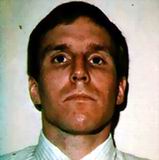 Michael Swango
Serial killer · USA · 1981
Michael Swango (Joseph Michael Swango) was a physician and American serial kill…
60 victims
Michael Swango
Serial killer · USA · 1981
Michael Swango (Joseph Michael Swango) was a physician and American serial kill…
60 victims
 Efren Saldivar
Serial killer · USA · 1989
Efren Saldivar (born 30 September 1969) was an American serial killer who murde…
50 victims
Efren Saldivar
Serial killer · USA · 1989
Efren Saldivar (born 30 September 1969) was an American serial killer who murde…
50 victims
 Gary Ridgway
Serial killer · USA · 1982
Gary Leon Ridgway Ridgway was born 18-February-1949 in Salt Lake City, UT. He w…
49 victims
Gary Ridgway
Serial killer · USA · 1982
Gary Leon Ridgway Ridgway was born 18-February-1949 in Salt Lake City, UT. He w…
49 victims
 Charles Cullen
Serial killer · USA · 1984
Charles Cullen (born February 22, 1960) was a former nurse and the most prolifi…
45 victims
Charles Cullen
Serial killer · USA · 1984
Charles Cullen (born February 22, 1960) was a former nurse and the most prolifi…
45 victims
 Mario Swain
Murderer · USA · 2002
Mario Swain was a Black male. He had black hair and brown eyes. He was 5'7" tal…
1 victim
Mario Swain
Murderer · USA · 2002
Mario Swain was a Black male. He had black hair and brown eyes. He was 5'7" tal…
1 victim
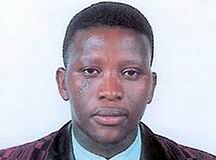 Norman Afzal Simons
Serial killer · South Africa · 1986
Norman Afzal Simons was a former teacher. He later converted to Islam in 1993,…
22 victims
Norman Afzal Simons
Serial killer · South Africa · 1986
Norman Afzal Simons was a former teacher. He later converted to Islam in 1993,…
22 victims
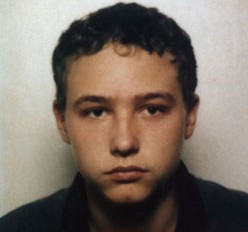 Joshua Phillips
Homicide · USA · 1998
November 3, 1998 — Maddie Clifton vanished from her Jacksonville, Fla., neighbo…
1 victim
Joshua Phillips
Homicide · USA · 1998
November 3, 1998 — Maddie Clifton vanished from her Jacksonville, Fla., neighbo…
1 victim
 Robert Dale Henderson
Serial killer · USA · 1980
Case name: Robert Dale Henderson v. Richard Dugger (Respondent) · Court/level:…
12 victims
Robert Dale Henderson
Serial killer · USA · 1980
Case name: Robert Dale Henderson v. Richard Dugger (Respondent) · Court/level:…
12 victims
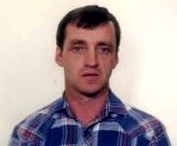 Eli Stutzman
Serial killer · USA · 1977
Eli Stutzman — accused; offender; later committed suicide on January 31, 2007.…
5 victims
Eli Stutzman
Serial killer · USA · 1977
Eli Stutzman — accused; offender; later committed suicide on January 31, 2007.…
5 victims
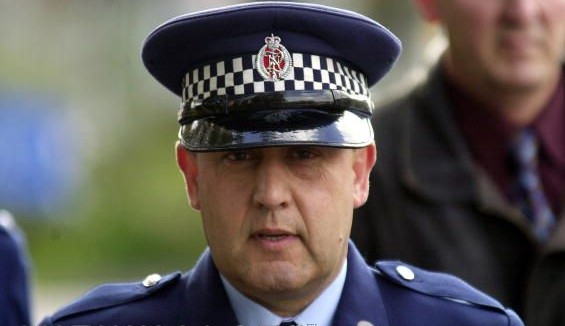 William Keith Abbott
Homicide · New Zealand · 2000
Name: William Keith Abbott William Keith Abbott is described as a New Zealand p…
1 victim
William Keith Abbott
Homicide · New Zealand · 2000
Name: William Keith Abbott William Keith Abbott is described as a New Zealand p…
1 victim
- Gender
- male
- Country
- USA
- Location
- Long Island, New York, USA
- Date of birth
- April 29, 1962
- Age at first offence
- 25
- Characteristics
- angel of death, nurse, drugs
- Victim profile
- Men and women (patients)
- Method of murder
- Poisoning (Pavulon and Anectine)
- Date(s) of murder
- September -October 1987
- Years active
- 1987
- Date of arrest
- October 12, 1987
- Status
-
Life imprisonment
Sentenced to 61 years to life
Case record: Richard Angelo
Richard Angelo was 26 years old when he went to work at Good Samaritan Hospital on Long Island in New York. He worked as a nurse on the graveyard shift from 11 p.m. to 7 a.m. He was the only male nurse on that shift. He had an underlying desire to be recognized as a hero.
Angelo had been a former Eagle Scout and a volunteer fireman. He later graduated from New York state university as a registered nurse in May 1985. He worked briefly at two Long Island hospitals before he joined Good Samaritan Hospital.
Background
Angelo developed a plan to inject drugs into patients at the hospital, bring them to a near-death state, and then intervene so he would appear to be saving them. He sought praise and recognition by arriving in time to “save” his victims.
During his relatively short time at Good Samaritan, there were 37 “Code-Blue” emergencies during his shift, and only 12 of the 37 patients lived to talk about their near-death experience. His ward experienced thirty-seven “Code Blue” emergencies, with a loss of twenty-five patients.
The offence
Angelo used combinations of paralyzing drugs, Pavulon and Anectine. After administering these drugs, patients would begin to feel numb, their breathing would become constricted, and their ability to communicate to nurses and doctors would be reduced. Few could survive the deadly attacks.
During the period in question, authorities tied the suspected killings to injections at the hospital.
On October 11, 1987, Angelo approached patient Gerolamo Kucich and told him, "I'm going to make you feel better," and injected Pavulon into his IV. The man immediately felt numbness and had difficulty breathing. However, Kucich was able to buzz in another nurse who saved his life.
Angelo later gave a taped confession to authorities in which he explained:
"I wanted to create a situation where I would cause the patient to have some respiratory distress or some problem, and through my intervention or suggested intervention or whatever, come out looking like I knew what I was doing. I had no confidence in myself. I felt very inadequate."
Investigation
After one of the suspected victims, Gerolamo Kucich, used the call button for assistance after receiving an injection from Angelo, a nurse took a urine sample and had it analyzed. The test proved positive for Pavulon and Anectine, neither of which had been prescribed to Kucich.
The bodies of several suspected victims were exhumed and tested for Pavulon and Anectine. The tests proved positive for the drugs on ten of the dead patients.
Laboratory test results were later used to confirm that Pavulon had been administered to at least one victim. The case involved multiple suspicious deaths and hospital administrators were alarmed by unusual cases in the latter months of 1987. Six suspicious deaths between September 16 and October 11 left doctors bewildered.
Arrest
On October 12, 1987, Angelo was questioned by police. As the only male nurse on the graveyard shift, and as a bearded man, he was treated as a natural suspect in the Cucich attack. On November 3, laboratory test results confirmed that Cucich had received a shot of Pavulon, inducing muscular paralysis that could have led to death by suffocation.
A search of Angelo’s hospital locker on November 13 turned up hypodermic needles and a vial of potassium chloride. The following day, police searched Angelo’s apartment, seizing vials of Pavulon and a similar drug, Anectine.
Angelo was arrested on November 15 while attending an out-of-town conference for emergency medical technicians. He was held without bail pending further investigation. In custody, he confessed to a series of murders, estimating that he used Pavulon or Anectine to poison an average of two patients per week during September and early October 1987. He cited his motive as wanting to make himself a “hero” by arriving in time to “save” his victims.
Trial
Angelo was charged with multiple counts of second-degree murder. During trial, his lawyers fought to prove that Angelo suffered from dissociative identity disorder, which meant he was able to disassociate himself completely from the crimes he committed and was unable to realize the risk of what he had done.
As part of this defence, the lawyers introduced polygraph exams that Angelo had passed during questioning about the murdered patients. The judge did not allow polygraph evidence into the court.
Prosecutors called to the stand two mental health experts. The experts agreed that Angelo suffered from a personality disorder but not one that precluded him from appreciating whether his actions were right or wrong. The two psychologists testified that Angelo suffered from dissociative identity disorder. The state argued that Angelo knew exactly what he was doing while he was doing it.
Sentencing
Angelo was convicted of two counts of depraved indifference murder (second-degree murder), one count of second degree manslaughter, one count of criminally negligent homicide, and six counts of assault with respect to five of the patients. He was sentenced to 61 years to life.
Appeals
No appeal information appeared in the provided material.
Outcome
Angelo was sentenced to 61 years to life. He was incarcerated in Clinton Correctional Facility in Dannemora, New York.
Other details
Angelo was arrested while attending an out-of-town conference for emergency medical technicians and was held without bail pending further investigation. He chose to stay in custody, citing threats against his life.
On October 11, 1987, after the deaths of two postoperative subjects in a single day, Girolamo Cucich was approached by a bearded, heavy-set man who told him, "I'm going to make you feel better," and injected something into his intravenous tube, producing immediate numbness and labored breathing. Cucich was able to buzz for a nurse, and his life was saved.
On November 13, 1987, Angelo’s hospital locker search turned up hypodermic needles and a vial of potassium chloride. On November 14, police seized vials of Pavulon and Anectine from Angelo’s apartment.
The material included variations in victim counts: in Angelo’s short employment there were 37 “Code Blue” emergencies leaving 25 patients dead; published reports placed the body-count as high as 30; authorities numbered victims “in excess of ten.”
Spotted an error, or have more information about this case?