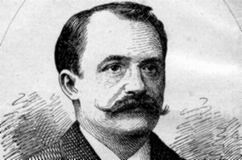
Hugo Schenk
Serial killer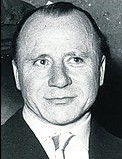 Max Gufler
Serial killer · Austria · 1946
Max Gufler was described as Austria’s “Bluebeard.” He lived in a lower Austrian…
18 victims
Max Gufler
Serial killer · Austria · 1946
Max Gufler was described as Austria’s “Bluebeard.” He lived in a lower Austrian…
18 victims
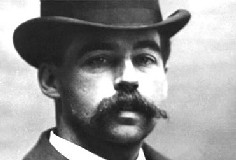 Herman Webster Mudgett
Serial killer · USA - Canada · 1886
Herman Webster Mudgett (May 16, 1861 – May 7, 1896), better known under the ali…
27 victims
Herman Webster Mudgett
Serial killer · USA - Canada · 1886
Herman Webster Mudgett (May 16, 1861 – May 7, 1896), better known under the ali…
27 victims
 Herman Webster Mudgett
Serial killer · USA - Canada · 1886
Herman Webster Mudgett (May 16, 1861 – May 7, 1896), better known under the ali…
27 victims
Herman Webster Mudgett
Serial killer · USA - Canada · 1886
Herman Webster Mudgett (May 16, 1861 – May 7, 1896), better known under the ali…
27 victims
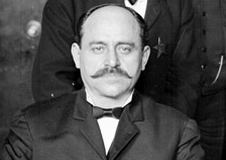 Johann Otto Hoch
Serial killer · USA · 1890
Johann Otto Hoch (1855 - 1906) was the most famous and last-used alias of a Ger…
15 victims
Johann Otto Hoch
Serial killer · USA · 1890
Johann Otto Hoch (1855 - 1906) was the most famous and last-used alias of a Ger…
15 victims
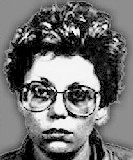 Waltraud Wagner
Serial killer · Austria · 1983
Waltraud Wagner was an Austrian nurse nicknamed a “Death Angel.” She was 49 at…
15 victims
Waltraud Wagner
Serial killer · Austria · 1983
Waltraud Wagner was an Austrian nurse nicknamed a “Death Angel.” She was 49 at…
15 victims
 Antonyo Gipson
Murderer · USA · 2006
Defendant: Antonyo Gipson (23), of the 1100 block of North Kedvale Avenue · All…
3 victims
Antonyo Gipson
Murderer · USA · 2006
Defendant: Antonyo Gipson (23), of the 1100 block of North Kedvale Avenue · All…
3 victims
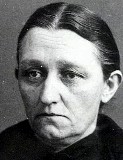 Sarah Makin
Murderer · Australia · 1892
Sarah Makin was also known as Sarah Jane Makin. John Makin (14 February 1845 –…
12 victims
Sarah Makin
Murderer · Australia · 1892
Sarah Makin was also known as Sarah Jane Makin. John Makin (14 February 1845 –…
12 victims
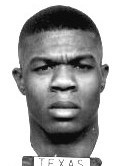 Willie Marcel Shannon
Murderer · USA · 1992
Willie Marcel Shannon was convicted of capital murder for the carjacking and ki…
1 victim
Willie Marcel Shannon
Murderer · USA · 1992
Willie Marcel Shannon was convicted of capital murder for the carjacking and ki…
1 victim
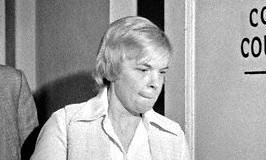 Marybeth Tinning
Murderer · USA · 1972
Marybeth Tinning (née Roe, born on September 11, 1942) was an American prisoner…
9 victims
Marybeth Tinning
Murderer · USA · 1972
Marybeth Tinning (née Roe, born on September 11, 1942) was an American prisoner…
9 victims
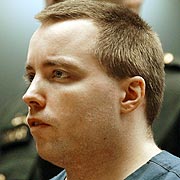 Jeffrey Mailhot
Serial killer · USA · 2003
Jeffrey Mailhot lived in Woonsocket and was described by neighbours as a “nice…
3 victims
Jeffrey Mailhot
Serial killer · USA · 2003
Jeffrey Mailhot lived in Woonsocket and was described by neighbours as a “nice…
3 victims
- Gender
- male
- Country
- Austria
- Location
- Vienna, Austria
- Date of birth
- February 11, 1849
- Age at first offence
- 34
- Characteristics
- rape, robbery
- Victim profile
- Josephine Timal / Katharina Timal / Therese Ketterl / Rosa Ferenczy
- Method of murder
- Shooting - Drowning
- Date(s) of murder
- May-December 1883
- Years active
- 1883
- Date of arrest
- January 10. 1884
- Status
-
Executed
Executed by hanging on April 22, 1884
Case information
Hugo Schenk was executed by hanging on April 22, 1884.
Timeline
- April 22, 1884 — Hugo Schenk was executed by hanging.
Background
Hugo Schenk was known as “the girl murderer with the gentle face” (rough translation). Schenk wooed Viennese housemaids in the mid-1800s. He told women that he was a count named Winopolsky and that he had been able to enter their lives through a Polish accent. He made acquaintances by means of advertisements in the local papers. He caused women to believe he was “a Nihilist agent, a Polish Count with untold gold,” that he had “uncles in America,” and that he had noble relations who would not hear of a marriage with a servant. Clandestine marriage was used as an excuse for leaving Vienna. After leaving Vienna with the girl’s money safe in her bag, he met his accomplices at a romantic spot, murdered the victim, and returned by the next train.
The offence
Schenk raped victims. He stole whatever scant belongings were taken from his victims. He tied a boulder to his victims’ feet and tossed them into the icy Danube. Sometimes his brother acted as an accomplice, and sometimes Schenk worked alone. Sometimes a brother acted as accomplice; at other times he worked alone.
On one occasion, Schenk taught Theresia Ketterl to play “Russian Roulette” with an empty gun, while secretly loading the gun. The poor housemaid did the dirty work for him. Schenk’s brother helped him to murder the cook Ketterl; they shot her dead and threw her into the Danube early in August, 1883.
A principal witness against Hugo Schenk was his sweetheart, Emily Höchsmann. Schenk first enticed Emily Höchsmann like his other victims, then “finding her poor, yet attractive, spared her life.” He spent “much of the money obtained by his terribles crimes” on Emily Höchsmann. Emily Höchsmann offered herself as a witness when she heard who her lover really was.
Schenk confessed that he had planned five murders for “last week” to provide him with 30,000 florins. He intended to escape to America with Emily Höchsmann. Two intended victims were described as daughters of respectable families. One intended victim was a servant to Baroness Malfatti, whose chambermaid Schenk had induced to steal pearls worth 20,000 florins. The pearls had been imperial family gifts to Dr. Malfatti for attending Napoleon’s son, the Duke of Reichstadt, during his last illness.
Schenk’s intended plan was said to include giving inmates a dose of morphia, including the maid herself, with the real intention to murder them all. Schenk had been arrested on “the 10th.” If he had not been arrested on the 10th, “this crime would have been added to the others.”
The Baroness Malfatti had about 10,000 florins’ worth of plate and jewels, besides much cash, in the house. Baroness Malfatti’s house was described as a solitary villa in an outlying suburb. Baroness Malfatti was described as founding and keeping up an asylum for old women. Her pearls were pawned in Linz. The maid’s deposition confirmed Schenk’s confession. “Every step that the police take” was said to reveal fresh crimes of the brothers Schenks and their accomplice, Schlossarek. Schenk acted by minutely prepared plans. Schenk plotted against one girl even before disposing of another.
The fifth murder described as established in the account was the cook Ketterl murder connected to the early August, 1883 date. Three other murders were described as probable, “so far as we may say so before actual convictions.” Schenk’s wife and his child were described as disappearing altogether. A man answering Schenk’s description was seen from a railway train near Lundenburg wrestling with a woman who seemed to stab. This affair was described as not being cleared up because police sent from the station where the train stopped found no trace of murderer or victim. Schenk confessed to having murdered a woman near Lundenburg but refused to give details.
In May, Schenk murdered the two Timals after four weeks’ acquaintance. In August, the cook Ketterl was murdered. In the last days of December, when police had already traced him, Schenk killed Rosa Ferenczy. During the entire period described, Schenk professed to be in love with two girls and corresponded with at least 50 others.
Last August, Schenk left Emily Höchsmann for one day, promising to meet her at night in a certain public garden. Emily Höchsmann waited for him with her relations. When he came, he had been busy all day. After being surrounded by dozens of people, he gave Emily Höchsmann “a watch, bracelets, and rings” taken from the murdered Ketterl three hours previously. The next day, he started a Swiss tour with Emily Höchsmann and left her only when money fell short.
Schenk’s last victim was described as Rosa Ferenczy. Rosa Ferenczy was described as the illegitimate daughter of a Hungarian nobleman. She was described as being full of fanciful ideas. When she was “at the age of 30,” this handsome man offered her his hand and heart and she followed him from service. He took some of her money, “1,800 florins in all.” He lodged her in a remote suburb and visited her sometimes. The landlady stated that Rosa Ferenczy suspected him when absent, but whenever he showed himself she always believed him.
At Christmas, Schenk took Rosa Ferenczy to the theatres and the opera. He promised to visit his sister in her company soon. Rosa Ferenczy prepared for departure. Rosa Ferenczy told the landlady, crying: “You’ll either see me happy and married, or never again.” The landlady recognized Schenk and Schlossarek as the two men with whom Rosa drove to the station. Next day, her body was found in the Danube near Presbourg.
The sums obtained by Schenk by his murders, which he “must have divided with his brother and his accomplice Schlossarek,” were said not to amount to 6,000 florins. It was also said that he never worked and lived comfortably, traveling for three years at least, and that his accomplices also lived comfortably for three years at least. The account stated that he must have obtained money by other means, or that many other murders for which no clue had been obtained were his work.
In March, 1883, Schenk was released after two years’ imprisonment. After his release, he murdered the two Timals in May and then murdered the cook Ketterl in August. In the last days of December, he killed Rosa Ferenczy.
Investigation and arrest
Schenk was arrested on “the 10th,” and his arrest gave a clue to the robbery involving Baroness Malfatti’s pearls. The pearls were not missed until Schenk’s arrest gave the clue. It was said that “every step that the police take” revealed fresh crimes of the brothers Schenks and their accomplice, Schlossarek. Before being delivered up to justice, Schenk confessed to police that he had planned five murders for “last week” to provide him with 30,000 florins and to enable escape to America with Emily Höchsmann.
The Pesth police asked for Schenk’s likeness because several girls had been abducted from that city in similar manner to Schenk’s.
Trial
A principal witness against Hugo Schenk was Emily Höchsmann, who offered herself as a witness when she heard who her lover really was.
Sentencing
Schenk was hanged in 1884. His skull was said to sit in the Vienna’s Kriminalmuseum (Crime Museum) to this day.
Outcome
Aftermath
It was said that his skull sits in the Vienna’s Kriminalmuseum (Crime Museum) to this day. The account said Pesth police asked for his likeness due to similar abductions in recent years from that city.
Other details
Schenk was described as tall, handsome, well-mannered, speaking fluently several languages, and having the bearing of a gentleman. His brother had confessed to having helped him to murder the cook Ketterl, including shooting her dead and throwing her into the Danube early in August, 1883. The confession was said to include a planned dosage of morphia for inmates at Baroness Malfatti’s house, although the account described that the real intention was to murder them all. It was stated that a chambermaid had prepared everything for Schenk and his accomplice’s reception in the house on the very night Schenk was arrested. The account described a romantic meeting pattern: after murdering a victim, Schenk returned by next train. A Swiss tour was described as having occurred with Emily Höchsmann after the garden meeting day. Rosa Ferenczy was found dead in the Danube near Presbourg the next day after driving to the station with Schenk and Schlossarek. The account described that Schenk corresponded with at least 50 women.

Spotted an error, or have more information about this case?