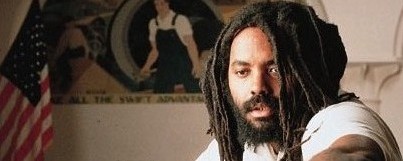
Mumia Abu-Jamal
Murderer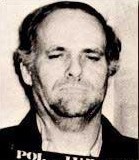 Ervil LeBaron
Murderer · USA · 1972
Ervil Morrell LeBaron (1925 to August 16, 1981) was the leader of a polygamous…
35 victims
Ervil LeBaron
Murderer · USA · 1972
Ervil Morrell LeBaron (1925 to August 16, 1981) was the leader of a polygamous…
35 victims
 Brian Kevin Rosenfeld
Murderer · USA · 1985
Brian Kevin Rosenfeld Brian Kevin Rosenfeld was sentenced to three concurrent l…
23 victims
Brian Kevin Rosenfeld
Murderer · USA · 1985
Brian Kevin Rosenfeld Brian Kevin Rosenfeld was sentenced to three concurrent l…
23 victims
 Marvin Gray
Murderer · USA · 1975
Marvin Gray was convicted killer who claimed responsibility for 23 slayings and…
23 victims
Marvin Gray
Murderer · USA · 1975
Marvin Gray was convicted killer who claimed responsibility for 23 slayings and…
23 victims
 Yahweh ben Yahweh
Murderer · USA · 1980
Yahweh ben Yahweh was born and legally named Hulon Mitchell Jr. (October 27, 19…
23 victims
Yahweh ben Yahweh
Murderer · USA · 1980
Yahweh ben Yahweh was born and legally named Hulon Mitchell Jr. (October 27, 19…
23 victims
 Russell Ellwood
Murderer · USA · 1991
Russell Ellwood was a former taxi driver. Authorities suspected him of killing…
20 victims
Russell Ellwood
Murderer · USA · 1991
Russell Ellwood was a former taxi driver. Authorities suspected him of killing…
20 victims
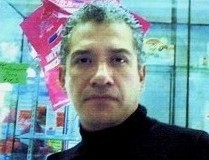 Jose Luis Calva Zepeda
Serial killer · Mexico · 2004
Jose Luis Calva Zepeda was an aspiring horror writer in Mexico City who was acc…
3 victims
Jose Luis Calva Zepeda
Serial killer · Mexico · 2004
Jose Luis Calva Zepeda was an aspiring horror writer in Mexico City who was acc…
3 victims
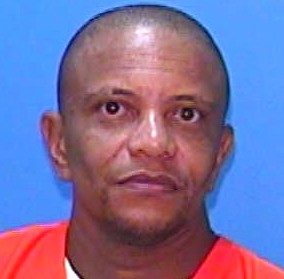 Ronnie Keith Williams
Murderer · USA · 1984
Name: Ronnie Keith Williams · Sex: Male · Race: Black · Hair color: Black · Eye…
2 victims
Ronnie Keith Williams
Murderer · USA · 1984
Name: Ronnie Keith Williams · Sex: Male · Race: Black · Hair color: Black · Eye…
2 victims
 Flint Gregory Hunt
Murderer · USA · 1985
Name: Flint Gregory Hunt Also listed as: Flint Gregory Hunt, Petitioner-appella…
1 victim
Flint Gregory Hunt
Murderer · USA · 1985
Name: Flint Gregory Hunt Also listed as: Flint Gregory Hunt, Petitioner-appella…
1 victim
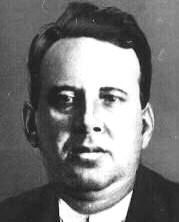 Sylvestre Matuschka
Mass murderer · Hungary · 1931
Sylvestre Matuschka (born 1892, date of death unknown) (in Hungarian publicatio…
22 victims
Sylvestre Matuschka
Mass murderer · Hungary · 1931
Sylvestre Matuschka (born 1892, date of death unknown) (in Hungarian publicatio…
22 victims
 Ria Ramkissoon
Murderer · USA · 2007
Ria Ramkissoon was convicted for starving her one-year-old son to death on the…
1 victim
Ria Ramkissoon
Murderer · USA · 2007
Ria Ramkissoon was convicted for starving her one-year-old son to death on the…
1 victim
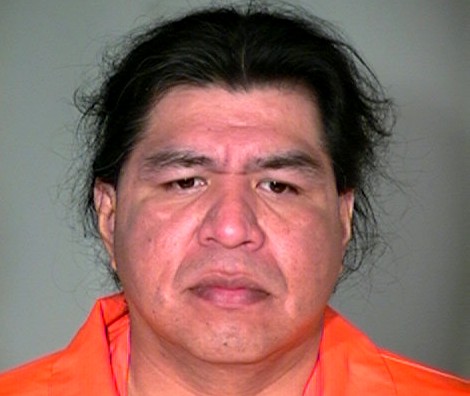 Eldon Schurz
Murderer · USA · 1989
Eldon Schurz was tried in Arizona in connection with the attempted robbery and…
1 victim
Eldon Schurz
Murderer · USA · 1989
Eldon Schurz was tried in Arizona in connection with the attempted robbery and…
1 victim
- Gender
- male
- Country
- USA
- Location
- Philadelphia, Pennsylvania, USA
- Date of birth
- April 24, 1954
- Age at first offence
- 27
- Characteristics
- —
- Victim profile
- Daniel Faulkner, 25 (Philadelphia Police Officer)
- Method of murder
- Shooting (.38 caliber Charter Arms revolver)
- Date(s) of murder
- December 9, 1981
- Years active
- 1981
- Date of arrest
- Same day (wounded by police)
- Status
-
Life imprisonment
Sentenced to death July 2, 1982. Overturned. Sentenced to life December 2001
Case record
Mumia Abu-Jamal (also known as Wesley Cook) was a journalist and political activist who was convicted of the murder of Philadelphia police officer Daniel Faulkner. He was sentenced to death and later received a life sentence.
Background
Mumia Abu-Jamal was born Wesley Cook. He was raised in Philadelphia and graduated from Benjamin Franklin High School. He co-founded the Philadelphia branch of the Black Panther Party and served as its minister of information. He later became the president of the Philadelphia Association of Black Journalists. To supplement his income, he moonlighted as a cab driver.
He adhered to the teachings of John Africa, who founded the controversial MOVE sect based in Philadelphia. Many organizations and publications called Mumia Abu-Jamal a political prisoner.
His Black Panther history and political activism were described as factors connected to his public profile and the case. His religion was manifested in his long dreadlocks, and his assertion that cutting his hair would violate his religious beliefs continued to be a point of contention. The Department of Corrections placed him in disciplinary confinement.
The offence
At 3:55 AM on December 9, 1981, a Philadelphia police officer stopped a light blue Volkswagen Beetle traveling the wrong way down a one-way street. The car was driven by William Cook, Mumia Abu-Jamal’s brother. Mumia Abu-Jamal, who was driving a taxicab nearby, approached the scene.
Officer Daniel Faulkner was shot and lay dying of four bullet wounds. His name was Daniel Faulkner. He was described as a decorated five-year veteran of the police force, recently married, a U.S. military veteran, a son and a brother. He was twenty-five years old.
Several eyewitness accounts differed on who shot Officer Faulkner. Mumia Abu-Jamal’s gun was found at the scene. Tests at trial were described as indicating that bullets that killed Faulkner could have been fired from Jamal’s gun. Later investigation challenged that conclusion and several new witnesses claimed they had seen an unidentified man fleeing the scene.
The narrative of the shooting described Officer Faulkner pulling the Volkswagen over in view of several eyewitnesses after observing it traveling the wrong way and then turning east onto Locust Street. Faulkner exited his vehicle and approached the driver’s side of the Volkswagen being driven by William Cook. Faulkner radioed for a police wagon to back him up before leaving his car.
Witnesses stated that they saw William Cook punch Officer Faulkner in the face and violently attack him. The officer responded by striking Cook, apparently with his flashlight, and then turned Cook towards the car attempting to subdue him. With William Cook’s older brother, Wesley Cook (also known as Mumia Abu Jamal), sitting in a taxicab across the street and watching the events, witnesses stated that Mumia Abu-Jamal exited his taxi and ran across the street toward the officer and his brother. With Faulkner distracted by Cook and with his back turned to Mumia Abu-Jamal, Mumia Abu-Jamal was seen raising his arm and then firing one shot that found its mark in Officer Faulkner’s back.
After firing that shot, Faulkner was able to draw his gun and fire one return shot at Mumia Abu-Jamal. The bullet was later extracted from Mumia Abu-Jamal’s upper abdomen. After Faulkner fell to the sidewalk, Mumia Abu-Jamal stood over Faulkner with a five-shot, .38 caliber Charter Arms revolver and began to fire at the officer’s upper body from approximately three feet away. Mumia Abu-Jamal missed his first several shots. He then moved closer, bent down over Faulkner, put the muzzle of the gun within inches of Officer Faulkner’s face, and squeezed off the final, fatal, shot. The bullet entered Officer Faulkner’s face slightly above the eye and came to rest in his brain, killing him instantly.
In another stated version of events discussed in the material, during the traffic stop William Cook assaulted Faulkner and Faulkner attempted to subdue him; Mumia Abu-Jamal emerged from a nearby taxi and shot Faulkner in the back; Faulkner returned fire and seriously wounded Mumia Abu-Jamal; Mumia Abu-Jamal then fired four additional shots at close range, one striking Faulkner in the face and killing the policeman. Mumia Abu-Jamal was unable to flee due to his own gunshot wound and was taken into custody by other officers summoned by Faulkner. Mumia Abu-Jamal was taken directly from the scene to a hospital and treated for his injury.
Supporters of Mumia Abu-Jamal claimed that the evidence relied on evidence and eyewitnesses that were later discredited. Three prosecution eyewitnesses—Veronica Jones, William Singletary, and Robert Chobert—were described as discrediting their own testimony, saying they lied because they were threatened, coerced, or made promises by police to provide false testimony.
Mumia Abu-Jamal later gave a sworn statement describing that he had been sitting in his cab across the street when he heard the sound of gunshots, and after seeing his brother standing in the street staggering and dizzy, he ran across the street to William Cook, where he stated he was shot by a uniformed police officer (not Faulkner). In that account, he also claimed he was tortured by the police before receiving medical aid.
Investigation
Forensic experts at trial were described as testifying that the bullets that killed Faulkner could have been fired from Mumia Abu-Jamal’s gun. Later investigation challenged their conclusion and testimony from eyewitnesses.
Ballistics-related details included the description that a .38 caliber handgun purchased by Mumia Abu-Jamal to defend himself as a cab driver in 1979 was found at the scene next to him containing five spent shell casings. Ballistics tests were described as not having been performed to see if the weapon had been recently fired, and the potential for scientifically reliable results was described as affected by the struggle with police during his arrest.
The autopsy information included Dr. Pual Hoyer stating in his notes that the bullet extracted from Faulkner was a .44 caliber, later stating it was a rough guess based on his observations and that it was not meant for official reporting. Official ballistics tests were described as verifying that Officer Faulkner was killed by a .38 caliber bullet, with the fatal .38 slug described as a Federal brand Special +P bullet with a hollow base and as matching the exact type, brand, and caliber of bullet found in Jamal’s gun. It was also described that those experts testified the bullet taken from Mumia Abu-Jamal had been fired from Officer Faulkner’s service weapon, and that the defense ballistics expert, George Fassnacht, did not dispute the prosecution’s findings.
Amnesty International was described as including in its list of trial irregularities a lack of adequate ballistic tests to determine whether Abu-Jamal’s gun had recently been fired, including residue on his hands, and as describing inadequate resources provided to Mumia Abu-Jamal’s public defender, Anthony Jackson, to retain a ballistics expert to testify.
Arrest
On December 9, 1981, police officers took Mumia Abu-Jamal into custody after his own gunshot wound, with officers summoned by Officer Faulkner at the time of the traffic stop. Mumia Abu-Jamal was taken directly to a hospital and treated for his injury.
Trial
The case went to trial in June 1982 in Philadelphia. Judge Albert F. Sabo initially agreed to Abu-Jamal’s request to represent himself, with criminal defense attorney Anthony Jackson acting as his legal advisor. During the first day of the trial, that decision was reversed and Jackson was ordered to resume acting as Abu-Jamal’s sole advocate by reason of the judge’s finding of intentionally disruptive actions by Abu-Jamal.
At 3:55 AM on December 9, 1981, the court proceedings were described as involving frequent disruptions including acts of civil disobedience, shouting, chanting, violent outbursts, disruptions, forced removals, threats and physical altercations. Mumia Abu-Jamal regularly disrupted the proceedings and was removed from the courtroom over thirteen times. A running verbal battle was described as occurring between Mumia Abu-Jamal and his attorney, the prosecutor, and the judge.
The prosecution charged Mumia Abu-Jamal with first degree murder.
Prosecution evidence and witness testimony
At trial, the prosecution presented eyewitness and physical evidence. Four eyewitnesses to the shooting were described:
- Robert Chobert, a cab driver, who later said that the police coerced him into making his false testimony
- Michael Scanlan, a businessman visiting from out of town
- Cynthia White, a prostitute described as later revealed to be a police informant
- Albert Magilton, a passerby
Also described were three additional witnesses present at the hospital during treatment:
- Priscilla Durham, a hospital security guard
- two members of the Philadelphia Police Department
These witnesses testified that while Mumia Abu-Jamal was being treated for his own gunshot wound, he said he had shot Daniel Faulkner and hoped the officer would die.
Hospital security guard Priscilla Durham testified that she heard Mumia Abu-Jamal yell: “I shot the motherfucker and I hope he dies.” Another described hospital-related testimony included police officer Garry Bell testifying about a confession phrase: “I shot the mother fucker, and I hope the mother fucker dies.”
Officer Daniel Faulkner’s shooting and the response involved Mumia Abu-Jamal’s gun. A .38 caliber revolver belonging to Mumia Abu-Jamal with five spent cartridges was described as retrieved at the scene. Shell casings and rifling characteristics were described as consistent with bullet fragments taken from Faulkner’s body. Tests to confirm Mumia Abu-Jamal had handled and fired the weapon were described as not performed in one account.
Officer Gary Wakshul was described as having filed an original police report stating that during the time he spent with Mumia Abu-Jamal, “during this time the Negro male made no comment.” Gary Wakshul later stated that he heard Mumia Abu-Jamal confess that night, and it was described that this later recollection did not occur until almost three months after Mumia Abu-Jamal’s arrest when prosecutor McGill met with police asking for a confession. It was described that Judge Albert Sabo did not allow the jury to hear Gary Wakshul’s original report.
Defense evidence and witness testimony
The defense presented nine character witnesses, including poet Sonia Sanchez, who testified that Mumia Abu-Jamal was “viewed by the black community as a creative, articulate, peaceful, genial man”. Another defense witness, Dessie Hightower, testified that he saw a man running along the street shortly after the shooting although he did not see the actual shooting itself. This contributed to a “running man theory” based on the possibility that a “running man” may have been the actual shooter.
Veronica Jones also testified for the defense, including an account that she did not see anyone running. Other potential defense witnesses refused to appear.
A William Cook-related point was described: William Cook did not testify but was described as stating in a signed affidavit that he was willing to testify and that Mumia Abu-Jamal did not kill Officer Faulkner. Mumia Abu-Jamal did not testify in his own defense.
Mumia Abu-Jamal’s explanation for not testifying was described as appearing in a May 3, 2001 signed affidavit stating:
“At my trial I was denied the right to defend myself I had no confidence in my court-appointed attorney, who never even asked me what happened the night I was shot and the police officer was killed; and I was excluded from at least half the trial. Since I was denied all my rights at my trial I did not testify. I would not be used to make it look like I had a fair trial.”
Verdict and sentencing
On July 3, 1982, the jury unanimously convicted Mumia Abu-Jamal of the premeditated murder of Officer Daniel Faulkner. In one account, it took the jury three hours to unanimously convict.
In the sentencing phase, plagued by similar disruptions as the guilt phase, the same jury unanimously sentenced Mumia Abu-Jamal to death. In one account, it was reported that the jury deliberated for two days before finding Abu-Jamal guilty and he was subsequently sentenced to death.
Appeals
District court sentencing ruling in December 2001
On December 18, 2001, federal district judge William Yohn overturned Mumia Abu-Jamal’s death sentence, citing irregularities in the original sentencing process. This overturned action concerned the death sentence, not the conviction.
The material described that the jury instructions and verdict sheet involved “an unreasonable application of federal law.” It also described the charge and verdict form creating a reasonable likelihood that the jury believed it was precluded from considering mitigating circumstances that had not been found unanimously to exist. Judge Yohn ordered the State of Pennsylvania to commence new sentencing proceedings within 180 days and ruled that it was unconstitutional to require unanimity for jury findings of mitigating circumstances against determining a sentence of death.
Eliot Grossman and Marlene Kamish criticized the ruling because it denied Mumia Abu-Jamal a new trial based on evidence that they argued proved that Mumia Abu-Jamal was the victim of a frame-up. The District Attorney’s Office did not agree with overturning the death sentence.
Both sides appealed.
Third Circuit and later review
The U.S. Court of Appeals for the Third Circuit admitted four issues for appeal on December 6, 2005, including issues in relation to sentencing about whether the jury verdict form had been flawed and the judge’s instructions confusing; issues including whether racial bias in jury selection existed tending to produce an inherently biased jury (a Batson claim); issues including whether the prosecutor improperly reduced jurors’ sense of responsibility; and issues in post-conviction review hearings relating to the presiding judge’s alleged bias. The Third Circuit heard oral arguments on May 17, 2007, before a panel consisting of Chief Judge Anthony Joseph Scirica, Judge Thomas Ambro, and Judge Robert Cowen.
On March 27, 2008, the panel issued its opinion upholding Yohn’s 2001 opinion but rejecting bias and Batson claims, with Ambro dissenting. The material stated that if the Commonwealth of Pennsylvania chose not to hold a new hearing, Mumia Abu-Jamal would be automatically sentenced to life in prison. It also stated that this decision could be appealed to the full court or to the Supreme Court of the United States.
State and federal earlier appeals
Direct appeal of his conviction was considered and denied by the Supreme Court of Pennsylvania on March 6, 1989, and it denied rehearing. The Supreme Court of the United States denied his petition for writ of certiorari on October 1, 1990, and denied his petition for rehearing twice up to June 10, 1991.
A death warrant was described as being signed on June 1, 1995 by Pennsylvania Governor Tom Ridge, with execution suspended while Abu-Jamal pursued state post-conviction review.
The material described post-conviction review hearing testimony including:
- William “Dales” Singletary, who testified he saw the shooting and that the gunman was the passenger in Cook’s car; and that Singletary’s account contained discrepancies rendering it “not credible”
- William Harmon, a convicted fraudster, who testified that Faulkner’s murderer fled in a car that pulled up at the crime scene and could not have been Abu-Jamal
- Robert Harkins, who testified he witnessed a man stand over Faulkner as the latter lay wounded and who shot him point-blank in the face and then “walked and sat down on the curb”
The six judges of the Supreme Court of Pennsylvania ruled unanimously that all issues raised by Abu-Jamal, including ineffective assistance of counsel, were without merit. The U.S. Supreme Court denied a petition for certiorari against that decision on October 4, 1999, enabling Governor Ridge to sign a second death warrant on October 13, 1999. Execution was described as stayed while Abu-Jamal commenced federal habeas corpus review.
The material also described that in 2008 the Supreme Court of Pennsylvania rejected a further request for a hearing into claims that trial witnesses perjured themselves on the grounds that he had waited too long before filing the appeal.
Outcome
Mumia Abu-Jamal’s death sentence was overturned, and he was subsequently sentenced to life in December 2001.
Aftermath and later developments
Mumia Abu-Jamal continued political activism during imprisonment, publishing Live from Death Row and writing about life inside prisons. He completed a Bachelor of Arts from Goddard College and earned a Master of Arts from California State University, Dominguez Hills, by distance education. He made commencement speeches by tape from his cell to graduating classes at UC Santa Cruz, Evergreen State College, Antioch College, and Occidental College, and he made frequent commentaries on radio shows.
His comments were described as broadcast on over 100 radio stations nationwide. He wrote for the Yale Law Journal and the Philadelphia Inquirer from prison.
A December 2001 ruling and later sentencing developments were described as having received international attention. Supporters and opponents disagreed about the appropriateness of the death penalty, whether Abu-Jamal was guilty, and whether he received a fair trial.
In October 2003, Mumia Abu-Jamal was described as being awarded honorary citizen status of Paris in a ceremony attended by former Black Panther Angela Davis. Bertrand Delanoë was quoted in a press release stating:
“The award was meant to be a reminder of the continuing fight against the death penalty, which was abolished in France in 1981.”
A proposal to make him an honorary citizen was described as being approved by the city’s council in 2001. In 2006, a street was named after Abu-Jamal by the Communist administration of the city of Saint-Denis, a suburb of Paris, provoking some uproar in the U.S.
The material also described that since his conviction he had been a prisoner at State Correctional Institution Greene near Waynesburg, Pennsylvania, and that he had been involved with municipal, educational and civil society organizations. It described his continued restrictions on activities, including punishment with solitary confinement for engaging in entrepreneurship contrary to prison regulations, and the Pennsylvania Department of Corrections banning outsiders from using recording equipment in state prisons after an HBO documentary. It also described litigation in the U.S. Court of Appeals in 1998 establishing his right to write for reward in prison, and that the Pennsylvania Department of Corrections illegally opened his mail to establish whether he was writing for financial gain.
In May 1994 he was engaged by National Public Radio’s All Things Considered to deliver a series of monthly three-minute commentaries on crime and punishment; the broadcast plans and commercial arrangement were described as canceled following condemnations from, among others, the Fraternal Order of Police and U.S. Senator Bob Dole. The commentaries later appeared in print in May 1995 as part of Live from Death Row.
In 1999, he was invited to deliver the keynote address for the graduating class at The Evergreen State College. The event was protested heavily. In 2000, he gave a commencement address at Antioch College. The material described the New College of California School of Law as presenting him with an honorary degree for his struggle to resist the death penalty.
The material also described he gave a keynote address subject to protests and continued to write a weekly column for the German language Marxist newspaper junge Welt.
The material also referenced honors and controversy including:
- He was described as having been made an honorary citizen of about 25 cities around the world, including Paris, Montreal and Palermo
- In 2001, he received the biannual Lübeck Erich Mühsam Prize for special commitment to human rights
- In October 2002, he was conferred honorary membership of the Berlin-based Association of Those Persecuted by the Nazi Regime - Federation of Antifascists and Antifascist Groups (VVN-BdA)
- On April 29, 2006, a newly-paved road in the Parisian suburb of St Denis was named Rue Mumia Abu-Jamal in his honour, with protest described as involving U.S. Congressman Michael Fitzpatrick and Senator Rick Santorum introducing resolutions in both Houses of Congress, and the House of Representatives voting 368–31 in favor of the resolution
In December 2006, it was described that the executive committee of the Republican Party for the 59th Ward of the City of Philadelphia filed two criminal complaints in the French legal system against the city of Paris and the city of Saint-Denis, alleging the offense of “apology or denial of crime.”
Other details
Mumia Abu-Jamal’s family details and personal history were included in the material. His father died when he was nine years old. He was given the name Mumia in 1968 by his high school teacher, a Kenyan instructor. He adopted the surname Abu-Jamal after the birth of his son Jamal on July 18, 1971. His first marriage at age 19 was to Jamal’s mother, Biba, and it was described as short-lived. Their daughter, Lateefa, was born shortly after the wedding. Mazi, his son by his second wife Marilyn (known as “Peachie”), was born in early 1978. He separated from Marilyn and commenced living with his third and current wife, Wadiya, shortly before events leading to his incarceration.
A narration described an explanation offered by Mumia Abu-Jamal that “Mumia” meant “Prince” and that it was the name of anti-colonial African nationalists conducting warfare against the British in Kenya at the time of the Uhuru.
His involvement with the Black Panthers was described as including being “kicked ... into the Black Panther Party” after suffering a beating from white racists and a policeman for disrupting a George Wallace for President rally in 1968. In 1969 he helped form the Philadelphia branch of the Black Panther Party, taking appointment as chapter “Lieutenant of Information.” He dropped out of Benjamin Franklin High School and took up residence in the branch headquarters. The material stated he spent the winter of 1969 in New York City and the spring of 1970 in Oakland, living and working with BPP colleagues in those cities. It also stated he was a party member from May 1969 until October 1970 and was subject to FBI COINTELPRO surveillance from then until about 1974.
Education and journalism career details were included: after leaving the Panthers he returned to Benjamin Franklin High School but was suspended for distributing literature calling for “black revolutionary student power.” He led unsuccessful protests to change the school name to Malcolm X High. After attaining his GED, he studied briefly at Goddard College in rural Vermont. He pursued radio newscasting first at Temple University’s WRTI and then at commercial enterprises. The material stated employment at radio station WHAT, hosting a weekly feature program of WCAU-FM in 1978, brief employment at radio station WPEN, and activity in the local chapter of the Marijuana Users Association of America. From 1979 he worked at WUHY public radio station until 1981, when he was asked to submit his resignation after a dispute about objective focus.
A role in reporting on the MOVE anarcho-primitivist commune in Philadelphia was described, including reportage of the 1979–80 trial of certain members charged with the murder of police officer James Ramp.
The material included additional witness and evidence disputes and trial controversies. It stated that Cynthia White was described as having been later revealed to be a police informant and that she was said to have died in 1992, with it being alleged that she falsified her testimony. It also stated that a stepbrother of Priscilla Durham, Kenneth Pate, submitted a declaration in April 2003 through Mumia’s lawyers in the U.S. Court of Appeals and the Third Circuit Court stating:
“I read a newspaper article about the Mumia Abu-Jamal case. It said Priscilla Durham had testified at Mumia's trial that when she was working as a security guard at the hospital she heard Mumia say that he had killed the police officer. When I read this I realized it was a different story from what she had told me.”
It also included a quoted exchange in that declaration: Kenneth Pate asked her, ‘"Did you hear him say that?” [I shot the motherfucker and I hope he dies.] " Priscilla answered, "All I heard him say was: 'Get off me, get off me, they're trying to kill me."
The material also described an affidavit by Mumia Abu-Jamal dated May 3, 2001 about lack of confidence in his attorney, exclusion from at least half the trial, and that he did not testify because he would not be used to make it look like he had a fair trial.
The material described a quote attributed to Mumia Abu-Jamal in relation to his view of political imprisonment:
“First of all, let me begin with the proposition...my firm belief that every African American prisoner in American prisons is a political prisoner. By that I mean that it is a policy decision at the highest levels & the lowest levels of this system to incriminate, to incarcerate, to harass Black life through this system.”
It included a quote attributed to Mumia Abu-Jamal about meeting another human being while incarcerated:
“This is the first time I've met another human being other than a guard since July of 1983 without handcuffs or shackles....I don't know what my children, my wife, my brother, I don't know what they feel like anymore. Because, were we to meet...It would be a Plexiglas shield down here & a little steel-mesh, wire-mesh area down here where sound can travel through but where no touching is permitted. Frankly, I'm a little uncomfortable. I've been shackled for so long I feel uncomfortable right now...in the sense that the prison administrators agreed to allow us to do this project but would forbid me to hug my wife, or my children, or my grandchildren at this stage.”
It included a quote attributed to Mumia Abu-Jamal about fearlessness and political position in a sentencing-related discussion and about “march toward the death chamber” with a quote from the Yale Law Journal:
“states that have not slain in a generation now ready their machinery: generators whine, poison liquids are mixed, and gases are measured and readied.”
It also included an instruction quote attributed to Judge Albert F. Sabo:
“You are not being asked to kill anybody”
The material included a statement attributed to Jamal read to the jury from a prepared statement, criticizing the attorney and the judge. It described that in his statement he said:
“knew he was inadequate to the task and chose to follow the directions of this black-robed conspirator, [Judge] Albert Sabo, even if it meant ignoring my directions” and that his rights had been: “deceitfully stolen” and that he declared himself: “innocent of these charges”.
The material included additional legal and sentencing-related figures and procedures: Abu-Jamal was charged with first degree murder; he initially retained criminal defense attorney Anthony Jackson and later, attorneys Eliot Grossman and Marlene Kamish were involved in criticism of the December 2001 ruling. The material referenced Governor Ridge signing a death warrant scheduling an execution on August 17. It also described a prosecution argument related to jury responsibility being vetted on appeal, and stated that the Commonwealth of Pennsylvania sought to reinstate the death sentence based on Yohn’s ruling being flawed, including deference to the Pennsylvania Supreme Court and a Batson claim invalid because Abu-Jamal made no complaints during original jury selection.
The material included references to publications and books authored by Mumia Abu-Jamal with listed publishers and years, including Live from Death Row (HarperTrade, 1996), We Want Freedom: A Life in the Black Panther Party (South End Press, 2004), Death Blossoms: Reflections from a Prisoner of Conscience (South End Press, 2003), Faith of Our Fathers: An Examination of the Spiritual Life of African and African-American People (Africa World Press, 2003), and All Things Censored (Seven Stories Press, 2000), as well as Amnesty International’s The Case of Mumia Abu-Jamal: A Life in the Balance (Open Media Pamphlet Series) (Open Media Pamphlet Series, 2001) and other named works.
Mumia Abu-Jamal’s birth details were also described: born Wesley Cook April 24, 1954.
Spotted an error, or have more information about this case?