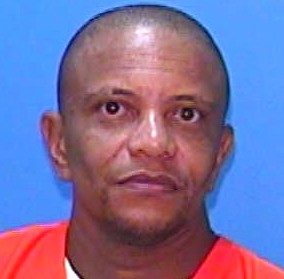
Ronnie Keith Williams
Murderer Brian Kevin Rosenfeld
Murderer · USA · 1985
Brian Kevin Rosenfeld Brian Kevin Rosenfeld was sentenced to three concurrent l…
23 victims
Brian Kevin Rosenfeld
Murderer · USA · 1985
Brian Kevin Rosenfeld Brian Kevin Rosenfeld was sentenced to three concurrent l…
23 victims
 Marvin Gray
Murderer · USA · 1975
Marvin Gray was convicted killer who claimed responsibility for 23 slayings and…
23 victims
Marvin Gray
Murderer · USA · 1975
Marvin Gray was convicted killer who claimed responsibility for 23 slayings and…
23 victims
 Yahweh ben Yahweh
Murderer · USA · 1980
Yahweh ben Yahweh was born and legally named Hulon Mitchell Jr. (October 27, 19…
23 victims
Yahweh ben Yahweh
Murderer · USA · 1980
Yahweh ben Yahweh was born and legally named Hulon Mitchell Jr. (October 27, 19…
23 victims
 Russell Ellwood
Murderer · USA · 1991
Russell Ellwood was a former taxi driver. Authorities suspected him of killing…
20 victims
Russell Ellwood
Murderer · USA · 1991
Russell Ellwood was a former taxi driver. Authorities suspected him of killing…
20 victims
 Michaela Roeder
Murderer · West Germany · 1984
Michaela Roeder, known as the “Angel of Death,” was a nurse who was charged in…
17 victims
Michaela Roeder
Murderer · West Germany · 1984
Michaela Roeder, known as the “Angel of Death,” was a nurse who was charged in…
17 victims
 William Henry Furman
Murderer · USA · 1967
William Henry Furman William Henry Furman was sentenced to death on September 2…
1 victim
William Henry Furman
Murderer · USA · 1967
William Henry Furman William Henry Furman was sentenced to death on September 2…
1 victim
 Mark David Chapman
Murderer · USA · 1980
Mark David Chapman (born May 10, 1955, in Fort Worth, Texas) shot and killed mu…
1 victim
Mark David Chapman
Murderer · USA · 1980
Mark David Chapman (born May 10, 1955, in Fort Worth, Texas) shot and killed mu…
1 victim
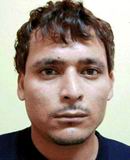 Jose Manuel Torres Yake
Murderer · Japan · 2005
Jose Manuel Torres Yake was born in February 1972. He assumed the false name Ju…
1 victim
Jose Manuel Torres Yake
Murderer · Japan · 2005
Jose Manuel Torres Yake was born in February 1972. He assumed the false name Ju…
1 victim
 Jessie Dotson
Mass murderer · USA · 1994
Jessie Dotson was convicted of the shooting murders of his brother, his brother…
7 victims
Jessie Dotson
Mass murderer · USA · 1994
Jessie Dotson was convicted of the shooting murders of his brother, his brother…
7 victims
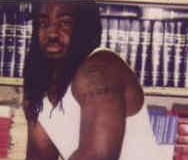 Shawnfatee Bridges
Murderer · USA · 1996
Shawnfatee M. Bridges was sentenced to death on February 23, 1998. On Saturday,…
2 victims
Shawnfatee Bridges
Murderer · USA · 1996
Shawnfatee M. Bridges was sentenced to death on February 23, 1998. On Saturday,…
2 victims
- Gender
- male
- Country
- USA
- Location
- Broward County, Florida, USA
- Date of birth
- J une 19, 1962
- Age at first offence
- 22
- Characteristics
- child molester, rape, mentally ill
- Victim profile
- Gaynel Jeffrey, 21 / Lisashantill Dyke, 18 (seven months pregnant)
- Method of murder
- St abbing with knife
- Date(s) of murder
- 1984 / 1993
- Years active
- 1984–1993
- Date of arrest
- —
- Status
-
Sentenced to death
Sentenced to death on April 15, 2004
Case identification
- Name: Ronnie Keith Williams
- Sex: Male
- Race: Black
- Hair color: Black
- Eye color: Brown
- Height: 5′02”
- Weight: 133 lbs.
- Birth date: 06/19/1962
Current custody and facility
- Current facility: UNION C.I.
- Current custody: MAXIMUM
- Current release date: DEATH SENTENCE
Legal proceedings and counsel
- 17th Judicial Circuit, Broward County
- Case number: 93-3005CF10A
- Sentencing judge: The Honorable Sheldon Schapiro
- Attorney, trial: Bruce D. Raticoff – Asst. Public Defender
- Attorney, direct appeal: Jeffrey L. Anderson – Asst. Public Defender
- Attorney, collateral appeals: Roseanne Eckert – CCRC-South
Background and personal details
Ronnie Keith Williams was found guilty of the 1993 stabbing of Lisa Dyke, which resulted in her death 19 days later.
Before the 1993 murder, Williams pleaded no contest in 1982 to a charge of indecent assault on a child after police said he raped a 9-year-old girl with his finger. In late 1984, Williams went to the house of Robin Jeffrey, a young girl who had broken off a relationship with him after she learned about the pending rape charge, and killed her sister. He stabbed Gaynel Jeffrey, 21, in the back and chest. He dragged the body from room to room, then stuffed her in her mother's car and drove to a construction site where he dumped her.
For both the rape and murder, Williams was sentenced to 17 years but served only seven because of prison crowding. Williams killed Dyke eight months after his release.
The sentencing judge, Sheldon Schapiro, pointed out that just before both murders, Williams had broken up with a young woman. To punish each of them, he tried to kill their relatives. In the case of Lisa Dyke, he had been there to kill her roommate but found her there instead. Schapiro said the murders were “unnecessarily tortorous,” and Lisa Dyke suffered extreme mental anguish and was “forced to choke on her own blood and vomit,” Schapiro said. Schapiro stated he did not find a “nexus” between Williams’ deprived childhood, which included being beaten up by school kids, “and the vicious, brutal murder of Lisa Dyke.”
Timeline
- 06/19/1962 — Ronnie Keith Williams was born.
- 01/26/93 — Date of offense.
- 01/25/93 — Ronnie Williams and Ruth Lawrence had a disagreement at the apartment Ruth lived in with her son David and the victim, Lisa Dyke.
- 01/26/93 — 911 operator Ilona Gerdner received an emergency call at approximately 8:30 a.m. from a distressed female caller who identified herself as Lisa Dyke.
- 02/14/93 — Lisa Dyke’s official cause of death was deemed to be multiple stab wounds that produced a fatally high level of toxicity in her body.
- 04/16/04 — Date of sentence.
- 04/15/2004 — Sentenced to death.
- 04/23/2004 — Initial receipt date.
- 1982 — Williams pleaded no contest to a charge of indecent assault on a child.
- late 1984 — Williams killed Gaynel Jeffrey.
- 1992 — Williams was paroled.
- 1996 — A jury convicted Williams in 1996 of Lisa Dyke’s murder and voted 11-1 to recommend death.
- 2001 — An appeals court ruled the judge should have declared a mistrial.
The offence
On 01/25/93, Ronnie Williams and his girlfriend’s sister, Ruth Lawrence, had a disagreement at the apartment Ruth lived in with her son David and the victim, Lisa Dyke. After the fight, Stephanie Lawrence, Williams’ girlfriend, told Williams he was no longer welcome at either her or her sister’s home.
On 01/26/93, Ilona Gerdner, a 911 operator, received an emergency call at approximately 8:30 a.m. Gardner testified that the caller was begging for help because she had been stabbed. When she asked the victim who had stabbed her, Dyke’s response sounded like “Rodney,” but she later identified the name as “Ronnie” when the tape was played back for her.
Officers Gillespie and Costello arrived within one minute at the apartment Dyke shared with Ruth and David. When the officers knocked, Dyke answered the door nude and bleeding from numerous wounds.
The victim, Lisa Dyke, was more than seven months pregnant at the time of the attack. While paramedics treated her, Officer Gillespie questioned Dyke as to who had assaulted her. Through the oxygen mask Dyke was wearing, Gillespie heard Dyke’s response as “Rodney.” When asked to clarify, Dyke answered “Ruth’s sister’s boyfriend” and gave him the telephone number of “Ruth’s sister.” Dyke also asserted that he had raped her, though hospital personnel were unable to perform a rape examination or collect evidentiary samples before she was rushed into surgery.
Lisa Dyke, 18, was in the Wilton Manors apartment of her friend that January morning. While she was making toast, Williams came to the apartment, apparently looking for his girlfriend, who had broken up with him the night before, or her sister. He stabbed Lisa Dyke, penetrating her lungs and four inches into her sternum.
The medical examiner noted that Lisa Dyke had been stabbed seven times, six of which were between one-quarter of an inch and one-half inch deep. The seventh stab wound was approximately four inches deep and had punctured her left lung. Lisa Dyke’s official cause of death on 02/14/93 was deemed to be multiple stab wounds that produced a fatally high level of toxicity in her body.
After the judge announced the sentence, the murder victim’s mother, Margaret Dyke, cried from relief when told about the ruling. She said she hears her daughter telling her:
"`Now mommy, you can live. Now you can go on with your life. Now you don't have to worry if you're going to get justice or not. I knew all the time God was going to give you justice.'"
Dyke also added:
"You know what it is to go through something like this for 11 long years? It's definitely not easy ... Nobody deserves to die like that."
Williams smirked as he was led away in shackles after the judge’s ruling. His defense attorney, Hale Schantz, said he would appeal.
Investigation and evidence
While processing the crime scene, Detective Cerat noticed no sign of forced entry but observed blood on the floor, dust ruffle, door, bedroom door (which contained a finger print), and found a bloodied knife beside the victim’s bed.
After Dyke was taken to the hospital, Cerat collected bloody clothing, lifted six prints from the crime scene, and sent them to the lab for identification.
At the hospital, Officer Jones showed Dyke a photo lineup and asked her if she could identify one of the persons in the lineup as her assailant. Dyke identified Ronnie K. Williams.
Two days later, Jones photographed bite marks found on the victim’s body and these marks were compared with dental imprints taken from Williams. Forensic dentist Richard Souviron identified the photographs of the bite marks as matching those taken from Williams’ dental imprints.
Fingerprint analyst Fred Boy testified that a fingerprint found in a red substance located on the bathroom door of Ruth’s apartment matched Williams’ left ring finger.
DNA testing on blood samples taken from clothing in the apartment revealed a match to Williams’ DNA profile at four genetic locations. The frequency of finding the same profile in two unrelated individuals matching at these four points would be 1 in 120 million African-Americans.
Arrest and statements
Williams told police when he was arrested that the cuts on his hand were from washing dishes.
Dyke identified Williams to a 911 operator and again on her hospital deathbed by pointing him out in a photo lineup. DNA testing placed Williams' blood and his bloody fingerprint at the crime scene, and bite marks on Dyke’s body appeared to match Williams' teeth, according to a forensic dentist.
Trial history
After three trials, Williams received a death sentence for the stabbing death of the pregnant teen.
First trial and conviction
A jury convicted him in 1996 of Dyke’s murder and voted 11-1 to recommend death. That conviction was overturned because a juror had an emotional collapse during deliberations and was replaced by another juror.
Appeal and mistrial ruling
An appeals court ruled in 2001 that the judge should have declared a mistrial.
Second trial and mistrial
Williams’ second trial, in December, ended in a mistrial after a prosecutor accidentally read a statement to a witness that could have led jurors to realize Williams had been tried before.
Third trial and verdict
In February, a new Broward jury deliberated only a few hours before finding Williams guilty of first-degree murder under two theories: premeditated and felony murder. This meant the jury rejected his defense that he was too drunk and high on drugs to have planned the attack.
The jury believed Dyke’s statement to police that she had been raped, even though no medical tests were done to prove her claim because she was rushed into surgery in an effort to save her life.
The same jury deliberated only 15 minutes before recommending in a 10-2 vote that Williams receive the death penalty.
One juror, Sandy Troehler, of Davie, came to Friday’s hearing, sitting in the front row so she could “follow it through.” She said:
"This is definitely justice." "I don't want anybody like that out on the street. I don't want him near my grandchildren."
Prosecutor Deborah Zimet said the death sentence was warranted so that there would be “not a third grieving mother.”
Sentencing
After the judge, The Honorable Sheldon Schapiro, announced the sentence, the murder victim’s mother, Margaret Dyke, cried from relief when told about the ruling.
In his sentencing remarks, Schapiro said the murders were “unnecessarily torturous,” and Lisa Dyke suffered extreme mental anguish and was “forced to choke on her own blood and vomit.”
Schapiro also stated he did not find a “nexus” between Williams’ deprived childhood, which included being beaten up by school kids, “and the vicious, brutal murder of Lisa Dyke.”
Williams was sentenced to die on April 15, 2004.
Appeals and collateral proceedings
Outcome
The death sentence was imposed on April 15, 2004.
Aftermath and reactions
Williams’ defense attorney, Hale Schantz, said he would appeal.
Jeffrey’s family was in court, wiping tears from their faces. They said they felt the death sentence was vindication for Gaynel, as well. Robin Jeffrey, Gaynel’s sister, said:
"Put him in the chair because he's a monster." "I want to be at peace ... This is over. It's the way it's supposed to be."
Other details
- Race: BLACK
- Motive listed: Sex
- MO listed: “Pedophile lust killer”
- The legal case was associated with Supreme Court of Florida opinion SC04-857.

Spotted an error, or have more information about this case?