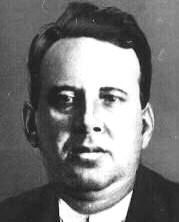
Sylvestre Matuschka
Mass murderer Andrew Kehoe
Mass murderer · USA · 1927
Andrew P. Kehoe committed suicide the same day by killing himself in the explos…
44 victims
Andrew Kehoe
Mass murderer · USA · 1927
Andrew P. Kehoe committed suicide the same day by killing himself in the explos…
44 victims
 Leung Ying
Mass murderer · USA · 1928
Leung Ying (also known as Loy Yeung, Wong Gay, and Lim Onn) pleaded guilty to k…
11 victims
Leung Ying
Mass murderer · USA · 1928
Leung Ying (also known as Loy Yeung, Wong Gay, and Lim Onn) pleaded guilty to k…
11 victims
 Fritz Angerstein
Mass murderer · Germany · 1924
Fritz Heinrich Angerstein was executed by decapitation with an axe in the court…
8 victims
Fritz Angerstein
Mass murderer · Germany · 1924
Fritz Heinrich Angerstein was executed by decapitation with an axe in the court…
8 victims
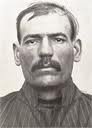 Stephanous Swart
Mass murderer · South Africa · 1927
Stephanus Andries Johannes Swart (1890 - 6 May 1927) was a South African farmer…
8 victims
Stephanous Swart
Mass murderer · South Africa · 1927
Stephanus Andries Johannes Swart (1890 - 6 May 1927) was a South African farmer…
8 victims
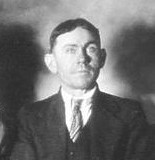 Charles Davis Lawson
Mass murderer · USA · 1929
Charles Davis Lawson was an American tobacco farmer from Stokes County, North C…
7 victims
Charles Davis Lawson
Mass murderer · USA · 1929
Charles Davis Lawson was an American tobacco farmer from Stokes County, North C…
7 victims
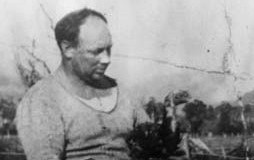 Eric Stanley Graham
Mass murderer · New Zealand · 1941
Eric Stanley Graham (also known as Stan) was a New Zealand mass murderer who ki…
7 victims
Eric Stanley Graham
Mass murderer · New Zealand · 1941
Eric Stanley Graham (also known as Stan) was a New Zealand mass murderer who ki…
7 victims
 Christopher McCowen
Murderer · USA · 2002
Christopher McCowen was an African American who was convicted in the 2002 rape…
1 victim
Christopher McCowen
Murderer · USA · 2002
Christopher McCowen was an African American who was convicted in the 2002 rape…
1 victim
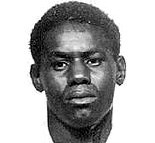 Sammie Felder
Murderer · USA · 1975
March 13, 1975 — Felder worked his usual day shift, 6:00 a.m. to 2:00 p.m., whi…
1 victim
Sammie Felder
Murderer · USA · 1975
March 13, 1975 — Felder worked his usual day shift, 6:00 a.m. to 2:00 p.m., whi…
1 victim
 Randy Halprin
Murderer · USA · 2000
Randy Halprin (Randy Ethan Halprin), TDCJ Number 999453 · Date of birth: 09/13/…
1 victim
Randy Halprin
Murderer · USA · 2000
Randy Halprin (Randy Ethan Halprin), TDCJ Number 999453 · Date of birth: 09/13/…
1 victim
 Terry Darnell Edwards
Murderer · USA · 2002
Name: Terry Darnell Edwards TDCJ Number: 999463 Date of birth: 08/10/1973 Gende…
2 victims
Terry Darnell Edwards
Murderer · USA · 2002
Name: Terry Darnell Edwards TDCJ Number: 999463 Date of birth: 08/10/1973 Gende…
2 victims
 Adrienne Hickson
Murderer · USA · 2005
Adrienne Emily Hickson was a 24-year-old law student and had been a student at…
1 victim
Adrienne Hickson
Murderer · USA · 2005
Adrienne Emily Hickson was a 24-year-old law student and had been a student at…
1 victim
- Gender
- male
- Country
- Hungary
- Location
- Bia-Torgaby, Hungary
- Date of birth
- January 24, 1892
- Age at first offence
- 39
- Characteristics
- —
- Victim profile
- Men, women and children (Vienna Express passengers)
- Method of murder
- Explosives
- Date(s) of murder
- September 12, 1931
- Years active
- 1931
- Date of arrest
- October 10, 1931
- Status
-
Imprisoned
Sentenced to death in 1934; commuted to life in prison; escaped from jail in Vác in 1944; never recaptured and his fate is unknown
Background
Sylvestre Matuschka (born 1892, date of death unknown) (in Hungarian publications: Matuska Szilveszter) was a former officer in the Austro-Hungarian army.
Szilveszter Matuska (January 29, 1892, Csantavér (now Čantavir, Serbia) - disappeared circa 1945) was a Hungarian mass murderer and mechanical engineer who made two successful and at least two unsuccessful attempts to derail passenger trains in Hungary, Germany and Austria in 1930 and 1931.
Matuska reportedly served as an explosives expert during the latter stages of World War II. Rumours circulated that he appeared on the communist side in the Korean War, but there was no evidence to support this.
Matuska’s motives were reported to remain unclear. His first attack was initially thought to have been politically motivated.
The offence
Matuska was charged with arranging the derailment of several trains.
His most notorious crime was the derailment of the Vienna Express headed towards Vienna as it was crossing the Biatorbágy bridge near Budapest at 12.20am on 13 September 1931. The incident resulted in the death of 22 people and the wounding of 120 others, 17 of them severely.
Matuschka carried out his crime by blowing up a portion of the bridge, causing the engine and nine of the eleven coaches forming the train to plunge into a ravine 30 meters deep.
Matuska’s first successful crime was the derailment of the Berlin-Basel express train south of Berlin on August 8, 1931. Scores of people were injured, but there were no deaths. Because of the discovery of a defaced Nazi newspaper at the scene of the crime, among other things, the attack was believed to have been politically motivated.
Matuska’s second and more notorious successful crime was the derailment of the Vienna Express headed towards Vienna as it was crossing the Biatorbágy bridge near Budapest at 12.20am on 13 September 1931. 22 people died and 120 others were injured, 17 of them severely.
Matuska made at least two failed attempts to derail passenger trains in Hungary, Germany and Austria in 1930 and 1931. Crimes included two failed attempts to derail trains in Austria in December 1930 and January 1931.
A bounty of 100,000 reichsmark was put on the perpetrator.
It was reported that he achieved orgasm while watching the trains he had sabotaged crash. He was quoted as explaining his crimes by saying: "I wrecked trains because I like to see people die. I like to hear them scream." In the trial, Matuschka claimed to have been ordered to derail the express by God.
The rails were reported to have been blown up in front of the Orient Express as it crossed the bridge on the 12th September 1931, and the train fell into the abyss with 23 dead. The culprit was identified as Sylvester Matuschka (or, with Hungarian spelling, Szilveszter Matuska), described as a mine owner then with residence in Vienna, who served in a railway sabotage unit in Hungary during WWI and had explosives experience.
Investigation
Matuschka was discovered at the scene of the crime but, having passed himself off as a surviving passenger, he was only arrested one month later.
Investigators in the three countries were on his trail.
In Vienna, Austrian police was already looking for him in connection with two previous derailing attacks described as his “exercises” for the big one (the last day of 1930 at Anzbach near Vienna, and August 1931 between Jüterbog and Kloster Zinna near Berlin).
Arrest
Matuschka was arrested in October 1931 and charged with arranging the derailment of several trains.
He was discovered at the scene of the crime and released, but was arrested one month later, on 10 October 1931.
Matuska was arrested in Vienna on 10 October 1931, whereupon he soon confessed.
Trial
At his trial, Matuschka claimed to have been ordered to derail the express by God.
Matuska was tried and convicted in Austria for two unsuccessful attempts.
In the trial itself, Matuschka behaved in a very eccentric way, and after originally confessing to the crime, he began to blame an imaginary friend.
The expert conclusion then and now was that he was not insane, he was acting over-the-top.
Matuschka was found guilty of murder and sentenced to death.
Matuska was later extradited to Hungary on condition that he not be executed.
Sentencing
Matuschka was sentenced to death, but the sentence was commuted.
The sentence was later commuted to life imprisonment as agreed with Austria.
Appeals
No appeals were described in the provided material.
Outcome
Matuschka’s sentence of death was commuted to life in prison.
Matuska reportedly escaped from jail in Vác in 1944. He was never recaptured and his fate was unknown.
Disappearance during World War II was described with two versions: one had him staying in prison until the Russians came, when he would welcome the soldiers as the last inmate and then disappear; the other had him offering his bombing expertise to the army in November 1942, when the Russians began to push back the fascist invaders, and then disappearing or getting killed on the Eastern Front two years later.
Some people claimed that they met him in the seventies when he re-visited Hungary under a false name, while others speculated that he was taken by the Russians and made to work for them.
Aftermath
In 1990, Matuschka became the subject of a song, Sylvestre Matuschka, by the band Lard.
In 1982, a Hungarian/German TV film based on the case, titled The Viaduct, was broadcast.
A far-right ex-officers’ association was mentioned in connection with speculations of cover or an allowed escape.
Speculation included a theory from right-wing press that Matuschka was a super-secret communist agent, planted by the Soviets into a right-wing background years earlier. It was also described that, in the context of a state of emergency and a crackdown on communists, the two leaders of the communist party were executed while the real culprit’s trial went on in Austria, with eyewitnesses listened to only in a second trial. Misleading anonymous letters praising a “revolution” were mentioned as having left behind by Matuschka or police conspirators in some versions.
The viaduct was described as being disused two-three decades before 1982, when it was used in a spectacular re-creation of the trainwreck for the US-West German-Hungarian movie The Train Killer (Der Fall Matuschka Viadukt), starring Michael Sarrazin.
Spotted an error, or have more information about this case?