
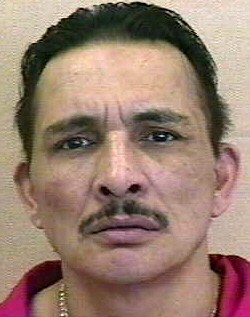
Flint Gregory Hunt
Murderer Brian Kevin Rosenfeld
Murderer · USA · 1985
Brian Kevin Rosenfeld Brian Kevin Rosenfeld was sentenced to three concurrent l…
23 victims
Brian Kevin Rosenfeld
Murderer · USA · 1985
Brian Kevin Rosenfeld Brian Kevin Rosenfeld was sentenced to three concurrent l…
23 victims
 Marvin Gray
Murderer · USA · 1975
Marvin Gray was convicted killer who claimed responsibility for 23 slayings and…
23 victims
Marvin Gray
Murderer · USA · 1975
Marvin Gray was convicted killer who claimed responsibility for 23 slayings and…
23 victims
 Yahweh ben Yahweh
Murderer · USA · 1980
Yahweh ben Yahweh was born and legally named Hulon Mitchell Jr. (October 27, 19…
23 victims
Yahweh ben Yahweh
Murderer · USA · 1980
Yahweh ben Yahweh was born and legally named Hulon Mitchell Jr. (October 27, 19…
23 victims
 Russell Ellwood
Murderer · USA · 1991
Russell Ellwood was a former taxi driver. Authorities suspected him of killing…
20 victims
Russell Ellwood
Murderer · USA · 1991
Russell Ellwood was a former taxi driver. Authorities suspected him of killing…
20 victims
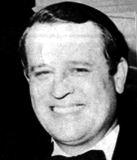 Dr. John Robert Hill
Murderer? · USA · 1950
Dr. John Robert Hill was a prominent Houston surgeon. His wife was Joan Robinso…
5 victims
Dr. John Robert Hill
Murderer? · USA · 1950
Dr. John Robert Hill was a prominent Houston surgeon. His wife was Joan Robinso…
5 victims
 Angela Norman
Homicide · USA · 2011
Angela Norman was a Dayton resident and the mother of Makayla Norman, a 14-year…
1 victim
Angela Norman
Homicide · USA · 2011
Angela Norman was a Dayton resident and the mother of Makayla Norman, a 14-year…
1 victim
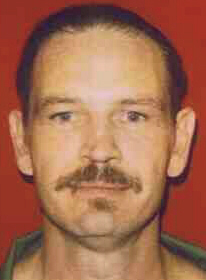 James Neil Tucker
Murderer · USA · 1992
James Neil Tucker was imprisoned and later sentenced to death in South Carolina…
2 victims
James Neil Tucker
Murderer · USA · 1992
James Neil Tucker was imprisoned and later sentenced to death in South Carolina…
2 victims
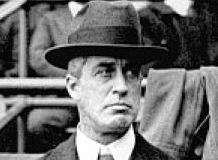 Charles Chapin
Murderer · USA · 1918
Charles Chapin (October 19, 1858 – December 13, 1930) was a New York newspaper…
1 victim
Charles Chapin
Murderer · USA · 1918
Charles Chapin (October 19, 1858 – December 13, 1930) was a New York newspaper…
1 victim
 Devin Earl Banks
Murderer · USA · 2002
Devin Earl Banks killed Kadhem Al-Maily and permanently disabled Hussain Altile…
1 victim
Devin Earl Banks
Murderer · USA · 2002
Devin Earl Banks killed Kadhem Al-Maily and permanently disabled Hussain Altile…
1 victim
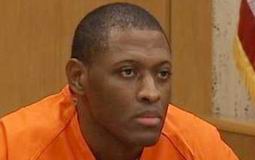 Leon Davis Jr.
Murderer · USA · 2007
Leon Davis Jr. was sentenced to death on April 29, 2011, for the execution-styl…
5 victims
Leon Davis Jr.
Murderer · USA · 2007
Leon Davis Jr. was sentenced to death on April 29, 2011, for the execution-styl…
5 victims
- Gender
- male
- Country
- USA
- Location
- Baltimore City, Maryland, USA
- Date of birth
- 1959
- Age at first offence
- 26
- Characteristics
- to avoid arrest
- Victim profile
- Vincent Adolpho ( Baltimore police officer )
- Method of murder
- Shooting ( .357 Magnum revolver)
- Date(s) of murder
- November 18, 1985
- Years active
- 1985
- Date of arrest
- 5 days after
- Status
-
Executed
Executed by lethal injection in Maryland on July 2, 1997
Case details
Name: Flint Gregory Hunt Also listed as: Flint Gregory Hunt, Petitioner-appellant Approximate year of birth: c. 1958 Execution: July 2, 1997
Timeline
- November 18, 1985 — Officer Vincent Adolfo noticed a Cadillac with a missing window covered with plastic; Hunt was later identified as the driver who jumped out of the moving car, ran into an alley, and shot Officer Adolfo twice, at close range.
- five days later — Hunt was apprehended in a Tulsa, Oklahoma, bus station.
- June 1986 — A jury convicted Hunt of first degree murder, using a handgun in the commission of a crime of violence, and unlawfully carrying a handgun.
- July 1986 — The same jury imposed a sentence of death on Hunt for the murder conviction.
- June 1, 1992 — Hunt filed in state circuit court a petition for post-conviction relief.
- April 13, 1993 — The post-conviction court denied Hunt’s petition.
- February 28, 1994 — The Supreme Court denied Hunt’s petition for certiorari review of the denial of state post-conviction relief.
- May 13, 1994 — Hunt filed a federal habeas corpus petition under 28 U.S.C. § 2254 in the United States District Court for the District of Maryland.
- June 27, 1994 — The district court denied Hunt’s amended habeas petition.
- July 29, 1994 — The Office of the Federal Public Defender was appointed by this Court as a consultant for Hunt in the pending appeal.
- September 9, 1994 — The district court denied Hunt’s Rule 60(b) motion.
- March 8, 1995 — The United States Court of Appeals, Fourth Circuit, argued Hunt’s appeal.
- June 27, 1995 — The Fourth Circuit decided the appeal and affirmed the district court.
- 1991 — The United States Supreme Court denied Hunt’s petition for certiorari review of the Court of Appeals of Maryland’s decision in Hunt II.
- November 29 to December 21, 1988 — A second capital sentencing hearing occurred and the jury again sentenced Hunt to death.
- December 21, 1988 — The second jury sentenced Hunt to death (within the hearing period).
- July 2, 1997 — The State of Maryland executed Flint Gregory Hunt by lethal injection.
The parties and court
United States Court of Appeals: Fourth Circuit Case citation: 57 F.3d 1327 Docket number: No. 94-4006 Caption: Flint Gregory Hunt, Petitioner-appellant, v. Eugene M. Nuth, Maryland Correctional Adjustment Center and Maryland Penitentiary; J. Joseph Curran, Jr., Attorney General of the State Of Maryland, Respondents-appellees (two cases) Judicial panel: OPINION RUSSELL, Circuit Judge
Background
Flint Gregory Hunt was a death row inmate awaiting execution in Maryland. He appealed issues arising from the district court’s denial of his petition for writ of habeas corpus, which contested his capital conviction and sentence for murdering a Baltimore City policeman. He also appealed the denial of his motion to vacate the judgment and to amend his habeas petition under Rule 60(b) of the Federal Rules of Civil Procedure.
The facts surrounding the murder were described as set forth in opinions by the Court of Appeals of Maryland, including:
- Hunt v. State, 540 A.2d 1125, 1126-27 (Md. 1988) (Hunt I)
- Hunt v. State, 583 A.2d 218, 225 (Md. 1990) (Hunt II), cert. denied (1991)
The offence
Officer and encounter
On November 18, 1985, Officer Vincent Adolfo, a Baltimore City policeman, noticed a Cadillac with a missing window covered with plastic. The car contained four occupants. Officer Adolfo made a routine inquiry and learned that the car had been stolen. Two officers in separate patrol cars responded to his request for back-up and blocked the path of the on-coming Cadillac. Upon nearing the roadblock, the driver—later identified as Hunt—jumped out of the car while it was still moving and ran up a nearby alley. Officer Adolfo pursued Hunt into the alley.
Officer Adolfo apprehended Hunt, positioned him against a wall, and tried to handcuff him. Hunt pushed away, knocking the officer off balance. Hunt then pulled a single-action .357 Magnum revolver from his jacket.
Shooting
Hunt shot Officer Adolfo in the chest at close range. Within seconds, as the officer reeled from the first shot, Hunt shot him again, this time in the back. Officer Adolfo was pronounced dead at the hospital.
Post-shooting flight and witness statements at trial
Hunt fled the scene of the crime. Hunt’s sister testified at trial that Hunt had seemed fine that night. Hunt’s girlfriend, Deborah Powell, said that Hunt had been taking drugs earlier that afternoon and appeared “high” when he had left her.
Investigation and arrest
Officer Adolfo’s pursuit ended in the alley where Hunt was apprehended after the shooting attempts described above. Hunt was apprehended in a Tulsa, Oklahoma bus station five days later.
Trial
Convictions
In June 1986, a jury convicted Hunt of:
- first degree murder,
- using a handgun in the commission of a crime of violence, and
- unlawfully carrying a handgun.
Sentence
In July 1986, the same jury imposed a sentence of death on Hunt for the murder conviction.
Sentences for handgun-related charges
The trial judge imposed consecutive punishments of:
- twenty years imprisonment for the charge of using a handgun, and
- three years imprisonment for the charge of carrying a handgun.
First appellate outcome in Hunt I
In Hunt I, the Court of Appeals of Maryland affirmed the convictions and the twenty-year sentence for the use of a handgun charge. The Court of Appeals vacated the death sentence and ordered a new sentencing hearing because victim impact evidence admitted during the sentencing hearing violated Booth v. Maryland (1987). The Court of Appeals also vacated the conviction for carrying a handgun because the charge merged with the other handgun charge.
Resentencing (Hunt II)
The state circuit court conducted a second capital sentencing hearing before another jury between November 29 and December 21, 1988. This jury also sentenced Hunt to death. In Hunt II, the Court of Appeals of Maryland affirmed the death sentence. The United States Supreme Court denied Hunt’s petition for certiorari review in 1991.
Post-conviction and federal habeas proceedings
State post-conviction
On June 1, 1992, Hunt filed a petition for post-conviction relief in the state circuit court, which the court denied on April 13, 1993. Hunt then applied to the Court of Appeals of Maryland for discretionary review of the denial; the Court of Appeals denied his application and his motion for reconsideration. On February 28, 1994, the Supreme Court denied Hunt’s petition for certiorari review of the denial of state post-conviction relief (Hunt v. Maryland, 114 S. Ct. 1206 (1994)).
Federal habeas
On May 13, 1994, Hunt filed a federal habeas corpus petition under **28 U.S.C. The district court denied Hunt’s amended habeas petition on June 27, 1994 (Hunt v. Smith, 856 F. Supp. 251 (D. Md. 1994) (Hunt III)).
Rule 60(b) motion
In September 1994, the Office of the Federal Public Defender for the District of Maryland, appointed by this Court on July 29, 1994 as a consultant for Hunt in the pending appeal, filed in the district court a motion to vacate judgment pursuant to Rule 60(b) of the Federal Rules of Civil Procedure. The State agreed, at Hunt’s request, not to file a response unless the district court asked for one. The district court denied Hunt’s Rule 60(b) motion on September 9, 1994. This Court consolidated Hunt’s appeal from that decision with his appeal from the district court’s original judgment denying habeas relief.
Appeals (Fourth Circuit)
Issues on appeal
The Fourth Circuit affirmed the district court, addressing claims that trial and resentencing counsel provided ineffective assistance, claims about Maryland’s discretionary post-conviction review system, and claims involving constitutionality of methods of execution and execution-choice provisions, as well as the denial of the Rule 60(b) motion.
Ineffective assistance of trial counsel (Strickland framework)
The Fourth Circuit stated that Hunt had to satisfy both the performance and prejudice prongs of Strickland v. Washington, 466 U.S. 668 (1984).
Opening statement timing
Hunt argued his trial counsel erred by reserving opening statement until the close of the State’s case. The Fourth Circuit agreed with the district court that reserving opening statement was fundamentally tactical and within the range of reasonably competent representation.
Defense theory and cross-examination
Hunt faulted trial counsel for failing to develop a single cohesive defense theory. He argued that evidence that he shot Officer Adolfo was overwhelming and that counsel only confused or distracted the jury by challenging the criminal agency aspect of the State’s case instead of focusing on first- versus second-degree murder and voluntary intoxication.
Hunt also challenged performance during cross-examination of State witnesses regarding the timing of the two gun shots:
- He argued counsel should discredit Aaron McNair, who testified Hunt ran behind Officer Adolfo between shots.
- He argued counsel should not have impeached Donna McGuigan, who testified the shots occurred in rapid succession.
The Fourth Circuit found that trial counsel did attempt to impeach McNair regarding criminal charges pending against him and assistance he had received from the prosecution (citing Joint Appendix pages). It also found that McGuigan’s testimony at trial contradicted her earlier statement to police and was inconsistent with evidence regarding the location of the officer’s body. It agreed with the post-conviction court that the expert criticisms graded the quality of cross-examination and did not place counsel’s conduct outside prevailing professional norms.
Alleged failure to marshal intoxication corroboration
Hunt argued trial counsel failed to introduce testimony of Cynthia Stokes, a passenger in the Cadillac, who told police that Hunt was “flighty as from cocaine.” The Fourth Circuit concluded trial counsel could have considered Stokes an unreliable witness because she barely knew Hunt and because she had been convicted of many crimes involving dishonesty. The Fourth Circuit also concluded that because Deborah Powell and Angelo Williams testified that Hunt used a variety of drugs on the day of the shooting, Stokes’ testimony would have been cumulative.
Marijuana/PCP evidence from a hand-rolled cigarette butt
Hunt argued trial counsel failed to investigate and introduce into evidence a hand-rolled cigarette butt containing plant material found in the ashtray of the Cadillac. A police lab report identified the material as marijuana, but the state chemist did not test for the presence of PCP. The post-conviction court found that, at best, the presence of PCP in the cigarette butt could not be shown. The Fourth Circuit concluded that given the abundance of testimony about Hunt’s drug use, Hunt could not demonstrate the requisite prejudice under Strickland.
Ineffective assistance of resentencing counsel
Failure to inform jury of handgun sentence
Hunt argued resentencing counsel failed to introduce mitigating evidence that could have swayed the jury away from imposing death. Specifically, the jury knew Hunt had been convicted of a handgun offense, but resentencing counsel neglected to inform the jury of the twenty-year sentence Hunt received for the offense. The Fourth Circuit stated counsel had no strategic or tactical reason to omit the evidence and noted that counsel attempted to correct the mistake after the close of evidence, but the court refused to instruct the jury on the twenty-year sentence or reopen evidence.
The Fourth Circuit described Hunt’s claimed prejudice in two ways:
- Hunt speculated the jury might not have imposed death if it knew Hunt already had received a twenty-year sentence that could be served consecutively to a life sentence. The Fourth Circuit stated the jury would not have known whether the twenty-year sentence would run consecutively or concurrently because a judge would determine after the jury determined the murder sentence. The Court of Appeals of Maryland calculated that if the additional twenty-year sentence were served concurrently, parole eligibility would be delayed by only one year, and the Fourth Circuit concluded that the negligible difference did not establish a reasonable probability of a different outcome.
- Hunt contended the jury may have punished him for both the murder and handgun charge because they were unaware of any sentence imposed for the handgun charge. The Fourth Circuit concluded Hunt did not show a reasonable probability of this form of prejudice, finding it highly unlikely the handgun sentence information affected the decision to impose death because the capital crime severity eclipsed the handgun offense.
Shackling during resentencing and proposed alternatives
Hunt argued resentencing counsel failed to present alternatives less onerous and prejudicial than leg-iron shackling to ensure public safety during resentencing. The court had responded to concerns by Judge Edward Angeletti, the chair of the court’s security committee, about Hunt’s ability to escape from a street-level courtroom by ordering him shackled midway through resentencing. Resentencing counsel cross-examined Judge Angeletti and objected to the shackling. Hunt argued counsel failed to suggest an alternative such as moving to a windowless courtroom on an upper level. The Fourth Circuit agreed with the district court that counsel’s failure to suggest an alternative did not violate Strickland’s performance prong.
Life without parole instruction claim rejected
Hunt argued the state court violated constitutional rights by refusing to charge the resentencing jury that it could impose life without parole under Md. Ann. Code art. 27, Sec. 412. The district court rejected this as bordering on frivolous because Maryland law, as determined by the Court of Appeals, did not allow retroactive imposition of life without parole for convictions before July 1, 1987 (citing Collins v. State). The Fourth Circuit discussed and rejected Hunt’s due process and equal protection arguments tied to Collins and the statutory effective date.
Maryland appellate review of post-conviction proceedings
Hunt argued Maryland’s discretionary review of post-conviction proceedings violated the Eighth Amendment and his rights to due process and equal protection. The Fourth Circuit affirmed the district court’s rejection, citing that the federal constitution does not require plenary appellate review in post-conviction cases and that Maryland provides procedural protections including appointed counsel, briefs, and consideration on a formal appellate record.
Execution method and execution-choice provisions
Change from lethal gas to lethal injection and election
The Fourth Circuit addressed challenges regarding Maryland’s execution methods. On March 25, 1994, Maryland changed its method of execution from lethal gas to lethal injection. Under the statute, death row inmates sentenced before the effective date could elect lethal gas; refusal resulted in death by lethal injection. On May 24, 1994, the last day of the election period, Hunt chose to be executed by lethal gas.
Hunt argued the choice provision violated the Eighth Amendment because it forced a person to choose the method of execution. The Fourth Circuit referenced Campbell v. Wood, 18 F.3d 662 (9th Cir., en banc) and held the Maryland choice provision did not violate the Eighth Amendment.
Lethal gas constitutionality
Hunt argued that lethal gas executions violated the Eighth Amendment. He cited Fierro v. Gomez, 865 F. Supp. 1387 (N.D. Cal. 1994), which had declared California’s lethal gas provision unconstitutional to the extent it requires or permits execution by lethal gas. The Fourth Circuit declined to follow Fierro, noting that before Fierro other courts had held lethal gas did not violate the Eighth Amendment and agreeing with the district court that graphic descriptions of death throes were insufficient to demonstrate wanton and unnecessary infliction of pain.
Lethal injection arguments raised in reply brief declined
Hunt challenged lethal injection for the first time in his reply brief, arguing violations of federal drug statutes and potential cruel treatment from botched executions. The Fourth Circuit held those arguments were moot because Hunt had chosen lethal gas and because it would be unfair to the appellee to address new issues raised for the first time in a reply brief. The Fourth Circuit therefore declined to reach challenges to execution by lethal injection.
Rule 60(b) and cause and prejudice / successive petition analysis
The Fourth Circuit addressed the denial of Hunt’s Rule 60(b) motion. It described that after Hunt’s habeas petition was denied, the Office of the Federal Public Defender was appointed as “consultant,” and it was discovered that habeas counsel had neglected to raise certain direct appeal claims in the initial petition. The State conceded the omission resulted from an honest, unintentional omission. Hunt’s Rule 60(b) motion was denied because Hunt failed to show cause for counsel’s failure to include the claims.
The Fourth Circuit held that a district court could properly treat a Rule 60(b) motion as a successive habeas petition and require cause and prejudice where the “new claims” were equivalent to additional habeas claims. It further held Hunt could not establish cause because the Supreme Court held attorney error constituting ineffective assistance is cause, but there is no constitutional right to counsel in state post-conviction proceedings and Hunt could not allege constitutionally ineffective assistance in those proceedings. It also noted that because Hunt had no constitutional right to an attorney during federal habeas proceedings, attorney error could not serve as cause.
The Fourth Circuit also held that Hunt failed to demonstrate prejudice because none of the omitted claims established the requisite prejudice. It therefore affirmed denial of both Hunt’s habeas petition and his Rule 60(b) motion.
Other details
Witnesses named
- Deborah Powell — Hunt’s girlfriend; testified Hunt appeared “high” when he left her, and that he had been taking drugs earlier that afternoon.
- Aaron McNair — witness whose testimony was addressed on cross-examination issues regarding timing between the two gun shots.
- Donna McGuigan — witness whose testimony about shot timing was addressed; the Fourth Circuit noted inconsistencies with her earlier police statement and with evidence regarding the officer’s body location.
- Cynthia Stokes — passenger in the Cadillac; told police Hunt was “flighty as from cocaine.”
- Angelo Williams — testified about Hunt using a variety of drugs on the day of the shooting.
Execution dispute and petitions
The execution went forward despite defense lawyers’ efforts to convince the courts and Governor Parris Glendening to spare Hunt’s life.
Appellate decision and result
The Fourth Circuit concluded: “AFFIRMED.”
Spotted an error, or have more information about this case?