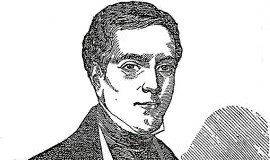
Jereboam Beauchamp
Murderer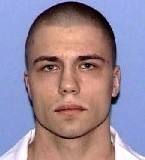 Clinton Lee Young
Murderer · USA
Clinton Lee Young (born July 19, 1983) was convicted of murdering two men in No…
2001 victims
Clinton Lee Young
Murderer · USA
Clinton Lee Young (born July 19, 1983) was convicted of murdering two men in No…
2001 victims
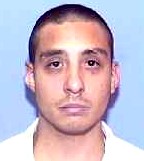 Ivan Abner Cantu
Murderer · USA
Name: Ivan Abner Cantu · TDCJ number: 999399 · Date of birth: 06/14/1973 · Age…
2000 victims
Ivan Abner Cantu
Murderer · USA
Name: Ivan Abner Cantu · TDCJ number: 999399 · Date of birth: 06/14/1973 · Age…
2000 victims
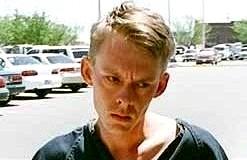 Michael John Yowell
Murderer · USA
Name: Michael John Yowell · TDCJ number: 999334 · Date of birth: 01/25/1970 · P…
1998 victims
Michael John Yowell
Murderer · USA
Name: Michael John Yowell · TDCJ number: 999334 · Date of birth: 01/25/1970 · P…
1998 victims
 Michael Duane Zack
Murderer · USA
Michael Duane Zack was convicted and sentenced to death for the 06/13/96 murder…
1996 victims
Michael Duane Zack
Murderer · USA
Michael Duane Zack was convicted and sentenced to death for the 06/13/96 murder…
1996 victims
 John Doyle Lee
Murderer · USA · 1857
Name: John Doyle Lee Lifespan: September 12, 1812 - March 23, 1877 Legal outcom…
120 victims
John Doyle Lee
Murderer · USA · 1857
Name: John Doyle Lee Lifespan: September 12, 1812 - March 23, 1877 Legal outcom…
120 victims
 Cecil Clayton
Murderer · USA · 1996
Cecil L. Clayton was convicted of murder in the first degree and was sentenced…
1 victim
Cecil Clayton
Murderer · USA · 1996
Cecil L. Clayton was convicted of murder in the first degree and was sentenced…
1 victim
 William Choyce
Serial killer · USA · 1988
William Jennings Choyce was raised in Oakland and worked as a trash hauler from…
3 victims
William Choyce
Serial killer · USA · 1988
William Jennings Choyce was raised in Oakland and worked as a trash hauler from…
3 victims
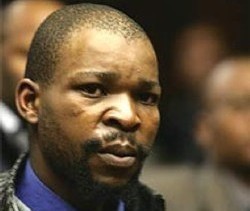 Sipho Dube
Serial killer · South Africa · 2001
Sipho Dube was convicted of seven murders and three rapes and was sentenced to…
7 victims
Sipho Dube
Serial killer · South Africa · 2001
Sipho Dube was convicted of seven murders and three rapes and was sentenced to…
7 victims
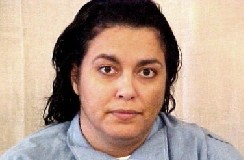 Angelina Rodriguez
Murderer · USA · 2000
Angelina Rodriguez was a Latina. She was 32 years old at the time of the crime.…
1 victim
Angelina Rodriguez
Murderer · USA · 2000
Angelina Rodriguez was a Latina. She was 32 years old at the time of the crime.…
1 victim
- Gender
- male
- Country
- USA
- Location
- Frankfort, Kentucky, USA
- Date of birth
- September 24, 1802
- Age at first offence
- 23
- Characteristics
- revenge, murder for hire
- Victim profile
- Kentucky legislator Solomon P. Sharp
- Method of murder
- St abbing with knife
- Date(s) of murder
- November 7, 1825
- Years active
- 1825
- Date of arrest
- 7 days after
- Status
-
Executed
Executed by hanging in Frankfort, Kentucky, on July 7, 1826
Case record
Identity
Jereboam Orville Beauchamp was an American lawyer and convicted murderer who was one of the central figures in the Beauchamp-Sharp Tragedy.
Background
Jereboam Orville Beauchamp was born September 24, 1802, in Kentucky. Another account in the material gave his birth date as September 6, 1802, and placed it in the area that is now Simpson County, Kentucky. He was educated at Dr. Benjamin Thurston's academy in Barren County, Kentucky until the age of sixteen. He later observed lawyers practicing in Glasgow and Bowling Green and determined to pursue a career in the legal profession. By age eighteen, he had finished his preparatory studies and began studying law.
His father was a farmer. One account identified his parents as Thomas and Sally (Smithers) Beauchamp and said he was the second son. He was named after one of his father's older brothers, Jereboam O. Beauchamp, who was a state senator from Washington County, Kentucky. He attempted to fund his education by finding employment as a shopkeeper, which provided funds but not time to pursue studies. After saving some money, he became a preceptor of a school, returned to Thurston's school as a student, and was later employed by the school as an usher.
Solomon P. Sharp was a lawyer whom Beauchamp admired. The material said Sharp was twice elected to the state legislature and served two terms in the U.S. House of Representatives.
In 1820, Beauchamp became disenchanted with Sharp when rumors surfaced that Sharp had fathered an illegitimate child with a woman named Anna Cooke. Sharp denied paternity of the stillborn child. Public opinion favored Sharp, and Cooke became a recluse at her mother's estate.
Beauchamp began courtship of Anna Cooke. The material said Cooke told Beauchamp she would only marry him on the condition that he kill Sharp. Beauchamp consented to the condition.
Beauchamp left Bowling Green and resided at his father's estate in Simpson County while he sought to recover from an illness. He learned that Cooke had become a recluse at “Retirement,” her mother’s estate, and that it was about a mile from the Beauchamp estate. He gained access by visiting under the guise of borrowing books from Cooke's library, gradually built trust, and by summer 1821 they became friends and began courting. The material described Beauchamp as eighteen and Cooke as at least thirty-four.
Beauchamp later wrote that he had planned to avenge Cooke and that he would avenge her. He attempted to kill Sharp and returned home without completing his promise.
The offence (murder of Solomon P. Sharp)
The material stated that Beauchamp planned to assassinate Solomon P. Sharp and flee to Missouri after the commission of the crime. It stated he intended to commit the murder in the early morning of November 7, the day the legislature would convene its session, hoping the timing would cast suspicion on Sharp’s political enemies.
Three weeks before November 7, the material said Beauchamp sold his property and made it known that he was planning to move to Missouri. He hired laborers to help him load his wagons two days before the planned assassination.
Beauchamp prepared for the murder by packing a change of clothes, a black mask, and a knife with poison on the tip, which became the murder weapon in the material’s narrative.
On the evening of November 6, the material said Beauchamp arrived in Frankfort unable to find lodging at inns because they were filled. He eventually found lodging at the private residence of Joel Scott, warden of the state penitentiary. Between nine and ten o'clock that evening, he slipped out of the house and proceeded to Sharp's residence, dressed in disguise, while carrying his usual clothes with him. The material said he buried these along the bank of the Kentucky River so he could retrieve them after the murder.
The material said Beauchamp discovered Sharp was not home, then sought him in the city and found him at a local tavern. He returned to Sharp's house and waited for Sharp to return. It said Sharp entered the house at approximately midnight.
At two o’clock in the morning, the material said Beauchamp determined the household was asleep and approached the house.
The material reproduced Beauchamp’s Confession passage describing the encounter verbatim as follows:
I put on my mask, drew my dagger and proceeded to the door; I knocked three times loud and quick, Colonel Sharp said; "Who's there" - "Covington I replied," quickly Sharp's foot was heard upon the floor. I saw under the door as he approached without a light. I drew my mask over my face and immediately Colonel Sharp opened the door. I advanced into the room and with my left hand I grasped his right wrist. The violence of the grasp made him spring back and trying to disengage his wrist, he said, "What Covington is this." I replied John A. Covington. "I don't know you," said Colonel Sharp, I know John W. Covington." Mrs. Sharp appeared at the partition door and then disappeared, seeing her disappear I said in a persuasive tone of voice, "Come to the light Colonel and you will know me," and pulling him by the arm he came readily to the door and still holding his wrist with my left hand I stripped my hat and handkerchief from over my forehead and looked into Sharp's face. He knew me the more readily I imagine, by my long, bush, curly suit of hair. He sprang back and exclaimed in a tone of horror and despair, "Great God it is him," and as he said that he fell on his knees. I let go of his wrist and grasped him by the throat dashing him against the facing of the door and muttered in his face, "die you villain." As I said that I plunged the dagger to his heart.
The material stated Sharp died within moments.
After the stabbing, the material said Beauchamp fled to the bank of the river where he had hidden his change of clothes. He changed out of his disguise and sank it in the river with a stone, then returned to his dormitory at the house of Joel Scott. When the Scott family awoke the next morning, Beauchamp emerged from his quarters, feigned surprise when told of the murder, and after being assured there were no suspects yet, returned to Bowling Green. The material said he told his wife that Sharp was dead.
The material also stated that Sharp’s wife, Eliza Sharp, witnessed the entire scene from the top of the stairs in the house.
Investigation
The material stated that the Kentucky General Assembly authorized the governor to offer a reward of $3,000 for the arrest and conviction of Sharp's killer. It said the trustees of the city of Frankfort added a reward of $1,000, and friends of Sharp raised an additional $2,000 reward.
Suspicion for the killing rested on three men: Beauchamp, Waring, and Patrick H. Darby.
The material said that during Sharp's 1824 campaign for a seat in the Kentucky House of Representatives, Darby had remarked that “he would never take his seat and would be as good as a dead man” if Sharp was elected.
The material also said Waring had made similar threats and boasted that he had already stabbed six men. A warrant was sworn out for Waring’s arrest, but it was soon discovered that he was incapacitated after being shot through both hips the day before Sharp's death.
The material said that when Darby discovered he was under suspicion, he began his own investigation. It stated Darby traveled to Simpson County where he met Captain John F. Lowe, who told Darby that Beauchamp had related detailed plans for the assassination. The material also said Lowe furnished Darby with a letter containing damaging admissions against Beauchamp.
The material stated attempts were made to match a knife taken from Beauchamp upon his arrest to the type of wound observed on Sharp's body. The material said the attempt was unsuccessful. It also said efforts to match a footprint found near Sharp’s house to Beauchamp were similarly unsuccessful.
The material stated that the posse that arrested Beauchamp took a bloody handkerchief from the crime scene but lost it on the trip back to Frankfort after the arrest.
Eliza Sharp provided the best evidence presented by the prosecution, stating that she heard the killer’s voice and that it was distinct, and that when given the opportunity to hear Beauchamp’s voice, she identified it as that of the killer.
The material stated that Beauchamp claimed in his Confession that he had buried the actual murder weapon—which was never found—by the bank of the river near where the murder took place. It said a handkerchief found at the scene of the crime and believed to belong to the murderer was lost by the posse, and later Beauchamp claimed he had stolen and burned it after the posse had gone to sleep one night.
A test was devised allowing Ms. Sharp to hear Beauchamp’s voice; she immediately identified it as that of the killer. The material stated that Beauchamp claimed he had disguised his voice on the night of the murder and thought Ms. Sharp would not recognize it.
The material also described that a dagger taken from Beauchamp upon his arrest did not match the wound on Sharp’s body.
The material stated that in anticipation of trial, Beauchamp asked for additional time to gather witnesses before hearings resumed.
Arrest
The material said the material timeline included Beauchamp’s movements after the murder. It stated that the first night following the murder, he stayed at the home of a relative in Bloomfield, Kentucky. The next day, he traveled to Bardstown, spent the night there, and lodged with his brother-in-law in Bowling Green on the night of November 9 before returning to his home in Glasgow on November 10.
The material stated that before nightfall, a posse arrived from Frankfort to arrest him. He was brought to Frankfort and tried before an examining court. It stated Commonwealth's Attorney Charles S. Bibb confessed that he had not yet collected enough evidence to detain him. The material said Beauchamp was released but agreed to stay in Frankfort for ten days to allow the court to finish its investigation.
During this time, the material said Beauchamp wrote letters to John J. Crittenden and George M. Bibb requesting their legal aid, and neither letter was answered.
The material also described Beauchamp’s prior planning in relation to an arrest warrant: it said a warrant sworn out against him by a woman named Ruth Reed claimed he was the father of her illegitimate child born on June 10, 1824. The material stated the warrant was sworn out October 25, 1825, but Beauchamp maintained it was harassment and that he should continue with his plans to remove to Missouri. The material further said Beauchamp later claimed he arranged for the warrant to be issued so he would have a plausible reason to be in Frankfort at the time of Sharp’s murder.
Historian Fred Johnson is mentioned in the material and said to have stated that incorporation of the warrant into Beauchamp’s story was probably done after the fact as a means of damage control.
Trial
The material stated that Beauchamp was held for trial at the next term of the circuit court in March 1826 based on circumstantial evidence.
In anticipation of trial, the material said Beauchamp’s uncle Jereboam assembled a legal team that included former U.S. senator John Pope.
The grand jury convened in March and returned an indictment against Beauchamp for Sharp's murder.
The material stated that Beauchamp asked for more time to gather witnesses before his trial began; the court acceded, and scheduled a special session in May specifically to try Beauchamp's case.
The material stated that Beauchamp’s trial began May 8, 1826. After a change of venue was denied, Beauchamp pled innocent. A jury was empaneled, and testimony began May 10. Trial testimony concluded on May 15, 1826, and summations concluded four days later. In one section of the material, it stated the jury returned a guilty verdict after only an hour of deliberation on May 19; this verdict date appears alongside other date statements.
Eliza Sharp detailed events of the night of the murder and reiterated that Beauchamp’s voice was that of the murderer.
John Lowe testified that he had heard Beauchamp threaten to kill Sharp and said that on Beauchamp’s return from Frankfort he had observed him waving a red flag and declaring to his wife that he had “gained the victory.”
Patrick Darby repeated his testimony of a 1824 meeting between Darby and Beauchamp. Darby said that during the conversation, Beauchamp told him that Sharp offered him one thousand dollars, a slave girl, and 200 acres (0.81 km²) of land if Beauchamp and his wife Anna would leave Sharp alone. The material said Sharp reneged on the promise and Beauchamp told Darby he was going to kill Sharp.
The material stated that other witnesses testified that Beauchamp habitually referred to Sharp's friend, John W. Covington as “John A. Covington,” which was the name the assassin used to gain entry to Sharp’s house.
The material also stated the defense attempted to discredit Patrick Darby by stressing his association with the Old Court and presenting the theory that the killing was politically motivated. It said the defense presented witnesses who testified they knew of no hostility between Beauchamp and Sharp and questioned whether Darby and Beauchamp’s 1824 meeting ever occurred.
During closing arguments, the material stated that defense counsel John Pope attempted to discredit Darby. It said this tactic provoked Darby to assault one of Pope's co-counselors with a cane.
Sentencing
The material stated that despite the absence of physical evidence, including a murder weapon, the jury returned a guilty verdict after only an hour of deliberation.
Beauchamp was sentenced to death by hanging on June 26, 1826, in one account. Another section of the material stated he was sentenced to be executed by hanging on June 16, 1826. The material also stated that Beauchamp requested a stay of execution to write a justification for his actions. The stay was granted, and execution was rescheduled for July 7, 1826.
The material stated that Anna Beauchamp was questioned during the legal process and that a charge against her for being an accessory to the crime was dismissed due to lack of evidence. It described that on May 20, Anna was examined by two justices of the peace on suspicion of being an accessory and was acquitted due to lack of evidence.
Appeals
The material stated that after conviction, Anna appealed to John Waring for help on her husband’s behalf, and tried to entice John Lowe to commit perjury. It said both appeals were denied.
Outcome
Execution and immediate aftermath
While imprisoned and awaiting execution, Beauchamp penned a confession. In it, he accused Patrick Darby of perjuring himself regarding the alleged 1824 meeting between Darby and Beauchamp.
Many believed the confession’s harsh words about Darby were meant to curry favor with New Court governor Joseph Desha to secure a pardon.
The material stated the confession was finished in mid-June 1826, and Beauchamp’s uncle, Senator Beauchamp, took it to the state printer to have it published immediately. The printer, described as an Old Court supporter, would not publish it.
The material stated that Anna Beauchamp joined her husband in his cell at her own request.
During incarceration, they tried to bribe a guard to allow them to escape. When this failed, they attempted to pass a letter to Senator Beauchamp asking him to help them escape, which also failed.
The material stated that both Senator Beauchamp and the younger Jereboam Beauchamp made repeated requests for a pardon from Governor Desha, but to no avail.
Beauchamp’s final request to Desha for a stay of execution was rejected on July 5, 1826.
The material stated that on July 5, 1826, they attempted a double suicide by taking laudanum smuggled into the cell by Anna; both survived. After the attempt, they were put on suicide watch and threatened with separation.
The material stated that on the night before execution, Anna Beauchamp took a second dose of laudanum but was unable to keep it down.
On July 7, 1826, the day of Beauchamp’s execution, Anna requested that the guard give her privacy to dress. Once the guard left, Anna produced a knife she had smuggled into the cell, and both she and her husband stabbed themselves. Anna was taken to a nearby house to be treated by doctors.
The material stated that Beauchamp was too weak to stand or walk and was loaded onto a cart to be conveyed to the gallows.
The material stated that Beauchamp begged to see Anna before being taken. Doctors told the guards she was not seriously injured and would recover. Beauchamp continued to insist on seeing his wife, and the guards finally acquiesced.
Upon arriving, Beauchamp was angered that the guards lied about Anna’s condition. He remained with her until he could no longer feel her pulse, kissed her lifeless lips, and was hurried to the gallows so he might be hanged before he died of stab wounds.
The material stated that on his way to the gallows, Beauchamp asked to see Patrick Darby. He offered his hand, but Darby declined. The material further said Beauchamp publicly denied that Darby had any involvement with the murder, accused Darby of having lied about the 1824 meeting, and ordered the cart driver to continue to the gallows when Darby tried to engage him in discussion.
At the gallows, two men supported Beauchamp as the noose was put in place around his neck. He requested a drink of water and that the band play “Bonaparte's Retreat from Moscow.” On his signal, the cart that held him drove away, and he died after a brief struggle.
His father requested the bodies of his son and daughter-in-law for burial. The material stated their bodies were positioned in an embrace and buried in the same coffin. The material said a poem Anna had written was etched on their double tombstone.
The material stated the couple’s tombstone was engraved with a poem written by Anna Beauchamp.
The material also stated the bodies were buried in Maple Grove Cemetery in Bloomfield, Kentucky.
Publications and later responses
Senator Beauchamp eventually found a publisher for Beauchamp’s confession. The first printing of the book ran on August 11, 1826.
Sharp’s brother, Dr. Leander Sharp, attempted to counter Beauchamp’s confession with “Vindication of the character of the late Col. Solomon P. Sharp,” which he wrote in 1827. In that book, Dr. Sharp claimed to have seen a “first version” of the confession implicating Darby.
Darby threatened to sue Dr. Sharp if he published “Vindication,” and John Waring threatened to kill him if he did so. Consequently, the manuscript was never published, but was found years later during a remodel of Sharp’s house.
Beauchamp’s confession was published in 1826, along with a transcript of Beauchamp’s trial authored by J. G. Dana and R. S. Thomas. The material also mentioned “The Letters of Ann Cook,” whose authorship is disputed, as being published in the same year as Beauchamp’s confession.
The material described Sharp’s widow Eliza as having subscribed to a notion that political opponents had instigated the crime. It said that in an 1826 letter in the New Court Argus of Western America, she referred to Darby as “the chief instigator of the foul murder which has deprived me of all my heart held most dear on earth.”
Claims of political motive and disputed involvement
The material stated that speculation raged that Sharp's political opponents instigated the crime. It said Sharp was a leader of the New Court party during the Old Court–New Court controversy in Kentucky and that Sharp was thought to be the minority party’s choice for Speaker of the House for the 1826 session.
It stated that some New Court partisans charged that Beauchamp had been incited to violence by members of the Old Court party, specifically Patrick Darby. It also said that a deal was explicitly mentioned in one version of Beauchamp’s confession, and that Beauchamp ultimately rejected the deal for fear of being double-crossed.
Darby denied involvement, claiming New Court partisans such as Francis P. Blair and Amos Kendall were seeking to defame him. The material stated that Darby also countered that Eliza Sharp’s letter to the New Court Argus was written by New Court supporters, including Kendall, the newspaper’s editor.
The claims and counterclaims reached such an extreme that the material said an 1826 letter in the New Court Argus suggested New Court supporters had instigated Sharp’s murder to blame Old Court partisans and affix a stigma to them.
Darby eventually brought suit for libel against Kendall and Eliza Sharp, as well as Senator Beauchamp and Sharp’s brother Leander. The material said numerous delays and changes of venue prevented any suits from ever going to trial. It stated that Darby died in December 1829.
The material also stated that some Old Court partisans claimed Governor Desha offered Beauchamp a pardon if he would implicate Darby and Achilles Sneed, clerk of the Old Court, in his confession.
The material included a quotation attributed to Beauchamp “been New Court long enough, and would die an Old Court man” said shortly before execution.
Literature and fiction inspired by the case
The material stated that the Beauchamp–Sharp Tragedy created a national sensation and inspired fictional works.
It cited Edgar Allan Poe’s “Scenes from Politian” (1835) and also referenced Poe’s unfinished play “Politian” as being inspired by the tragedy. It also cited Robert Penn Warren’s “World Enough and Time” (1950).
It also stated that William Gilmore Simms wrote three works based on Sharp’s murder and aftermath: “Beauchampe: or The Kentucky Tragedy, A Tale of Passion,” “Charlemont,” and “Beauchampe: A Sequel to Charlemonte.”
The material listed other works drawing on events around Sharp’s murder: “Greyslaer: A Romance of the Mohawk” by Charles Fenno Hoffman, “Octavia Bragaldi” by Charlotte Barnes, “Sybil” by John Savage, and “Conrad and Eudora; or, The Death of Alonzo: A Tragedy” and “Leoni, The Orphan of Venice,” both by Thomas Holley Chivers.
Other details
The material stated that a cousin, Noah Beauchamp, was hanged in 1842 for stabbing a man to death in Indiana.
The material stated that Beauchamp’s murder of Sharp was known as the Beauchamp–Sharp Tragedy, sometimes called the Kentucky Tragedy. It also described Sharp’s political affiliation with the New Court party and the Old Court–New Court controversy and described the conflict between debtors seeking relief after the Panic of 1819 and creditors.
The material stated that an investigation soon revealed Beauchamp as the killer and that he was apprehended at his home in Glasgow, Kentucky, four days after the murder.
The material stated that Beauchamp was the first person legally executed in the state of Kentucky.
The material stated that Anna Cooke-Beauchamp died from her wounds shortly before her husband was hanged.
The material described that the jailer permitted Anna to stay in the cell with Beauchamp at her own request.
The material stated that the Twenty-Second Regiment musicians played “Bonaparte's Retreat from Moscow” while five thousand spectators watched Beauchamp’s execution. It stated that it was the first legal hanging in Kentucky's history.
The material stated that after execution, bodies were buried in a single coffin, locked in an embrace as requested, in Maple Grove Cemetery in Bloomfield, Kentucky.
The material stated that in accordance with their wishes, the couple’s bodies were positioned in an embrace and buried in the same coffin.
Spotted an error, or have more information about this case?