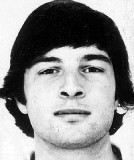
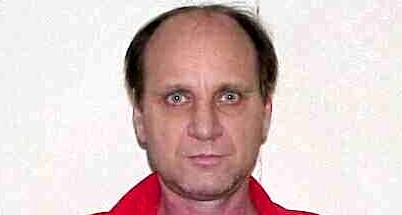
Paul Steven Haigh
Serial killer Christopher Worrell
Serial killer · Australia · 1976
Christopher Worrell was described as a rapist and was later killed in a car acc…
7 victims
Christopher Worrell
Serial killer · Australia · 1976
Christopher Worrell was described as a rapist and was later killed in a car acc…
7 victims
 James William Miller
Serial killer · Australia · 1976
James William Miller was convicted of six counts of murder in the Truro murders…
7 victims
James William Miller
Serial killer · Australia · 1976
James William Miller was convicted of six counts of murder in the Truro murders…
7 victims
 Archibald McCafferty
Serial killer · Australia · 1973
Archibald Beattie McCafferty was sentenced to three life sentences in 1974 and…
4 victims
Archibald McCafferty
Serial killer · Australia · 1973
Archibald Beattie McCafferty was sentenced to three life sentences in 1974 and…
4 victims
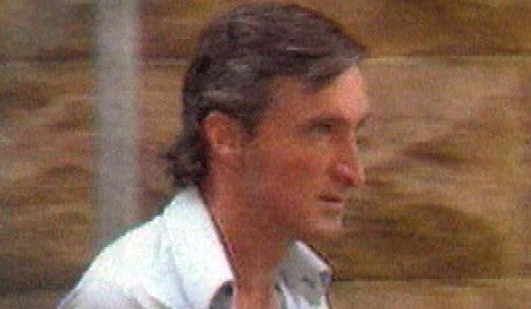 David Birnie
Serial killer · Australia · 1986
David John Birnie (16 February 1951 – 7 October 2005) was an Australian serial…
4 victims
David Birnie
Serial killer · Australia · 1986
David John Birnie (16 February 1951 – 7 October 2005) was an Australian serial…
4 victims
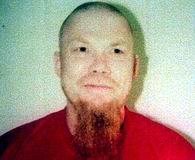 Gregory John Brazel
Serial killer · Australia · 1982
Gregory John “Bluey” Brazel was an Australian arsonist and armed robber who was…
3 victims
Gregory John Brazel
Serial killer · Australia · 1982
Gregory John “Bluey” Brazel was an Australian arsonist and armed robber who was…
3 victims
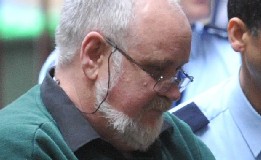 John Coombes
Serial killer · Australia · 1984
John Leslie Coombes was convicted of murdering and dismembering childcare worke…
3 victims
John Coombes
Serial killer · Australia · 1984
John Leslie Coombes was convicted of murdering and dismembering childcare worke…
3 victims
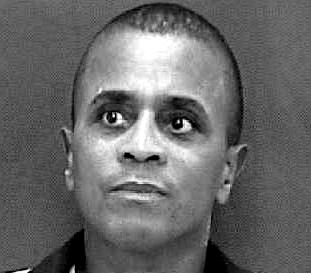 Willie James Hall
Murderer · USA · 1988
Willie James "Bo" Hall, 40, was sentenced to death in DeKalb County in February…
1 victim
Willie James Hall
Murderer · USA · 1988
Willie James "Bo" Hall, 40, was sentenced to death in DeKalb County in February…
1 victim
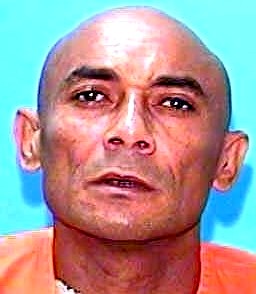 Juan David Rodriguez
Murderer · USA · 1988
Juan David Rodriguez (DOB: 06/26/56) was tried in the Eleventh Judicial Circuit…
1 victim
Juan David Rodriguez
Murderer · USA · 1988
Juan David Rodriguez (DOB: 06/26/56) was tried in the Eleventh Judicial Circuit…
1 victim
 Kanae Kijima
Serial killer · Japan · 2009
Kanae Kijima was sentenced to death on April 13, 2012. She was convicted of thr…
3 victims
Kanae Kijima
Serial killer · Japan · 2009
Kanae Kijima was sentenced to death on April 13, 2012. She was convicted of thr…
3 victims
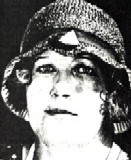 Eva Coo
Murderer · USA · 1934
Eva Coo was an American murderer who was executed by electric chair at Sing Sin…
1 victim
Eva Coo
Murderer · USA · 1934
Eva Coo was an American murderer who was executed by electric chair at Sing Sin…
1 victim
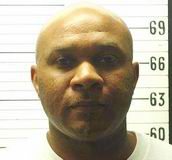 Clarence Nesbit
Murderer · USA · 1993
Clarence C. Nesbit was convicted of premeditated first degree murder in the Cri…
1 victim
Clarence Nesbit
Murderer · USA · 1993
Clarence C. Nesbit was convicted of premeditated first degree murder in the Cri…
1 victim
- Gender
- male
- Country
- Australia
- Location
- Victoria, Australia
- Date of birth
- September 5, 1957
- Age at first offence
- 21
- Characteristics
- robbery, disputes, drugs
- Victim profile
- Evelyn Adams, 58 / Bruno Cingolani, 45 / Wayne Keith Smith, 27 / Sheryle Gardner, 31 / Danny Mitchell, 10 / Lisa Brearley, 19 / Donald George Hatherley, 36 (inmate)
- Method of murder
- Shooting - Stabbing with knife
- Date(s) of murder
- 1978 - 1979 / 1991
- Years active
- 1978–1991
- Date of arrest
- —
- Status
-
Life imprisonment
Sentenced to six sentences of life imprisonment without the possibility of parole for the murder of seven people in the late 1970s
Case record: Paul Steven Haigh
Paul Steven Haigh was an Australian serial killer.
Timeline
- 1978 — After being paroled for a string of armed holdups, Haigh shot dead TattsLotto agency worker Evelyn Adams, aged 58, and Bruno Cingolani, aged 45, in separate armed robberies.
- 1979 — Haigh began killing people he believed knew too much about his crimes. He shot dead his associate Wayne Keith Smith, aged 27, and his associate’s former girlfriend Sheryle Gardner, aged 31. Haigh then shot dead Gardner’s son Danny Mitchell, aged 10, who was sitting beside his mother in their car.
- 1979 — Haigh stabbed his girlfriend Lisa Brearley, aged 19, 157 times after allowing another man to rape her at knifepoint.
- 1991 — Haigh murdered sex offender Donald George Hatherley in a jail cell at Pentridge Prison in 1991.
- 2009 — The Victorian Supreme Court (Trial Division) decision in 2009 denied Haigh’s request to be given a minimum term.
- 19 April 2011 — Haigh won the right to have his sentence reviewed at a hearing before Victorian Court of Appeal justices Peter Buchanan, Geoffrey Nettle and Emilios Kyrou to determine whether he should be entitled to parole.
- 13 December 2012 — The appeal was rejected by Justice David Beach.
The offence
Haigh murdered seven people across 1978, 1979 and 1991.
In 1978, in the first two weeks after being paroled for a string of armed holdups, Haigh committed separate armed robberies in which he shot dead TattsLotto agency worker Evelyn Adams, aged 58, and pizza shop operator and father of two Bruno Cingolani, aged 45.
In 1979, Haigh shot dead his associate Wayne Keith Smith, aged 27.
Haigh shot dead his associate’s former girlfriend Sheryle Gardner, aged 31.
Haigh shot dead Gardner’s son Danny Mitchell, aged 10, who was sitting beside his mother in their car when she was shot, to stop him identifying his mother’s killer.
Haigh’s most brutal attack was committed against his girlfriend, Lisa Brearley, aged 19. He stabbed her 157 times after allowing another man to rape her at knifepoint.
The court heard that Haigh killed Brearley after allowing another man to rape and sodomise her at knifepoint, because Haigh believed she was sleeping with other men.
After Brearley’s murder, Haigh said:
"I only intended to do 20 [stab wounds], but I lost count so then I started counting out another 20. I kept making sure she was dead."
In 1991, Haigh killed sex offender Donald George Hatherley in a jail cell at Pentridge Prison in 1991.
Haigh claimed he “assisted” Hatherley to commit suicide by placing a noose around his neck, kicking a cupboard out from under him, then pushing down on Hatherley’s shoulders.
Investigation
Haigh’s murders were described in court submissions by prosecutor Peter Rose, SC, as pre-meditated, cold-blooded and vile.
Mr Rose told the court that Haigh’s murders involved “particularly degrading acts”.
Mr Rose also said that the murders had been committed by a remorseless man who to this day blames his victims and abuses drugs in jail.
During Haigh’s hearing, psychiatrist Dr Yvonne Skinner testified that Haigh did not have the capacity to feel empathy on an emotional level and would be a “moderate to high” risk of re-offending if he was ever released.
Dr Skinner said she believed Haigh, now 54, did not have a mental illness but suffered from a personality disorder “with multiple different features”.
Asked by Mr Rose if Haigh shunned responsibility for his crimes, Dr Skinner said:
“I think he deals with it by laying the blame on other people or factors.”
Under cross examination by Haigh, Dr Skinner said impulsive tendencies were not a major characteristic of his personality and that his actions were planned and carefully considered.
Trial
A jury found Haigh guilty of Hatherley’s murder.
Haigh was self-represented during his application.
Sentencing
Haigh received a life sentence with a minimum for Hatherley’s murder.
Haigh was sentenced to six sentences of life imprisonment without the possibility of parole.
Appeals
On 19 April 2011, at a hearing before Victorian Court of Appeal justices Peter Buchanan, Geoffrey Nettle and Emilios Kyrou, Haigh won the right to have his sentence reviewed to determine whether he should be entitled to parole, after he appealed a 2009 Victorian Supreme Court (Trial Division) decision to deny his request to be given a minimum term.
Haigh argued that the 2009 decision by Justice Betty King was flawed because it had been based on a 2005 pre-sentence report that was later withdrawn by the Victorian Parole Board and replaced in 2007.
The appeal was rejected on 13 December 2012.
Justice David Beach dismissed Haigh’s application and refused to fix a non-parole period.
In dismissing the application, Justice Beach described the murders as “unjustifiable and merited condign punishment”.
Justice Beach said the six murders that were the subject of Haigh’s application were “dreadful crimes”.
Justice Beach accepted that Haigh’s conduct in prison over the past several years had been considerably better than it was in the early years of his sentences, but said the following matters did not tell in favour of granting a non-parole period:
- “the applicant's continued willingness to attribute blame to others”
- “his continued use of illicit drugs in prison”
- “the murder of Donald Hatherley”
- “his lack of any remorse in respect of the murder of Donald Hatherley”
- “the significant episodes of bad behaviour in prison up until the last several years”
- “the future risk of him committing further offences of violence (as disclosed in the evidence)”
Justice Beach said:
"While the applicant's behaviour now (and in the last several years) is significantly different from his behaviour when he was a younger man, a consideration of all of the material in this case suggests to me that he remains a person who will say and do whatever he thinks will suit the course he is currently pursuing,"
Justice Beach said:
"I accept the evidence that, notwithstanding the elapse of time and significant changes in behaviour, the applicant remains (and will remain) a moderate to high risk of committing further offences of violence."
Justice Beach said:
"None of it leads me to the conclusion that it is appropriate to fix a non-parole period. "
Justice Beach said:
"On all of the material, I am of the view that it is, in fact, inappropriate to fix a non-parole period,"
Justice Beach concluded:
"The application for the fixing of a non-parole period in respect of the life sentences imposed upon him for the murders of Evelyn Abraham, Bruno Cingolani, Wayne Keith Smith, Sheryle Ann Gardner, Danny William Mitchell and Lisa Maude Brearley is refused."
Outcome
Haigh lost his bid for a minimum term on his life-without-parole sentence for the murders of six people, including a 10-year-old boy.
Prosecutor Peter Rose, SC, told the court that Haigh should never be released and that his past history and conduct, as well as several prior convictions, meant the public must be protected from him so that he would remain in custody.
Mr Rose also described the murders as among the worst combination of murders ever committed in Victoria.
Aftermath
Haigh had applications for a parole-related minimum term considered by courts, including:
- a 2009 Victorian Supreme Court (Trial Division) decision to deny his request to be given a minimum term
- a Victorian Court of Appeal hearing on 19 April 2011 where he won the right to have his sentence reviewed
- dismissal of his application on 13 December 2012 by Justice David Beach
Other details
Haigh was described as having borderline personality disorder when he committed the murders in the 1970s, and he argued for a mitigated sentence on that basis.
Haigh appeared before a five-judge bench of the Court of Appeal after breaking off with his legal counsel.
Haigh argued that Justice King underestimated his remorse.
Justice Betty King said:
"You are capable of understanding and feeling remorse, but ... to a very limited degree, and I find that you have no real empathy with your fellow man,"
Justice Betty King said:
"You are able to understand the issues intellectually, but are not capable of feeling true sympathy or compassion for any person unless they are someone that you love and care about. "
Justice Betty King said:
"You remain a callous individual."
Justice King also said:
Justice King said she could not be satisfied Haigh would not kill again if he were ever released.
Haigh described his “assisted” suicide assistance in 1991 and the conduct around it.
Haigh said:
"I only intended to do twenty but I lost count"
Haigh wrote:
“Lisa became a loose end,”
Haigh wrote:
“I consoled” the sobbing boy before shooting him three times in the back of the head.
Haigh said of his crimes:
"They were, in the context of the criminal world, understandable and appropriate. "
Haigh said:
"Overall, from a more mature perspective, I see that a clear-thinking person, a more self-respecting person and law-abiding person would not go to such a horrendous extreme. "
Haigh said:
"I was pretty much disturbed and out of control."
Haigh said about shooting dead two people in separate hold-ups in 1978:
"Clearly they threatened my freedom and the last thought I had before I pulled the trigger was, 'You're not sending me back to jail'."
Haigh said he “didn’t like” Danny in 2008.
Haigh blamed Ms Gardner for her son's death, claiming she used him as a shield, and said:
"He didn't need to die and were he not there it wasn't something we would have gone out of our way to do -- it was just an unforeseen circumstance,"
Haigh replied when asked if he was revolted by shooting the child:
"With Danny, sadly no -- I wasn't. Being self-centred at the time my desire was to save my miserable life. " "His life came second to my freedom."
Haigh said of stabbing Lisa Brearley:
"When I was satisfied of no chance of a miraculous recovery I stopped," "The intensity of her fight fazed me -- it wasn't like in the movies." "It was the only one I have ever had a nightmare about."
Haigh said he felt remorseful about all the murders except that of his seventh victim, Donald Hatherley:
"It was all with consent, it was something that was done with a warmth,"
Haigh said:
"I have not had a skerrick of remorse about it so my heart tells me I did no wrong."
Haigh said it was cruel to leave people alive to suffer.
Haigh said when asked why he was applying for a minimum term:
"So I have got the hope of being released."
Haigh said:
"It is pretty bleak at the moment and I am running out of steam. I need a light at the end of the tunnel. "
Haigh said:
"I do care about my future very much."
Spotted an error, or have more information about this case?