
Reinaldo Rivera
Serial killer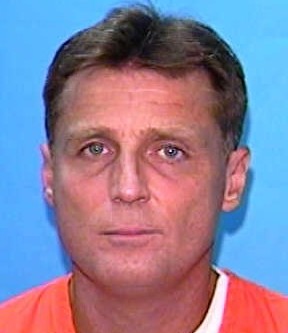 Glen Edward Rogers
Serial killer · USA · 1993
Glen Edward Rogers was a spree killer whose cross-country rampage in 1994-95 le…
70 victims
Glen Edward Rogers
Serial killer · USA · 1993
Glen Edward Rogers was a spree killer whose cross-country rampage in 1994-95 le…
70 victims
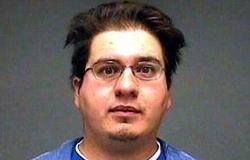 Efren Saldivar
Serial killer · USA · 1989
Efren Saldivar (born 30 September 1969) was an American serial killer who murde…
50 victims
Efren Saldivar
Serial killer · USA · 1989
Efren Saldivar (born 30 September 1969) was an American serial killer who murde…
50 victims
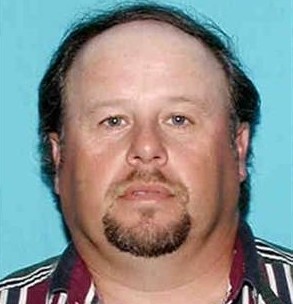 Ronald Dominique
Serial killer · USA · 1997
Ronald Joseph Dominique (born 1964) was an American serial killer from the Bayo…
23 victims
Ronald Dominique
Serial killer · USA · 1997
Ronald Joseph Dominique (born 1964) was an American serial killer from the Bayo…
23 victims
 Jeremy Jones
Serial killer · USA · 1992
Name: Jeremy Jones · Aliases/identities mentioned: John Paul Chapman · Age (as…
21 victims
Jeremy Jones
Serial killer · USA · 1992
Name: Jeremy Jones · Aliases/identities mentioned: John Paul Chapman · Age (as…
21 victims
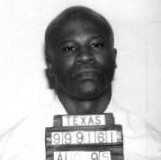 Desmond Jennings
Serial killer · USA · 1993
Desmond Jennings declined to make a last statement. Texas Attorney General John…
20 victims
Desmond Jennings
Serial killer · USA · 1993
Desmond Jennings declined to make a last statement. Texas Attorney General John…
20 victims
 John Eric Armstrong
Serial killer · USA · 1992
John Eric Armstrong was a former USS Nimitz sailor of Dearborn Heights, Michiga…
18 victims
John Eric Armstrong
Serial killer · USA · 1992
John Eric Armstrong was a former USS Nimitz sailor of Dearborn Heights, Michiga…
18 victims
 Cecil Emile Davis
Murderer · USA · 1997
Cecil Emile Davis was the appellant in State of Washington v. Cecil Emile Davis…
1 victim
Cecil Emile Davis
Murderer · USA · 1997
Cecil Emile Davis was the appellant in State of Washington v. Cecil Emile Davis…
1 victim
 Paul Jennings Hill
Murderer · USA · 1994
Paul Jennings Hill was executed by lethal injection in Florida on September 3,…
2 victims
Paul Jennings Hill
Murderer · USA · 1994
Paul Jennings Hill was executed by lethal injection in Florida on September 3,…
2 victims
 Ronald Bernard Bennett
Murderer · USA · 1985
Ronald Bernard Bennett was executed by lethal injection in Virginia on November…
1 victim
Ronald Bernard Bennett
Murderer · USA · 1985
Ronald Bernard Bennett was executed by lethal injection in Virginia on November…
1 victim
 Manuel Martínez Coronado
Mass Murderer · Guatemala · 1995
Manuel Martínez Coronado was a farmer and a mass murderer from Guatemala. A lan…
7 victims
Manuel Martínez Coronado
Mass Murderer · Guatemala · 1995
Manuel Martínez Coronado was a farmer and a mass murderer from Guatemala. A lan…
7 victims
 Catherine Deshayes
Murderer · France · 1660
Catherine Deshayes, sometimes known as Catherine Monvoisin, and known as La Voi…
Catherine Deshayes
Murderer · France · 1660
Catherine Deshayes, sometimes known as Catherine Monvoisin, and known as La Voi…
- Gender
- male
- Country
- USA
- Location
- Georgia/South Carolina, USA
- Date of birth
- September 13, 1963 (Madrid, Spain)
- Age at first offence
- 36
- Characteristics
- rape
- Victim profile
- Melissa Dingess, 17 / Tiffaney S. Wilson, 17 / Tabitha Bosdell, 17 / Sergeant Marni Glista, 21
- Method of murder
- Strangulation
- Date(s) of murder
- July 1999 - September 2000
- Years active
- 1999–2000
- Date of arrest
- —
- Status
-
Sentenced to death
Sentenced to death in Georgia on February 20, 2004
Background
Reinaldo Rivera was arrested in a motel room where he tried to kill himself by slashing his wrists after a woman whom he stabbed and raped helped authorities locate him. Rivera was a 37-year-old former sailor who worked for the U.S. Joint Chiefs of Staff in Washington, D.C.
Rivera was born in Madrid, Spain, and moved with his family to Puerto Rico at the age of 7. His father was a doctor. At 19, Rivera joined the Navy and reported for basic training in Orlando, Florida. That year, he was sent to San Diego, California, and spent the next three years at sea.
From December 1986 to March 1991, Rivera worked for the Joint Chiefs of Staff in Washington. After that, he attended the University of South Carolina in Columbia, earning a degree in office administration. While in Columbia, he married Tammy Lisa Bonnette on Valentine's Day 1993, and they had two children ages 5 and 7.
Rivera remained in the Navy, moving to Pensacola, Florida, and Corpus Christi, Texas, before being discharged in September 1995. He left Texas and settled in Aiken County, South Carolina, in January 1998, where he was hired as a tire inspector at a Bridgestone/Firestone plant.
Investigation
Investigators said they had gotten about 30 calls from women who said they were approached by Rivera between 1999 and “this year.” The women, who were mostly young and blond, said the man tried to lure them into his car, saying he was opening a modeling agency and asking them about their sex lives.
Using information obtained during Rivera’s police interview, authorities located the bodies of two of his four alleged victims in a wooden area in the South Carolina border. The other two victims had been located previously.
Police said Rivera had been charged with the murders of Melissa Dingess, 17, of Graniteville, South Carolina, who disappeared 15 months before his arrest; Fort Gordon Sergeant Marni Glista, 21, of Augusta, who was raped and strangled last month; Tiffaney Wilson of Jackson, South Carolina, who was killed last December; and an unidentified 18-year-old woman who disappeared during the summer.
A homicide task force in Fayetteville checked whether Rivera could be a suspect in 15 unsolved cases in the area. Six cases involved the murder of prostitutes in the Fayetteville/Cumberland County area between 1987 and 1999. Police said almost all the victims were beaten and strangled to death.
Arrest and attempted suicide
After the woman whom he stabbed and raped helped authorities locate him, Rivera was arrested in a motel room. Investigators said Rivera tried to kill himself by slashing his wrists. The woman said she went with Rivera to her house last week, where he allegedly raped her and stabbed her three times in the neck with a steak knife.
The offence
Police said Rivera stabbed and raped the woman and later led authorities to additional bodies.
Rivera was charged with and later convicted in relation to:
- The September 9 death of Marni Glista.
- The sexual assault of Chrisilee Barton that nearly proved fatal Oct. 10, 2000.
- The June 29, 2000 attack on Tabitha Bosdell.
- Additional charges associated with the victims identified as Melissa Dingess, Tiffaney S. Wilson, and an unidentified 18-year-old woman.
During sentencing proceedings, Judge Albert M. Pickett imposed sentences tied to specific attacks described as:
- For the Sept. 4, 2000 attack on Sgt. Glista.
- For the June 29, 2000 attack on Tabitha L. Bosdell.
- For the Oct. 10, 2000 attack on Chrisilee Barton, who was 18 at the time.
Trial
Pleas and charges
On November 3, Rivera entered not guilty pleas to a capital murder charge and 13 other charges including rape, aggravated assault and aggravated sodomy.
During the arraignment and initial hearing in Richmond County Superior Court, Judge Albert M. Pickett read through each of the 14 charges lodged against Rivera, including a murder charge for the September 9 death of Marni Glista. The arraignment and initial hearing in Richmond County Superior Court were the first of specialized pretrial hearings that must be held in every case in which prosecutors intend to seek the death penalty.
Jury verdict on guilt
A jury found Rivera guilty on all counts. On each of the 14 counts in the indictment, the jury wrote “guilty” and also wrote “guilty beyond a reasonable doubt.”
Rivera stood completely still in Richmond County Superior Court during the reading of the 14 charges.
Sentencing phase and aggravating factors
Georgia law required death penalty trials to be conducted in two phases. During the first phase, a jury considered only guilt or innocence. If the jury convicted, a second phase took place as the penalty phase. Attorneys made opening and closing statements and presented evidence, and the jury decided punishment—life in prison with or without the possibility of parole, or death. To impose death or life in prison without parole, the jury had to find the prosecutor proved at least one of the state’s statutory aggravating factors beyond a reasonable doubt. The verdict had to be unanimous.
At the penalty phase, the jury found that prosecutors had proven the following aggravating circumstances beyond a reasonable doubt:
- Rivera caused Sgt. Glista’s death in conjunction with her rape.
- Rivera murdered Sgt. Glista while committing aggravated battery.
- Sgt. Glista’s slaying was outrageously or wantonly vile, horrible or inhuman.
Immediately after the 12 jurors were asked if that was their individual verdicts and they responded yes, Judge Albert M. Pickett officially imposed the death sentence.
Rivera expressed outrage that his death penalty trial would continue to a sentencing phase. His remarks included: “This is a joke. This is a circus here,” Mr. Rivera said Friday afternoon in Richmond County Superior Court.
Judge Pickett told Rivera: “This trial must go forward,” Judge Albert M. Pickett told Mr. Rivera.
When discussing his options, Judge Pickett told Rivera that he had the right to testify, to be his own co-counsel, and to tell the jury he wanted a death sentence. Judge Pickett said Rivera had the right to make an opening statement to the jury and skip the remainder of his trial, but he could not prevent his defense attorneys Peter Johnson and Jacque Hawk from presenting evidence to persuade the jury to impose a sentence of life.
Jacque Hawk told the judge: “I’m really confused about what I’m supposed to do,” Mr. Hawk told the judge.
Rivera said he would make his statement to the jury and then return to his jail cell for the remainder of his trial.
Rivera said what he really wanted was to tell the jury what he said was a liar:
- Rivera told the judge what he wanted to tell the jury “is to tell the jury what a liar District Attorney Danny Craig is.”
At the beginning, middle and end of the day’s proceedings, Rivera ranted about the closing arguments District Attorney Danny Craig made Thursday.
During sentencing-related testimony and statements to investigators, Rivera described himself as a sex addict and said he lived a double life with a bad side that led him to repeated attempts to deceive women with a phony story about being a professional photographer. The narrative also described that Rivera confessed that he raped and killed Sgt. Glista in September 2000, killed three other women, and tried to kill one last victim.
District Attorney Danny Craig argued that jurors should not believe everything Rivera said and described Rivera as a murderous rapist who stalked and abducted each of the four homicide victims.
Rivera complained about indictments and venue, saying: “If he can't kill me in Richmond County he thinks he can kill me in Columbia County. He wants a second shot at me,” Mr. Rivera complained to the judge.
After the guilty verdicts, the jury determined Rivera’s punishment by finding aggravating factors. Rivera had one short statement before Judge Pickett imposed the sentence: “I’m sorry.”
Conviction and death sentence
On January 27, 2004, after nearly eight hours of deliberations on his sentence, a Richmond County Superior Court jury found Rivera should die for the killing of Army Sgt. Marni Glista. Judge Albert M. Pickett set Rivera’s execution date for between March 3 and 9.
Judge Pickett ruled the death sentence and prison sentences were to be consecutive.
Sentencing
Death sentence
On February 20, 2004, Rivera was sentenced to death in Georgia.
Additional sentences for Augusta crimes
On Thursday, February 12, 2004, while already under a death sentence for murder, Judge Albert M. Pickett sentenced Rivera to seven life sentences plus 105 years in prison for all of his other Augusta crimes. Tempers flared as Rivera’s defense attorneys attempted to present motions over his objections and Judge Pickett berated them for trying.
Rivera told the judge: “There's nothing I have against my attorneys. They're excellent attorneys,” Mr. Rivera said of Peter Johnson and Jacque Hawk, whom he asked the judge to restrain from filing motions on his behalf.
Peter Johnson said: “I think he's mentally ill,” Mr. Johnson said of his client and asked the judge to let him and Mr. Hawk present motions challenging the constitutionality of Georgia's method of execution.
During arguments, a lethal injection procedure argument was made by Jacque Hawk. Jacque Hawk said: “The lethal injection procedure Georgia uses has been banned in 19 states as inhumane euthanasia for animals,” Mr. Hawk said.
Judge Pickett responded when Johnson referenced ineffective assistance: “Oh, that's sweet. That's bootstrap,” Judge Pickett responded to Mr. Johnson's reference to ineffective assistance.
Johnson responded by making arguments that included “speculation” about the possibility of Rivera killing more than four women being false. Rivera said: “There’s nobody else,” Mr. Rivera said.
Judge Pickett’s sentences based on attacks were:
- For the Sept. 4, 2000 attack on Sgt. Glista:
- life for rape,
- life for each of two counts of aggravated sodomy,
- 20 years for aggravated assault.
- Bosdell in Augusta:
- life for rape,
- life for aggravated sodomy,
- After Rivera’s arrest, Rivera led investigators to Columbia County to find the body of the 17-year-old foster child.
- For the Oct.
- life for rape,
- life for aggravated sodomy,
- 20 years for burglary,
- 20 years for each of two counts of aggravated assault,
- five years for possession of a knife during the commission of a crime.
In total, a Richmond County Superior Court jury convicted Rivera of 14 crimes related to the attacks.
Appeals and post-trial proceedings
Nearly two years after his Richmond County Superior Court conviction and death sentence, Rivera returned to Augusta from Georgia’s death row for a hearing on a motion for a new trial. On Monday (during that hearing), the first step in the appeal process, Rivera objected to any appeal work on his behalf. His objections started before defense attorney Peter Johnson could finish speaking a complete sentence.
Senior Judge Albert M. Pickett explained to Rivera that the law mandated completion of a motion for a new trial and appeal to the Georgia Supreme Court and said: “The law insists on the clarification of your conviction,” he said. “It’s truly bigger than you.”
The hearing included alleged errors raised by defense attorneys:
- Rivera’s defense challenged the judge’s ruling to allow prosecutors to present evidence of the South Carolina killings of Melissa Dingess and Tiffaney Wilson, and the Columbia County slaying of Tabitha Bosdell. Each girl was 17.
- The defense also alleged improper allowance for Rivera to serve as his own attorney. Peter Johnson said: “When I tell people about this trial, I say the defense fought with the court, the defense fought with the district attorney, and the defense fought with Reinaldo Rivera,” he said.
District Attorney Danny Craig countered the defense’s allegations, saying many of the issues were dealt with properly before the trial began. Craig said: “This defendant got pretty much whatever he wanted,” he said. “The problem was he kept changing his mind,” Mr. Craig said.
The judge heard arguments and gave attorneys two weeks to file written arguments, but did not indicate when he might issue a ruling.
Other details
Letter transcript from Tammy Rivera
On October 18, the Agusta Journal published a handwritten letter from Rivera’s wife Tammy expressing her faith in God and grief over the deaths of four young women her husband raped and murdered. The transcript of the letter was:
“We want to express our deepest sympathy for all the victims and their families. We have been praying and continue to pray for the families and all that are involved. God is the only one that is going to get us (through) this. In reading about the victims I prayed to God that the person committing these horrible acts would be apprehended, not knowing it was my own husband. We believe God did not allow him to die in the motel room for at least (two) reasons; one so that the unsolved cases could be solved and two that total justice can be served. We could never adequately express our grief and tremendous sorrow we feel in our hearts toward you that have gone (through) the loss of your precious loved ones. My life is shattered and I just ask that the community have compassion not so much for me but for my two small children who are victims also. We have asked God over and over Why? How could this have happened? We just do not have the answers and probably never will. Our family, church, close friends, and even people from the community that we have never met (have) been a comforting support, but above all God (has been). We have been cooperating fully with law enforcement and will continue to do so. To the families again our deepest sympathy.”
Tammy Rivera & family
Statements from Sgt. Glista’s mother
Gloria Perius, Sgt. Glista’s mother, traveled from Seattle to attend the trial with her sister, daughter and husband. After the sentencing verdict: “I've waited for 3 1/2 years for this and I am just so thankful that the jurors saw to it to bring justice,” said Gloria Perius.
Pending cases in other counties
Richmond County was described as finished with Rivera, but he faced charges in Columbia County for Ms. Bosdell's slaying and in Aiken County, where he was accused of raping and killing two 17-year-olds: Melissa Dingess and Tiffaney S. Wilson, who disappeared in July and December 1999.
South Carolina 2nd Circuit Solicitor Barbara Morgan said she would try Rivera in Aiken County in the sexual assaults and slayings of Melissa Dingess, 17, and Tiffaney S. Wilson, 17, for disappearances in July and December 1999.
District Attorney Danny Craig said he would try Rivera in Columbia County on capital murder charges in Ms. Bosdell's death, possibly in “this summer or fall.”
Attack descriptions and related victims
The narrative described that Sgt. Glista was attacked inside her west Augusta home Sept. 4, 2000, and died several days later when life support was disconnected.
Spotted an error, or have more information about this case?