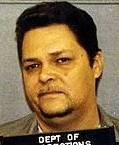
Alan Jeffrey Bannister
Murderer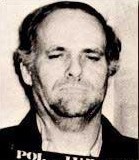 Ervil LeBaron
Murderer · USA · 1972
Ervil Morrell LeBaron (1925 to August 16, 1981) was the leader of a polygamous…
35 victims
Ervil LeBaron
Murderer · USA · 1972
Ervil Morrell LeBaron (1925 to August 16, 1981) was the leader of a polygamous…
35 victims
 Brian Kevin Rosenfeld
Murderer · USA · 1985
Brian Kevin Rosenfeld Brian Kevin Rosenfeld was sentenced to three concurrent l…
23 victims
Brian Kevin Rosenfeld
Murderer · USA · 1985
Brian Kevin Rosenfeld Brian Kevin Rosenfeld was sentenced to three concurrent l…
23 victims
 Marvin Gray
Murderer · USA · 1975
Marvin Gray was convicted killer who claimed responsibility for 23 slayings and…
23 victims
Marvin Gray
Murderer · USA · 1975
Marvin Gray was convicted killer who claimed responsibility for 23 slayings and…
23 victims
 Yahweh ben Yahweh
Murderer · USA · 1980
Yahweh ben Yahweh was born and legally named Hulon Mitchell Jr. (October 27, 19…
23 victims
Yahweh ben Yahweh
Murderer · USA · 1980
Yahweh ben Yahweh was born and legally named Hulon Mitchell Jr. (October 27, 19…
23 victims
 Russell Ellwood
Murderer · USA · 1991
Russell Ellwood was a former taxi driver. Authorities suspected him of killing…
20 victims
Russell Ellwood
Murderer · USA · 1991
Russell Ellwood was a former taxi driver. Authorities suspected him of killing…
20 victims
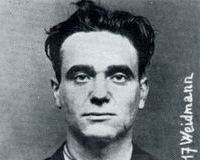 Eugen Weidmann
Serial killer · France · 1937
Eugen Weidmann was executed by guillotine in Versailles, outside the prison Sai…
6 victims
Eugen Weidmann
Serial killer · France · 1937
Eugen Weidmann was executed by guillotine in Versailles, outside the prison Sai…
6 victims
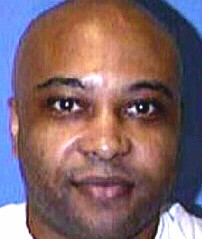 Keith Bernard Clay
Murderer · USA · 1993
Keith Bernard Clay was a defendant in the capital murder case of Melathethil To…
4 victims
Keith Bernard Clay
Murderer · USA · 1993
Keith Bernard Clay was a defendant in the capital murder case of Melathethil To…
4 victims
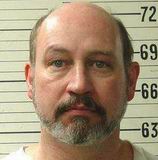 Michael Dale Rimmer
Murderer · USA · 1997
Michael Dale Rimmer was convicted of one count of premeditated murder, one coun…
1 victim
Michael Dale Rimmer
Murderer · USA · 1997
Michael Dale Rimmer was convicted of one count of premeditated murder, one coun…
1 victim
 David Funches
Murderer · USA · 1974
David Livingston Funchess was the petitioner and appellant in federal habeas co…
2 victims
David Funches
Murderer · USA · 1974
David Livingston Funchess was the petitioner and appellant in federal habeas co…
2 victims
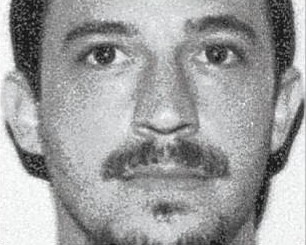 Douglas McArthur Buchanan
Mass murderer · USA · 1987
Douglas McArthur Buchanan Jr. was convicted in Virginia of capital murder for k…
4 victims
Douglas McArthur Buchanan
Mass murderer · USA · 1987
Douglas McArthur Buchanan Jr. was convicted in Virginia of capital murder for k…
4 victims
- Gender
- male
- Country
- USA
- Location
- Jasper County, Missouri, USA
- Date of birth
- J uly 1, 1958
- Age at first offence
- 24
- Characteristics
- murder for hire
- Victim profile
- Darrell Ruetsman (male)
- Method of murder
- Shooting ( .22-caliber pistol)
- Date(s) of murder
- August 20, 1982
- Years active
- 1982
- Date of arrest
- Next day
- Status
-
Executed
Executed by lethal injection in Missouri on October 22, 1997
Overview
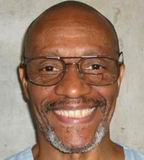
Alan Jeffrey Bannister was convicted of capital murder and sentenced to death for the killing of Darrell Ruestman. The jury found statutory aggravating circumstances including that the murder was committed for the purpose of receiving money and that Bannister had a substantive history of serious assaultive convictions. Bannister was executed by lethal injection in Missouri on October 22, 1997.
Timeline
- Aug. 21, 1982 — Darrell Ruestman was shot once in the heart at the front door of his trailer in Joplin, Missouri.
- Aug. 12, 1982 — Alan Bannister shot and killed Darrell Ruestman in Joplin, Missouri (Newton County).
- Aug. 20, 1982 — Bannister arrived in Joplin, registered at a motel under a different name, paid in advance for two days, visited the trailer park, and returned to befriend a resident, Glenn Miller.
- Aug. 22, 1982 — Police officers arrested Bannister at a Joplin, Missouri bus station.
- Aug. 23, 1982 — Bannister met with Sheriff Joe Abramowitz and officers Don Richardson and Bob Barnett at 10:30 a.m. after being advised of Miranda rights and signing a waiver form.
- Oct. 25, 1982 — A suppression hearing occurred in which Bannister testified that his statements were involuntary because he had been denied medical attention.
- Feb. 3, 1983 — The jury found Bannister guilty of capital murder, and he was sentenced to death on March 10, 1983.
- Mar. 10, 1983 — Bannister was sentenced to death.
- Mar. 15, 1983 — A notice of appeal was filed.
- Nov. 20, 1984 — The Missouri Supreme Court affirmed Bannister’s conviction and sentence.
- Apr. 1, 1985 — The U.S. Supreme Court denied certiorari review.
- July 12, 1985 — Bannister filed a Rule 27.26 motion for post-conviction relief in Circuit Court.
- Dec. 17, 1985 — The Circuit Court denied post-conviction relief.
- July 26, 1986 — The Missouri Court of Appeals for Southern District affirmed the denial of relief.
- July 26, 1987 — Bannister filed a petition for habeas corpus in U.S. District Court for the Western District of Missouri.
- July 19, 1987 — The petition was dismissed without prejudice.
- Feb. 2, 1988 — Bannister filed a second post-conviction relief motion in Circuit Court.
- Apr. 12, 1988 — The second post-conviction motion was denied by the Circuit Court.
- Apr. 13, 1988 — A notice of appeal was filed.
- Sept. 1, 1988 — The Missouri Supreme Court affirmed the denial of relief.
- Oct. 28, 1988 — The U.S. District Court reopened the habeas litigation.
- Aug. 23, 1991 — The U.S. District Court denied the petition for writ of habeas corpus.
- Apr. 30, 1992 — The U.S. District Court denied the Motion to Reconsider.
- May 29, 1992 — Bannister appealed denial of habeas relief.
- Sept. 24, 1993 — The U.S. Court of Appeals for the Eighth Circuit affirmed the denial of relief.
- Oct. 31, 1994 — The U.S. Supreme Court declined review.
- Nov. 1, 1994 — The State requested the Missouri Supreme Court to set an execution date.
- Nov. 15, 1994 — The Missouri Supreme Court set December 7, 1994, as Bannister’s execution date.
- Nov. 29, 1994 — Bannister filed a petition for writ of habeas corpus in federal court.
- Nov. 30, 1994 — The U.S. District Court issued a stay of execution on Bannister’s 1987 petition of habeas corpus.
- Dec. 2, 1994 — The U.S. District Court vacated its November 29 stay of execution.
- Jan. 27, 1995 — The U.S. Eighth Circuit Court of Appeals remanded the case to the District court.
- Sept. 15, 1995 — The U.S. District Court denied relief.
- June 27, 1996 — The U.S. Supreme Court denied review of the case.
- Sept. 24, 1997 — The Missouri Supreme Court set an execution date of October 22, 1997.
- Oct. 22, 1997 — Bannister was executed by lethal injection in Missouri.
- Oct. 1, 1997 — Marshall J. Matthews wrote a letter to Governor Mel Carnahan.
The offence
In 1982, Bannister shot and killed Darrell Ruestman. Ruestman died before police arrived. Police testimony included evidence that Bannister shot Ruestman once in the heart.
Bannister did not deny killing Darrell Ruestman, but he asserted that he did not intend to kill Ruestman.
Background and relationships
In August 1982, Alan Jeffrey Bannister lived near Peoria, Illinois, with Ronald Rick Wooten. Wooten asked Bannister if he would like to make money by killing a man. Wooten explained that the plan involved the man whose wife left him for another man wanting that latter killed.
The plan involved payment to Bannister:
- $4,000 total, including $1,500 in advance, plus the gun and transportation.
Wooten gave Bannister a note on which was written: “Darrell Ruestman, Shady Lane Mobile Home Park, Joplin, Missouri.”
Bannister left by bus for Joplin.
On August 20, 1982, Darrell Ruestman was living in a Joplin trailer park with Linda McCormick, then married to Richard McCormick. McCormick observed Bannister and Glenn Miller in the vicinity of the trailer before the shooting.
Investigation and evidence
In the early morning hours after the shooting, Bannister took a taxicab to the bus station. He was arrested by Joplin and Newton County police officers for the murder of Darrell Ruestman. Bannister was placed in a lineup and was positively identified by Linda McCormick and two other witnesses as the man seen near the Ruestman trailer shortly before the murder.
Bannister revealed various details of the crimes in subsequent statements to the police and led officers to physical evidence. This evidence included the murder weapon and the torn-up note with the victim’s name on it.
Police searched a field next to Ruestman’s trailer on August 22, and recovered a gun, a shell, a shirt, and a baseball cap. At the time of Bannister’s arrest, officers administered a gun residue test and took fingernail, hair, and soil samples. Dr. Philip Whittle testified for the state that the gun recovered at the field was the murder weapon, but he could not link the gun to Bannister. The gun residue test was negative, and there were no identifiable prints on the gun. Tests could not establish the presence of blood on the shirt, baseball cap, or fingernail clippings. Soil sample comparison of soil samples taken from the field and from Bannister’s shoes was described as not an exact comparison by any means.
Arrest and interrogation
Bannister was arrested at a bus station in Joplin, Missouri, around 5:15 a.m. on August 22, 1982. After officers read him his Miranda rights, Bannister told them he would wait to talk to an attorney. Officers took him to the Joplin city jail, where Miranda rights were again advised. Bannister refused to talk and said he wanted to talk to an attorney.
During the discussion of going to a nearby motel to determine if Bannister had registered there, Bannister volunteered that he had registered under an alias. While being transported to the county jail, Bannister asked Officer Marshall Matthews about criminal charges and penalties. Matthews told Bannister he was being charged with capital murder with a penalty of death or life imprisonment. Bannister asked what the penalty would be for a reduced charge and stated “stuck to [his] own profession” when the police car pulled onto the jail parking lot. When Matthews asked what that was, Bannister replied “robbing banks. I never got caught.” Bannister asked whether the Federal Bureau of Investigation (FBI) would be interested in talking to him. Bannister asked to talk to the person in charge, and Matthews took Bannister to Sheriff Joe Abramowitz. Abramowitz advised it would be in Bannister’s best interest to cooperate.
At 10:30 a.m. on August 23, 1982, Bannister met with Abramowitz and officers Don Richardson and Bob Barnett. After being read his Miranda rights, Bannister stated he understood his rights and wanted to talk, then signed a waiver form.
Bannister told the officers he had been living in Peoria, Illinois, with Rick Wooten, that Wooten asked if he would like to make some money killing a man, and that McCormick’s husband wanted Reustman killed and would pay $4,000. Bannister agreed and Wooten gave him a $1,500 down payment, a gun, a bus ticket, and a slip of paper with Reustman’s name and address.
Suppression motion
Before trial, Bannister moved to suppress his statements. At a suppression hearing on October 25, 1982, Bannister asserted the statements were involuntary because he had been denied medical attention for pain from old stab wounds and repeatedly requested medical attention for pain. Officer Richardson testified that Bannister complained about pain but did not ask to stop the interview or to see a doctor. Abramowitz testified that Bannister did not appear to be in pain. The court denied Bannister’s suppression motion.
Trial
The jury convicted Bannister of capital murder. The trial lasted four days, and Bannister did not testify. At the penalty phase, Ray Gordon presented no mitigating evidence and argued against the death penalty on religious grounds.
The jury recommended a death sentence, finding two statutory aggravating circumstances:
- that the murder was committed for the purpose of receiving money; and
- that Bannister had a substantive history of serious assaultive convictions.
Bannister appealed and raised claims including that admission of his statements violated his fifth amendment rights, and other claims regarding Miranda and counsel rights.
Sentencing
The court denied a motion for a new trial and sentenced Bannister to death on March 10, 1983.
Bannister had been initially offered a plea bargain of life plus 50 years, which he refused.
Appeals and post-conviction litigation
Direct appeal
The Missouri Supreme Court affirmed Bannister’s conviction and sentence on November 20, 1984, and analyzed the admissibility of his statements under Edwards v. Arizona. The U.S. Supreme Court denied certiorari review on April 1, 1985.
Post-conviction and habeas proceedings
Bannister filed a Rule 27.26 motion for post-conviction relief on July 12, 1985; it was denied on December 17, 1985. The Missouri Court of Appeals for Southern District affirmed on July 26, 1986.
Bannister filed a petition for habeas corpus in U.S. District Court for the Western District of Missouri on July 26, 1987; it was dismissed without prejudice on July 19, 1987. Bannister filed a second post-conviction relief motion on February 2, 1988; it was denied on April 12, 1988. A notice of appeal was filed April 13, 1988, and the Missouri Supreme Court affirmed denial on September 1, 1988.
The U.S. District Court reopened habeas litigation on October 28, 1988. It denied the habeas petition on August 23, 1991, and denied a motion to reconsider on April 30, 1992. Bannister appealed denial on May 29, 1992. The U.S. Court of Appeals for the Eighth Circuit affirmed denial on September 24, 1993.
The U.S. Supreme Court declined review on October 31, 1994.
Execution dates and stays
On November 15, 1994, the Missouri Supreme Court set December 7, 1994, as Bannister’s execution date. Bannister filed a petition for writ of habeas corpus in federal court on November 29, 1994, and the U.S. District Court issued a stay of execution on November 30, 1994. On December 2, 1994, the U.S. District Court vacated its November 29 stay.
After further proceedings, the U.S. Eighth Circuit Court of Appeals remanded on January 27, 1995. The U.S. District Court denied relief on September 15, 1995.
Federal appellate decisions
The U.S. Court of Appeals for the Eighth Circuit affirmed denial of habeas relief in Bannister v. Armontrout, resulting in a decision dated September 24, 1993 (4 F.3d 1434). The case addressed, among other issues, challenges related to an August 23, 1982 interrogation, psychiatric examination and counsel effectiveness, juror bias claims, parole-related jury questions, evidentiary and instructional penalty phase claims, and due process challenges.
Bannister later appealed another successive petition. The U.S. Court of Appeals for the Eighth Circuit affirmed dismissal of a successive petition in Bannister v. Delo, No. 94-3902, dated January 22, 1997 (100 F.3d 610). The decision addressed motions and claims related to disqualification of Judge Bartlett, guilt-phase actual innocence under Schlup v. Delo, cause and prejudice, Michigan v. Jackson claims, ineffective assistance of counsel, and proportionality review challenges related to missing cases in the Missouri Supreme Court’s data base.
Requests to file successive federal habeas petition under AEDPA
In a separate proceeding, Bannister moved for permission to file another successive federal habeas petition pursuant to AEDPA. The court denied the request and denied a stay of execution, noting without prejudice that Bannister could seek relief in the United States Supreme Court pending resolution of Trest v. Cain. The order reflected the execution currently scheduled for October 22, 1997.
Letters and quoted statements
Last words
Alan Jeffrey Bannister made the following last words: “The State of Missouri is committing as premeditated a murder as possible, far more heinous and deliberate than my crime. Thank you to all of you who have supported me.”
Letter to the Governor
Marshall J. Matthews wrote to Governor Mel Carnahan. The letter included the following remarks:
Dear Mr. Governor, At about 10:20 P.M. Saturday August 21, 1982 I was dispatched to the Shady Lane Mobile Home Park at 4720 South Rangeline in Joplin, Newton County Missouri, to investigate the report of a shooting.
Upon my arrival at lot #6, I found the body of Darrell Ruestman; he may have died a minute before I got there, or when I was checking his body for signs of life.
Seven hours later, I handcuffed Alan Bannister at the Continental Trailways Bus Station in Joplin and advised him he was under arrest for investigation of murder.
Mr. Governor, I'm writing this letter to you trusting that as a man of reason, conscience and wisdom, you will spare the life of Alan Bannister.
I am aware that my appeal to you goes against the position of many people in the Missouri law enforcement community including those I've served with.
The letter also addressed concerns including the officers’ questioning of the means Bannister employed, the absence of a tape recorded or signed confession, the change of venue, the lack of defense resources, and sentence comparison arguments.
The letter concluded:
Most Respectfully Yours, Marshall J. Matthews, Wichita, Kansas
Aftermath and advocacy
Bannister was supported internationally in connection with opposition to the death penalty. The International Bannister Foundation was set up in memory of Alan Jeffrey (A.J.) Bannister on October 22, 1997.
The narrative also included claims that Bannister had spent time on Missouri’s death row and that his execution followed advocacy efforts.
Spotted an error, or have more information about this case?