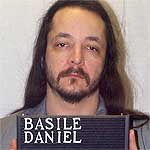
Daniel Anthony Basile
Murderer Brian Kevin Rosenfeld
Murderer · USA · 1985
Brian Kevin Rosenfeld Brian Kevin Rosenfeld was sentenced to three concurrent l…
23 victims
Brian Kevin Rosenfeld
Murderer · USA · 1985
Brian Kevin Rosenfeld Brian Kevin Rosenfeld was sentenced to three concurrent l…
23 victims
 Russell Ellwood
Murderer · USA · 1991
Russell Ellwood was a former taxi driver. Authorities suspected him of killing…
20 victims
Russell Ellwood
Murderer · USA · 1991
Russell Ellwood was a former taxi driver. Authorities suspected him of killing…
20 victims
 Robert Martines Perez
Murderer · USA · 1994
Name: Robert Martines Perez · Other name used in proceedings: Robert Martinez P…
15 victims
Robert Martines Perez
Murderer · USA · 1994
Name: Robert Martines Perez · Other name used in proceedings: Robert Martinez P…
15 victims
 Billy Frank Vickers
Murderer · USA · 1993
Billy Frank Vickers Vickers was executed by lethal injection in Texas on Januar…
14 victims
Billy Frank Vickers
Murderer · USA · 1993
Billy Frank Vickers Vickers was executed by lethal injection in Texas on Januar…
14 victims
 Vernon Sattiewhite
Murderer · USA · 1976
Vernon Sattiewhite, executed by lethal injection in Texas on August 15, 1995, h…
2 victims
Vernon Sattiewhite
Murderer · USA · 1976
Vernon Sattiewhite, executed by lethal injection in Texas on August 15, 1995, h…
2 victims
 Willie Bosket
Homicide · USA · 1978
Willie Bosket was a juvenile who committed robberies and related violent attack…
2 victims
Willie Bosket
Homicide · USA · 1978
Willie Bosket was a juvenile who committed robberies and related violent attack…
2 victims
 Mark Wiles
Murderer · USA · 1985
Mark Wiles was a White male convicted in Portage County of an aggravated murder…
1 victim
Mark Wiles
Murderer · USA · 1985
Mark Wiles was a White male convicted in Portage County of an aggravated murder…
1 victim
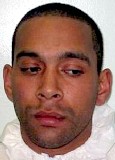 Wayne Edwards
Murderer · United Kingdom · 2009
Wayne Edwards was 33 years old and lived with his grandfather, Paul Peters, in…
1 victim
Wayne Edwards
Murderer · United Kingdom · 2009
Wayne Edwards was 33 years old and lived with his grandfather, Paul Peters, in…
1 victim
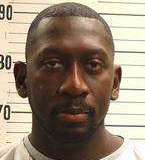 Kennath Henderson
Murderer · USA · 1997
April 26, 1997 — Kennath Henderson was planning an escape from the Fayette Coun…
1 victim
Kennath Henderson
Murderer · USA · 1997
April 26, 1997 — Kennath Henderson was planning an escape from the Fayette Coun…
1 victim
 Gregory Allen Bowen
Murderer · USA · 1985
December 25, 2001 — Gregory Allen Bowen and his friend Mike Colby left Crescent…
3 victims
Gregory Allen Bowen
Murderer · USA · 1985
December 25, 2001 — Gregory Allen Bowen and his friend Mike Colby left Crescent…
3 victims
- Gender
- male
- Country
- USA
- Location
- St. Charles County, Missouri, USA
- Date of birth
- December 5, 1966
- Age at first offence
- 26
- Characteristics
- murder-for-hire
- Victim profile
- Elizabeth DeCaro (female, 28)
- Method of murder
- Shooting
- Date(s) of murder
- March 6, 1992
- Years active
- 1992
- Date of arrest
- 6 days after
- Status
-
Executed
Executed by lethal injection in Missouri on August 14, 2002
Case overview
Daniel Anthony Basile was convicted of first degree murder and sentenced to death for the 1992 shooting death of Elizabeth A. DeCaro. The Supreme Court of Missouri affirmed the conviction and sentence and affirmed the denial of Basile’s post-conviction relief after an evidentiary hearing.
Timeline
- January 10, 1992 — James Torregrossa went to get a tire for his ex-girlfriend at the Old Orchard service station in Webster Groves; Richard DeCaro worked at the station and spoke with Torregrossa about his van payments and about having someone “take it off his hands” and “put a hit on somebody.”
- January 26, 1992 — Richard DeCaro struck Elizabeth DeCaro with their van, knocking her through the garage wall in the kitchen; she sustained severe bruising.
- February 8, 1992 — Basile stole Richard DeCaro’s van, drove it to Jackson, Missouri, and burned it.
- February 28, 1992 — Basile asked Jeffrey Niehaus for a stolen gun that was not traceable.
- March 4, 1992 — Basile showed his half-brother, Doug Meyer, a .22 caliber semi-automatic pistol with pearl-like grips and said he bought it from his father for $100.
- March 5, 1992 — Basile asked Susan Jenkins to get him latex gloves from the doctors offices where she worked.
- March 6, 1992 — Richard DeCaro drove all four of his children and the family dog to the Lake of the Ozarks and checked into the Holiday Inn; Basile told Doug Meyer he could not work because he was working for Richard DeCaro.
- Between 2:00 and 2:30 p.m. (March 6, 1992) — A witness noted the DeCaro garage door was closed; Elizabeth DeCaro left work at 2:20 p.m.
- 3:15 p.m. (March 6, 1992) — A neighbor noticed the garage door was open and that the DeCaro’s Blazer with personalized license plates was in the garage, but no one answered the doorbell.
- 4:15 p.m. (March 6, 1992) — Basile was seen driving the DeCaro’s Blazer in St. Charles.
- Around 6:30 to 7:00 p.m. (March 6, 1992) — Basile called an ex-roommate for a ride and said: “Things went down. I did what I had to do.”
- 7:00 p.m. (March 6, 1992) — Basile called Doug Meyer and asked if Meyer had garage space for Basile to work on his car.
- Just after 8:00 p.m. (March 6, 1992) — The Blazer was spotted heading south on Interstate 270.
- 10:30 p.m. (March 6, 1992) — Basile went to Meyer’s house; they ate pizza before going out for drinks.
- Around 8:00 p.m. (March 6, 1992) — Melanie Enkleman called 911 after finding Elizabeth DeCaro lying face-down in the kitchen floor.
- March 7, 1992 — Basile called Craig Wells and stated: “It looks like I’ve gotten set up.”
- March 9, 1992 — Meyer found the DeCaro’s dismantled Blazer in the garage he had provided for Basile; Meyer helped Basile take parts to the dump, then confronted Basile.
- March 11, 1992 — Meyer contacted the police.
- March 12, 1992 — Basile went to Kenneth Robinson’s trailer and told Robinson he was in trouble because the police thought he had “done the van and the lady”; Robinson contacted the police and police arrested Basile a few hours later.
- May 26, 1994 — Basile was convicted of Murder First Degree in the St. Charles County Circuit Court.
- May 27, 1994 — A jury set punishment as death.
- July 1, 1994 — Basile was sentenced to death for the murder of Elizabeth DeCaro.
- January 17, 1995 — Basile filed a motion for post-conviction relief.
- January 23, 1996 — Basile’s motion for post-conviction relief was denied.
- March 25, 1997 — The Missouri Supreme Court affirmed the conviction and sentence and the denial of post-conviction relief by the Circuit Court.
- October 6, 1997 — Certiorari was denied by the U.S. Supreme Court.
- July 1, 1998 — Basile filed a habeas petition in the U.S. District Court for the Eastern District of Missouri.
- December 16, 1998 — Petition for habeas corpus was denied by the U.S. District Court.
- January 4, 2000 — Basile filed a motion to alter or amend the judgment.
- February 2, 2000 — Motion to alter or amend the judgment was denied.
- January 9, 2001 — The U.S. Court of Appeals for the Eighth Circuit affirmed the denial of habeas corpus.
- November 13, 2001 — Certiorari denied.
- July 2, 2002 — The Missouri Supreme Court set an execution date of August 14, 2002.
- August 14, 2002 — Basile was executed by lethal injection in Missouri at 10:05 p.m. after an execution delay of about 22 hours.
The offence
On March 6, 1992, Elizabeth DeCaro was shot in the home. The Missouri Supreme Court described the victim as lying face-down in the kitchen floor when discovered by Elizabeth DeCaro’s sister, Melanie Enkleman. Enkleman found her after entering the DeCaro home through an open side door in the garage and then through an open door leading into the house. Police later found no signs of forced entry.
Elizabeth DeCaro suffered two gunshot wounds in the back of her neck and bruises on her body. When she was shot, the gun was in contact with her body, and she was either kneeling or lying down. The bullets recovered from her body were .22 caliber.
The court found that Basile had been sought out by Richard DeCaro to steal vehicles and kill Elizabeth DeCaro, and that Basile felt the need to kill Elizabeth DeCaro to avoid her potential disclosure of the insurance fraud scheme and his being sent back to prison.
Background
Initial conversations about the van and arranging a “hit”
The events leading up to the murder began on January 10, 1992, when James Torregrossa went to get a tire for his ex-girlfriend at the Old Orchard service station in Webster Groves. Richard DeCaro worked at the station. Torregrossa and DeCaro knew each other because they both belonged to Gold’s Gym.
DeCaro told Torregrossa that he had heavy payments on his van and asked Torregrossa if he knew of anyone that could “take it off his hands.” In the same conversation, DeCaro asked if Torregrossa knew anyone who could “put a hit on somebody” for him. DeCaro also stated that his wife thought he was having an affair with his secretary and that he would not wish marriage on anyone.
Life insurance policy and the van incident
Ten days later, Richard DeCaro purchased a $100,000 life insurance policy on behalf of his wife, Elizabeth, listing himself as the primary beneficiary. On January 26, 1992, Richard DeCaro struck Elizabeth with their van knocking her through the garage wall into the kitchen, and she sustained severe bruising. The insurance company paid Richard DeCaro over $30,000 as a result of the incident.
Introduction of Basile
In January 1992, DeCaro asked Craig Wells, a manager at the Old Orchard service station, if he knew anyone who could steal his van. Wells introduced DeCaro to Basile, and the two met. DeCaro offered Basile $15,000 to steal the van and kill Elizabeth.
Investigation and evidence
Vehicle and weapon-related evidence
On February 8, 1992, Basile stole the van, drove it to Jackson, Missouri, and burned it. He received $200 for this job.
On February 28, 1992, Basile asked Jeffrey Niehaus for a stolen gun that was not traceable. On March 4, 1992, Basile showed Doug Meyer a .22 caliber semi-automatic pistol with pearl-like grips, and claimed he bought it from his father for $100. On March 5, Basile asked Susan Jenkins to get latex gloves from the doctors offices where she worked.
The jury also received evidence via stipulation that Basile had prior convictions for burglary, stealing and assault. The record further reflected testimony that Basile had strangled his neighbor on one occasion and threatened to kill an ex-girlfriend’s husband.
Events around the murder
On March 6, 1992, Elizabeth DeCaro left work at 2:20 p.m. Between 2:00 and 2:30 p.m., a witness noted that the DeCaro garage door was closed. At 3:15 p.m., a neighbor stopped by and noticed the garage door was open and that the DeCaro’s Blazer with personalized license plates reading “LIZ-RIK” was in the garage, but no one answered the doorbell.
At 4:15 p.m., Basile was seen driving the DeCaro’s Blazer in St. Charles. That evening around 6:30 to 7:00 p.m., Basile called an ex-roommate for a ride stating: “Things went down. I did what I had to do.” At 7:00 p.m., Basile called Doug Meyer and asked if Meyer had garage space for Basile to work on his car. Basile drove the Blazer to Richard Borak’s home in Florissant and gave Borak a “boom box” stereo stolen from the DeCaro residence as a birthday gift, telling Borak that he “did this lady.” Just after 8:00 p.m., the Blazer was spotted heading south on Interstate 270.
At 10:30 p.m., Basile went to Meyer’s house, where they ate pizza before going out for drinks.
Discovery of the body and calls to police
Elizabeth DeCaro had planned to meet her sister, Melanie Enkleman, for dinner at 5:00 p.m. When the victim failed to show up for dinner or answer her telephone, Enkleman and a mutual friend went to the DeCaro home. Enkleman called 911 at around 8:00 p.m.
Police found the victim lying face-down in the kitchen floor. The court found that audio-visual equipment had been removed from the home, but the cables and wires had been carefully unplugged or unscrewed from the walls.
Post-offence statements and arrests
On March 7, 1992, Basile called Craig Wells and stated: “It looks like I’ve gotten set up.”
On March 9, 1992, Meyer found the DeCaro’s dismantled Blazer in the garage he had provided for Basile. Meyer helped Basile take parts of the Blazer to the dump. Meyer realized that the Blazer belonged to DeCaro and confronted Basile. Basile admitted to Meyer that he stole the Blazer.
At trial, Meyer testified that Basile told him “it was either him or her, and he wasn’t going back to jail.” Basile told Meyer that he was a thief, not a murderer. Meyer contacted the police on March 11, 1992.
On March 12, 1992, Basile went to Kenneth Robinson’s trailer and told Robinson that he was in trouble because the police thought that he had “done the van and the lady.” Robinson contacted the police, and police arrested Basile a few hours later.
Recovery of stolen items and related findings
In the investigation, police found a license plate from the stolen and burned van in Cape Girardeau County, and they also found the van itself. The dismantled remains of the DeCaro’s Blazer were found in an apartment garage near Fenton, Missouri. A portable stereo unit was also in the garage. Police later recovered the DeCaro’s stolen “boom box” from Ricky Borak’s apartment.
Arrest
Police arrested Basile on March 12, 1992.
Trial
Conviction and sentencing
A jury found Basile guilty of first degree murder. Basile was sentenced to death, and the jury set punishment as death on May 27, 1994.
Jury aggravating circumstances
In assessing punishment, the jury cited two statutory aggravating circumstances:
- that Basile murdered Elizabeth DeCaro for another for the purpose of receiving money or other things of value, and
- that Basile murdered DeCaro as an agent or employee of Richard DeCaro.
Defence presentation and testimony
Basile did not testify on his own behalf during trial or during the penalty phase. Basile presented the testimony of four witnesses. The court described the defence theory as presenting Basile as only a car thief and as being framed as a murderer.
The record included evidence about Basile’s interactions with Susan Jenkins, including her testimony regarding Basile being observed whispering to his mother about a VCR, which was treated as a defendant’s statement exception but found by the court to lack discernible prejudice.
Prior convictions and other acts
According to a stipulation, Basile had prior convictions for burglary, stealing and assault. The record also included testimony that Basile had strangled his neighbor on one occasion and threatened to kill an ex-girlfriend’s husband.
Appeals
Direct appeal and post-conviction relief
Basile filed a motion for post-conviction relief pursuant to Rule 29.15, and relief was denied after an evidentiary hearing.
The Missouri Supreme Court affirmed both judgments, stating that the circuit court did not err in overruling Basile’s motion for post-conviction relief after an evidentiary hearing. The court affirmed the conviction and sentence at death for the 1992 shooting of Elizabeth DeCaro.
Federal habeas
Basile filed a habeas petition in the U.S. District Court for the Eastern District of Missouri, and the petition was denied. Basile also filed further federal proceedings in the form of appellate and certiorari requests, including denial of certiorari at multiple points in time reflected in the chronology.
Sentencing
Basile received a sentence of death after conviction for first degree murder. The jury found statutory aggravating circumstances relating to murder for receiving money or other things of value and murder as an agent or employee of Richard DeCaro.
Outcome
Basile’s conviction and death sentence were affirmed on appeal. After the delay connected to a last-minute reprieve, Basile was executed by lethal injection in Missouri on August 14, 2002 at 10:05 p.m.
Aftermath
An execution delay occurred after a new alibi witness came forward, prompting Governor Bob Holden to stay the execution. Basile’s planned execution time had been scheduled for 12:01 a.m. Wednesday at the Potosi Correctional Center for the 1992 contract killing of Elizabeth DeCaro.
The delay was described as about 22 hours. The Missouri Supreme Court set the execution date of August 14, 2002 on July 2, 2002.
Basile was described as 35 years old in the account of the reprieve and execution. The execution was carried out following the stay.
Spotted an error, or have more information about this case?