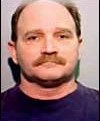
Gregory Allen Bowen
Murderer Brian Kevin Rosenfeld
Murderer · USA · 1985
Brian Kevin Rosenfeld Brian Kevin Rosenfeld was sentenced to three concurrent l…
23 victims
Brian Kevin Rosenfeld
Murderer · USA · 1985
Brian Kevin Rosenfeld Brian Kevin Rosenfeld was sentenced to three concurrent l…
23 victims
 Marvin Gray
Murderer · USA · 1975
Marvin Gray was convicted killer who claimed responsibility for 23 slayings and…
23 victims
Marvin Gray
Murderer · USA · 1975
Marvin Gray was convicted killer who claimed responsibility for 23 slayings and…
23 victims
 Yahweh ben Yahweh
Murderer · USA · 1980
Yahweh ben Yahweh was born and legally named Hulon Mitchell Jr. (October 27, 19…
23 victims
Yahweh ben Yahweh
Murderer · USA · 1980
Yahweh ben Yahweh was born and legally named Hulon Mitchell Jr. (October 27, 19…
23 victims
 Russell Ellwood
Murderer · USA · 1991
Russell Ellwood was a former taxi driver. Authorities suspected him of killing…
20 victims
Russell Ellwood
Murderer · USA · 1991
Russell Ellwood was a former taxi driver. Authorities suspected him of killing…
20 victims
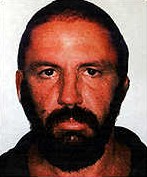 Robert Paul Long
Mass murderer · Australia · 2000
Robert Paul Long was an itinerant fruit-picker who lived in Australia and was d…
15 victims
Robert Paul Long
Mass murderer · Australia · 2000
Robert Paul Long was an itinerant fruit-picker who lived in Australia and was d…
15 victims
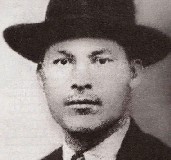 Beltrán Cortés
Murderer · Costa Rica · 1934
21 November 1908 — Beltrán Dalay Cortés Carvajal was born. · 1 June 1928 — Dr.…
4 victims
Beltrán Cortés
Murderer · Costa Rica · 1934
21 November 1908 — Beltrán Dalay Cortés Carvajal was born. · 1 June 1928 — Dr.…
4 victims
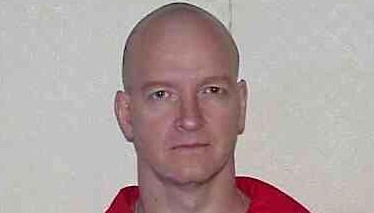 Mitchell Willoughby
Murderer · USA · 1983
Mitchell Willoughby · January 13, 1983 — Two men shot to death Jackqueline Gree…
3 victims
Mitchell Willoughby
Murderer · USA · 1983
Mitchell Willoughby · January 13, 1983 — Two men shot to death Jackqueline Gree…
3 victims
 Ricky Lee Grubbs
Murderer · USA · 1984
Ricky Lee Grubbs — defendant · Jerry Russell Thornton — victim (found dead insi…
1 victim
Ricky Lee Grubbs
Murderer · USA · 1984
Ricky Lee Grubbs — defendant · Jerry Russell Thornton — victim (found dead insi…
1 victim
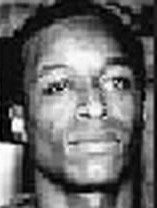 George Waterfield Russell
Serial killer · USA · 1990
George Waterfield Russell (George Russell Jr.) was prosecuted in Washington. Ru…
3 victims
George Waterfield Russell
Serial killer · USA · 1990
George Waterfield Russell (George Russell Jr.) was prosecuted in Washington. Ru…
3 victims
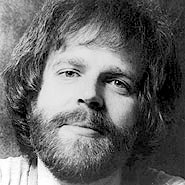 Jerry Harvey
Murderer · USA · 1988
Jerry Harvey (October 28, 1949 – April 9, 1988) was an American screenwriter an…
1 victim
Jerry Harvey
Murderer · USA · 1988
Jerry Harvey (October 28, 1949 – April 9, 1988) was an American screenwriter an…
1 victim
- Gender
- male
- Country
- USA
- Location
- Nevada/Oregon, USA
- Date of birth
- October 20, 1953
- Age at first offence
- 32
- Characteristics
- argument
- Victim profile
- One man / Marjorie Kincaid / Donald Palmer Christiansen, 76
- Method of murder
- Shooting / St abbing with knife
- Date(s) of murder
- 1985 / 2001
- Years active
- 1985–2001
- Date of arrest
- January 3, 2002
- Status
-
Sentenced to death
Sentenced to death in Oregon in 2003; resentenced to death on March 29, 2010
Timeline
- December 25, 2001 — Gregory Allen Bowen and his friend Mike Colby left Crescent City in search of temporary work on the coast.
- December 29, 2001 — Bowen and Colby traveled to Gold Beach.
- December 29, 2001 — The assault on Bowen’s ex-girlfriend, Bridget Dalton, occurred during an argument at Dalton’s house.
- December 29, 2001 — Bowen and Colby went to the home of Donald Christiansen (the victim) and the victim was shot, with his body later discovered by a neighbor.
- January 3, 2002 — Bowen was arrested in Cave Junction and brought back to Curry County.
- April 2, 2003 — A Curry County Circuit Court jury convicted Bowen of two counts of aggravated murder and one of intentional murder.
- April 17, 2003 — The jury deliberated more than five hours before returning an unanimous decision to invoke the death penalty.
- April 17, 2003 — The trial court imposed a sentence of death on both aggravated murder convictions.
- 2006 — The Oregon Supreme Court upheld Bowen’s death sentence but remanded for entry of a corrected judgment of conviction, directing that the two convictions of aggravated murder with death sentences and the conviction for intentional murder should be merged.
- March 10, 2006 — The case was argued and submitted in the Oregon Supreme Court.
- May 11, 2006 — The Oregon Supreme Court decision was filed.
- March 29, 2010 — Bowen was resentenced to death.
- March 31, 2010 — A report stated that Bowen was sentenced a second time.
Background
Gregory Allen Bowen was on death row for the 2001 murder of 76-year-old Don Palmer Christiansen (the victim).
Bowen was convicted by a Curry County Circuit Court jury on April 2, 2003, of two counts of aggravated murder and one of intentional murder. After the penalty-phase deliberations, the jury unanimously agreed to invoke the death penalty.
The offence
On December 29, 2001, Bowen and his associate, Mike Colby, traveled to Gold Beach, where they began experiencing problems with their vehicle. While in Gold Beach, Bowen decided to visit his ex-girlfriend, Bridget Dalton. After arriving at Dalton’s house, Bowen told her that he wanted to pick up some extra clothes and give her money that he owed her. After entering the house, however, Bowen and Dalton began to argue.
During that argument, Bowen struck Dalton in the face with his fist, knocking her to the floor. He then grabbed Dalton by her hair, pulling her up from the floor, and proceeded to hold a knife to her throat. Bowen then took Dalton into the bedroom and exchanged his knife for a black-powder pistol, which he used to repeatedly beat Dalton. During the altercation, Dalton grabbed the barrel of the pistol and cut her hand on the gunsights.
Shortly thereafter, someone knocked on Dalton’s front door. Bowen told Dalton that, if she made a sound, he would shoot the person at the front door. After Bowen left the bedroom to check the front door, Dalton escaped the house by jumping through a bedroom window and ran to her neighbor’s house. Dalton yelled for someone to call the police.
After Bowen and Colby fled, Bowen and Colby visited their heroin supplier, but discovered the supplier was not home. They then traveled to the home of Donald Christiansen (the victim). Upon arriving at the victim’s house, Colby and Bowen left their vehicle running and met the victim on his front porch. The victim allowed them inside, and all three men sat down at the kitchen table.
While seated, Bowen removed the black powder pistol from his pocket and placed it on the kitchen table. Bowen asked the victim if he had any money; the victim answered "no," which prompted Bowen to inquire about a bowl of money sitting on the counter. The victim informed Bowen that the bowl contained only coins. The victim and Bowen got up from the kitchen table and moved to the living room to talk. Bowen left the pistol on the kitchen table. Colby remained at the kitchen table until he heard the vehicle making strange noises outside. Bowen asked Colby to step outside and check on it, and Colby then remained outside to smoke a cigarette.
Bowen testified that after returning to the kitchen and while Colby was outside, he informed the victim about his earlier altercation with Dalton. The victim offered to call the police and encouraged Bowen to turn himself in. As Bowen prepared to call the police, Bowen testified that Bowen grabbed the gun and said, "If you call 911[,] I may as well just shoot myself and get it over with." Bowen testified that the victim attempted to take the gun away from him and during the struggle the gun accidentally went off. The bullet entered the victim's chest above his left nipple and traveled downward, deflected off a rib, and pierced the victim's heart and liver.
After hearing the gunshot, Colby rushed back inside. Colby saw the victim on the floor and heard Bowen tell the victim that "It will be over shortly. I got you in the heart." Colby asked, "Fuck, Buck, what happened?" In response, Bowen looked at Colby and asked, "Are you all right with this?" Colby then went outside to the vehicle and waited. Soon thereafter, Colby watched Bowen come out of the victim’s house carrying several guns and a box with a phone in it. After leaving the victim's home, Bowen and Colby returned to Crescent City in search of heroin.
A neighbor discovered the victim’s body the following day and called the police. A police officer arrived and determined that the victim was "obviously deceased" and that the scene revealed "obvious foul play." Several other police officers arrived, took photographs, turned the body over, and cut open the victim's shirt with a pair of scissors. Police discovered blood splatter low on the wall and framing of the doorway between the living room and kitchen, low-angle blood splatter on and under a cart just inside the kitchen, and blood smears on the kitchen floor and on a white telephone. The officers indicated that the home appeared "appropriately cluttered" and displayed no evidence of ransacking.
Bowen was convicted on the theory that he intentionally and personally caused the death of the victim during a robbery and and also intentionally and personally caused the death of the victim during a burglary. The state subsequently charged Bowen in an 18-count indictment as a result of the crimes that occurred on the night of December 29, 2001, with one group involving Dalton and the second group involving the victim. Bowen pleaded guilty to all charges involving Dalton.
The verdicts in the guilt phase included convictions related to aggravated murder, first-degree theft, and theft in the second degree, and the case proceeded to a penalty-phase proceeding based on the aggravated murder verdicts.
In the original trial, the jury deliberated for three hours before finding Bowen guilty of all charges, including two counts of aggravated murder, three counts of first-degree theft, and one count of theft in the second degree. The jury then deliberated more than five hours before returning a unanimous decision to invoke the death penalty.
Investigation
Police officers determined the victim was "obviously deceased" and that the scene revealed "obvious foul play." The officers took photographs, turned the body over, and cut open the victim's shirt with a pair of scissors. The officers discovered blood splatter low on the wall and framing of the doorway between the living room and kitchen, low-angle blood splatter on and under a cart just inside the kitchen, and blood smears on the kitchen floor and on a white telephone. They indicated that the home appeared "appropriately cluttered" and displayed no evidence of ransacking.
During the subsequent investigation and trial proceedings, evidence described the presence and handling of the black-powder pistol, injuries to Dalton, the confrontation at Dalton’s house, the subsequent events at the victim’s house, and Bowen’s relationship with Colby.
Arrest
Bowen was arrested on January 3, 2002 in Cave Junction and brought back to Curry County.
Trial
Bowen was convicted on April 2, 2003 by a Curry County Circuit Court jury of two counts of aggravated murder and one of intentional murder. Bowen was convicted of the shooting death of Christiansen in his Gardner Ridge home on December 29, 2001. At the original trial, the jury deliberated for three hours before finding Bowen guilty of all charges, including two counts of aggravated murder, three counts of first-degree theft, and one count of theft in the second degree.
Defense attorneys Robert Able and Corrine Lai worked to convince the jury to find Bowen guilty of one of two other possible lesser crimes—intentional murder or first-degree manslaughter—neither of which would carry the threat of a death penalty.
During the penalty phase, the jury members deliberated more than five hours before returning an unanimous decision to invoke the death penalty. The jury answered "yes" to the statutory questions submitted to it on each count.
A witness in the trial was Bridget Dalton of Harbor. Bowen pleaded guilty in a separate hearing to attempted murder and assault against Dalton, committed before going to Christiansen’s home.
During testimony, days before and after the murder were recounted, including that Bowen and Colby drove from Crescent City, Calif., to Portland and back, stopping along the way at towns along the coast to look for drugs and work, and finally ending up in Cave Junction where the arrest took place.
Pretrial issues (appellate discussion)
Bowen maintained that the trial court erred in overruling his objections to photographs depicting evidence of his crimes against Dalton. The photographs consisted of images of injuries to Dalton’s face, head, hand, and legs, taken prior to Dalton receiving medical treatment. The trial court sustained Bowen’s objections to four photographs but allowed the state to introduce the balance of the photographs. The trial court concluded that the photographs were relevant and that testimony would be relevant to the demeanor Bowen showed toward Dalton at that time because it related to the violence Bowen showed at the time and because the black-powder revolver belonged to Dalton on the same date in the same area of Curry County where the victim was killed.
Bowen also argued that the trial court erred by requiring him to wear a "stun belt" during the trial without first holding a hearing and finding such control was necessary. Bowen conceded he did not object to wearing the stun belt or request findings, and the appellate court determined he failed to satisfy requirements for plain error review because he could not show the stun belt affected his ability to assist in his defense and there was no evidence the stun belt was visible to the jury.
Bowen also contested denial of motions regarding Count one, including assertions that the indictment failed to allege sufficient facts to constitute aggravated murder based on burglary, including argument that ORS 163.095(2)(d) required the indictment to allege that Bowen actually committed a crime listed in ORS 163.115(1)(b).
Guilt-phase evidentiary and instructional issues (appellate discussion)
Bowen challenged restrictions on testimony of his forensic expert regarding whether the bullet that entered the victim’s body would have inflicted a fatal injury if it had not deflected off the victim’s rib. In the appellate discussion, the court addressed objections sustained by the trial court to questions posed to expert Sweeney, including questions about what would have occurred if there were no deflection, concluding the issue was not adequately preserved due to absence of an offer of proof and because Bowen did not argue the ORCP 59 E comment-on-evidence claim at trial.
Bowen also challenged cross-examination about his prior felony convictions. He acknowledged convictions including unauthorized use of a vehicle in California, attempted arson in Nevada, and accessory to murder after the fact in Nevada. He later stated "I'm also -- I also * * *," but defense counsel stopped him with "No." When asked "[W]hat other felonies have you been convicted of?" Bowen replied, "I've also been convicted of a Manslaughter charge in 1981." A discussion occurred in which the trial court instructed the jury to disregard any convictions that occurred prior to fifteen years from the relevant date. The prosecutor later stated that he was trying to elicit a felony conviction in 1998 in California for receiving stolen property but clarified his misunderstanding after reading a certified copy incorrectly; he later stated that there was no other felony within the fifteen years and characterized his mistake as asking for other felonies. The trial court denied the motions for mistrial and gave the jury cautionary instructions explaining that prior convictions could be used only for credibility and not propensity.
Bowen argued the trial court erred in refusing instructions and verdict form changes regarding lesser-included offenses. He sought instructions that manslaughter be included as a lesser-included offense with respect to aggravated murder counts. The trial court declined to include first-degree manslaughter as a lesser-included offense under the aggravated murder counts, but did instruct that when the jury deliberated it should first consider Murder and only consider Manslaughter in the First Degree if the jury found the defendant not guilty of the charged Murder offense. The appellate court concluded the trial court’s error, though acknowledged, was harmless when instructions were considered as a whole.
Sentencing
At the subsequent sentencing hearing after the aggravated murder verdicts, the trial court imposed a sentence of death on both aggravated murder convictions.
Resentencing in 2010 (appellate and case summary)
Bowen was scheduled to return to Curry County for Monday’s sentencing but later decided to appear by television from the state prison. When time came for sentencing, he changed his mind and refused to appear. His court-appointed attorney, Steven Gorham of Salem, telephoned the prison and Bowen agreed to appear by conference call.
Judge Jesse Margolis told Bowen: "You understand the court has the ability to cause you to be transported for personal appearance." Gorham made several motions, including a motion for a new trial and a motion for Margolis to sentence Bowen to life with the possibility of parole. Margolis denied all the motions.
Margolis told Bowen: "You are allowed to address the court if you wish. It isn’t a time you can argue you innocence." Bowen responded: "I’m not guilty of aggravated murder," and "I’m not guilty of murder at all."
In the penalty phase of the original trial, the trial court stated that "These three counts will merge into one count. There was a penalty phase in which the jury unanimously agreed. Gregory Allen Bowen is hereby sentenced to death."
At resentencing, the court followed the instructions of the Oregon Supreme Court, including the sentence of death, and merged the relevant counts into one count with the jury unanimity in the penalty phase.
The victim’s son, Donald, spoke to the court, also by telephone: "I feel no forgiveness for my father’s murder." Christiansen said the murder "gave him bragging rights of what a cold-blooded murderer he is." Christiansen also said: "I was at his appeal in Eugene. I was at his trial. And I’ll be at his appeal in 2011 in Eugene." He stated: "he had plotted to break out and was threatening the death of (Detective) Dave Gardiner. Gregory Bowen is a natural born predator." Judge Margolis said: "This court shall follow the instructions of the Supreme Court, which includes the sentence of death," and "These three counts will merge into one count." The court stated: "There was a penalty phase in which the jury unanimously agreed.
In resentencing proceedings, the state and Bowen continued to address issues arising from the prior trial’s determinations and the Supreme Court’s remand instructions.
At sentencing for Count III, the trial court stated: "As to Count III, that is the Intentional Murder [Count], obviously that cannot be imposed should the Aggravated Murder death sentence be carried out. However, as we're all aware, there's going to be a long and lengthy process of appeal in this particular case so I am going to go ahead and sentence you on Count III which may avoid coming back here if they set aside Count I and II's sentence for any particular reason."
The trial court entered judgment on Count III sentencing Bowen to a term of imprisonment of 300 months, followed by post-prison supervision for the rest of defendant's life, to be served consecutively to the sentences imposed on the other counts.
Appeals
The case went on automatic and direct review of judgments of conviction and sentences of death imposed by the Curry County Circuit Court.
Oregon Supreme Court holdings and remand (2006)
In 2006, the Oregon Supreme Court affirmed Bowen’s convictions and sentences of death but remanded for entry of a corrected judgment consistent with the opinion. The court stated it affirmed "defendant’s convictions and sentences of death" and remanded for corrected judgment.
The Oregon Supreme Court addressed pretrial issues and guilt-phase assignments of error, including rulings relating to photographs of Dalton’s injuries, the stun belt issue, Count one indictment arguments, restrictions on expert testimony, cross-examination on prior convictions, jury instructions on lesser-included offenses, and the denial of a mistrial and other objections.
The Oregon Supreme Court also addressed penalty-phase assignments of error including evidence regarding Bowen’s role in a prior murder.
The Oregon Supreme Court concluded that the trial court erred by entering separate convictions and sentences of death for aggravated murder on Counts one and two for the same victim, and that the error was apparent on the face of the record. The Supreme Court agreed that the trial court should have entered one judgment of conviction for the aggravated murder of the victim, enumerating separately each aggravating factor and imposing one sentence of death. The Supreme Court reversed the judgments of conviction for aggravated murder on Counts one and two, vacated the sentences of death imposed on those convictions, and remanded for corrected judgments and resentencing.
The Oregon Supreme Court also concluded that the trial court erred in not merging Bowen’s conviction of intentional murder (Count three) with his convictions of aggravated murder for the death of the same victim, and that the error was apparent on the face of the record. The Supreme Court reversed the judgment of conviction for intentional murder on Count three, vacated the sentence imposed on that conviction, and remanded for entry of a corrected judgment and resentencing.
The Oregon Supreme Court indicated it remanded for a corrected judgment reflecting Bowen’s guilt on the charge of aggravated murder based upon alternative aggravating factors and intentional murder, with one sentence of death.
Other details
Pretrial and trial participants and evidence
The prosecutor’s and defense attorneys’ names in portions of the appellate record included Robin A. Jones, Senior Deputy Public Defender, as counsel for appellant, and Hardy Myers as Attorney General, with Mary H. Williams as Solicitor General, Carolyn Alexander and Steven R. Powers as Assistant Attorneys General, arguing for respondent. The trial court judge in the resentencing proceedings was Judge Jesse Margolis. In the Oregon Supreme Court decision, Richard K. Mickelson was identified as a judge. DE MUNIZ, C. J. was identified as the author of the opinion in the Oregon Supreme Court proceedings.
An investigator named Christopher Bubel testified in an effort by the defense to rebut the state’s theory regarding Bowen’s involvement in the 1985 murder of Marjorie Kincaid. The appellate discussion noted that the trial court sustained the prosecutor’s objection on hearsay grounds and found the proposed testimony would be based on information the investigator had no personal knowledge of. The trial court offered the defense an opportunity to put the evidence on the record through an offer of proof; Bowen never made that offer of proof.
During the penalty phase, Dennis Ray Wright testified about the Kincaid murder. Wright testified that Bowen admitted raping and murdering Marjorie Kincaid. Wright also testified that Bowen told him how he committed the crime and how he had attempted to destroy incriminating evidence. Wright further testified that Bowen told him that when the state failed to convict him, he was going to kill another woman and "make her squeal just like the pig did -- the other pig that he killed."
Testimony and roles regarding Dalton
Bowen testified that he informed the victim about his earlier altercation with Dalton. Dalton escaped through a bedroom window after Bowen went to check the front door. She yelled for someone to call the police as she ran to her neighbor’s house.
Witness reference
The appellate discussion identified a witness at trial as Bridget Dalton of Harbor.
Evidence described in the appellate record
During the guilt phase, it was described that the bullet entered the victim's chest above his left nipple, traveled downward through tissue under his skin, struck his left sixth rib, and was deflected to the right and through the victim’s heart and liver. It was also described that clothing worn by the victim did not contain any gunshot residue and the state forensic expert testified the victim had been shot from a distance of more than five feet.
Prior convictions discussion
Bowen’s prior felony convictions were addressed, including unauthorized use of a vehicle in California, attempted arson in Nevada, and accessory to murder after the fact in Nevada, and his acknowledgement that he had been convicted of a manslaughter charge in 1981. The appellate record also discussed restrictions on the use of convictions within a 15-year period and the court’s instructions to disregard any convictions outside that period.
Limiting instructions and mitigation evidence
Bowen requested a limiting instruction regarding evidence of his involvement in the Kincaid murder, arguing the jury should consider it only for future dangerousness, but the trial court rejected the proposed instruction, concluding it was erroneous because it would prevent the jury from considering aggravating evidence as permitted under Oregon’s death penalty statute requirements.
Bowen also challenged the trial court’s decision to sustain the state’s relevance objection to testimony from his former girlfriend, Cheryl Keil, about whether the jury should impose the death penalty. The appellate court concluded Bowen did not sufficiently tie Keil’s testimony to the criteria set out in ORS 163.150 and upheld the trial court’s instruction to disregard Keil’s answer.
Sentencing merge issues identified on appeal
The Oregon Supreme Court addressed errors involving merger and separate sentences of death for aggravated murder, and separately a failure to merge intentional murder with aggravated murder convictions for the same victim, resulting in reversals, vacaturs, and remands for corrected judgments and resentencing.
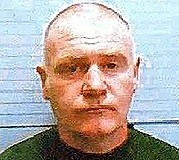
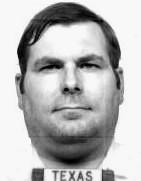
Spotted an error, or have more information about this case?