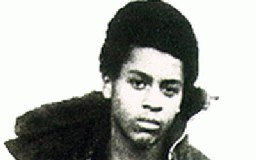
Willie Bosket
Homicide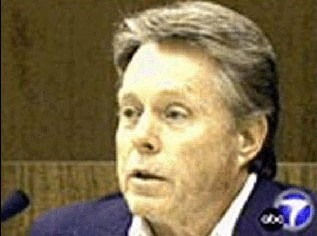 Edward Charles Allaway
Homicide · USA · 1976
Edward Charles Allaway Edward Charles Allaway was found not guilty by reason of…
7 victims
Edward Charles Allaway
Homicide · USA · 1976
Edward Charles Allaway Edward Charles Allaway was found not guilty by reason of…
7 victims
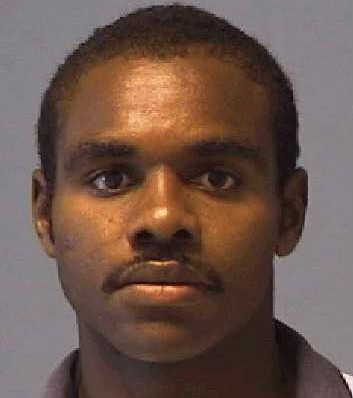 Clinton Bankston
Homicide · USA · 1987
15 August 1987 — Ann Morris (63), her sister Sally Nicholson (59), and Sally’s…
5 victims
Clinton Bankston
Homicide · USA · 1987
15 August 1987 — Ann Morris (63), her sister Sally Nicholson (59), and Sally’s…
5 victims
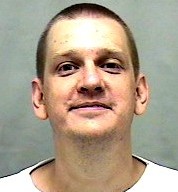 David Francis Brom
Homicide · USA · 1988
David Francis Brom (born October 3, 1971) killed his parents, brother, and sist…
4 victims
David Francis Brom
Homicide · USA · 1988
David Francis Brom (born October 3, 1971) killed his parents, brother, and sist…
4 victims
 Elizabeth Fenning
Attempted murder? · United Kingdom · 1815
Elizabeth Fenning was executed by hanging on July 26, 1815. Elizabeth Fenning (…
0 victims
Elizabeth Fenning
Attempted murder? · United Kingdom · 1815
Elizabeth Fenning was executed by hanging on July 26, 1815. Elizabeth Fenning (…
0 victims
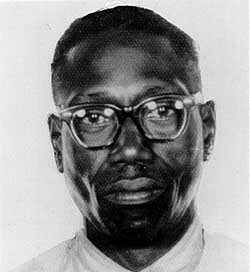 Monroe Hickson
Spree killer · USA · 1946
Monroe Hickson was a native of South Carolina. He was nicknamed "Blue Boy". He…
4 victims
Monroe Hickson
Spree killer · USA · 1946
Monroe Hickson was a native of South Carolina. He was nicknamed "Blue Boy". He…
4 victims
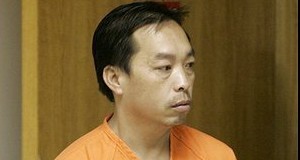 Chai Soua Vang
Mass murderer · USA · 2004
Chai Soua Vang (born September 24, 1968) shot several deer hunters in northern…
6 victims
Chai Soua Vang
Mass murderer · USA · 2004
Chai Soua Vang (born September 24, 1968) shot several deer hunters in northern…
6 victims
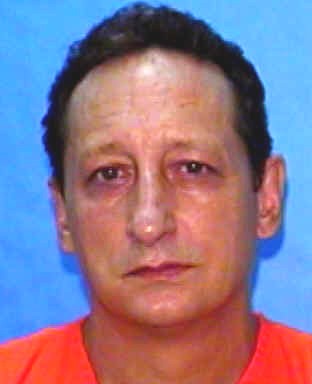 Paul William Scott
Murderer · USA · 1978
Defendant: Paul William Scott · Also known as / aliases: Steven William Prince;…
1 victim
Paul William Scott
Murderer · USA · 1978
Defendant: Paul William Scott · Also known as / aliases: Steven William Prince;…
1 victim
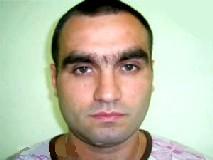 Vladimir Mirgorod
Serial killer · Russia · 2002
Vladimir Mirgorod was sentenced to life in prison for killing at least sixteen…
16 victims
Vladimir Mirgorod
Serial killer · Russia · 2002
Vladimir Mirgorod was sentenced to life in prison for killing at least sixteen…
16 victims
- Gender
- male
- Country
- USA
- Location
- New York City, New York, USA
- Date of birth
- December 9, 1962
- Age at first offence
- 16
- Characteristics
- juvenile (15), armed robbery, arson, rape, robbery
- Victim profile
- Noel Perez , 44 / Moises Perez (no relation to his first victim)
- Method of murder
- Shooting
- Date(s) of murder
- March 19/27, 1978
- Years active
- 1978
- Date of arrest
- —
- Status
-
Life imprisonment
Pled guilty on two counts as juvenile, 1978; released 1983; sentenced to three to seven years for attempted robbery, 1984; sentenced to 25 years to life for arson and assaults in prison, 1987; sentenced to 25 years to life for stabbing fellow inmate, 1989
Case overview
Willie Bosket was a juvenile who committed robberies and related violent attacks, including shootings during attempted robberies, attacks in custody, and arson in prison.
He was considered by many to be New York's most dangerous inmate and was kept in near-solitary confinement in three cells. He was incarcerated for a term of five years for a casual double murder on the New York City Subway at age 15. He was later serving essentially the rest of his life in prison after additional violent attacks on guards and staff.
Timeline
- Sunday, March 19, 1978 — Bosket, then fifteen years old, shot dead Noel Perez on the New York subway during an attempted robbery.
- Eight days later (1978) — Bosket shot another man, Moises Perez (no relation to his first victim), in another attempted robbery.
- 1978 — Bosket pled guilty on two counts as juvenile.
- 1983 — Bosket was released.
- 1984 — Bosket was sentenced to three to seven years for attempted robbery.
- 1987 — Bosket was sentenced to 25 years to life for arson and assaults in prison.
- 1989 — Bosket was sentenced to 25 years to life for stabbing fellow inmate.
- As of March 2011 — Bosket was housed in a special cell at Woodbourne Correctional Facility.
- 2062 — Bosket would not be eligible for parole until this year.
The offence
Subway shootings during attempted robberies
On Sunday, March 19, 1978, Willie Bosket, then fifteen years old, shot dead Noel Perez on the New York subway during an attempted robbery.
Eight days later, Bosket shot Moises Perez (not related to the first victim) in another attempted robbery.
In connection with the subway killings described in the material, Bosket was also linked to other violent robberies over the following days, including:
- Bosket and Herman Spates pulled three more violent robberies over the course of the next three nights.
- They got twelve dollars from a man they had kicked down the steps to the A train station.
- They shot 57 year-old Matthew Connolly in the hip when he resisted them.
- On Monday, March 27th, 1978, Bosket and Herman Spates jumped the turnstile on 135 th Street and entered the last car of an uptown train with only one passenger, described as a Hispanic man in his late thirties. Bosket demanded the man's money, the man said he did not have any, and Bosket pulled the trigger, after which the man slid from his seat to the floor and blood pooled around him. Bosket then went through the man's pockets and found two dollars. The man's wallet revealed his name as Moises Perez (no relation to Willie’s first victim).
Attempted robbery and prison violence
After Bosket’s release, the material described an arrest after a man living in his apartment complex claimed Bosket had robbed and assaulted him, followed by assaults while awaiting trial.
The material further described multiple prison assaults and arson, including assaulting a guard with a chain and stabbing another, and stated that he set fire to his cell and attacked guards.
Investigation
Detective Martin Davin of the Sixth Homicide Zone investigated the recent subway killings. The material described:
- There was talk of a serial killer on the loose and increased pressure due to that.
- The fact that Moises Perez's wallet had been found indicated the killer might be from the neighborhood.
- A computer search brought up Willie Bosket and Herman Spates, picked up for the shooting of Matthew Connolly.
- Willie and Herman had not been identified at earlier point, so they had been released, but because of repeat arrests, Davin thought they should be checked out.
- Davin decided to go after Herman, who was 17, while Willie was described as a juvenile at 15 and Davin planned to be careful due to holding a juvenile too long risking the case being thrown out.
Arrest and custody events
Arrest of Bosket and his family’s involvement
Some ambitious transit cops grabbed Willie on the street and brought him in, requiring Davin to find Herman quickly. Herman was found with his probation officer and willingly accompanied Davin.
Herman initially insisted it was Willie who shot the man, claimed he was asleep in a movie theater, and spilled the beans on the previous murder and revealed the whereabouts of the gun. The detectives got a search warrant and ran into Willie’s mother on her way out the door; she reluctantly showed them where the gun was.
The material described that Willie was questioned and immediately threatened the district attorney and then blundered by admitting he had the gun.
Later escape attempt and release-related arrest
The material stated that Bosket was sent to state prison for four years after trying to break out of the youth facility, and was released in 1983.
After 100 days, Bosket was arrested when a man living in his apartment complex claimed Bosket had robbed and assaulted him.
While awaiting trial, Bosket assaulted several court officers.
Trial
Family Court trial for the subway murders
Bosket was tried in the New York City Family Court. Judge Edith Miller presided. The material described:
- The trial was held in the Family Court building on Lafayette Street in lower Manhattan.
- Bosket was charged with three separate felonies: two counts of murder and one of attempted murder, meaning three different trials.
- Judge Edith Miller had seen Bosket before and thought him too bright to be in so much trouble, but this time in court he was described as belligerent to the point of needing restraint, and his foul-mouthed manner surprised her.
- The material described Bosket forcing the widow of Moises Perez to testify that it was indeed her husband’s body she had identified.
- At Spofford Juvenile Center, Bosket had stabbed another boy with a fork, hit a counselor in the face, and choked a psychiatrist.
- Bosket approached his trials with detachment and did not realize he was going through a new procedure different from only two years earlier.
- As the trials went along, Bosket tired of it and impulsively told his surprised lawyer to enter a plea of guilty.
- Silbering insisted Bosket must plead to all three counts, which Bosket did.
Another pro se trial for assault and related charges
The material described Bosket demanding to be his own lawyer and putting on a show such that the jury found him not guilty. It also described that he was tried for attempted murder after stabbing a guard with a home-made knife and was given another life sentence.
Sentencing
Initial juvenile sentences
After the Family Court plea described in the material, Bosket was placed with the Division of Youth for a maximum sentence of five years, described as the maximum sentence for someone of his age.
The stated status and sentencing outcomes included:
- Pled guilty on two counts as juvenile, 1978.
- Released 1983.
Subsequent sentences
The stated sentencing outcomes included:
- Sentenced to three to seven years for attempted robbery, 1984.
- Sentenced to 25 years to life for arson and assaults in prison, 1987.
- Sentenced to 25 years to life for stabbing fellow inmate, 1989.
Appeals
No appeals information was included in the provided material.
Outcome
Bosket remained incarcerated following the series of juvenile and later prison sentences described above. The material stated he would not be eligible for parole until 2062 and described his long-term isolation and restrictions in custody.
Other details
People mentioned
- Noel Perez — described as the victim whom Bosket shot dead on the New York subway on Sunday, March 19, 1978.
- Moises Perez — described as the victim shot in another attempted robbery; the material also referred to the victim’s widow who identified the body.
- Herman Spates — Bosket’s cousin in the material; described as accompanying him and later telling detectives about prior events and the location of the gun.
- Anthony Lamorte — described as a motorman whose CB radio and money were believed to be targeted; the material described Lamorte approaching and then being shot during the robbery attempt.
- Matthew Connolly — described as a victim shot in the hip when he resisted during robberies described in the material.
- Detective Martin Davin — described as the Sixth Homicide Zone detective investigating the subway killings.
- Judge Edith Miller — described as the judge who presided over Bosket’s Family Court proceedings.
- Assistant D. A. Robert Silbering — described as the assistant district attorney who acquired Bosket’s case.
- Governor Hugh Carey — described as responding publicly to the sentence and supporting the Juvenile Offender Act of 1978.
- Jo Allison Henn — described as a lawyer who helped represent Bosket roughly 20 years earlier when he fought unsuccessfully to have restrictions removed.
- Erik Kriss — described as a spokesman for the State Department of Correctional Services.
- Linda Foglia — described as a spokeswoman for the corrections department.
- Fox Butterfield — described as a New York Times reporter who wrote All God's Children: The Bosket Family and the American Tradition of Violence.
- John Eligon — described as author of Two Decades in Solitary in The New York Times (September 22, 2008).
- Richard Behar — described as author of a Time.com piece titled "I Won't Kill, I'll Just Maim" (Monday, May. 29, 1989).
- Thomas Coughlin III — described as New York's commissioner of correctional services.
- Robert Silbering — described as a former prosecutor who tried Bosket for the subway murders (name appears in the material alongside reference to Silbering in other contexts).
- Cheryl Stewart — described as Bosket’s sister.
- Adam Mesinger — described as a television and movie producer who had visited Bosket.
- Sharon Hayward — described as a woman Bosket met after his release and planned to marry; described as having a child.
Stated birth and identity details
The material stated that:
- Willie James Bosket was born on December 9, 1962.
- Bosket said he was “not Willie Bosket, but Bobby Reed” during sentencing proceedings.
Inmate identification and confinement details
The material stated that:
- Bosket had NYSDOCS inmate number 84A6391.
- As of March 2011, Bosket was housed in a special cell at Woodbourne Correctional Facility.
- The material described spending 23 hours a day in a 9-by-6-foot cell, with a cot and a sink-toilet combination.
- It stated his visitors had to wedge into a nook outside his cell and speak through a 1-by-3-foot window of foggy plexiglass and iron bars.
- It described that he was scheduled to remain isolated from the general prison population until 2046.
- It described four video cameras tracking him and shackling during movement outside his cell.
Prison restrictive measures described in the material
The material described:
- A special dungeon at the upstate Woodbourne Correctional Facility.
- His room lined with Plexiglas and three video cameras tracking him constantly.
- Visitors being handled with chaining during calls.
- Constraints such as no electrical outlets, no television, and no newspapers.
- Four video cameras and being under surveillance at all times.
- The recreation area measuring 34 feet by 17 feet, surrounded by nearly 9-foot-high walls with bars on the top.
- A statement that he was entitled to three showers a week and had one hour of recreation a day, also solitary.
- The material described that he could leave his cell only for medical visits and haircuts.
- The material described that some accounts said he was chained during recreation and could not walk more than six feet, while corrections officials disputed that account, saying he was allowed to roam freely during his hour.
Quotes included
“Everything is the same every day. This is hell. Always has been.”
Bosket said it during an interview at Woodbourne Correctional Facility.
“Just blank”
Bosket described his existence as that.
“He is a very dangerous person; he’s killed people,” said Jo Allison Henn.
“I’m not saying he should be released from custody entirely, just the custody that he is in. It is beyond inhumane. I don’t think that too many civilized countries do that.”
Jo Allison Henn said this.
“This guy was violent or threatening violence practically every day,” Mr. Kriss said.
“Granted, it has been a while, but there are consequences for being violent in prison. We have zero tolerance for that.”
Erik Kriss said this.
Bosket described his existence this way.
“I’m really a loving and caring person,” he protests.
Bosket said this.
“I hunger for knowledge. My pain and suffering have stroked my ability to be intellectual. If the system wasn't so quick to incarcerate me as a child, I could have become a well-known attorney. I could have been a Senator.”
Bosket said this.
“Willie Bosket is gonna keep striking,” he says.
“If they / bring back the death penalty, I won't kill. I'll just maim. I want to live every day I can just to make them regret what they've done to me.”
Bosket said this.
“Did you get that picture? Did you get that on film?”
Bosket shouted to photographers in the material.
“I’m not broken down and never will be.”
Bosket said this.
“I’d rather be dead.”
Bosket said this.
“When you’re in hell,” he said, “you can’t predict the future.”
Bosket said this.
“What was done was wrong, and if he could redo it, he wouldn't do it again,” she said.
Cheryl Stewart said this.
“He knows what was done was wrong and is just sorry for what all has went down.”
Cheryl Stewart said this.
“I have no fear of him,” Mr. Mesinger said.
“I don’t think he would ever harm me. I don’t think he ever really wants to harm anybody.”
Adam Mesinger said this.
“When Willie’s father a controversial event).
The material included this phrase without a complete quote attribution.
Motive and description tags
The material assigned:
- Motive: PC/CE
- A description that Bosket killed teenage boy in fight and shot men in petty robberies.

Spotted an error, or have more information about this case?