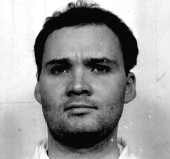
James Lee Beathard
Murderer Brian Kevin Rosenfeld
Murderer · USA · 1985
Brian Kevin Rosenfeld Brian Kevin Rosenfeld was sentenced to three concurrent l…
23 victims
Brian Kevin Rosenfeld
Murderer · USA · 1985
Brian Kevin Rosenfeld Brian Kevin Rosenfeld was sentenced to three concurrent l…
23 victims
 Marvin Gray
Murderer · USA · 1975
Marvin Gray was convicted killer who claimed responsibility for 23 slayings and…
23 victims
Marvin Gray
Murderer · USA · 1975
Marvin Gray was convicted killer who claimed responsibility for 23 slayings and…
23 victims
 Yahweh ben Yahweh
Murderer · USA · 1980
Yahweh ben Yahweh was born and legally named Hulon Mitchell Jr. (October 27, 19…
23 victims
Yahweh ben Yahweh
Murderer · USA · 1980
Yahweh ben Yahweh was born and legally named Hulon Mitchell Jr. (October 27, 19…
23 victims
 Russell Ellwood
Murderer · USA · 1991
Russell Ellwood was a former taxi driver. Authorities suspected him of killing…
20 victims
Russell Ellwood
Murderer · USA · 1991
Russell Ellwood was a former taxi driver. Authorities suspected him of killing…
20 victims
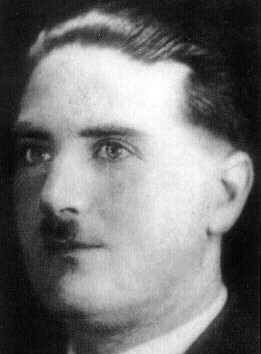 Alfred Arthur Rouse
Murderer · United Kingdom · 1930
Alfred Arthur Rouse (6 April 1894–10 March 1931) was a British murderer. It was…
1 victim
Alfred Arthur Rouse
Murderer · United Kingdom · 1930
Alfred Arthur Rouse (6 April 1894–10 March 1931) was a British murderer. It was…
1 victim
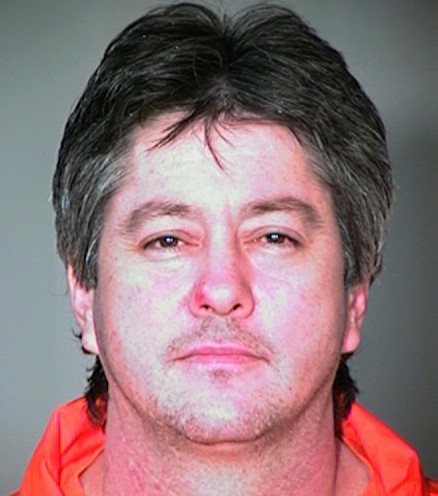 Brian Dann
Murderer · USA · 1999
Brian Dann killed Andrew Parks, Shelly Parks, and Eddie Payan in Andrew Parks’…
3 victims
Brian Dann
Murderer · USA · 1999
Brian Dann killed Andrew Parks, Shelly Parks, and Eddie Payan in Andrew Parks’…
3 victims
 Tony Lee Walker
Murderer · USA · 1978
Tony Lee Walker was convicted of capital murder for the killing of Virginia Sim…
3 victims
Tony Lee Walker
Murderer · USA · 1978
Tony Lee Walker was convicted of capital murder for the killing of Virginia Sim…
3 victims
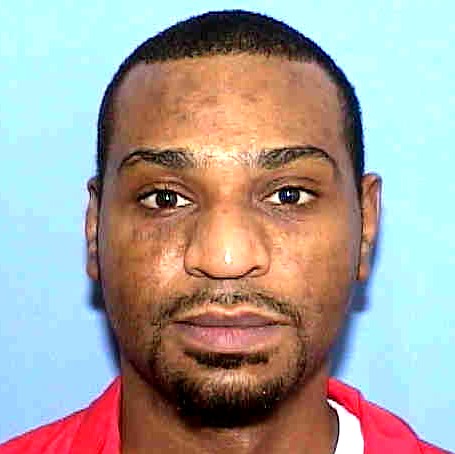 Ronald Chris Foster
Homicide · USA · 1989
Ronald Chris Foster was an African American who was 17 years of age at the time…
1 victim
Ronald Chris Foster
Homicide · USA · 1989
Ronald Chris Foster was an African American who was 17 years of age at the time…
1 victim
- Gender
- male
- Country
- USA
- Location
- Trinity County, Texas, USA
- Date of birth
- February 23, 1957
- Age at first offence
- 27
- Characteristics
- murder for hire, robbery
- Victim profile
- Gene Hathorn Sr., 45; his wife, Linda Sue, 34, and their 14-year-old son, Marcus
- Method of murder
- Shooting
- Date(s) of murder
- October 9, 1984
- Years active
- 1984
- Date of arrest
- —
- Status
-
Executed
Executed by lethal injection in Texas on December 9, 1999
Case information
Name: James Lee Beathard Case role: Capital murder defendant; accomplice to Gene Hathorn, Jr. in the murders of the Hathorn family Victims: Gene Hathorn Sr., Linda Sue Hathorn, and their 14-year-old son, Marcus Hathorn Trial outcome: Capital offense conviction; sentence of death
Timeline
- January 1984 — Beathard left Rusk State Hospital and enrolled in classes at Stephen F. Austin University in Nacogdoches, Texas.
- July 1984 — Gene Hathorn, Jr. offered to give Beathard a $12,500 share of the expected inheritance to help him murder his family, and Beathard agreed.
- October 9, 1984 — Gene Hathorn, Jr. and Beathard left Rusk at 3:00 p.m. in a borrowed Dodge Colt; they went to the Stephen F. Austin University library and other public places to create an alibi, then drove to do target practice with a sawed-off shotgun; after nightfall they arrived at Gene Hathorn, Sr.’s trailer house; Gene Hathorn, Jr. fired the shotgun through a picture window, and Beathard entered through the back door and shot all three victims.
- October 10, 1984 — Beathard returned to his girlfriend’s house at approximately 12:30 a.m. wearing overalls and visibly upset.
- November 15, 1984 — A grand jury in Trinity County, Texas indicted Beathard for the capital offense of murdering Marcus Hathorn in the course of committing burglary, which occurred on October 9, 1984.
- March 4, 1985 — A jury found Beathard guilty of the capital offense of murdering Marcus Hathorn in the course of committing burglary.
- March 4, 1985 (same day) — Following a separate punishment hearing, the jury answered affirmatively the two special sentencing issues under former Article 37.071, and the trial court assessed Beathard’s punishment at death.
- May 26, 1993 — The Court of Criminal Appeals denied relief after the trial court recommended that relief be denied following an evidentiary hearing.
- March 8, 1989 — The Court of Criminal Appeals affirmed Beathard’s conviction and sentence.
- May 10, 1989 — The Court of Criminal Appeals denied rehearing.
- April 20, 1995 — Beathard filed his federal petition for writ of habeas corpus in the United States District Court for the Eastern District of Texas, Sherman Division.
- January 29, 1996 — The district court denied relief.
- August 9, 1996 — The district court denied Beathard permission to appeal.
- May 26, 1999 — The United States Court of Appeals for the Fifth Circuit granted Beathard permission to appeal but affirmed the district court’s denial of habeas corpus relief.
- October 18, 1999 — The United States Supreme Court denied Beathard’s petition for writ of certiorari.
- December 3, 1999 — The Court of Criminal Appeals dismissed Beathard’s second application for state writ of habeas corpus as an abuse of the writ.
- December 9, 1999 — Beathard was executed by lethal injection in Texas.
Background
Beathard became friends with his accomplice, Gene Hathorn, Jr., when they were employed as psychiatric security technicians at Rusk State Hospital in Rusk, Texas. In January 1984, Beathard left Rusk State Hospital and enrolled in classes at **Stephen F.
Gene Hathorn, Jr. supplied Beathard, then unemployed, with small quantities of marijuana and cocaine to sell for a commission. During the spring and summer of 1984, they spent many evenings together, often discussing Gene Hathorn, Jr.’s desire to kill his father, stepmother, and half-brother.
Gene Hathorn, Sr., his wife Linda Hathorn, and son Marcus Hathorn lived in a trailer on eight acres in rural Trinity County, Texas. In 1983, Gene Hathorn, Sr. received a $150,000 settlement on an injury claim. Gene Hathorn, Jr. decided to kill his family out of animosity over a borrowed truck and because he believed he would inherit the settlement money. Hathorn described his plan to commit “the perfect murder,” requiring an accomplice to provide a false alibi and included leaving clues intended to convince the police that the family had been killed during a burglary by “a bunch of drug crazed niggers.”
Beathard agreed to participate for the $12,500 share of the expected inheritance. He needed the money to pay off a child support arrearage.
The offence
Plan and preparation
Gene Hathorn, Jr. and Beathard planned to shoot the family in the trailer in rural Trinity County. Hathorn planned to shoot everyone in the trailer using a number of different weapons, take several items that would be missed, and plant African-American hairs and cigarette butts that had been smoked by African-Americans. Hathorn also sought an accomplice to provide an alibi and help with the shootings.
On October 9, 1984, Gene Hathorn, Jr. and Beathard left Rusk at 3:00 p.m. in a borrowed Dodge Colt. Hathorn supplied three murder weapons, ammunition, gloves, some Negroid hairs gathered from a barber shop, and some butts of cigarettes that had been “smoked by black people.” The two men went to the library at Stephen F. Austin University and stopped at other public places to create an alibi. They also did some target practice with the sawed-off shotgun.
In the course of their movements on that date, they left Rusk and went to Nacogdoches, going by way of Gallatin in Cherokee County. Beathard had relatives who owned property near Gallatin, where Beathard and Hathorn conducted target practice with Hathorn’s shotgun.
Arrival and killings
They drove to Hathorn’s parents’ home in rural Trinity County and cut through the woods until they got to the driveway leading to the Hathorns’ trailer, following the driveway and then the tree line around the clearing to the trailer. Hathorn went behind the trailer and Beathard went to the back door.
Hathorn fired a shot through a large back window. When the shot was fired, Gene Hathorn Sr. was sitting with his back to the window with his head visible above the top of the sill. The forensic evidence described in the proceedings indicated that all three victims had wounds from a shotgun blast or blasts. The forensic pathologist testified that all three victims had fragments of glass and other debris in their wounds consistent with a shotgun being fired through a window. The forensic pathologist also testified that, based on examinations, the shotgun wounds were the first gunshot wounds inflicted; assuming simultaneous occurrence of the shotgun wounds, additional gunshots to Gene and Linda Hathorn were inflicted next, and additional wounds to Marcus, whose body was discovered in a bathroom, were inflicted last.
Crime scene investigators stated that the pattern of buckshot hitting the ceiling and opposite wall of the trailer was consistent with Hathorn having fired his shotgun from the position he testified to at trial. The locations of shell casings found inside the trailer and projected trajectory of the shots fired were stated to be consistent with an individual entering through and firing from the trailer’s back door. Ballistics tests matched bullets recovered from the bodies to bullets known to have been fired by Hathorn’s pistol and rifle.
At the time of the shooting, Beathard gave a detailed account at trial. He testified that Hathorn instructed him with the shotgun and that Hathorn said: “I don't want to have to do it this way.” Hathorn then rapidly turned and fired the shotgun through the back window “as if he were shooting skeet” and shouted “Mommy and Daddy get down somebody's shooting at us.” Hathorn then said to [Beathard] “If I go down you go down. Shoot anything that moves” and handed Beathard the shotgun. Beathard said that he laid down on the ground and then heard “A few seconds later,” three or four shots fired rapidly, followed by a pause, and then a similar group of shots. Beathard said he crept into the edge of the woods and hid, then worked his way back to the camper and shouted for Hathorn.
Property removal and disposal
After the initial firing, it was stated that Hathorn heard shots fired from inside the trailer. A few minutes later, Beathard came out the front door of the trailer carrying a video cassette recorder, a video disk player, and several of the Hathorn family’s guns. They loaded the items into the car.
They drove away using two vehicles: Hathorn drove a van belonging to the victims, and Beathard drove the car in which they had arrived. Hathorn drove to an area predominantly occupied by African-Americans, left the van on a residential street, and joined Beathard in the car. They then drove to Nacogdoches, stopping twice to drop the items removed from the trailer—pistol and rifle among them—off of two different bridges into two different rivers. They returned to the library to check out an additional book before completing the return home.
Other described details included stealing several items including guns, a video cassette recorder, and the family’s van, driving the van to a nearby African American community and abandoning it, and dumping other stolen items and two of the murder weapons into a river. The lethal weapons and other items were said to be used for staging evidence consistent with a burglary committed by people characterized in the proceedings as “drug crazed niggers,” including planting hairs and cigarette butts.
Investigation
The prosecution and subsequent proceedings included crime scene investigators and a forensic pathologist who testified regarding physical evidence discovered. Evidence and testimony were stated to corroborate Hathorn’s version of the facts. Ballistics tests matched bullets recovered from the bodies to bullets known to have been fired by Hathorn’s pistol and rifle, and the investigators described patterns of buckshot and trajectories consistent with the witness accounts of entry and firing.
In the federal appellate discussion, the evidence also described that officers requested that Beathard produce the overalls he was wearing upon returning at approximately 12:30 a.m. on October 10, 1984, but they were never recovered.
Arrest and pretrial
On November 3, 1984, Beathard was arrested for the triple murder of the Hathorn family. Beathard retained attorney Hulon Brown on November 5, 1984. Brown had been representing Hathorn for several months in two separate criminal charges and a civil rights action against the local police department. Brown did not represent Hathorn in connection with the instant murder charges. Beathard was indicted ten days later on November 15, 1984.
Brown realized that Beathard and Hathorn had antagonistic positions and therefore ceased to represent Beathard when he was indicted. Brown did not file a motion to withdraw. Beathard then retained David Sorrels, who represented him throughout the remainder of the trial proceedings.
Beathard testified at trial at the guilt-innocence stage that he was present at the scene of the murders, but that he was tricked into being there and that he hid outside while Gene Hathorn, Jr. fired all of the shots.
Trial
Charges and jury findings
On November 15, 1984, the grand jury indicted Beathard for the capital offense of murdering Marcus Hathorn in the course of committing burglary, occurring on October 9, 1984.
Beathard pleaded not guilty. On March 4, 1985, the jury found him guilty of the capital offense. Following a separate punishment hearing the same day, the jury answered affirmatively the two special sentencing issues submitted pursuant to former Article 37.071 of the Texas Code of Criminal Procedure. The trial court assessed Beathard’s punishment at death.
Evidence and witness testimony
The facts developed by the evidence included testimony from codefendant Gene Hathorn, Jr. and Beathard’s trial testimony. Beathard denied his complicity in the murders at trial.
Beathard admitted he accompanied Hathorn to Gallatin and to Nacogdoches. At trial he denied he had participated in the murders, stating that he agreed to leave Nacogdoches with Hathorn because he was offered an opportunity to make $2,000 by participating in a drug transaction. He testified that Hathorn instructed him to stay outside while Hathorn went into the trailer, knocked, entered for a short while, and then returned wearing rubber gloves. Beathard also testified that he did not see where Hathorn ran after the initial threat and that he did not see any weapon other than the shotgun during the evening.
In addition to Beathard’s testimony, family members, friends, and co-workers testified about Beathard’s character, competence on the job, honesty, reputation for nonviolence, and above-average intelligence. Several co-workers were psychiatrists and psychologists at Rusk State Hospital and testified that Beathard did not exhibit traits of an antisocial personality, while one co-worker testified that Beathard exhibited some signs of an antisocial personality. Witnesses also testified to bad reputation of Gene Hathorn. Some co-workers described Hathorn as short-tempered, dishonest, and violent and testified that Hathorn had a history of abusing patients.
Prosecutor statements and argument
The trial included prosecutor Joe L. Price’s statements to the jury. One reported statement in the proceedings was:
“Hathorn might be a cold-blooded killer, but there hasn't been any evidence in this courtroom that says he is a liar. He is telling the truth.”
In another context described in the record, Price made the statement:
“I'm a one-eyed hunting dog.”
In a described cross-examination argument, Price said to Gene Hathorn:
“O.K., and here was this ol' boy that had never shot that pistol before, was not near as familiar as you with weapons, going into a house he had never been in before in his life, to attack two people that had some advance warning that he was coming,”
“Does that seem a little bit strange to you, Gene?”
Beathard’s testimony and post-trial silence at punishment phase
Beathard testified at the guilt phase and exercised his Fifth Amendment right not to take the stand at the punishment phase. The trial court declined, over Beathard’s objection, to instruct the jury that no adverse inference could be drawn from Beathard’s silence at the punishment stage.
Sentencing
The jury answered affirmatively the two special sentencing issues submitted under former Article 37.071. Under state law, the trial court assessed Beathard’s punishment at death.
Appeals
Direct appeal
Because he was sentenced to death, appeal to the Texas Court of Criminal Appeals was automatic. On March 8, 1989, the Court of Criminal Appeals affirmed Beathard’s conviction and sentence and on May 10, 1989, it denied rehearing. Beathard did not file a petition for writ of certiorari in the United States Supreme Court.
State habeas corpus
After the convicting court scheduled Beathard’s execution for February 13, 1991, Beathard filed an application for state writ of habeas corpus with that court. On May 3, 1993, following an evidentiary hearing, the trial court recommended that relief be denied. On May 26, 1993, the Court of Criminal Appeals denied relief.
On October 14, 1994, with the assistance of new counsel, Beathard filed a motion for appointment of counsel to prepare a federal petition for writ of habeas corpus to be filed in the United States District Court for the Eastern District of Texas, Sherman Division.
After Beathard’s subsequent federal habeas proceedings, on or about November 30, 1999, Beathard filed a second application for state writ of habeas corpus. On December 3, 1999, the Court of Criminal Appeals dismissed that application as an abuse of the writ.
Federal habeas corpus and appellate decision
Beathard’s federal petition was filed on April 20, 1995 and the district court denied relief on January 29, 1996 and denied permission to appeal on August 9, 1996. On May 26, 1999, the United States Court of Appeals for the Fifth Circuit granted permission to appeal but affirmed the district court’s denial of habeas corpus relief. The United States Supreme Court denied Beathard’s petition for writ of certiorari on October 18, 1999.
The Fifth Circuit’s decision included legal analysis of multiple issues, including: an ineffective assistance of counsel claim relating to alleged conflict of interest; a claim about the prosecutor’s knowing failure to correct false testimony; Brady and Giglio related claims; claims regarding denial of discovery and denial of federal evidentiary hearing; claims regarding instructions and adverse inference at punishment stage; and claims regarding prosecutorial comments.
Outcome
Beathard’s conviction and death sentence were affirmed on direct appeal by the Texas Court of Criminal Appeals on March 8, 1989, and rehearing was denied on May 10, 1989. Federal habeas corpus relief was denied by the district court and affirmed by the United States Court of Appeals for the Fifth Circuit on May 26, 1999. The United States Supreme Court denied certiorari on October 18, 1999. The Court of Criminal Appeals dismissed Beathard’s second state habeas application as an abuse of the writ on December 3, 1999. A clemency petition was pending before the Texas Board of Pardons and Paroles.
Final statement and execution
Beathard’s final statement included acknowledgements of his family and statements criticizing the government and the death penalty. The statement included comments about sanctions against places like Iran and Irag, Cuba, and other places; and comments about support for a free press in Texas. He also addressed Joe Price, stating:
“I would like to address the State of Texas and specially Joe Price, the District Attorney who put me here.”
He then asserted:
“I want to remind Mr. Price of the mistake he made at Gene Hawthorn's trial when he said that Gene Hawthorn was telling the truth at my trial.”
He said:
“Mr. Price is a one-eyed hunting dog.”
He further stated:
“and in fact Gene Hawthorn lied at my trial.”
He stated that he was “dying tonight” based on testimony that he said “all parties” knew was a lie, and he said:
“I'm dying tonight based on testimony, that all parties, me, the man who gave the testimony, the prosecutor he used knew it was a lie.”
He stated:
“I am hoping somebody will call him to the floor for recent comments he's made in the newspaper.”
He also said:
“It's bad enough that a prosecutor can take truth and spin on it and try to re-doctor it. But when they actually make facts up and present to the public as trial's evidence. That goes beyond fail, that's completely unforgivable”
He repeated assertions that he was “lost on that” regarding tennis shoes he believed were referenced, and that he hoped someone would verify the trial record and “make him accountable for lying to the public and the press that way.”
He ended with expressions of love to his family, including:
“I love you booger bear. I love doodle bug, too. Don't let them ever forget me. I'll never forget them. I'll see you on the other side, okay. Bye bye Debbie. Bye bro, bye booger bear. Father Mike, Father Walsh, love you all.”
The Texas Attorney General Media Advisory stated that Beathard was scheduled to be executed after 6 p.m. on Thursday, December 9. Beathard was pronounced dead at 6:21 p.m.
Other details
Co-defendant
Gene Hathorn, Jr. was separately tried, convicted, and sentenced to death for murdering his father in the course of a burglary. His testimony at Beathard’s trial was read to the jury at his own trial, and Hathorn repeated the identical story on the witness stand. The proceedings stated that Hathorn recanted a year after Beathard’s trial, claimed he had acted alone, and said Beathard had been present but had hidden in the woods and had not participated in the killings. Beathard’s lawyers asked for a new trial, but the Texas Court of Criminal Appeals turned down the request because a criminal defendant had only 30 days after judgment to present new evidence.
Prior criminal history and drug/alcohol evidence
No evidence was presented at trial reflecting that Beathard had previous criminal convictions. No evidence was presented at trial reflecting that drugs or alcohol were used during the commission of the instant offense.
Administrative and advisory references in the proceedings
The filings and appellate proceedings referenced case captions including the Fifth Circuit case number 96-40760 in an appeal involving Beathard and Gary L. Johnson, Director, Texas Department of Criminal Justice, Institutional Division.

Spotted an error, or have more information about this case?