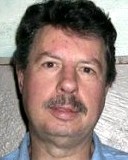
Donald Jay Beardslee
Murderer Ervil LeBaron
Murderer · USA · 1972
Ervil Morrell LeBaron (1925 to August 16, 1981) was the leader of a polygamous…
35 victims
Ervil LeBaron
Murderer · USA · 1972
Ervil Morrell LeBaron (1925 to August 16, 1981) was the leader of a polygamous…
35 victims
 Marvin Gray
Murderer · USA · 1975
Marvin Gray was convicted killer who claimed responsibility for 23 slayings and…
23 victims
Marvin Gray
Murderer · USA · 1975
Marvin Gray was convicted killer who claimed responsibility for 23 slayings and…
23 victims
 Charles Manson
Murderer · USA · 1969
Charles Milles Manson (born November 12, 1934) was an American criminal and mus…
9 victims
Charles Manson
Murderer · USA · 1969
Charles Milles Manson (born November 12, 1934) was an American criminal and mus…
9 victims
 Barry Byron Mills
Murderer · USA · 1979
Barry Byron Mills (born 1948) was a leader of the Aryan Brotherhood (AB) prison…
8 victims
Barry Byron Mills
Murderer · USA · 1979
Barry Byron Mills (born 1948) was a leader of the Aryan Brotherhood (AB) prison…
8 victims
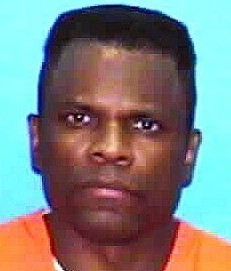 John Errol Ferguson
Murderer · USA · 1977
John Errol Ferguson was sentenced to death and was executed by lethal injection…
8 victims
John Errol Ferguson
Murderer · USA · 1977
John Errol Ferguson was sentenced to death and was executed by lethal injection…
8 victims
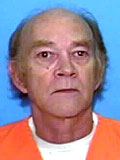 Terry Melvin Sims
Murderer · USA · 1977
Terry Melvin Sims was convicted and sentenced to death for the murder of George…
1 victim
Terry Melvin Sims
Murderer · USA · 1977
Terry Melvin Sims was convicted and sentenced to death for the murder of George…
1 victim
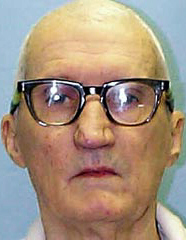 James Barney Hubbard
Murderer · USA · 1957
James Barney Hubbard was executed by lethal injection in Alabama on August 5, 2…
2 victims
James Barney Hubbard
Murderer · USA · 1957
James Barney Hubbard was executed by lethal injection in Alabama on August 5, 2…
2 victims
 Douglas Christopher Thomas
Homicide · USA · 1990
Defendant: Douglas Christopher Thomas Age at time of offence: 17 Status: Execut…
2 victims
Douglas Christopher Thomas
Homicide · USA · 1990
Defendant: Douglas Christopher Thomas Age at time of offence: 17 Status: Execut…
2 victims
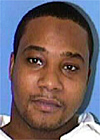 Jeffery Lynn Williams
Murderer · USA · 1994
Jeffery Lynn Williams was convicted of capital murder for killing Barbara Jacks…
1 victim
Jeffery Lynn Williams
Murderer · USA · 1994
Jeffery Lynn Williams was convicted of capital murder for killing Barbara Jacks…
1 victim
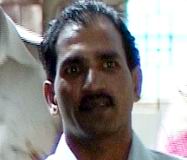 Mahanand Naik
Serial killer · India · 1994
Mahanand Naik was a three-wheel rickshaw driver from Ponda in the Indian state…
18 victims
Mahanand Naik
Serial killer · India · 1994
Mahanand Naik was a three-wheel rickshaw driver from Ponda in the Indian state…
18 victims
- Gender
- male
- Country
- USA
- Location
- Missouri/California, USA
- Date of birth
- May 13, 1943
- Age at first offence
- 26
- Characteristics
- drugs
- Victim profile
- Laura Griffin, 52 / Patty Geddling, 19, and Stacie Benjamin, 23
- Method of murder
- St abbing with knife / Shooting
- Date(s) of murder
- 1969 / 1981
- Years active
- 1969–1981
- Date of arrest
- April 26, 1981
- Status
-
Executed
Executed by lethal injection in California on January 19, 2005
Case details
Donald Jay Beardslee (May 13, 1943 – January 19, 2005) was a United States murderer executed by lethal injection in San Quentin State Prison, California.
Timeline
- December 1969 — Beardslee met Laura Griffin, 54, at a St. Louis-area bar.
- December 1969 — Beardslee killed Laura Griffin, 54, in her apartment in St. Louis.
- 1970 — Missouri trial court denied Beardslee’s motions to suppress.
- December 8, 1970 — Beardslee pleaded guilty to second degree murder and was sentenced to 19 years’ imprisonment with credit for the nearly one year he had spent awaiting trial.
- 1977 — Beardslee was paroled to California.
- March 1981 — Rutherford gave drugs to Soria; Soria suffered a near-fatal overdose and phoned Beardslee.
- April 23, 1981 — Soria told Beardslee that Stacy had cheated William Forrester in a drug deal.
- April 24, 1981 — Beardslee agreed with Soria and Rutherford to help Forrester get back at Stacy and Patty that evening in Beardslee’s apartment; Rutherford devised a scheme to entice Geddling and Benjamin to the apartment; Beardslee sent Soria out to buy duct tape to bind the victims before they arrived.
- April 25, 1981 — Patty (Paula) Geddling, 23, and Stacy Benjamin, 19, were murdered at separate locations.
- April 25, 1981 — Police called Beardslee after his phone number was found near Geddling’s body; Beardslee confessed and led police to Benjamin’s body.
- January 19, 2005 — Beardslee was executed by lethal injection at San Quentin State Prison.
Background
Early life
Beardslee was born in St. Louis, Missouri in 1943. He was the oldest of three children and his father died when he was 11. He was sent to a military school at age 15 and joined the U.S. Air Force at 19, serving for four years as an aircraft mechanic. In 1965, he and another airman were caught while trying to steal a vehicle. While serving a sentence in Minnesota on a work farm, he was hit by a falling tree and suffered a head fracture and a days-long coma.
He was married to Karen Kelly from 1966 to 1968.
Criminal career overview
In 1969 in Missouri, Beardslee choked, stabbed and drowned Laura Griffin, whom he had just met. After meeting in a bar, he went home with her and killed her. Beardslee turned himself in and confessed to the killing. He was convicted and served seven years before being released on parole. No motive was established nor did he offer any explanation.
After leaving prison, Beardslee was arrested in California for the April 25, 1981 drug-related homicide of 19-year-old Patty Geddling and 23-year-old Stacie Benjamin in Redwood City, California. Prosecutors said a drug deal between friends of Beardslee’s roommate had gone wrong. His roommate Rickie Soria lured the two to their apartment.
At trial in California, Beardslee was convicted of first-degree murder and sentenced to death. The defense tried to appeal on grounds of inadequate defense since the original lawyer quit the case, and on grounds of mental defect due to a head injury from a falling tree in the Minnesota work farm accident when he was 21. Prosecutors noted that Beardslee was of above average intelligence; family members testified he had life-long trouble expressing emotion and prison records indicated diagnoses of schizophrenia.
The offence
Missouri homicide: Laura Griffin
Beardslee met Laura Griffin, 54, in a St. Louis-area bar. He killed her in her apartment in December 1969. He stabbed, choked and drowned her in a bathtub and later described the killing to authorities as senseless and without motive. After talking with his minister and a lawyer, he went to police and confessed. He pleaded guilty to second-degree murder and was sentenced to 18 years in prison; he served seven years of that sentence.
California murders: Patty (Paula) Geddling and Stacy Benjamin
Patty (Paula) Geddling, age 23, and Stacy Benjamin, age 19, were murdered at separate locations on April 25, 1981. At the time of their deaths, they were living together as close friends. Stacy sold drugs and had a reputation for “ripping people off.” Patty on occasion also sold drugs.
Beardslee, age 37, was living in his studio apartment in Redwood City with Ricki Soria, whom he had met two months earlier while she was hitchhiking. Beardslee wanted to help Soria stop using drugs and to separate her from Ed Geddling and Frank Rutherford, who were drug dealers. Rutherford had a reputation for carrying guns and collecting drug debts, and had bragged that he would never go to jail because his or her brothers would take care of any witnesses.
Plan and guilt phase narrative
On April 23, Soria told Beardslee that Stacy had cheated William Forrester in a drug deal. The next afternoon, Beardslee agreed with Soria and Rutherford to help Forrester get back at Stacy and Patty that evening in Beardslee’s apartment. Forrester came to the apartment, and Beardslee picked up Rutherford, who had a shotgun. The four discussed plans for trapping victims, including Rutherford cutting a wire and twisting the ends around shotgun shells. At Beardslee’s request, Soria went out and bought tape for gagging the victims. It was agreed that when the victims arrived, Soria would sit on the sofa, Beardslee would open the door, and Rutherford and Forrester would hide.
The victims arrived around 6:30 p.m. As Beardslee opened the door and they approached Soria, Beardslee heard the shotgun fire. He then saw that Rutherford was holding the gun and that Patty was wounded in the left shoulder. Beardslee took Patty into the bathroom and tried to stop her bleeding. Both victims’ hands and feet were tied. Rutherford told Patty they would take her to the hospital and repeated this statement in Stacy’s presence while winking at Beardslee.
Between 9 and 10 p.m., Beardslee and Forrester left and brought back Rutherford’s car. After a discussion with Rutherford about taking the victims somewhere in their own van, Beardslee believed the victims would be killed. When Rutherford handed Beardslee some shotgun shells, Beardslee said, “I'm not going to do this.” Forrester responded, “Well, I guess I'm going to do it.”
Patty was loaded into the victims’ van, which was driven away by Forrester with Beardslee as a passenger, and Soria followed in Beardslee’s car. Rutherford stayed behind with Stacy. Forrester drove south on Highway 1 and on to Bean Hollow Road, where they stopped. Patty got out of the van and began pleading for her life. Beardslee loaded the gun for Forrester, who shot Patty twice. Beardslee reloaded and also fired at her twice. They left Patty’s dead body in a ditch beside the road and departed with Soria and Forrester in the van and Beardslee in his own car.
When the van ran out of gas, the three wiped off their fingerprints and abandoned it. Beardslee and Soria then dropped off Forrester and returned to Beardslee’s apartment. After receiving a telephone call from Rutherford asking them to join him at the nearby apartment of his girlfriend, Dixie Davis, they arrived between 3 and 3:30 a.m. and found Stacy watching television. Out of Stacy’s hearing, Beardslee told Rutherford that Forrester had “chickened out” and Beardslee had to finish the job. Rutherford said Beardslee should have killed Forrester; Beardslee replied that Soria had refused to give him more shells for that purpose. Then, in Stacy’s presence, Beardslee and Rutherford had a conversation implying that Patty was in the hospital.
Around 5 a.m., Beardslee, Rutherford, Soria, and Stacy left in Beardslee’s car. They stopped at a service station where Stacy collected money she was owed for drugs, stopped in Pacifica where Soria obtained cocaine, and made two more stops to consume the cocaine before crossing the Golden Gate Bridge. They stopped to see Rutherford’s brother in Sebastopol, where Beardslee heard Rutherford obtain advice from the brother on where to “drop off” Stacy. Beardslee understood this to refer to killing Stacy and leaving her body somewhere. They headed north on Highway 101 and turned onto a winding side road. Beardslee was driving. Rutherford told Stacy they were going to Lakeport to obtain drugs. They stopped at a turnout, and Stacy asked if Beardslee was supposed to strangle her then. Beardslee said, “No.”
Soria returned with Rutherford, and Beardslee and Soria walked further where they could not see Rutherford and Stacy. Beardslee heard commotion and Soria urged him to go help Rutherford. Beardslee found Rutherford sitting on Stacy, strangling her with his left hand. A broken wire lay under her neck. Rutherford called Stacy a “die hard bitch.” Beardslee saw Stacy give him a pleading look. Beardslee punched her in the left temple, attempting unsuccessfully to knock her out. Beardslee then held one end of a wire wrapped around Stacy’s throat while Rutherford pulled on the other end. Rutherford took both ends of the wire, pulled it tight, and twisted it. The two men dragged Stacy to a more secluded area.
Beardslee asked for Rutherford’s knife and used it to slit Stacy’s throat twice. After she was dead, Beardslee, at Rutherford’s suggestion, pulled down her pants to make it appear that she had been assaulted sexually. Late that afternoon, Rutherford, Soria, and Beardslee returned to the Davis apartment.
Survivors’ discovery and identification of Beardslee’s involvement
Patty’s body was found by joggers. A shoe repair claim ticket recovered from her clothing bore Beardslee’s telephone number. Detective Sergeant Robert Morse of the San Mateo County Sheriff’s Office called on Beardslee and Beardslee agreed to come to the sheriff’s office to give a statement. Morse began the interview by talking about the difference between a witness and a suspect, and then asked Beardslee if he were involved in the case. Beardslee replied: “Well, Frank [Rutherford] shot her but I guess I'm involved because I shot her in the head twice myself. I was afraid.”
Beardslee was advised of his Miranda rights and gave a detailed, taped statement about both killings. From Beardslee’s directions, officers found Stacy’s body near Hopland Grade Road in Lake County, and located numerous items of physical evidence at scattered locations in San Mateo County. A transcription of Beardslee’s statement, as well as the tape itself, became a prosecution exhibit at trial.
Beardslee’s testimony about the fatal blows
Beardslee testified in his own behalf. His trial testimony, his prior testimony at Rutherford’s preliminary hearing, and his taped statement were essentially consistent, except for differences in his versions of the fatal blows. He testified that after Forrester fired twice at Patty, he felt her pulse and decided she was dead; he retrieved the gun from Forrester and fired twice in the direction of her head but did not think he hit her. He said he did this out of fear that Rutherford would have him killed if he were only a witness and not a participant in Patty’s death. In his taped statement, he said he thought Patty was still alive after Forrester’s shots and shot directly at her to keep her from suffering. The condition of Patty’s remains was described as more consistent with the taped statement: about one-third of her head was missing. The doctor performing the autopsy testified there were multiple shotgun wounds including one in Patty’s left shoulder that preceded the others by several hours and a head wound inflicted by a shot or shots fired at extremely close range that caused instant death.
For Stacy, Beardslee testified at trial and at the preliminary hearing that he slit her throat concluding she was already dead; he said there was only one exhalation of breath and that blood from her jugular vein dribbled out rather than spurting. He conceded he helped Rutherford pull the wire around her throat but considered himself only a “minor” participant in her death. In his taped statement, Beardslee said when he asked Rutherford for the knife, Stacy was still alive and trying to gasp, and that when he slit her throat he was trying to “make it quick.” The pathologist testified that the knife wound cut Stacy’s left jugular vein and exposed her air passage but did not cut the carotid artery; from blood in her lungs he concluded she must have been still alive when her throat was cut.
Beardslee agreed at the outset to help Rutherford because he did not want to stand up to him, and he suggested Soria procure tape because he wanted to minimize any noise emanating from the apartment. He said that later in the evening after Rutherford used the shotgun on Patty, he became involved in disposal plans out of fear for his life, and he participated in both killings because he feared Rutherford would have him killed if he were only a witness rather than a participant.
Investigation and arrest
After Patty’s body was found by joggers, Detective Sergeant Robert Morse used the shoe repair claim ticket bearing Beardslee’s telephone number to contact Beardslee. Beardslee agreed to come to the sheriff’s office and gave a detailed, taped statement after receiving Miranda rights. Officers then recovered Stacy’s body near Hopland Grade Road in Lake County and recovered numerous items of physical evidence at scattered locations in San Mateo County based on Beardslee’s directions.
Trial
Charges and special circumstances
Beardslee was charged under the 1978 death penalty law with the first degree murders of Paula (Patty) Geddling and Stacy Benjamin under two special circumstances. A jury found Beardslee guilty of committing both murders with premeditation and deliberation (Pen.Code, §§ 187, 189). The jury also determined that each murder was committed under two special circumstances: concurrent conviction of multiple murders (§ 190.2, subd. (a)(3)) and intentional killing for the purpose of preventing the victim from testifying as a witness to a separate crime (§ 190.2, subd. (a)(10)).
The jury also found that Beardslee personally used a firearm in the murder of Patty Geddling (§§ 1203.06, subd. (a)(1), 12022.5) and a knife in the murder of Stacy Benjamin (§ 12022, subd. (b)).
A penalty trial was held before a different jury, which determined that Beardslee should suffer the death penalty for the murder of Patty Geddling and life imprisonment without possibility of parole for the murder of Stacy Benjamin. The trial court denied Beardslee’s motions to strike the special circumstances and to modify the penalty and entered judgment of death.
Evidence admitted at penalty phase regarding Missouri homicide
At the penalty phase, the prosecution introduced evidence that Laura Griffin was the victim of a homicide in Missouri in December 1969 and Beardslee’s admissions at Rutherford’s preliminary hearing that he had killed Griffin. The evidence was admitted to show an aggravating factor, “criminal activity by the defendant which involved the use or attempted use of force or violence.” The prosecution introduced no evidence of criminal proceedings against Beardslee for killing Griffin.
Defense sought unsuccessfully to prevent the jury from hearing references to the Missouri homicide. After the jury returned verdicts of guilt, Beardslee moved to exclude all references on the ground that his prior admissions, which were the only evidence relied on by the prosecution to connect him to that crime, resulted directly from violations of constitutional rights. The trial court denied the motion to exclude.
The California Supreme Court later concluded that the excess multiple-murder special circumstance and both witness-killing special circumstances must be set aside, and the judgment otherwise affirmed.
Sentencing
Beardslee was sentenced to death for the murder of Patty Geddling and to life without possibility of parole for the murder of Stacy Benjamin.
In Missouri, he was sentenced to 19 years’ imprisonment with credit for the nearly one year spent awaiting trial after pleading guilty to second degree murder.
Appeals
California Supreme Court decision
The California Supreme Court addressed Beardslee’s automatic appeal and set aside one of the multiple-murder and both witness-killing special circumstances, while affirming the judgment otherwise. It stated that one of the multiple-murder and both witness-killing special circumstances must be set aside, and that the judgment otherwise be affirmed.
Federal habeas relief and certificate of appealability
Beardslee sought federal habeas relief after affirmance of his state conviction for murder with special circumstances and death sentence. The United States District Court for the Northern District of California denied the petition and Beardslee appealed; the Ninth Circuit affirmed denial of federal habeas relief in Beardslee v. Woodford, 358 F.3d 560 (9th Cir. January 28, 2004). The U.S. Supreme Court denied Beardslee’s petition for a writ of certiorari.
Beardslee then requested issuance of a certificate of appealability (“COA”), arguing entitlement to relief based on Sanders v. Woodford. The Ninth Circuit discussed that its appellate decision was not final until its mandate issued and granted a certificate of appealability on claim 39 raised in the habeas petition, requiring expedited briefing and oral argument.
In a later Ninth Circuit decision, the Ninth Circuit denied relief and again affirmed the judgment of the district court denying Beardslee’s petition for a writ of habeas corpus, and it affirmed.
Outcome
Beardslee’s sentence was carried out by lethal injection at San Quentin State Prison, California.
Aftermath
Media access for scheduled execution specified that requests were due by Friday, January 7, 2005, and that up to 125 news media representatives may be admitted to attend news briefings and a news conference after the execution. Media credentials required written requests signed by the news department manager on company letterhead with specified representative details, including names, dates of birth, driver’s license number and expiration date, social security number, and size of vehicle for live broadcast purposes, sent to the California Department of Corrections Communications Office in Sacramento.
The execution was declared dead by San Quentin State Prison officials at 12:29 a.m. PST (3:29 a.m. EST) on Wednesday. Officials said Beardslee did not make a final statement. Beardslee skipped the traditional last meal and had regular prison fare of chili macaroni, salad and cake in one account and declined the state’s special last meal in another account; he asked for and drank grapefruit juice. The execution process involved sedative, paralyzing agent, and a dose of poison to stop his heart in one description, and included the use of three different chemicals including potassium chloride in another description.
Spotted an error, or have more information about this case?