
Kevin Cobb
Homicide Hu Wanlin
Homicide · China · 1997
Hu Wanlin (胡万林), born 1949, was from Mianyang, Sichuan Province. · 1993 — While…
146 victims
Hu Wanlin
Homicide · China · 1997
Hu Wanlin (胡万林), born 1949, was from Mianyang, Sichuan Province. · 1993 — While…
146 victims
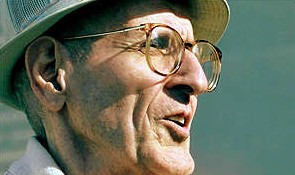 Jack Kevorkian
Homicide · USA · 1990
Jack Kevorkian (born May 26, 1928) was a controversial American pathologist. He…
130 victims
Jack Kevorkian
Homicide · USA · 1990
Jack Kevorkian (born May 26, 1928) was a controversial American pathologist. He…
130 victims
 David Koresh
Homicide · USA · 1993
David Koresh (born Vernon Wayne Howell; August 17, 1959 – April 19, 1993) led t…
79 victims
David Koresh
Homicide · USA · 1993
David Koresh (born Vernon Wayne Howell; August 17, 1959 – April 19, 1993) led t…
79 victims
 Todd Hall
Homicide · USA · 1996
Todd Hall was described by neighbors as "mentally slow" and was said to have su…
9 victims
Todd Hall
Homicide · USA · 1996
Todd Hall was described by neighbors as "mentally slow" and was said to have su…
9 victims
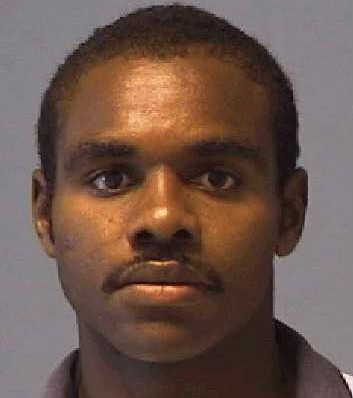 Clinton Bankston
Homicide · USA · 1987
15 August 1987 — Ann Morris (63), her sister Sally Nicholson (59), and Sally’s…
5 victims
Clinton Bankston
Homicide · USA · 1987
15 August 1987 — Ann Morris (63), her sister Sally Nicholson (59), and Sally’s…
5 victims
 Kanae Kijima
Serial killer · Japan · 2009
Kanae Kijima was sentenced to death on April 13, 2012. She was convicted of thr…
3 victims
Kanae Kijima
Serial killer · Japan · 2009
Kanae Kijima was sentenced to death on April 13, 2012. She was convicted of thr…
3 victims
 Raymond Landry
Murderer · USA · 1982
Raymond Landry Sr. was the person convicted in a Texas capital case. Raymond La…
1 victim
Raymond Landry
Murderer · USA · 1982
Raymond Landry Sr. was the person convicted in a Texas capital case. Raymond La…
1 victim
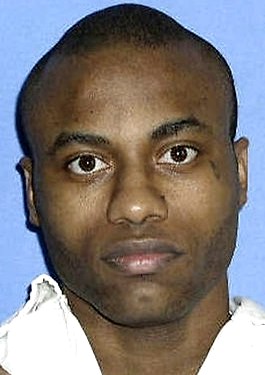 Johnny Ray Conner
Murderer · USA · 1998
Johnny Ray Conner was convicted in Texas state court and sentenced to death for…
1 victim
Johnny Ray Conner
Murderer · USA · 1998
Johnny Ray Conner was convicted in Texas state court and sentenced to death for…
1 victim
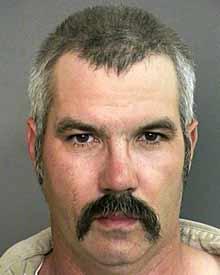 Scott Wilson Williams
Serial killer · USA · 1997
Scott Wilson Williams received three consecutive life sentences without parole…
3 victims
Scott Wilson Williams
Serial killer · USA · 1997
Scott Wilson Williams received three consecutive life sentences without parole…
3 victims
 Dragoslav Petkovic
Homicide · Bosnia-Herzegovina · 2002
29 April 2002 — 17-year-old Dragoslav Petkovic opened fire with a handgun short…
1 victim
Dragoslav Petkovic
Homicide · Bosnia-Herzegovina · 2002
29 April 2002 — 17-year-old Dragoslav Petkovic opened fire with a handgun short…
1 victim
- Gender
- male
- Country
- —
- Location
- —
- Date of birth
- 1962
- Age at first offence
- 34
- Characteristics
- poisoner, rape
- Victim profile
- Susan Annis, 31
- Method of murder
- Poisoning (midazolam) Loca tion : Lond on, England, United Kingdom
- Date(s) of murder
- November 26, 1996
- Years active
- 1996
- Date of arrest
- January 1999
- Status
-
Life imprisonment
Sentenced to seven life sentences for manslaughter and raping women patients in hospital after drugging them on July 6, 2000
Case overview
Kevin Cobb, a male nurse, was convicted of manslaughter for the death of nursing sister Susan Annis and of drugging women with intent to rape or indecently assault them, along with rape offences at St Peter's Hospital, Chertsey, Surrey. He received seven life sentences.
The offence
Cobb was accused of secretly administering Midazolam, a sedative used in medicine and in minor surgery, to women at hospital casualty departments in order to stupefy them and enable sexual assault. The prosecution alleged an underlying reason of sexual gratification.
In relation to Susan Annis, Cobb was alleged to have spiked her cider with Midazolam when the two were socialising at the Royal Brompton Hospital nurses' home. After drinking the cider, Annis stopped breathing and her heart stopped. Traces of Midazolam were found in her body. The jury heard that she suffered from a mild heart condition which caused an adverse reaction to the drug.
Cobb was also alleged to have attacked other women in accident and emergency areas at St Peter's Hospital, Chertsey, Surrey, over a four-week period. The allegation was that on multiple occasions he used Midazolam to put women into a coma-like state from which they recovered with little or no memory of what had happened.
Investigation
The prosecution alleged that Midazolam was administered in anticipation of the victims being comatosed and then sexually assaulted. The prosecution described Midazolam as a potentially dangerous drug because of side-effects including causing breathing difficulties, especially when taken with alcohol.
An inquest at the time of Susan Annis's death was unable to establish how she had come to have Midazolam in her body. The inquiry was reopened after Cobb's arrest in January last year following a complaint from a woman who said she had been “drugged and raped” in a hospital casualty department.
After Cobb's arrest, police found physical evidence associated with Midazolam:
- Cobb's uniform had traces of Midazolam in the pockets.
- A syringe containing traces of a sleeping drug was found at his home.
The police said the drug made it difficult for victims to identify themselves as victims.
Arrest
Cobb was arrested two years later after a woman complained she had been “drugged and raped” in a hospital casualty department. He was arrested in January 1999 after a woman patient complained she blacked out on a trolley and later came round to find herself being raped by a nurse.
Trial
Cobb denied the total of 11 charges including the manslaughter of Susan Annis and administering Midazolam with intent to rape or indecently assault her. He also denied a further six charges of administering the drug with intent and two of rape.
The trial at the Old Bailey involved the jury hearing allegations that:
- Cobb and Susan Annis were among nurses taking part in a child nursing course at the Brompton Hospital in November 1996.
- On the night she died, Annis's room in the hospital was opposite Cobb's and the two took a take-away and some beer to his room.
- Cobb told police that Annis drank cider and passed out; he said he woke her after half an hour and she went to her own room.
- In the early hours of the 26th, Cobb was concerned and found her, and then called for help.
A post-mortem showed Annis had the drug and alcohol in her body, and that she suffered from a mild heart condition which caused her to have an adverse reaction to the drug.
The jury was also told that Cobb had attacked two other women at the Accident and Emergency department of St Peter's Hospital, Chertsey, Surrey, over a four-week period. A staff member trying to get into a room found the door blocked by a trolley, and the staff member saw Cobb touching the woman's lower stomach.
During proceedings, Victor Temple QC told the jury:
"This defendant had secretly introduced Midazolam into Miss Annis's cider in anticipation of her being comatosed and a sexual assault in the shape of rape or indecent assault."
Sentencing
After conviction, Judge Martin Stephens sentenced Cobb to seven life sentences.
The sentencing was described as follows:
- Judge Martin Stephens told Cobb he could expect “an extremely long prison sentence”.
- Passing sentence, Judge Martin Stephens told Cobb he was a danger to women and it would be difficult to imagine a greater breach of trust.
Cobb had been convicted of:
- the manslaughter of nursing sister Susan Annis;
- two rapes; and
- giving women the anaesthetic Midazolam in order to rape them;
- four charges of drugging women with intent to rape.
Cobb was sacked from his job during the police inquiry.
Appeals
During the trial, Cobb maintained that he was wrongly accused.
Outcome
Cobb was found guilty and sentenced to seven life sentences for manslaughter and raping women patients in hospital after drugging them. The jury found him guilty of seven charges of manslaughter, rape and drugging women.
Aftermath
Detective Superintendent Dave Cook of Surrey Police said more victims feared Cobb is responsible for raping other women patients who may be unaware they had been attacked. He said another woman patient had come forward during the trial after recognising Cobb's photograph in newspaper reports, and that it would then be up to the Crown Prosecution Service.
Detective Chief Inspector Jim Dickie, who conducted the manslaughter inquiry, said:
"Justice has been done. I am pleased for the victims, especially the Annis family."
The police appealed for anyone else who may have been abused to come forward, stating there could be many more victims.
Joyce Winston-Smith, Director of Nursing, told the BBC:
"It has been very distressing for staff to know that one of their colleagues has turned out to have committed these distressing acts." She added: "There has been anger, staff feel betrayed."
Robin Hollingsworth, Medical Director of the hospital's NHS Trust, said Cobb had used his position for “evil purposes”, damaging the reputation of the hospital and the relationship between nurses and patients.
Cobb’s approach and the evidential difficulty for victims was described by Detective Superintendent Peter Cook of Surrey police:
"The problem is that this drug is designed to make victims forget. It makes it difficult to identify victims, or for them to identify themselves as victims."
The parents of Susan Annis, Audrey and David, made a statement:
"We never accepted that she died of natural causes, and we now know what happened. Now at last we can put our daughter to rest."
A Roofie Foundation was formed to help victims of drug-assisted rape. Its spokeswoman Lynda Greenwood said:
"There are many dangerous places; night-clubs, pubs and parties, we have had them reported on business premises. There are situations where you really have to be very careful what you drink."
People
- Kevin Cobb — nurse.
- Susan Annis — 31-year-old nursing sister at Crawley Hospital, West Sussex; died at the Royal Brompton Hospital.
- Joyce Winston-Smith — Director of Nursing.
- Robin Hollingsworth — Medical Director of the hospital's NHS Trust.
- Victor Temple QC — prosecutor.
- Judge Martin Stephens — judge who remanded Cobb and passed sentence.
- Detective Superintendent Peter Cook of Surrey Police — commented on the difficulty of identifying victims.
- Detective Superintendent David Cook of Surrey Police — appealed for anyone else who may have been abused to come forward.
- Detective Chief Inspector Jim Dickie — conducted the manslaughter inquiry.
- Grahams Rhodes — chief executive of the Roofie Foundation.
- Lynda Greenwood — spokeswoman for the Roofie Foundation.
- Dr John Parsley — consultant at Crawley Hospital who told police Cobb had been present at the death of Susan Annis.
Drug: Midazolam (as described in the case narrative)
Midazolam was described as a sedative drug commonly used in medicine, but which could be dangerous in the wrong hands. It was described as a benzodiazepine used as a sedative and to treat people who had gone into convulsions. It was said to induce amnesia, and to be often given prior to having tubes inserted so that patients were semi-conscious during procedures. The drug was said to work by slowing down both the heart rate and rate of breathing. It was described as being able to stimulate a heart attack and stop the lungs from working in very high doses. The narrative also stated it could lead to daydreams with a sexual content and could stimulate vertigo, dizziness, headaches, and, in rare circumstances, hallucinations. It was also described as causing visual disturbances and nausea. Repeated administration could make it addictive, and abrupt stopping could lead to withdrawal symptoms. People taking Midazolam were recommended not to drive or operate a machine for 24 hours after administration. It was described as not being recommended for pregnant women or breastfeeding.
Spotted an error, or have more information about this case?