Benjamin Berry
Murderer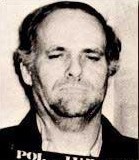 Ervil LeBaron
Murderer · USA · 1972
Ervil Morrell LeBaron (1925 to August 16, 1981) was the leader of a polygamous…
35 victims
Ervil LeBaron
Murderer · USA · 1972
Ervil Morrell LeBaron (1925 to August 16, 1981) was the leader of a polygamous…
35 victims
 Brian Kevin Rosenfeld
Murderer · USA · 1985
Brian Kevin Rosenfeld Brian Kevin Rosenfeld was sentenced to three concurrent l…
23 victims
Brian Kevin Rosenfeld
Murderer · USA · 1985
Brian Kevin Rosenfeld Brian Kevin Rosenfeld was sentenced to three concurrent l…
23 victims
 Marvin Gray
Murderer · USA · 1975
Marvin Gray was convicted killer who claimed responsibility for 23 slayings and…
23 victims
Marvin Gray
Murderer · USA · 1975
Marvin Gray was convicted killer who claimed responsibility for 23 slayings and…
23 victims
 Yahweh ben Yahweh
Murderer · USA · 1980
Yahweh ben Yahweh was born and legally named Hulon Mitchell Jr. (October 27, 19…
23 victims
Yahweh ben Yahweh
Murderer · USA · 1980
Yahweh ben Yahweh was born and legally named Hulon Mitchell Jr. (October 27, 19…
23 victims
 David Lee Powell
Murderer · USA · 1978
David Lee Powell was executed by lethal injection in Texas on June 15, 2010. He…
1 victim
David Lee Powell
Murderer · USA · 1978
David Lee Powell was executed by lethal injection in Texas on June 15, 2010. He…
1 victim
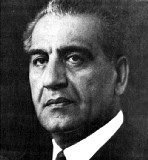 Gourgen Yanikian
Murderer · USA · 1973
Gourgen Mkrtich (Megerdich) Yanikian was an Armenian author, engineer, and an A…
2 victims
Gourgen Yanikian
Murderer · USA · 1973
Gourgen Mkrtich (Megerdich) Yanikian was an Armenian author, engineer, and an A…
2 victims
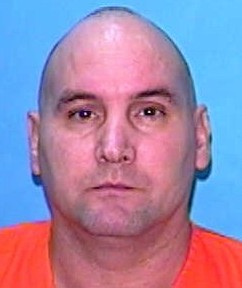 Anton Krawczuk
Murderer · USA · 1990
Anton Krawczuk (born 06/08/59) was tried in the Twentieth Judicial Circuit, Lee…
1 victim
Anton Krawczuk
Murderer · USA · 1990
Anton Krawczuk (born 06/08/59) was tried in the Twentieth Judicial Circuit, Lee…
1 victim
 Eryn Allegra
Murderer · USA · 2008
Eryn Allegra was a 32-year-old woman from Port St. Lucie, and she was accused o…
1 victim
Eryn Allegra
Murderer · USA · 2008
Eryn Allegra was a 32-year-old woman from Port St. Lucie, and she was accused o…
1 victim
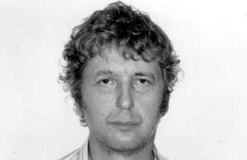 Robert Peernock
Murderer · USA · 1987
Robert John Peernock (born c. 1937) was convicted of murdering his wife, Claire…
1 victim
Robert Peernock
Murderer · USA · 1987
Robert John Peernock (born c. 1937) was convicted of murdering his wife, Claire…
1 victim
 Albert Clozza
Murderer · USA · 1983
Albert Clozza was convicted of killing a 13-year-old girl, Patricia Beth Bolton…
1 victim
Albert Clozza
Murderer · USA · 1983
Albert Clozza was convicted of killing a 13-year-old girl, Patricia Beth Bolton…
1 victim
- Gender
- male
- Country
- USA
- Location
- Jefferson Parish, Louisiana, USA
- Date of birth
- : 1956
- Age at first offence
- 22
- Characteristics
- bank robbery
- Victim profile
- Robert Cochran, an off-duty sheriff's deputy working as a bank guard
- Method of murder
- Shooting
- Date(s) of murder
- January 30, 1978
- Years active
- 1978
- Date of arrest
- —
- Status
-
Executed
Executed by electrocution in Louisiana on June 7, 1987
Background
Benjamin Berry was convicted in 1978 of killing Robert Cochran, a Jefferson Parish deputy sheriff working as a guard in a bank, during a bank robbery attempt. Berry was sentenced to death and later executed in Louisiana.
Berry was represented by Frederick A. Blanche, III as counsel for his trial.
The offence
On January 30, 1978, Benjamin Berry and David Pennington drove from Baton Rouge to Metairie with the intention of robbing the Metairie Bank and Trust Company. Berry entered the bank and drew a nine millimeter automatic pistol.
There was an exchange of gunfire between Berry and Cochran, resulting in Cochran’s death. Berry fired three shots and Cochran fired one shot. Cochran’s shot struck Berry in the lower left chest; two of Berry’s shots struck Cochran in the shoulder and the neck, resulting in Cochran’s death.
Berry and Pennington fled the scene and returned to Baton Rouge, where both were arrested.
Berry was indicted for first-degree murder.
At trial, Blanche conceded in his opening statement that Berry intended to rob the bank in Metairie. Blanche stipulated to the following facts: (1) that Berry went to the bank intending to commit an armed robbery; (2) after entering the bank Berry fired three shots, two of which struck and killed Cochran; (3) Cochran fired a single shot which struck Berry; and (4) the bullets which were found in Cochran and Berry each came from the other's gun.
The guilt phase included witnesses called by the state to establish that Berry fired the first shot in the bank.
Berry was the only witness in his behalf. His testimony corroborated the facts in the stipulation. Berry denied that he fired the first shot and contended that he did so only as a self-defense reflex, and that he did not possess the specific intent necessary for a first degree murder conviction under the Louisiana statute.
The jury found Berry guilty.
Investigation
The state's evidence identifying Berry as the individual who committed the attempted armed robbery and shooting was described as overwhelming.
Arrest
After Berry and Pennington fled the scene, they returned to Baton Rouge, where both were arrested.
Trial
The jury found Berry guilty. During the sentencing phase, Blanche introduced no witnesses or evidence on Berry's behalf.
Berry's mother was called to testify but was apparently overcome by emotion and ultimately was not placed on the stand. Blanche then placed her on the front row of the courtroom in full view of the jury.
Berry was sentenced to death by electrocution.
Sentencing
Berry was sentenced to death by electrocution after his conviction for the first degree murder of Robert Cochran.
Appeals
Berry’s appeals included federal habeas corpus litigation and a United States Court of Appeals decision.
Federal habeas petition and ineffective assistance claim
Benjamin A. Berry, Petitioner-Appellant, v. John T. King, Secretary of Department of Corrections, Etc., et al., Respondents-Appellees, No. 85-3043, United States Court of Appeals, Fifth Circuit, July 1, 1985.
This appeal from a denial of a petition for habeas corpus raised two issues:
- whether Benjamin Berry was denied effective assistance of counsel in his state capital murder trial; and
- whether the Fifth Circuit should reconsider its position that excluding from the guilt phase of a capital case jurors who are absolutely opposed to the death penalty did not violate the constitutional rights of the defendant in light of the Eighth Circuit's decision in Grigsby v. Mabry, 758 F.2d 226 (8th Cir.1985).
The court affirmed the denial of the petition, but left in effect the stay of execution for fifteen days to permit Berry to apply for certiorari. The disposition included:
- AFFIRMED.
Factual and procedural background in the 1985 federal appeal
The January 30, 1978 bank robbery attempt and shooting were described as the basis for Berry’s state capital murder case. Berry’s federal appeal included details of the state procedural history: his conviction, appeals, and denials of habeas relief in state court.
The state habeas petition was denied after an evidentiary hearing. The primary charge made in the state habeas petition was that Berry was denied effective assistance of counsel because Blanche was addicted to illegal drugs at the time of the trial. In the state evidentiary hearing, witnesses testified including Blanche himself, the state judge who presided over Berry's trial, David Pennington's attorney, and various associates of Blanche. The testimony of Blanche's associates was that he had, at times in the past, had problems with drugs. The state judge and others who were present at Berry's trial testified that Blanche did a good job in a difficult case.
The denial of the state habeas petition was affirmed by the Louisiana Supreme Court in State v. Berry, 430 So.2d 1005 (La.1983).
Berry then filed a federal habeas corpus petition under 28 U.S.C. Sec. 2254 in the Eastern District of Louisiana. The district court dismissed all claims save ineffective assistance of counsel and granted a stay of execution pending Strickland v. Washington and Pulley v. Harris, which were then pending before the Supreme Court. Berry appealed and the Fifth Circuit remanded after decisions in Strickland and Pulley v. Harris were issued in 736 F.2d 1524.
In August 1984, an evidentiary hearing was held before a magistrate. The magistrate recommended dismissal of the petition and the district court adopted the findings and recommendations. Berry noticed eight separate grounds for appeal from the district court's dismissal; only ineffective assistance of counsel and the claim based on Grigsby v. Mabry were pressed in the appeal.
Ineffective assistance of counsel analysis
The Fifth Circuit applied the two-part test set forth by the Supreme Court in Strickland v. Washington: deficient performance and prejudice.
Berry’s ineffective assistance contentions fell into two related categories:
- Alleged drug addiction by Blanche caused Blanche to fail to adequately investigate and prepare for the defense, leading to failure to locate witnesses with exculpatory information in the guilt phase and mitigating testimony in the penalty phase.
- Blanche’s drug use and failure to investigate prevented him from making an organized presentation during the guilt and sentencing phases. Berry contended this caused Blanche to stipulate to the “functional equivalent of a plea of guilty” without Berry's consent and that Blanche’s plea for Berry’s life was “tepid” during sentencing.
The court stated that the question whether Blanche used drugs during Berry’s trial was far from settled in either the state or federal evidentiary hearings, and that under Strickland, the fact that an attorney used drugs was not, by itself, relevant. The court focused on Berry’s specific allegations and whether deficient performance and prejudice were shown.
The court discussed Berry’s allegation that failure to investigate medical and ballistic evidence undermined reasonable doubt about who fired the first shot. The court referenced the testimony of Dr. Monroe Samuels, a forensic pathologist who testified at the state evidentiary hearing. The court found Dr. Samuels’ testimony at best equivocal and “certainly not sufficient to undermine confidence in the outcome of the trial.” The court concluded that even if Blanche failed to investigate and that failure was unreasonable, no prejudice was demonstrated because Berry had not pointed to other evidence that would have been produced.
Regarding the stipulation, the court stated that the stipulation did not admit every element of guilt and did not admit specific intent. The defense presented in the guilt phase was lack of specific intent under La.Rev.Stat. 14:30. The court concluded Berry failed to identify any prejudice resulting from the stipulation, characterizing Berry’s argument as involving lack of meaningful adversarial testing and an effective relief of the state’s burden, but finding the argument not convincing. The court further held that there was no identified prejudice in the sentencing phase from any failure to investigate by Blanche.
The court addressed Berry’s assertion about his mother’s attempted testimony, stating Mrs. Berry was overcome with emotion and unable to testify, and that Blanche placed her on the front row of the courtroom in full view of the jury as a reasonable and strategic response.
The court examined Blanche’s closing argument and found it within the range of professional competence required.
The effect of Grigsby v. Mabry
The Fifth Circuit discussed Witherspoon v. Illinois and the concept of jurors absolutely opposed to the death penalty. It stated that decisions of the circuit had established as a matter of law that exclusion of Witherspoon-authorized jurors from the guilt phase did not violate Sixth Amendment or Fourteenth Amendment rights.
The Eighth Circuit’s different conclusion in Grigsby v. Mabry was discussed, and the court stated that from the jury voir dire it appeared one juror was challenged on Witherspoon grounds at Berry’s trial. Berry asked the court to take judicial notice of underlying factual findings in Grigsby and hold that the exclusion violated his Sixth Amendment rights. The court noted it was informed a petition for certiorari had been filed in Grigsby and stated the Eighth Circuit’s decision may not be ignored.
Although affirming the denial of the habeas petition, the court left in effect the stay of execution for fifteen days to permit Berry to apply for certiorari and a further stay.
Appeals: 1987 per curiam denial of certificate of probable cause and stay
Benjamin A. Berry, Petitioner-Appellant, v. C. Paul Phelps, Secretary of Department of Corrections and Hilton Butler, Warden of Louisiana State Prison, Angola, Louisiana, Respondents-Appellees, No. 87-3408, United States Court of Appeals, Fifth Circuit, June 5, 1987.
This per curiam decision addressed an application for a certificate of probable cause and a request for a stay of execution from the denial of Berry’s third federal petition for a writ of habeas corpus.
The court denied a stay of execution and denied the application for certificate of probable cause, concluding Berry had not made a substantial showing of denial of a federal right.
Scheduling and procedural posture described in the 1987 appeal
The opinion stated Berry was sentenced to death by electrocution after conviction for first degree murder of Robert Cochran. Berry shot Cochran while Berry and others were attempting to commit an armed bank robbery. The Louisiana Supreme Court affirmed Berry’s conviction and sentence on direct appeal in State v. Berry, 391 So.2d 406 (La.1980). The Louisiana Supreme Court also denied Berry’s first state petition for habeas corpus in State v. Berry, 430 So.2d 1005 (La.1983).
After the denial of state habeas relief, Berry filed his first federal habeas relief raising eight claims, including a Caldwell claim but not including a Collins claim. The district court denied relief on all claims and Berry appealed; the Fifth Circuit rejected arguments on the two claims presented on appeal and affirmed the denial of habeas relief in Berry v. King, 765 F.2d 451 (5th Cir.1985).
In Berry’s second federal habeas round, a single issue was raised about discriminatory administration of the death penalty against defendants accused of killing Caucasians under McCleskey v. Kemp, and it was denied. The district court denied the second petition in Berry v. Phelps, 639 F.Supp. 1515 (E.D.La.1986) and the Fifth Circuit affirmed in Berry v. Phelps, 795 F.2d 504 (5th Cir.1986).
Berry’s third federal habeas petition was denied by the district court in an oral opinion on June 3, 1987. The district court dismissed the petition based on the abuse of the writ doctrine, citing Rule 9(b), 28 U.S.C. foll. Sec. 2254.
Caldwell claim and abuse of the writ
Berry raised two issues on appeal in 1987:
- whether the prosecutor's reference during closing argument to the availability of appellate review violated federal due process (Caldwell claim); and
- whether the Louisiana capital sentencing statute was unconstitutional because it allows the jury to base its sentence on aggravating factors that duplicate the elements of the underlying offense (Collins claim).
The court agreed with the district court that Berry failed to make a substantial showing of the denial of a federal right, denied a stay of execution, and denied the application for certificate of probable cause.
On the Caldwell issue, the court stated it need not reach the merits because Berry failed to raise the claim in his second federal writ application, and it treated the assertion as an abuse of the writ under Rule 9(b).
The opinion quoted the Caldwell principle that it is constitutionally impermissible to rest a death sentence on a determination made by a sentencer led to believe that responsibility rests elsewhere, and it quoted Caldwell’s description of the prosecutor’s message:
- "it is constitutionally impermissible to rest a death sentence on a determination made by a sentencer who has been led to believe that the responsibility for determining the appropriateness of the defendant's death rests elsewhere."
- "your decision is not the final decision.... Your job is reviewable."
The opinion also noted the prosecutor statement in Berry’s trial. It reproduced the statement attributed to the prosecutor during the sentencing phase closing argument:
- "There is another provision of the act which says that the Supreme Court of Louisiana shall review every sentencing of death to determine if it is excessive. Every possible safeguard where a defendant for whom the jury is decided, who the D.A. has decided, who the judge has decided, who shall be sentenced to death shall go to the ultimate court of this state, and they will also determine is that sentence excessive, was the jury [erroneous] when they reached their verdict."
The court agreed with the district court that the remarks did not deny Berry a fundamentally fair sentencing determination, noting the prosecution made a brief almost passing reference to appellate review, there was no objection, and the trial court instructed the jury they must decide whether Berry should receive the death sentence.
Collins duplicative aggravating factors claim and abuse of the writ
On the Collins issue, the court addressed that Berry argued aggravating circumstances duplicated elements of the underlying offense. The opinion discussed Collins v. Lockhart and Zant v. Stephens, stating statutory aggravating circumstances must genuinely narrow the class eligible for the death penalty.
The court held that Berry failed to raise the issue in his second federal habeas petition filed in July 1986 and found the attempt to excuse failure based on later awareness of conflicting circuit rules did not justify the delay. It concluded the assertion was an abuse of the writ.
The court also held the claim had no merit, stating that it had expressly rejected the Collins approach in multiple occasions and that no circuit court had followed Collins.
Welcome v. Blackburn stay request
Berry argued that the Supreme Court’s decision to stay the execution in Welcome v. Blackburn required a stay in his case. The court disagreed, stating that absent a declaration by the Supreme Court that executions should be stayed in cases presenting this issue, the court followed circuit precedents and denied both a certificate of probable cause and a stay of execution.
The opinion cited:
- Wicker v. McCotter, 798 F.2d 155 (5th Cir.1986)
- Evans v. Thigpen, 809 F.2d 239 (5th Cir.1987)
Conclusion of the 1987 appeal
The per curiam conclusion stated:
- "The application for a certificate of probable cause is DENIED; and the request for a stay of execution is DENIED."
Outcome
Benjamin Berry was executed by electrocution in Louisiana on June 7, 1987, shortly after midnight.
The execution followed denials of his appeals. The Supreme Court refused to stop the execution, and the Governor said he would not step in. Berry had asked the warden at the state prison in Angola to move him off death row to the isolation cell down the hall from the electric chair so he could be alone.
A candlelight vigil protesting the execution was held in front of the Governor's Mansion in Baton Rouge, and another protest gathered in New Orleans.
The execution was described as the first of five scheduled in Louisiana in the next two weeks and the first in the state since Jan. 4, 1985.
Berry made no final statement.
Aftermath
Berry’s execution was described as the 76th prisoner executed in the United States and the eighth in Louisiana since the United States Supreme Court allowed states to restore the death penalty in 1976.
The 1987 decision also included references to Caldwell v. Mississippi and to Collins v. Lockhart and included additional verbatim excerpts of defense and prosecution closing argument from Caldwell, which were set out as follows:
[E]very life is precious and as long as there's life in the soul of a person, there is hope. There is hope, but life is one thing and death is final. So I implore you to think deeply about this matter. It is his life or death--the decision you're going to have to make, and I implore you to exercise your prerogative to spare the life of Bobby Caldwell.... I'm sure [the prosecutor is] going to say to you that Bobby Caldwell is not a merciful person, but I say unto you he is a human being. That he has a life that rests in your hands. You can give him life or you can give him death. It's going to be your decision. I don't know what else I can say to you but we live in a society where we are taught that an eye for an eye is not the solution.... You are the judges and you will have to decide his fate. It is an awesome responsibility, I know--an awesome responsibility. Caldwell, 472 U.S. at 324, 105 S.Ct. at 2637- (emphasis added).
ASSISTANT DISTRICT ATTORNEY: Ladies and gentlemen, I intend to be brief. I'm in complete disagreement with the approach the defense has taken. I don't think it's fair. I think it's unfair. I think the lawyers know better. Now, they would have you believe that you're going to kill this man and they know-- they know that your decision is not the final decision. My God, how unfair can you be? Your job is reviewable. They know it. Yet they ... COUNSEL FOR DEFENDANT: Your Honor, I'm going to object to this statement. It's out of order. ASSISTANT DISTRICT ATTORNEY: Your Honor, throughout their argument, they said this panel was going to kill this man. I think that's terribly unfair. THE COURT: Alright, go on and make the full expression so the Jury will not be confused. I think it proper that the jury realizes that it is reviewable automatically as the death penalty commands. I think that information is now needed by the Jury so they will not be confused. ASSISTANT DISTRICT ATTORNEY: Throughout their remarks, they attempted to give you the opposite, sparing the truth. They said "Thou shalt not kill." If that applies to him, it applies to you, insinuating that your decision is the final decision and that they're gonna take Bobby Caldwell out in the front of this Courthouse in moments and string him up and that is terribly, terribly unfair. For they know, as I know, and as Judge Baker has told you, that the decision you render is automatically reviewable by the Supreme Court. Automatically, and I think it's unfair and I don't mind telling them so. Id. at 325-26, 105 S.Ct. at 2637-2638 (emphasis added).
Other details
Berry was described as a 31-year-old high school dropout.
The record described Berry’s case as having an eight execution date, with other execution dates canceled by appeals.
A quoted message on protest shirts read: "Justice for All - Even the Victims."
The opinion set out the legal elements of Berry’s first degree murder conviction based on three elements:
- The offender had "specific intent to kill or to inflict great bodily harm and is engaged in the perpetration or attempted perpetration of ... armed robbery";
- The offender had "specific intent to kill or to inflict great bodily harm upon a ... peace officer engaged in the performance of his lawful duties"; and
- The offender had "specific intent to kill or to inflict great bodily harm upon more than one person."
The opinion also set out the aggravating circumstances on which the jury based Berry’s death sentence:
- "The offender was engaged in the perpetration or attempted perpetration of ... armed robbery";
- "The victim was a ... peace officer engaged in his lawful duties"; and
- "The offender knowingly created a risk of death or great bodily harm to more than one person."

Spotted an error, or have more information about this case?