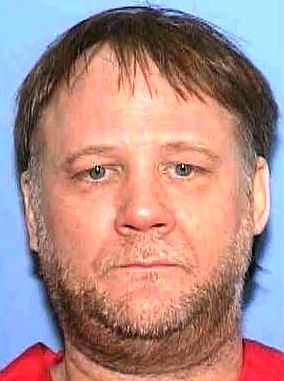
Earl Wesley Berry
Murderer Brian Kevin Rosenfeld
Murderer · USA · 1985
Brian Kevin Rosenfeld Brian Kevin Rosenfeld was sentenced to three concurrent l…
23 victims
Brian Kevin Rosenfeld
Murderer · USA · 1985
Brian Kevin Rosenfeld Brian Kevin Rosenfeld was sentenced to three concurrent l…
23 victims
 Yahweh ben Yahweh
Murderer · USA · 1980
Yahweh ben Yahweh was born and legally named Hulon Mitchell Jr. (October 27, 19…
23 victims
Yahweh ben Yahweh
Murderer · USA · 1980
Yahweh ben Yahweh was born and legally named Hulon Mitchell Jr. (October 27, 19…
23 victims
 Russell Ellwood
Murderer · USA · 1991
Russell Ellwood was a former taxi driver. Authorities suspected him of killing…
20 victims
Russell Ellwood
Murderer · USA · 1991
Russell Ellwood was a former taxi driver. Authorities suspected him of killing…
20 victims
 Jessica Riggins
Murderer · USA · 2007
Jessica Renae Riggins was convicted of murdering her husband, Rusty Riggins. Sh…
1 victim
Jessica Riggins
Murderer · USA · 2007
Jessica Renae Riggins was convicted of murdering her husband, Rusty Riggins. Sh…
1 victim
 Michael James Hayward
Murderer · USA · 1994
Michael James Hayward was sentenced to death in 1996. Hayward was involved in c…
1 victim
Michael James Hayward
Murderer · USA · 1994
Michael James Hayward was sentenced to death in 1996. Hayward was involved in c…
1 victim
 Kenneth Kenley
Murderer · USA · 1984
Kenneth Kenley Kenneth Kenley was executed by lethal injection in Missouri on F…
1 victim
Kenneth Kenley
Murderer · USA · 1984
Kenneth Kenley Kenneth Kenley was executed by lethal injection in Missouri on F…
1 victim
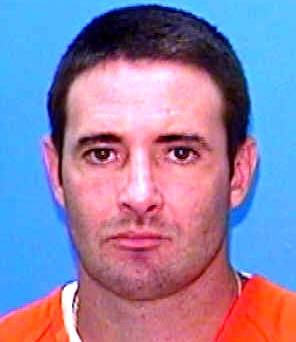 John Troy
Murderer · USA · 2001
Name: John Troy · Date of birth (DOB): 12/05/69 · Twelfth Judicial Circuit: Sar…
1 victim
John Troy
Murderer · USA · 2001
Name: John Troy · Date of birth (DOB): 12/05/69 · Twelfth Judicial Circuit: Sar…
1 victim
 Earl Matthews
Murderer · USA · 1984
Earl Matthews, Jr. was convicted and sentenced to death for the 1985 killing of…
1 victim
Earl Matthews
Murderer · USA · 1984
Earl Matthews, Jr. was convicted and sentenced to death for the 1985 killing of…
1 victim
- Gender
- male
- Country
- USA
- Location
- Chickasaw County, Mississippi, USA
- Date of birth
- May 5, 1959
- Age at first offence
- 28
- Characteristics
- rape
- Victim profile
- Mary Bounds, 56
- Method of murder
- Beating with fists and forearm
- Date(s) of murder
- November 29, 1987
- Years active
- 1987
- Date of arrest
- December 6, 1987
- Status
-
Executed
Executed by lethal injection in Mississippi on May 21, 2008
Case overview
Earl Wesley Berry was convicted of capital murder and sentenced to death for the kidnapping and beating death of Mary Bounds. Mary Bounds was reported missing on November 29, 1987. A few days later, her vehicle was located in Houston, Mississippi, with spattered blood around the driver’s side door. Her body was found nearby. She had been severely beaten and later was determined to have died of head injuries from repeated blows.
Berry provided details of what transpired in his confession. On the evening of November 29, 1987, while driving through Houston in his grandmother’s vehicle, Berry saw Mary Bounds near a church. As she was preparing to enter her vehicle, he approached and forced her into his vehicle, ultimately driving to a wooded area out of town. Mary pleaded with Berry, but he beat her with his fists and forearm. Berry carried her further into the woods and left her. Berry’s brother called the police after witnessing suspicious behavior. Berry was arrested at his grandmother’s home and soon confessed. Police found mismatched tennis shoes Berry discarded in a pond and a bloodied towel.
Timeline
- November 29, 1987 — Mary Bounds was reported missing around midnight; Berry drove through Houston in his grandmother’s vehicle, saw Mary Bounds near a church, approached her, and forced her into his vehicle.
- December 1, 1987 — Mary Bounds’ vehicle was located in Houston, Mississippi; spattered blood was found around the driver’s side door.
- December 5, 1987 — Berry’s brother called investigators and told them what he had observed.
- December 6, 1987 — Berry was arrested at his grandmother’s house and confessed to the crime.
- March 1, 1988 — A grand jury of Chickasaw County indicted Earl Wesley Berry for the murder and kidnapping of Mary Bounds and as an habitual criminal.
- May 20, 1982 — Berry escaped from Webster County custody.
- October 27, 1988 — Homicide commitment in Chickasaw County occurred.
- October 30, 2007 — The Mississippi Department of Corrections received the official ruling at 5:41 p.m. of the United States Supreme Court granting a stay of execution for Earl Wesley Berry.
- April 16, 2008 — The United States Supreme Court ruled in Baze holding that Kentucky’s three-drug protocol for administering lethal injections does not violate the Eighth Amendment.
- May 21, 2008 — Earl Wesley Berry was executed by lethal injection in Mississippi; he was pronounced dead at 6:15 p.m.
- May 6, 2008 — William Earl Lynd was executed by lethal injection in Georgia (context provided).
- September 2007 — The United States Supreme Court agreed to hear Baze v. Rees regarding Kentucky’s lethal injection protocol (context provided).
The offence
Authorities later located her automobile in Houston, near the Baptist Church she attended. Blood was splattered around the driver’s door of the car. Mary Bounds’ earrings were found near the car Tuesday morning.
Berry’s confession provided the details of what transpired. While driving through Houston on November 29, 1987, Berry saw Mary Bounds near a church. As she prepared to enter her vehicle, he approached and hit her and forced her into his vehicle. Berry left town after the initial abduction.
Berry took Mary Bounds into a wooded area and ordered her to lie down, intending to rape her. Berry did not actually commit the rape; he took his victim back to his car, telling her they would return to town. Instead, Berry drove to another wooded area where they exited the vehicle. Afterwards, he carried her further into the woods and left her.
Berry drove to his grandmother’s house. Along the way, he disposed of a pair of mismatched tennis shoes. At his grandmother’s house, he burned his bloodied clothes and wiped the vehicle he had used of any blood stains with a towel, which he threw into a nearby pond. A blue pajama top and dish towel were found in the pond behind Berry’s house.
The body of Mary Bounds was found nearby. Her body bore wounds consistent with a beating. Her legs were badly scratched. She died of head injuries from blows.
Investigation and evidence
A few days after Mary Bounds was reported missing, investigators located her vehicle in Houston, Mississippi. Inspection of the vehicle revealed spattered blood around the driver’s side door.
After learning that a woman was missing, Cecil Woodard, Jr. found a pair of woman’s shoes by the side of a road on Monday morning and directed authorities to the place where he found them. Nearby, authorities discovered Mary Bounds’ body.
Police found a pair of mismatched tennis shoes that Berry had discarded and recovered a bloodied towel from the pond near Berry’s grandmother’s house. Berry’s knuckles were skinned when he was arrested. Berry’s brother, who was at the house, witnessed some of the suspicious behavior and called investigators on December 5, 1987.
Arrest and confession
Berry was arrested at his grandmother’s home and soon confessed to the crime. The confession was used against him at trial.
Trial
Berry was indicted for the murder and kidnapping of Mary Bounds and as a habitual criminal on March 1, 1988. He was tried before a bifurcated jury in a first trial (guilt/innocence and punishment phases).
In a bifurcated trial, Berry was found guilty of capital murder and sentenced to death.
Habitual offender and sentencing notice
After the jury retired to consider whether Berry should be sentenced to death, a hearing was held on the habitual offender portion of Berry’s indictment. The state offered proof of seven prior convictions: two escapes; two grand larceny convictions; perjury; burglary; and simple assault on a law enforcement officer.
The court found that requirements of Miss.Code Ann. § 99-19-81 were met and adjudged Berry an habitual criminal, ineligible for probation or parole. Shortly thereafter the jury returned from deliberation and delivered the sentence of death without being informed that Berry could never be paroled, if given a life sentence.
The Mississippi Supreme Court later held that the jury should have been informed on this point before considering its sentencing options and concluded that the habitual offender portion should be held prior to jury deliberations on the death penalty.
Evidentiary and trial issues in direct appeal (as later described)
In Berry v. State, 575 So.2d 1 (Miss. 1990), the Mississippi Supreme Court affirmed as to guilt and vacated and remanded for sentencing trial. The court held that Berry’s written confession was voluntary and knowing; he waived his right to counsel; he was not entitled to change of venue; failure to remove a juror did not deprive him of a fair trial; photographs of the victim were admissible; he waived the right to continuance; he was not entitled to a lesser included offense for noncapital crime; the indictment sufficiently gave notice of the crime charged; and the jury should have been informed that Berry was a habitual offender who was not entitled to parole or probation. The opinion also included dissents and concurrences, including a dissent by Roy Noble Lee, C.J., joined by Pittman, J., and a concurrence/dissent by Pittman, J.
In Berry v. State, 703 So.2d 269 (Miss. 1997), after remand, the Mississippi Supreme Court affirmed in part and reversed and remanded in part. It described part one holdings including proper evidentiary rulings, that prosecutor comments and actions did not prejudice Berry’s right to a fair trial, proper jury instructions regarding mitigating factors, and that the death sentence was not disproportionate due to his mental conditions. It also described part two regarding reversible error in determining that Batson did not apply to certain prosecutor actions regarding peremptory challenges of black jurors, requiring a remand for a Batson hearing.
In Berry v. State, 802 So.2d 1033 (Miss. 2001), after remand, the Mississippi Supreme Court affirmed in part and remanded in part for a hearing on whether Batson criteria were violated. After a Batson hearing, the court held that the state offered race-neutral reasons for peremptory strikes of five black prospective jurors; any error in basing a strike on a juror’s religious preference was harmless; and that the trial court’s blanket findings on the Batson issue did not require remand. It affirmed.
In Berry v. State, 882 So.2d 157 (Miss. 2004) (PCR), the Mississippi Supreme Court denied application for leave to file petition for postconviction relief. It held that counsel’s allegedly deficient performance in failing to obtain a change of venue did not result in prejudice; counsel was not ineffective in failing to object to alleged improper remarks on credibility; counsel was not ineffective in failing to request a continuance or mistrial; DNA testing results were not exculpatory evidence subject to Brady disclosure; aggravating factors elevating the charge did not require inclusion in the indictment; determination of whether Berry was not mentally retarded was not required to be submitted to the jury; and Berry was not entitled to an Atkins hearing.
Sentencing
Berry was sentenced to death by a Chickasaw County jury for the November 29, 1987 murder of Mary Bounds.
The death sentence was vacated and the case was remanded for a new sentencing trial. On remand, the Circuit Court entered a death sentence again. The Mississippi Supreme Court affirmed the conviction in multiple appeals and addressed issues related to jury selection and sentencing procedures.
Sentencing-related quote
The prosecutor’s argument included the following quotation:
“where is the justice and mitigation and mercy of being a faithful member of the First Baptist Church, a member of the choir, taught Sunday school, there when the doors are open?…This woman was there every time the doors are open, at night, Sunday night. She missed choir practice that night. No doubt about that… [T]here is only one verdict in my opinion. That is this man receive the death penalty, the same penalty Mary Bounds got without hearing by jury or a trial. That man acted as judge, jury, and executioner all in a matter of minutes. She didn’t have any of the benefits of any justice or mitigation or mercy; and there is none due here in my humble opinion.”
The prosecutor also injected Biblical references into the proceedings when urging the jury to vote for the death penalty, including the quotation:
“it’s authorized by Mississippi, and it’s been authorized by scriptural law for a long time.”
Appeals
Berry’s postconviction and appellate history included multiple state appeals and federal habeas proceedings.
Direct appeal: conviction affirmed; death sentence vacated
In Berry v. State, 575 So.2d 1 (Miss. 1990), the Mississippi Supreme Court affirmed the conviction for murder and kidnapping and vacated the death sentence, remanding for a new sentencing trial.
After remand: sentencing affirmed in part; remanded in part
In Berry v. State, 703 So.2d 269 (Miss. 1997), the Mississippi Supreme Court described review of the death sentence after a new sentencing trial and affirmed in part and remanded in part for a Batson hearing due to reversible error in the trial court’s determination that Batson did not apply to certain prosecutor actions regarding peremptory challenges.
Batson hearing and affirmance
In Berry v. State, 802 So.2d 1033 (Miss. 2001), the Mississippi Supreme Court affirmed after the Batson-related remand and hearing, concluding that race-neutral reasons were provided for the peremptory strikes and that no remand was required based on the trial court’s findings.
PCR application denied
In Berry v. State, 882 So.2d 157 (Miss. 2004) (PCR), the application for leave to file postconviction relief was denied.
Federal habeas and execution method challenge dismissed
In Berry v. Epps, 506 F.3d 402 (5th Cir. 2007), the Fifth Circuit addressed a § 1983 challenge to the protocol for lethal injection in Mississippi. It held that the inmate’s delay in bringing the challenge warranted dismissal and that he was not entitled to a stay of execution pending the United States Supreme Court’s decision in a case involving a challenge to the method of execution. The judgment affirmed; injunction and stay were denied.
Supreme Court stays and review of lethal injection protocol
Berry sought last-minute review and a stay. The Mississippi Department of Corrections stated that on October 30, 2007, the United States Supreme Court granted Berry a stay of execution because the method of execution needed to be reviewed.
The United States Supreme Court later ruled in Baze on April 16, 2008, and the effect was to lift a de facto moratorium. In the sequence described, executions were on hold across the nation for seven months before that change.
Execution and last statements
Stay and rescheduled execution
In October 2007, the United States Supreme Court granted Berry a stay of execution. After the Supreme Court’s Baze decision on April 16, 2008, Mississippi’s execution date proceeded.
Last meal
Berry’s final/special meal included:
- Barbecue pork chops
- Barbecue pork sausages
- Buttered toast
- Salad (heavy on the onion)
- Mashed potatoes and gravy
- Pecan pie
- Any juice
For breakfast he had two biscuits, sausage, rice and coffee.
Final words
Berry’s final words included the following quotation:
- “No comment. It's in God's hands now.”
Execution day remarks and quotes
After being informed about his appeals being exhausted, Berry was described as acting crazy in the accounts of the Attorney General. The quoted remarks included:
- “All day he'd been entirely lucid,” Hood said.
- “When I walked in and informed him that all his appeals were exhausted, he started acting crazy. He was trying to fake us again.”
In the execution chamber proceedings, Corrections Commissioner Chris Epps asked Berry about remorse, and Berry’s response was quoted as:
“He said, No, and I think after 21 years, I've paid enough.'”
Epps also described asking the question and Berry’s answer as:
“Inmate Berry, do you have any remorse for what you did to Mrs. Bounds?'
He understood the question, and that was the answer he gave.”
The media accounts also included the following quotation attributed to Berry before the procedure began:
“It's in God's hands now.”
When told he had five minutes to say anything, Berry answered:
“No comment.”
Berry was declared dead at 6:15 p.m. on May 21, 2008. The Mississippi Department of Corrections announcement and subsequent accounts described that death occurred after he was strapped onto a table and that he never opened his eyes and never moved except to speak twice.
Timing and protocol (execution process details provided)
The material included a description of the lethal injection protocol process and a “Chronological Sequence of Events of Execution,” with steps such as a transfer to a holding cell, emergency lockdown status, media center opening, visits by attorney and chaplain, serving last meal and allowing a shower, clergy allowed to visit upon request, transport of witnesses, escort to execution room, witnesses in observation room, and post execution briefing.
Other details
Medical and personal background
The material described Berry as having mental health issues and low intellectual functioning, including paranoid schizophrenia and assessments of his IQ as below average. It also described that his lawyers provided evidence of mental retardation and that the issue was litigated through Atkins-related proceedings.
The material also stated that Berry had a history including time in mental institutions, treatment for paranoid schizophrenia, and that he was reportedly attempting to swallow razor blades on one occasion. It stated that he lived with his grandmother.
Confession intent regarding rape
The material stated that Berry intended to rape Mary Bounds and ordered her to lie down, but did not commit the rape at that point.
Quotes in dissent
The Presiding Justice’s dissent included the following quotations:
“As an indigent defendant sentenced to the ultimate and final punishment, Berry is entitled to appointed competent and conscientious counsel to assist him with his pursuit of post-conviction relief. He has now presented this Court with substantial evidence that but for his post-conviction attorney’s deficient performance, he would have been granted an opportunity to pursue his claim that he is mentally incompetent pursuant to Atkins… Whatever the reasons for his prior counsel’s deficient performance, it is clear that Berry was not allowed a meaningful opportunity to present his mental retardation claim to this Court… When appointed counsel fails to provide the Court with the relevant facts, the system designed to ensure due process as well as a timely end to the appellate process, ceases to function. In the end, justice fails for all of those involved.”
Prior convictions and commitments (as listed)
The record listed the following commitments:
- Simple Assault — 09/24/1980 — Oktibbeha County — 5 Years
- Escape — 05/20/1982 — Webster County — 2 Years
- Homicide — 10/27/1988 — Chickasaw County — Death
The record also listed “Escape 05/20/1982 Webster County 2 Years, Homicide 10/27/1988 Chickasaw County Death,” and a separate line that included “Simple Assault 09/24/1980 Oktibbeha County 5 Years” and “Escape 05/20/1982 Webster County 2 Years, Homicide 10/27/1988 Chickasaw County Death.”
The material also described that the state offered proof of seven prior convictions in the habitual offender hearing: two escapes; two grand larceny convictions; perjury; burglary; and simple assault on a law enforcement officer.
Personal identifiers and appearance (as listed)
The record listed:
- Earl Wesley Berry (male, white)
- Date of birth: 05/05/1959
- Age at execution: 49 (as described)
- FBI number: 795357V3
- Hair color: brown
- Complexion: medium
- Race: white
- Sex: male
- Eye color: blue
- Build: large
- Height: 6'01"
- Weight: 255
Execution status and stay announcement contact information
A Mississippi Department of Corrections news release dated October 30, 2007 included contact details “Tara Booth” and contained a quotation from Chris Epps commending staff professionalism.
Body and burial arrangements
After the execution, Berry’s body was to be returned for burial in the family plot at a rural Webster County cemetery. Another account stated Berry’s body would be released to a Eupora funeral home.
Family and witnesses
Accounts described visits from Berry’s mother, brothers, sister-in-law, family friends, and attorneys on the day of execution. Only attorneys witnessed his death. Several dozen members of Mary Bounds’ family were at Parchman. Jena Watson and Rebecca Blissard were described as set to witness the execution.
Victim and related individuals
The victim was Mary Bounds, age 56. The material included a quote from Mary Bounds’ widower, Charles Bounds:
- “I don't have much to say. I just think it took too long.”
- “I have had this on my mind for 20 years, and it really takes a lot out of me.”
Spotted an error, or have more information about this case?