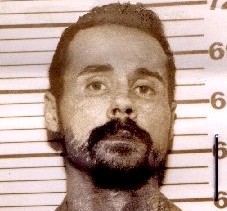
Wilford Lee Berry
Murderer Brian Kevin Rosenfeld
Murderer · USA · 1985
Brian Kevin Rosenfeld Brian Kevin Rosenfeld was sentenced to three concurrent l…
23 victims
Brian Kevin Rosenfeld
Murderer · USA · 1985
Brian Kevin Rosenfeld Brian Kevin Rosenfeld was sentenced to three concurrent l…
23 victims
 Yahweh ben Yahweh
Murderer · USA · 1980
Yahweh ben Yahweh was born and legally named Hulon Mitchell Jr. (October 27, 19…
23 victims
Yahweh ben Yahweh
Murderer · USA · 1980
Yahweh ben Yahweh was born and legally named Hulon Mitchell Jr. (October 27, 19…
23 victims
 Russell Ellwood
Murderer · USA · 1991
Russell Ellwood was a former taxi driver. Authorities suspected him of killing…
20 victims
Russell Ellwood
Murderer · USA · 1991
Russell Ellwood was a former taxi driver. Authorities suspected him of killing…
20 victims
 Robert Martines Perez
Murderer · USA · 1994
Name: Robert Martines Perez · Other name used in proceedings: Robert Martinez P…
15 victims
Robert Martines Perez
Murderer · USA · 1994
Name: Robert Martines Perez · Other name used in proceedings: Robert Martinez P…
15 victims
 Jeffrey Wayne Gorton
Murderer · USA · 1986
Jeffrey Wayne Gorton Jeffrey Wayne Gorton was sentenced to 40-80 years in priso…
2 victims
Jeffrey Wayne Gorton
Murderer · USA · 1986
Jeffrey Wayne Gorton Jeffrey Wayne Gorton was sentenced to 40-80 years in priso…
2 victims
 Rodrick Dantzler
Mass murderer · USA · 2011
Rodrick Shonte Dantzler was the suspected gunman in a mass murder in Grand Rapi…
7 victims
Rodrick Dantzler
Mass murderer · USA · 2011
Rodrick Shonte Dantzler was the suspected gunman in a mass murder in Grand Rapi…
7 victims
 Angus Sinclair
Serial killer · United Kingdom · 1961
Angus Sinclair was sentenced to life in prison for the murders of Helen Scott a…
8 victims
Angus Sinclair
Serial killer · United Kingdom · 1961
Angus Sinclair was sentenced to life in prison for the murders of Helen Scott a…
8 victims
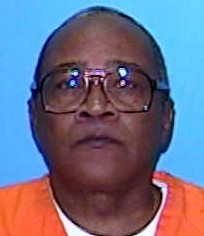 Norman Parker
Murderer · USA · 1966
Name: Norman Parker · Also known as: Nathen Parker; Shawn Vincent · Date of bir…
3 victims
Norman Parker
Murderer · USA · 1966
Name: Norman Parker · Also known as: Nathen Parker; Shawn Vincent · Date of bir…
3 victims
 Steve Edward Roach
Homicide · USA · 1993
Steve Edward Roach was sentenced to death and was executed by lethal injection…
1 victim
Steve Edward Roach
Homicide · USA · 1993
Steve Edward Roach was sentenced to death and was executed by lethal injection…
1 victim
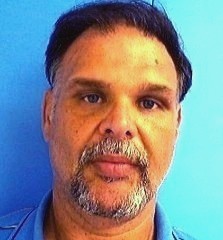 Patrick Burris
Spree killer · USA · 2009
Patrick Tracy Burris (August 8, 1967 – July 6, 2009) was an American spree kill…
5 victims
Patrick Burris
Spree killer · USA · 2009
Patrick Tracy Burris (August 8, 1967 – July 6, 2009) was an American spree kill…
5 victims
- Gender
- male
- Country
- USA
- Location
- Cuyahoga County, Ohio, USA
- Date of birth
- September 2, 1962
- Age at first offence
- 27
- Characteristics
- mentally ill, abuse, alcoholic
- Victim profile
- Charles Mitroff, 66 ( his new boss )
- Method of murder
- Shooting
- Date(s) of murder
- November 30, 1989
- Years active
- 1989
- Date of arrest
- —
- Status
-
Executed
Executed by lethal injection in Ohio on February 19, 1999
Overview
Wilford Lee Berry, Jr. was executed by lethal injection in Ohio on February 19, 1999. He was known as “The Volunteer” because he was the first convict to waive his right to appeal his death sentence after Ohio reinstated the death penalty. His execution followed the Supreme Court of Ohio’s determination that he was competent to abandon further legal challenges to his aggravated murder conviction and death sentence.
Timeline
- November 30, 1989 — Wilford Lee Berry and an accomplice, Anthony Lozar, ambushed Charles Mitroff at the bakery as Mitroff returned from a delivery run.
- December 2, 1989 — Berry’s conviction is described as stemming from the December 2, 1989 shooting death of his boss, 66-year-old baker Charles Mitroff of Cleveland.
- Three days later — Kenton County patrolman Charles Voorhees spotted the van outside Walton, Kentucky and pulled over the driver.
- 1990 (as described in case proceedings) — Berry was convicted of aggravated murder and sentenced to death.
- August 1995 — Dr. Sharon L. Pearson interviewed Berry for psychological testing and assessment.
- September 5, 1997 — Berry was assaulted by other inmates during a riot, sustaining serious injuries.
- July 22, 1997 — A trial judge issued an order finding Berry competent to forgo any and all further legal challenges.
- December 3, 1997 — The Supreme Court of Ohio issued a per curiam opinion on the motion to adopt findings of fact and issue an execution warrant, concluding Berry was competent and ordering execution.
- May 22, 1998 — The United States Court of Appeals for the 6th Circuit vacated a stay of execution, finding the Ohio Supreme Court’s competence determination binding.
- February 19, 1999 — Berry’s execution was carried out via lethal injection.
- March 3, 1998 (ordered execution date in the Supreme Court of Ohio opinion) — The Supreme Court of Ohio ordered execution to be carried into effect on March 3, 1998 and stated an execution warrant would issue immediately (execution ultimately carried out February 19, 1999).
The offence
Berry killed Charles Mitroff, his new boss, less than a week after he was hired to wash dishes and floors at Charles Mitroff’s Cleveland bakery.
Just before midnight on November 30, 1989, Berry and an accomplice, Anthony Lozar, ambushed Mitroff at the bakery as he returned from a delivery run. Lozar shot Mitroff once in the torso with a Chinese-made semi-automatic assault rifle. As Mitroff struggled to reach a telephone to call for help, Berry shot Mitroff again at point-blank range in the back of the head.
Berry and Lozar cleaned up the blood and drove Mitroff’s van near a bridge in Cleveland, where they dumped Mitroff’s body in a shallow grave. Mitroff’s normally punctual routine was disrupted when he failed to come home, leading his family to suspect something was wrong. They asked a family friend, Brecksville private detective William Florio, to investigate.
Florio said: “The last person who saw him alive was his new employee, a guy who went by the name of Ed Thompson,” and that he called the person up “posing as a guy who helps Charlie out, and asked him to come in early the next day.” Florio also stated: “Ed Thompson” never showed up.
Shortly after the call, Berry (also known as Ed Thompson) and Lozar sloppily repainted Mitroff’s blue, late-model Chevrolet van with black spray paint and fled south.
In a description of the events in federal proceedings, Mitroff looked at Berry after being shot in the torso and said, “You shot me.” When Mitroff begged for Berry to call for help, Berry shot Mitroff in the head.
Berry and Lozar took Mitroff’s wallet and delivery van and buried the body.
After Mitroff was wounded, he was described as begging for his life while crawling away, and he was shot with a .22-caliber rifle as he crawled away, begging for his life. (The record also describes the weapon as a Chinese-made semi-automatic assault rifle and later refers to a .22-caliber rifle in the execution narrative.)
Investigation
Brecksville private detective William Florio investigated after Mitroff failed to come home.
Kenton County patrolman Charles Voorhees spotted Mitroff’s van being driven erratically three days later outside Walton, Kentucky. Voorhees did not know it belonged to a murder victim. He performed a radio check of the license plate and found it did not belong to the vehicle, and decided to pull the driver over. Voorhees stated that although it was dark, he thought it was odd that someone had painted over the chrome on a van that still had the new-car sticker in the window. Voorhees grew more suspicious after noticing the butt of a rifle between the front seats, and he ordered the two men to lie face down outside the van.
Voorhees said: “The vehicle identification number came back to Charlie Mitroff, so I called up to Cleveland.” He further stated: “The dispatcher asked me if Mr. Mitroff was there because they were looking for him.” Duane Rolfsen, then a Kenton County detective, and Voorhees pinned the murder on the two men they had in custody.
Lozar later told police about Berry’s planning and the location of the body. Berry’s accomplice later revealed that Berry wanted him to shoot Charles Voorhees after the traffic stop and described how Berry had planned the robbery, obtained the guns, and enlisted him to help kill Mitroff. Lozar also told police where they could find Mitroff’s body.
Arrest and custody
Berry was arrested after he was stopped while driving Mitroff’s van outside Walton, Kentucky.
The execution narrative described Berry as having been arrested in Kentucky driving the stolen delivery van while driving drunk. In the same description, it said Berry confessed to police and bragged about the murder to fellow jail inmates.
Confession and evidence
Berry confessed a week later. The execution narrative described that when Berry confessed he still was wearing shoes soaked with Mitroff’s blood.
Berry offered two different explanations for his actions. One was that he killed Mitroff for revenge for nearly running down Berry’s sister with the van, and the other was that he killed him for no special reason.
A jury found Berry guilty based on his confessions and significant amounts of circumstantial forensic evidence linking him to the crime.
Trial
Berry was convicted of aggravated murder with the death penalty and firearm specifications. He was also convicted of aggravated robbery and aggravated burglary.
In the federal proceeding description, it stated that the jury convicted Berry after a trial by jury and he was sentenced to death.
Sentencing
The jury sentenced Berry to death for the aggravated murder of Charles Mitroff.
In the Supreme Court of Ohio opinion, the court described its review of Berry’s competence to abandon further legal challenges to his death sentence and conviction.
Competency to waive appeals and related proceedings
Legal question and standard
The Supreme Court of Ohio described the competence standard: “A capital defendant is mentally competent to abandon any and all challenges to his death sentence * * * if he has the mental capacity to understand the choice between life and death and to make a knowing and intelligent decision not to pursue further remedies. The defendant must fully comprehend the ramifications of his decision, and must possess the ‘ability to reason logically,’ i.e ., to choose ‘means which relate logically to his ends.’ ”
The court discussed the United States Supreme Court decision in Rees v. Peyton and the question of whether a mere possibility that a mental disorder substantially affects a decision requires a finding of incompetence. The court rejected the notion that a bare possibility is sufficient, concluding that the ultimate question was whether Berry in fact had the capacity.
Experts and testimony at the evidentiary hearing
The Supreme Court of Ohio opinion described four witnesses on competence: Dr. Phillip J. Resnick and Dr. Robert W. Alcorn (psychiatrists), Dr. Sharon L. Pearson (psychologist), and Dr. Jeffrey L. Smalldon (psychologist).
- Dr. Sharon L. Pearson conducted the most extensive interviews and administered psychological tests including the Minnesota Multiphasic Personality Inventory. She found symptoms of a “schizotypal personality disorder,” a “rigid thought process,” a tendency toward “extreme isolation and withdrawal,” and a tendency to have psychotic episodes under stress. She concluded Berry was not competent to waive his rights.
- Dr. Phillip J. Resnick interviewed Berry for 2.75 hours and reviewed extensive materials including Dr. Pearson’s report. Dr. Resnick and Dr. Alcorn diagnosed a mixed personality disorder with schizotypal, borderline, and antisocial features and found Berry competent to decide against pursuing further remedies under the legal standard.
- Dr. Robert W. Alcorn interviewed Berry for 1.5 hours, discussed Berry’s history with Berry, and reviewed reports of Drs. Pearson and Resnick. He diagnosed the mixed personality disorder and found Berry competent.
- Dr. Jeffrey L. Smalldon never examined Berry, had no opinion as to his competence, and testified generally regarding schizotypal personality disorder and its relevance.
Trial judge’s findings
After hearing the evidence, the trial judge found Berry “is competent to forgo any and all further legal challenges.”
The Supreme Court of Ohio described additional findings by the trial judge: that Berry understood the choice between life and death; had the capacity to make a knowing and intelligent decision not to pursue further remedies; and had the capacity to reason logically, while fully comprehending the ramifications of his decision. The trial judge found Berry suffered from a mixed personality disorder with schizotypal, borderline, and antisocial features, and that Berry had no mental disease. The court described that Berry’s disorder did not prevent understanding his legal position and the options available. The trial judge also found Berry understood abandoning appeals would result in his being put to death and considered death preferable to life in prison.
Evidence of mental state and reasoning as described in the opinion
The Supreme Court of Ohio opinion described that Dr. Resnick testified that “psychosis is a major mental disorder in which a person is out of touch with reality * * *.” It also described that Berry reported hallucinations while imprisoned in Texas in the 1980s, was diagnosed with schizophrenia, and was placed on antipsychotic medication. The opinion described that when Berry stopped taking the medicine, hallucinations did not recur, leading Dr. Resnick to question the accuracy of the Texas diagnosis.
The opinion described Berry’s religious beliefs about the afterlife as not an unusual or delusional belief as characterized by Dr. Alcorn. It also described Berry’s consideration of donating his organs.
The opinion described that Drs. Resnick and Alcorn concluded Berry understood the difference between life and death and the permanence of death, and that none of the experts found Berry psychotic.
The opinion stated Berry considered donating his organs and that he preferred freedom to death if it was a reasonable possibility. It also stated that the psychiatric profession does not regard Berry’s belief about judgment by God and going to heaven or hell as a sign of mental illness.
The opinion described conflicting views from experts about Berry’s rigidity of thought and whether he could absorb information from attorneys. The Supreme Court of Ohio concluded that it found the conclusions of Dr. Resnick and Dr. Alcorn more credible than Dr. Pearson’s.
Assault on September 5, 1997
Between the trial judge’s ruling and the Ohio Supreme Court’s affirmance, Berry was assaulted by inmates housed in his cell block who gained control in a riot. The Supreme Court of Ohio described that Berry’s jaw and facial bones were badly broken, requiring surgery and metal implants. It described that Berry’s right hand was heavily damaged from his attempt to protect the back of his head from blows inflicted by a heavy padlock swung on a chain. It also described broken ribs, bruised internal organs, and staples in his head.
The Supreme Court of Ohio described that Berry’s supporters sought to establish Berry was no longer competent based on those injuries, but state and federal courts repeatedly rejected the argument.
In the federal proceedings description, it added that Berry was rendered unconscious by the beating and that none of the information related to the beating was considered by the psychiatrist or psychologist who had examined him; it also stated that the Public Defender’s request for an additional evaluation after the beating was denied by the Supreme Court of Ohio.
Appeals
Supreme Court of Ohio
The Supreme Court of Ohio issued its per curiam opinion on December 3, 1997 on the motion to adopt findings of fact and issue an execution warrant, holding Berry competent and ordering execution to be carried out.
The opinion ordered: “the sentence of death heretofore imposed on Wilford Lee Berry, Jr., be carried into execution on March 3, 1998. An execution warrant will issue immediately. Judgment accordingly.”
United States Court of Appeals for the 6th Circuit
The federal appellate matter described a suit for habeas corpus relief under 28 U.S.C. 2254 filed on behalf of Berry. The petitioners were Jennie Franklin and Elaine Quigley acting as next friends.
The petitioners sought habeas relief after the Ohio Supreme Court set an execution date. The district court had granted a temporary stay of execution. The 6th Circuit vacated the stay, concluding the Ohio Supreme Court decision finding Berry competent bound the federal court and that, because Berry was competent, the petitioners did not have standing to pursue habeas relief on Berry’s behalf.
Outcome
Berry was executed by lethal injection in Ohio on February 19, 1999.
His accomplice, Anthony Lozar, was convicted of murder and was serving a life term. He could be considered for parole in December 2036.
Aftermath and related biographical details included in the record
Berry was described as having mental problems and severe mental illness history. The execution narrative described that Berry’s problems dated back to age 9, when he first tried to commit suicide after being raped and abused by his baby sitter’s family. It also described physical problems, severe punishment by his mother, and an abandoned father who later died in a mental hospital. It further described that as a teen-ager and as an adult, Berry was raped and beaten in prison, and that at times he had visions of a “lady in black” who appeared in his prison cell.
The execution narrative described that during his execution he died at 9:31 p.m. Friday at the Southern Ohio Correctional Facility near Lucasville, with witnesses including members of the news media. It described Warden Stephen Huffman could not hear the prayers from Berry’s lips as Berry lay dying.
The execution narrative described the victim’s background as 52-year-old Cleveland baker Charles J. Mitroff Jr., a hard worker and loving father and husband, and that he had golf and Cleveland Indians and Browns interests. It described that Mitroff had four grandchildren he never saw.
It described that Berry’s calm death was contrasted with the “cruel, painful death of his victim,” and said Mitroff was shot in the back of the head with a .22-caliber rifle as he crawled away, begging for his life during a robbery on Dec. 1, 1989.
The execution narrative also described that Berry’s mental problems made him a very questionable candidate for execution, and that the Ohio Supreme Court and other courts found Berry mentally competent to waive his appeals and decide to die.
It included statements by public defender David H. Bodiker and others. Bodiker said: “You have someone who is damaged goods, unquestionably...Wilford Berry was an unfortunate creature from our point of view,” Bodiker said. “We feel this may bode well for the anti-death penalty community, because it really exposed the immorality of the cause.”
It also included a novelist’s writing: Novelist Thomas Harris wrote: “I mourn the child he was,” Harris wrote, “but despise the man he had become.”
Other details
People mentioned
- Wilford Lee Berry, Jr. (convicted defendant; executed)
- Anthony Lozar (accomplice; convicted of murder; serving life term)
- Charles Mitroff, Jr. / Charles J. Mitroff Jr. / Charles Mitroff (victim; baker)
- William Florio (private detective)
- Brecksville private detective William Florio
- Charles Voorhees (Kenton County patrolman)
- Duane Rolfsen (Kenton County detective)
- Jennie Franklin (petitioners; birth mother; next friend)
- Elaine Quigley (petitioners; sister; next friend)
- Rodney L. Francis (warden respondent-appellant)
- Stephen Huffman (warden; referenced in execution narrative)
- Betty D. Montgomery (Attorney General; referenced in execution narrative)
- David H. Bodiker (Ohio Public Defender; referenced in execution narrative)
- Craig Wright (former Justice; referenced in execution narrative)
- Martha Craig Daughtrey (Judge; referenced in execution narrative)
- Dr. Phillip J. Resnick (psychiatrist who evaluated Berry)
- Dr. Robert W. Alcorn (psychiatrist agreed upon by the state and the Public Defender and appointed by the common pleas court)
- Dr. Sharon L. Pearson (psychologist)
- Dr. Jeffrey L. Smalldon (psychologist who never examined Berry)
- Alan Freedman (attorney; his testimony was proffered but not admitted in the Supreme Court of Ohio opinion)
- Pope John Paul II (referenced as rallying support)
- Gov. Bob Taft and George V. Voinovich (referenced as having sought clemency)
Counts and charging in the record
The jury found Berry guilty of aggravated murder with the death penalty and firearm specifications, aggravated robbery, and aggravated burglary.
Miscellaneous items included in the record
The Supreme Court of Ohio opinion contained a statement that Berry engaged in some disruptive conduct during status conferences that preceded the evidentiary hearing, but not during the hearing itself.
The federal appellate description included that Berry confessed and bragged about the murder to fellow jail inmates and that he had a preference to waive appellate rights.
The record also included references to “clemency report” and “Wikipedia.org,” but these were not treated as factual additions beyond the described procedural history and outcomes.

Spotted an error, or have more information about this case?