
Earl Matthews
Murderer Brian Kevin Rosenfeld
Murderer · USA · 1985
Brian Kevin Rosenfeld Brian Kevin Rosenfeld was sentenced to three concurrent l…
23 victims
Brian Kevin Rosenfeld
Murderer · USA · 1985
Brian Kevin Rosenfeld Brian Kevin Rosenfeld was sentenced to three concurrent l…
23 victims
 Marvin Gray
Murderer · USA · 1975
Marvin Gray was convicted killer who claimed responsibility for 23 slayings and…
23 victims
Marvin Gray
Murderer · USA · 1975
Marvin Gray was convicted killer who claimed responsibility for 23 slayings and…
23 victims
 Yahweh ben Yahweh
Murderer · USA · 1980
Yahweh ben Yahweh was born and legally named Hulon Mitchell Jr. (October 27, 19…
23 victims
Yahweh ben Yahweh
Murderer · USA · 1980
Yahweh ben Yahweh was born and legally named Hulon Mitchell Jr. (October 27, 19…
23 victims
 Russell Ellwood
Murderer · USA · 1991
Russell Ellwood was a former taxi driver. Authorities suspected him of killing…
20 victims
Russell Ellwood
Murderer · USA · 1991
Russell Ellwood was a former taxi driver. Authorities suspected him of killing…
20 victims
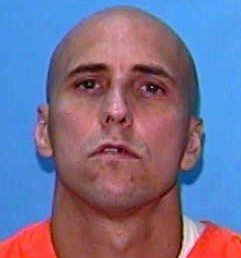 Paul Anthony Brown
Murderer · 1992
Paul Anthony Brown was convicted and sentenced to death for the murder of Roger…
1 victim
Paul Anthony Brown
Murderer · 1992
Paul Anthony Brown was convicted and sentenced to death for the murder of Roger…
1 victim
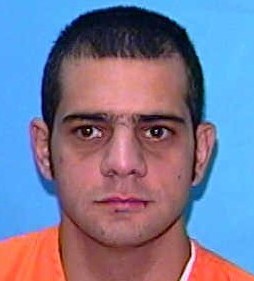 Anthony Farina
Murderer · USA · 1992
Anthony Farina (born 11/20/73) was tried in the Seventh Judicial Circuit, Volus…
1 victim
Anthony Farina
Murderer · USA · 1992
Anthony Farina (born 11/20/73) was tried in the Seventh Judicial Circuit, Volus…
1 victim
 Robert Glen Coe
Murderer · USA · 1979
Robert Glen Coe (April 15, 1956 – April 19, 2000) was born in Hickman, Kentucky…
1 victim
Robert Glen Coe
Murderer · USA · 1979
Robert Glen Coe (April 15, 1956 – April 19, 2000) was born in Hickman, Kentucky…
1 victim
 Gary Carl Simmons
Murderer · USA · 1996
Gary Carl Simmons, Jr. was sentenced to death and executed in Mississippi by le…
1 victim
Gary Carl Simmons
Murderer · USA · 1996
Gary Carl Simmons, Jr. was sentenced to death and executed in Mississippi by le…
1 victim
 William Zeigler
Mass murderer · USA
William Thomas Zeigler Jr. was prosecuted in Florida for the murders of four pe…
1975 victims
William Zeigler
Mass murderer · USA
William Thomas Zeigler Jr. was prosecuted in Florida for the murders of four pe…
1975 victims
- Gender
- male
- Country
- USA
- Location
- Charleston County, South Carolina, USA
- Date of birth
- 1965
- Age at first offence
- 19
- Characteristics
- armed robbery, rape
- Victim profile
- Lucia Aimar (female, 16)
- Method of murder
- Shooting
- Date(s) of murder
- October 29, 1984
- Years active
- 1984
- Date of arrest
- —
- Status
-
Executed
Executed by lethal injection in South Carolina on November 7, 1997
Case details
Earl Matthews, Jr. was convicted and sentenced to death for the 1985 killing of a sixteen year old girl during a botched robbery attempt. He was executed by lethal injection in South Carolina on November 7, 1997.
Timeline
- October 14, 1997 — A decision to execute Earl Matthews, Jr. was handed down.
- November 7, 1997 — Earl Matthews, Jr. was executed by lethal injection in South Carolina.
- October 29, 1984 — Lucia Aimar and her boyfriend, Eric Burn, purchased their dinner at a drive-through restaurant in Charleston, South Carolina; while the couple was parked in a nearby parking lot eating their dinner, Matthews approached the driver’s side of the car.
- 1985 — Matthews was convicted and sentenced to death for the killing of a sixteen year old girl during a botched robbery attempt.
- May 31, 1994 — The Supreme Court of the United States denied Matthews’ second petition for writ of certiorari.
- August 30, 1994 — Matthews filed a petition for writ of habeas corpus in the United States District Court for the District of South Carolina.
- January 28, 1997 — The appellate opinion was issued.
- 1997 — The United States Court of Appeals for the Fourth Circuit affirmed the district court’s denial of Matthews’ petition for writ of habeas corpus.
Background
Lucia Aimar and her boyfriend, Eric Burn, purchased dinner at a drive-through restaurant in Charleston, South Carolina. While the couple was parked in a nearby parking lot eating their dinner, Matthews approached the driver’s side of the car where Burn was seated.
At the time of the crime, Matthews was only 20 years old, and he had no criminal record to speak of. Matthews was 32 at the time of the execution scheduling described in the summary.
The offence
Matthews pulled out a handgun, pointed it at Burn’s head, and demanded money. While Burn was searching for money, Matthews struck Burn across the face, breaking his nose. After Burn found five dollars in Aimar’s purse, Burn handed the purse to Matthews.
Matthews then walked around to the passenger’s side of the car where Aimar was seated. Aimar locked the door and tried to roll up the window. Matthews prevented Aimar from rolling up the window and asked for a ride. When Burn refused, Matthews shot Aimar in the head and shot Burn in the chest. As a result of her injuries, Aimar died. Burn recovered from his chest wound and later testified at Matthews’ trial.
Investigation
Burn later testified at Matthews’ trial about what occurred.
Arrest
No arrest details were stated in the provided record.
Trial
Following a jury trial, Matthews was convicted of the capital murder of Aimar, armed robbery, attempted armed robbery, assault and battery with intent to kill, and unlawful possession of a handgun.
On the murder count, on the recommendation of the jury, Matthews was sentenced to death. For the remaining offenses, Matthews received consecutive sentences totaling sixty-six years.
Sentencing
On direct appeal, the Supreme Court of South Carolina affirmed Matthews’ convictions but vacated his death sentence because of a Skipper violation and remanded the case for a new sentencing trial. On remand, the jury again recommended a sentence of death, and Matthews was sentenced accordingly. The sentence was affirmed by the Supreme Court of South Carolina.
Matthews chose to die by lethal injection rather than being electrocuted.
Voir dire of the sentencing judge
Matthews made a motion requesting the sentencing judge to submit to voir dire examination regarding:
- the Court’s attitude toward the death penalty in general,
- the appropriateness of the death penalty in this case,
- whether the Court had expressed public opinions about the death penalty and what those opinions were,
- whether the Court was called on to vote on legislation concerning the death penalty while the Court was a member of the legislature and what that vote or votes were,
- whether the Court had any connection with the family of the deceased victim in this case,
- whether the Court’s knowledge of this case through any means public or not would have any effect on the Court’s decision on the appropriate penalty in this case and what that effect would be,
- whether the Court could consider a sentence of life imprisonment in a case of this type.
The sentencing judge responded:
“The only thing I can state in that regard is I was in the legislature when the death penalty was, quote, reenacted, and I voted in favor of that.... I don't know anybody with the family. I've never met anybody in the family at all. The only knowledge I have is from the newspaper accounts back at that time.... How I feel about the appropriateness of the death penalty in this case, whether I've expressed public opinions about the death penalty, what those opinions are; whether I would consider a life imprisonment--those types of things. I would decline to answer that.”
Before the commencement of voir dire examination, the issue was raised again and the sentencing judge stated:
“As a member of the judiciary, [I am], of course, governed by certain requirements. A jury in and of themselves--they are not subject to the rules of ethical standards that judges are and the case law and other requirements placed upon a judge. Because of that, I would say that I could not preside over a case unless--if I felt I was anything less than impartial in regard to the Defendant and the facts of the case. As you know, I would obviously be required to recuse myself. That's the position that I'm in in this case, that if I felt that I would have any reason to recuse myself then I would do so. But I am not going to establish and do not think I should or that it would be appropriate for me to establish precedent by allowing voir dire of judges. So I decline to do that but with the statement that if there was any question about impartiality I would recuse myself from the case.”
On direct appeal, the Supreme Court of South Carolina rejected Matthews’ contention that the sentencing judge’s refusal to answer voir dire questions prior to his sentencing retrial violated his constitutional right to a fair trial. The Supreme Court explained:
“This State's capital sentencing scheme contains no provision for voir dire examination of a trial judge, nor do we believe one is necessary. A judge's oath requires him to follow and uphold the law in all cases, including capital cases. Had appellant waived the jury and chosen sentencing by the court, the judge would have been required to consider applicable mitigating and aggravating circumstances under § 16-3-20(C) before imposing a sentence. The judge is entitled to a presumption that he would have done so, regardless of his "personal beliefs" about capital punishment. The judge here did not abuse his discretion in refusing to submit to voir dire examination.”
Appeals
Matthews filed a petition to the Supreme Court of the United States for a writ of certiorari, which was denied.
Post-conviction relief and federal habeas corpus
Matthews filed a state application for post-conviction relief, which the state trial court denied on August 24, 1992. The Supreme Court of South Carolina denied discretionary review. On May 31, 1994, the Supreme Court of the United States denied Matthews’ second petition for writ of certiorari.
On August 30, 1994, Matthews filed a petition for writ of habeas corpus in the United States District Court for the District of South Carolina. The case was assigned to a magistrate judge, who recommended denial. The district court adopted the magistrate judge’s report and recommendation after de novo review and denied the petition. Matthews noted a timely appeal.
Fourth Circuit appeal
The United States Court of Appeals for the Fourth Circuit affirmed the district court’s denial. The appellate opinion stated: “Affirmed by published opinion.” Judge HAMILTON wrote the opinion, joined by Judge WIDENER and Senior Judge PHILLIPS. The court described the case number as 96-5 and referenced the parties as Earl Matthews, Jr., Petitioner-Appellant, v. Parker Evatt, Commissioner, South Carolina Department of Corrections; T. Travis Medlock, Attorney General, State of South Carolina, Respondents-Appellees.
Claim about racial discrimination in seeking the death penalty
Matthews argued that Charles Condon, then the Ninth Circuit Solicitor and later Attorney General of South Carolina, sought the death penalty in a racially discriminatory manner. The Fourth Circuit held the claim was procedurally barred and not addressed on the merits.
Outcome
The Fourth Circuit affirmed the denial of Matthews’ petition for writ of habeas corpus.
Aftermath
Matthews was executed by lethal injection in South Carolina on November 7, 1997.
Other details
Jury selection at the sentencing retrial (Batson)
At Matthews’ sentencing retrial, the prosecutor used all peremptory challenges to exclude five blacks: Carl Ellis, Nellie Frazier, Joe Ann Hunt, Patricia Middleton, and Rebecca McDonald. The prosecutor’s challenges resulted in a jury of seven whites and five blacks.
Matthews’ counsel made a motion for mistrial under Batson. The sentencing judge questioned whether a prima facie case of discrimination was made given that five blacks were on the jury, but required the prosecutor to state reasons for the challenges.
The prosecutor’s reasons included the following verbatim statements:
- For Carl Ellis:
- “indicated it really wasn't his decision [to impose the death penalty]; that he would let the Lord make that decision and whatever the Lord told him to do he would do”
- “had a criminal record”
- For Joe Ann Hunt: “had at least fifty fraudulent check convictions”
- For the prosecutor’s stated reason for Patricia Middleton: she equivocated repeatedly about her ability to impose the death penalty, stating once that she could not impose the death penalty under any circumstances and later stating that she thought she could.
- For Rebecca McDonald: she lived on the same street as Matthews and knew some of his family, including Matthews’ grandmother.
The record stated that Matthews offered no rebuttal evidence that the prosecutor’s justifications were a pretext for discrimination. The sentencing judge found that the prosecutor’s explanation “justif[ied] the striking” of the five black veniremen.
Letters introduced at sentencing retrial
Prior to Matthews’ sentencing retrial, Matthews moved in limine to exclude two letters written by him following his first trial. The motion was denied. Matthews then asked the sentencing judge to redact references to the first trial, death row, and Matthews’ exercise of his appellate rights. The sentencing judge granted the redaction request. At the sentencing retrial, the redacted letters were introduced into evidence and, as redacted, each letter contained profanity and the phrases “sitting down smoking a good joint” and “if I ever get out of this shit.”
At the PCR hearing, Michael O’Connell testified that he attempted to get any damaging information removed from the letters but, given the sentencing judge’s ruling that the letters were admissible, he was not going to prevent the jury from seeing the letters. O’Connell further testified that once the motion to suppress was denied, he asked for redaction of as much as he believed he could get, but preferred not to anger the sentencing judge by asking for deletions he did not believe would be allowed.
Ineffective assistance of counsel claims (sentencing retrial)
Matthews argued his counsel was ineffective for failing to:
- investigate and present evidence of his brain damage due to exposure to lead, and
- redact portions of letters written by Matthews introduced into evidence.
Lead exposure / brain damage mitigation
The record stated that counsel undertook efforts to find mitigating evidence and enlisted two experts: Dr. John Outz, III, and Dr. Gordon Kimbrell. Counsel interviewed numerous family members and reviewed Matthews’ school and social service records and records of his earlier encounters with the law. The Fourth Circuit stated that counsel were never given information that Matthews suffered from brain damage due to lead exposure. The mitigation presented focused on poor upbringing, poor performance in school, low I.Q., and adaptability to prison life. Approximately fifteen witnesses testified at the sentencing retrial.
At the state PCR hearing, Matthews presented voluminous evidence supporting his claim of brain damage due to lead exposure. The PCR court found Matthews did not suffer from brain damage due to lead exposure and stated:
“I find that Applicant has failed to establish that any brain damage existed in the Applicant at the time of the murder and has failed to establish that the damage, if any, contributed to the Applicant's actions in committing the murder.”
The Fourth Circuit stated that Matthews did not show counsel’s failure to investigate and present evidence of brain damage due to lead exposure was constitutionally deficient.
Redaction of letters
The Fourth Circuit rejected Matthews’ ineffective assistance claim about redaction, describing that the sentencing judge granted the specific redaction requests (references to the first trial, death row, and Matthews’ appellate rights) and that the redacted letters included the profanity and phrases quoted above.
Premature juror deliberations at sentencing retrial
Matthews argued that premature juror deliberations at his sentencing retrial deprived him of a fair trial. The Fourth Circuit stated this claim was not raised in state court and was procedurally barred for the reasons described in the opinion.
References in the opinion notes
The opinion discussed Skipper v. South Carolina as explaining that the sentencing court’s refusal to admit evidence of adaptability to prison life violated the defendant’s Eighth and Fourteenth Amendment rights.
Spotted an error, or have more information about this case?