Jerry Joe Bird
Murderer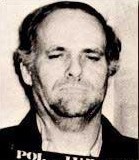 Ervil LeBaron
Murderer · USA · 1972
Ervil Morrell LeBaron (1925 to August 16, 1981) was the leader of a polygamous…
35 victims
Ervil LeBaron
Murderer · USA · 1972
Ervil Morrell LeBaron (1925 to August 16, 1981) was the leader of a polygamous…
35 victims
 Marvin Gray
Murderer · USA · 1975
Marvin Gray was convicted killer who claimed responsibility for 23 slayings and…
23 victims
Marvin Gray
Murderer · USA · 1975
Marvin Gray was convicted killer who claimed responsibility for 23 slayings and…
23 victims
 Yahweh ben Yahweh
Murderer · USA · 1980
Yahweh ben Yahweh was born and legally named Hulon Mitchell Jr. (October 27, 19…
23 victims
Yahweh ben Yahweh
Murderer · USA · 1980
Yahweh ben Yahweh was born and legally named Hulon Mitchell Jr. (October 27, 19…
23 victims
 Charles Manson
Murderer · USA · 1969
Charles Milles Manson (born November 12, 1934) was an American criminal and mus…
9 victims
Charles Manson
Murderer · USA · 1969
Charles Milles Manson (born November 12, 1934) was an American criminal and mus…
9 victims
 Joshua Rosa
Murderer · USA · 2005
Joshua Rosa (born January 24, 1986) was a convicted murderer in the State of Fl…
1 victim
Joshua Rosa
Murderer · USA · 2005
Joshua Rosa (born January 24, 1986) was a convicted murderer in the State of Fl…
1 victim
 Billy Sunday Birt
Murderer · USA · 1972
Billy Sunday Birt was sentenced to death in 1975, for murder counts connected w…
3 victims
Billy Sunday Birt
Murderer · USA · 1972
Billy Sunday Birt was sentenced to death in 1975, for murder counts connected w…
3 victims
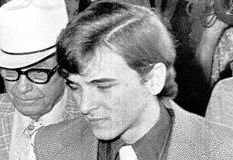 Elmer Henley
Serial killer · USA · 1972
Elmer Wayne Henley, Jr. was born May 9, 1956. He was convicted and incarcerated…
7 victims
Elmer Henley
Serial killer · USA · 1972
Elmer Wayne Henley, Jr. was born May 9, 1956. He was convicted and incarcerated…
7 victims
 Robert Mark Edwards
Murderer · USA · 1986
Robert Mark Edwards was born on 6/14/61, 6/15/60, 6/14/58, or 6/15/61, with FBI…
2 victims
Robert Mark Edwards
Murderer · USA · 1986
Robert Mark Edwards was born on 6/14/61, 6/15/60, 6/14/58, or 6/15/61, with FBI…
2 victims
 Virginia Sims
Murderer · USA · 2011
Virginia Sims was a 47-year-old South Georgia woman who pleaded guilty in conne…
1 victim
Virginia Sims
Murderer · USA · 2011
Virginia Sims was a 47-year-old South Georgia woman who pleaded guilty in conne…
1 victim
- Gender
- male
- Country
- USA
- Location
- Cameron County, Texas, USA
- Date of birth
- 1936
- Age at first offence
- 38
- Characteristics
- arson, burglary
- Victim profile
- Victor Harrell Trammell ( antique-gun collector )
- Method of murder
- Shooting
- Date(s) of murder
- 1974
- Years active
- 1974
- Date of arrest
- —
- Status
-
Executed
Executed by lethal injection in Texas on June 17, 1991
Timeline
- June 9, 1970 — Bird suffered a stroke and was hospitalized for nearly a week.
- June 17, 1991 — The execution took place by lethal injection; Jerry Joe Bird was pronounced dead at 12:21 A.M. after lethal drugs began to flow about 12 minutes earlier.
- June 17, 1991 — Federal appeals proceedings: 934 F.2d 629.
- March 6, 1991 — Federal appeals proceedings: 924 F.2d 67.
- Sunday evening (year not stated) — A federal appeals court dissolved a stay granted earlier that day by a federal judge.
- Shortly before midnight (year not stated) — The United States Supreme Court refused, 8 to 1, to block the execution.
Background
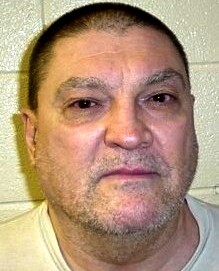
Jerry Joe Bird (offender #512) was executed by lethal injection in Texas on June 17, 1991.
He had been on death row since 1974 for the murder of an antique-gun collector during a burglary at the man’s house in the Rio Grande Valley. He had earlier been denied a commutation of his sentence or a postponement because of ill health.
Bird suffered a stroke on June 9 and was hospitalized for nearly a week. He was returned to death row on Friday, where he lived longer than all but one of 345 inmates condemned to death in Texas. The execution occurred as the 40th person executed in Texas and the 147th in the nation since the United States Supreme Court in 1976 let states resume use of the death penalty. Texas had more executions than any state with capital punishment.
Bird mouthed “Hi” to his mother from the death chamber. He declined to give a final statement and said: “That’s all. Go ahead. Start things rolling.”
The offence
Bird was put to death for the 1974 slaying of a gun collector, Victor Harrell Trammell, during a burglary at Trammell’s house in the Rio Grande Valley.
According to testimony, Bird and Emmett L. Korges burglarized Mr. Trammell’s home, stole his antique gun collection, shot him, and then set fire to the house.
Mr. Trammell’s wife escaped through a window.
Investigation
No investigation-specific facts beyond the trial testimony described were included.
Trial
Bird was convicted in 1974, but the conviction was overturned because of improper comments made by prosecutors in closing arguments.
Bird was retried, convicted, and again sentenced to death in 1982. He continued to live on death row even after the first conviction was overturned.
The text also states that Bird had been convicted of murder in Texas in 1956 and was paroled in 1961 after serving five years.
Bird’s conviction history also included:
- Bird was convicted of capital murder in October 1977 and sentenced to death by a Texas jury.
- The Texas Court of Criminal Appeals affirmed Bird’s conviction in Bird v. State, 692 S.W.2d 65 (Tex.Crim.App.1985).
- This conviction and sentence was described as his second for this offense.
- The first conviction was reversed by the Texas Court of Criminal Appeals in Bird v. State, 527 S.W.2d 891 (1975).
Sentencing
Bird was sentenced to death by a Texas jury, and the sentence was affirmed by the Texas Court of Criminal Appeals. Bird was again sentenced to death in 1982 following retrial after the 1974 conviction was overturned.
Robert White and his death-row status were mentioned in relation to timing:
- Robert White, who was convicted of killing three people during a service station robbery in 1974, had been on death row a month longer than Bird.
Emmett L. Korges received a sentence of life in prison and died in 1982.
Appeals
924 F.2d 67 (March 6, 1991)
Jerry Joe Bird, Petitioner-Appellant, v. James A. Collins, Director, Texas Department of Criminal Justice, Institutional Division, Respondent-Appellee, No. 90-2378, Federal Circuits, 5th Cir., March 6, 1991, appeal from the United States District Court for the Southern District of Texas.
Bird appealed from the denial by a United States District Court of his petition for writ of habeas corpus.
Bird’s collateral attack of his state court conviction rested on five arguments:
- The exclusion of Spanish-surnamed individuals in the selection of a jury violated his equal protection and due process rights.
- The decision of his direct appeal by the state court was unduly delayed.
- The court erred by admitting testimony given at the first trial by an important witness assertedly unable to testify at the second trial.
- The Texas death penalty scheme violates the eighth and fourteenth amendments.
- The trial court erred in not submitting the third of the three issues prescribed by the Texas Code of Criminal Procedure for the sentencing phase of capital cases.
After full briefing and oral argument, the court was persuaded that the denial of habeas corpus should be affirmed for essentially the reasons stated by the district court, with one exception involving a Penry claim.
The district court raised and rejected a Penry claim never asserted by Bird. Bird requested that the ruling be vacated, because it assertedly denied him the right to personally develop such a claim, and requested remand to allow that opportunity. The court declined that course, vacated the district court’s ruling regarding the Penry issues, modified the judgment accordingly, and affirmed.
The disposition was stated as:
- “AFFIRMED IN PART, VACATED IN PART.”
The court stated:
We do not say that a district court lacks the authority to raise claims sua sponte, or that it is never prudent to do so.
And:
As we see it, no Penry claims are properly in this case.
The court further stated:
We therefore vacate the district court's ruling regarding the Penry issues, modify the judgment accordingly, and affirm.
It also stated:
We do not decide whether Bird may assert any Penry claims he might have in a subsequent proceeding in state court.
934 F.2d 629 (June 17, 1991)
Jerry Joe Bird, Petitioner-Appellee Cross-Appellant, v. James A. Collins, Director, Texas Department of Criminal Justice, Institutional Division, Respondent-Appellant Cross-Appellee, No. 91-2630, Federal Circuits, 5th Cir., June 17, 1991.
This appeal involved Bird’s second petition for a writ of habeas corpus presented to the United States District Court for the Southern District of Texas at Brownsville, Texas, under 28 U.S.C. Sec. 2254, et seq.
The district court dismissed claims one, two, and four but declined to dismiss claim number three.
Claim number three urged: “Reliance on appellate courts' 'uniform interpretation' of the Texas capital sentencing statute prevented counsel from investigating, developing, and presenting relevant mitigating evidence in support of a life sentence for Bird.”
The district court issued a stay of execution and granted a requested certificate of probable cause. Both the State and petitioner appealed.
The appeals court affirmed the district court’s dismissal for essentially the reasons stated by the district court as to claims one, two, and four, and addressed the stay and certificate of probable cause regarding actual innocence / Penry-type evidence.
The text quoted from Smith v. Murray, 477 U.S. 527, 539, 106 S.Ct. 2661, 2884, 91 L.Ed.2d 434 (1986):
We do not undertake here to define what it means to be "actually innocent" of a death sentence.... Demonstrating that an error is by its nature the kind of error that might have affected the accuracy of a death sentence is far from demonstrating that an individual defendant probably is "actually innocent" of the sentence he or she received. The approach taken by the dissent would turn the case in which an error results in a fundamental miscarriage of justice, the "extraordinary case," [Murray v. ] Carrier, supra, 477 U.S. at 496, 106 S.Ct. [2639], at 2650, [91 L.Ed.2d 397 (1986) ], into an all too ordinary one.
It also referenced Cuevas v. Collins, 932 F.2d 1078 (5th Cir.1991).
The disposition was stated:
- “AFFIRMED IN PART AND REVERSED IN PART.”
The stay of execution was vacated and the certificate of probable cause vacated.
Outcome
Bird was executed by lethal injection in Texas on June 17, 1991. He was pronounced dead at 12:21 A.M., about 12 minutes after the lethal drugs began to flow.
The federal appeals court dissolved a stay granted earlier that day by a federal judge. Shortly before midnight, the United States Supreme Court refused, 8 to 1, to block the execution. Justice Thurgood Marshall cast the sole vote for a stay.
Bird had earlier been denied a commutation or postponement because of ill health, and he declined to give a final statement in the execution chamber.
Bird was described as 54 years old at the time of execution.
Aftermath
No further aftermath facts beyond execution-day statements and timing were included.
Spotted an error, or have more information about this case?