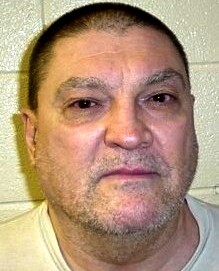
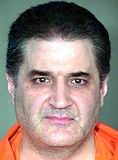
Marvin Bieghler
Murderer Ervil LeBaron
Murderer · USA · 1972
Ervil Morrell LeBaron (1925 to August 16, 1981) was the leader of a polygamous…
35 victims
Ervil LeBaron
Murderer · USA · 1972
Ervil Morrell LeBaron (1925 to August 16, 1981) was the leader of a polygamous…
35 victims
 Brian Kevin Rosenfeld
Murderer · USA · 1985
Brian Kevin Rosenfeld Brian Kevin Rosenfeld was sentenced to three concurrent l…
23 victims
Brian Kevin Rosenfeld
Murderer · USA · 1985
Brian Kevin Rosenfeld Brian Kevin Rosenfeld was sentenced to three concurrent l…
23 victims
 Marvin Gray
Murderer · USA · 1975
Marvin Gray was convicted killer who claimed responsibility for 23 slayings and…
23 victims
Marvin Gray
Murderer · USA · 1975
Marvin Gray was convicted killer who claimed responsibility for 23 slayings and…
23 victims
 Yahweh ben Yahweh
Murderer · USA · 1980
Yahweh ben Yahweh was born and legally named Hulon Mitchell Jr. (October 27, 19…
23 victims
Yahweh ben Yahweh
Murderer · USA · 1980
Yahweh ben Yahweh was born and legally named Hulon Mitchell Jr. (October 27, 19…
23 victims
 Russell Ellwood
Murderer · USA · 1991
Russell Ellwood was a former taxi driver. Authorities suspected him of killing…
20 victims
Russell Ellwood
Murderer · USA · 1991
Russell Ellwood was a former taxi driver. Authorities suspected him of killing…
20 victims
 Mary Ellen Samuels
Murderer · USA · 1988
Mary Ellen Samuels was convicted of arranging the murders of her husband, Rober…
2 victims
Mary Ellen Samuels
Murderer · USA · 1988
Mary Ellen Samuels was convicted of arranging the murders of her husband, Rober…
2 victims
 Jeannie Donald
Murderer · United Kingdom · 1934
Jeannie Donald was tried in July 1934 for the murder of Helen Priestly. Helen P…
1 victim
Jeannie Donald
Murderer · United Kingdom · 1934
Jeannie Donald was tried in July 1934 for the murder of Helen Priestly. Helen P…
1 victim
 Jim Adkisson
Murderer · USA · 2008
July 27, 2008 — Jim David Adkisson entered the Tennessee Valley Unitarian Unive…
2 victims
Jim Adkisson
Murderer · USA · 2008
July 27, 2008 — Jim David Adkisson entered the Tennessee Valley Unitarian Unive…
2 victims
- Gender
- male
- Country
- USA
- Location
- Howard County, Indiana, USA
- Date of birth
- December 15, 1947
- Age at first offence
- 34
- Characteristics
- drug dealer, drugs, alcohol
- Victim profile
- Tommy Miller, 21, and his pregnant wife Kimberly, 19
- Method of murder
- Shooting (.38 pistol)
- Date(s) of murder
- December 10, 1981
- Years active
- 1981
- Date of arrest
- —
- Status
-
Executed
Executed by lethal injection in Indiana on January 27, 2006
Overview
Marvin Bieghler was executed in Indiana on January 27, 2006, after a jury convicted him in 1983 of two counts of murder and recommended the death penalty for the execution-style slayings of Tommy Miller and his pregnant wife, Kimberly Jane Miller. Bieghler was pronounced dead at 2:17 a.m. EST after a lethal injection. He had exhausted his appeals and was denied clemency by Gov. Mitch Daniels. His final words were "Let's get it over with," and he also directed the phrase "semper fi" to those he called his "brother warriors" in a written statement released by prison officials.
Timeline
- December 10, 1981 — Kenny Miller went to visit his brother Tommy Miller, who lived with his pregnant wife Kimberly in a trailer near Kokomo; Tommy and Kimberly were found dead after they had been shot.
- December 11, 1981 — Tommy and Kimberly’s bodies were found in their Russiaville mobile home.
- 1983 — Bieghler was convicted of two counts of murder in an execution-style shooting and sentenced to death; a burglary conviction was also part of the jury verdicts, but the trial judge did not sentence Bieghler on burglary.
- December 1981 slayings appeal period — The U.S. Supreme Court cleared the way for the execution after turning down Bieghler’s appeal to block his execution for the December 1981 slayings.
- January 21, 2006 — During a clemency hearing at the Indiana State Prison, Bieghler asked the Indiana Parole Board to set him free and stated he wanted the process ended.
- January 23, 2006 — The Indiana Parole Board voted unanimously against recommending clemency for Bieghler.
- Thursday night (January 26, 2006) — A federal appeals court issued a stay of execution for Bieghler shortly before his scheduled execution.
- Thursday (January 26, 2006) — The state attorney general’s office immediately asked the U.S. Supreme Court to overturn the stay so the execution could proceed early Friday; Gov. Mitch Daniels turned down a clemency request.
- January 27, 2006 — The U.S. Supreme Court overturned the stay in a 6-3 decision less than a half hour before the scheduled execution; Bieghler was executed by lethal injection in Michigan City at the Indiana State Prison; he was pronounced dead at 1:17 a.m. CST after the injection process started about 12:30 a.m., and was also pronounced dead at 2:17 a.m. EST.
The offence
In December 1981, Tommy Miller and Kimberly Jane Miller were murdered in their mobile home in Russiaville, Indiana. Kimberly was pregnant.
Bieghler was convicted for the execution-style shootings of Tommy Miller and his pregnant wife. The evidence included that Tommy Miller was shot six times and his wife was shot three times.
According to court documents and testimony summarized in the post-conviction and appellate materials, Bieghler shot the couple because he was convinced Tommy Miller told police about Bieghler’s drug operation. Bieghler also contended Tommy Miller owed him a drug debt. Authorities said Tommy Miller was not a police informant.
Dimes were dropped near the bodies, and authorities said Bieghler was sending a message to other possible informants. Court documents described the murders as “execution style,” including that each victim was shot while standing and then again while lying on the floor of their bedroom. An angle of trajectory was described as indicating the shooter stood directly above each victim.
Background
Marvin Bieghler was described as an admitted drug dealer who bought and sold marijuana. He had been involved in obtaining drugs in Florida and supplying marijuana to others in the Kokomo area.
At trial and in subsequent proceedings, witnesses testified that Bieghler threatened a person he believed had informed to the police, using the expression “dropping a dime.” One of Bieghler’s constant companions and partners in his marijuana business was Harold “Scotty” Brook.
Bieghler was also described as a Marine Corps veteran who saw significant combat during the Vietnam War. At his clemency hearing, he blamed his turn toward drugs, in part, on his Vietnam service.
Investigation and evidence
Witness testimony described events leading up to the murders, including that Bieghler and Brook spent the day of the murders drinking beer and smoking marijuana. During the evening, Bieghler spoke of getting Tommy Miller.
The appellate and habeas summaries described that, around 10:30 p.m. to 11:00 p.m., Bieghler and Brook left a tavern, drove to Tommy’s trailer, and Bieghler entered carrying an automatic pistol. Brook testified about seeing Bieghler pointing the weapon into a room, and that afterward Bieghler ran back to the car and drove away.
Police learned that nine shell casings found at the murder scene matched casings from a remote rural location where Bieghler fired his pistol during target practice. At trial, an expert testified that the two sets of casings were fired from the same gun.
In the direct appeal summary, Brook’s testimony was described as the only eyewitness account, and issues were raised about whether Brook heard any shots. In the discussion of sufficiency on direct appeal, the court stated it was not clear whether Brook said no shots were fired or whether he just did not hear them.
The direct appeal record also described testimony about timing conflicts among witnesses and evidence about parties involved with pickup arrangements after 11 p.m., including testimony about Bieghler picking up his girlfriend, Thelma McVety, from work around 11:10–11:15 p.m. or between 11:15 and 11:20 p.m., and testimony that Fay Nova spoke with Miller at about 11:20 p.m.
Arrest and legal process
Bieghler was convicted and sentenced to death in 1983 for the murders of Tommy and Kimberly Miller. The death sentence was carried out after Bieghler pursued further legal challenges.
In the federal habeas proceedings, Bieghler argued that the prosecution violated due process by exploiting his post-arrest silence after being advised of Miranda rights. The appellate court described the relevant prosecutor questions and cited the Doyle v. Ohio framework while concluding the comments did not run afoul of Doyle in this case.
Trial
A jury found Bieghler guilty in Howard Superior Court of two counts of intentional murder and one count of burglary. The jury recommended that the death sentence be imposed on both counts of murder. The trial judge accepted the jury’s recommendation and imposed the death penalty; the judge did not sentence Bieghler on the burglary conviction.
At trial, Bieghler admitted he was in the business of buying drugs in Florida and selling them in the Kokomo area. Evidence described Tommy Miller as selling drugs supplied by Bieghler.
The direct appeal materials listed issues raised by Bieghler in his appeal, including claims about sufficiency of evidence, capital punishment jury findings requirements, jury selection, evidentiary rulings, prosecutorial misconduct, and multiple jury and sentencing-phase claims. The Indiana Supreme Court affirmed the convictions and death sentence.
Sentencing
The trial court imposed the death sentence after the jury recommended death on the two murder counts.
The direct appeal discussion included that the trial court made detailed findings and accepted the jury recommendation, and that the imposition of the death penalty was found appropriate considering the nature of the offense and character of the defendant.
Appeals
Direct appeal
On July 31, 1985, the Indiana Supreme Court affirmed Bieghler’s murder convictions and death sentence.
Bieghler v. State, 481 N.E.2d 78 (Ind. July 31, 1985):
- The court held evidence was sufficient to convict him of intentional murder of both victims.
- The court held evidence was sufficient for burglary by showing breaking and entering with intent to commit a felony.
- The court held that jurors opposed to the death penalty who stated unequivocally they could not vote for death under any circumstances were properly excused for cause.
- The court held multiple additional trial issues did not warrant reversal.
- The court affirmed the death penalty and remanded for the sole purpose of setting a date for the execution.
Post-conviction
In Bieghler v. State, 690 N.E.2d 188 (Ind. 1997) (PCR), the Indiana Supreme Court affirmed the denial of post-conviction relief. The court addressed claims including ineffective assistance of appellate and trial counsel and other issues.
Federal habeas
In Bieghler v. McBride, 389 F.3d 701 (7th Cir. November 18, 2004), the U.S. Court of Appeals for the Seventh Circuit affirmed the denial of federal habeas relief. The court held that the prosecutor did not impermissibly comment on Bieghler’s post-arrest silence in violation of due process and that the state appellate court did not unreasonably apply federal law in rejecting ineffective assistance of counsel claims.
U.S. Supreme Court stay and lifting
A federal appeals court issued a stay of execution shortly before the execution date. The state attorney general’s office asked the U.S. Supreme Court to overturn the stay so the execution could proceed early.
The U.S. Supreme Court overturned the lower court’s stay in a 6-3 decision less than a half hour before the scheduled execution.
Outcome
Marvin Bieghler was executed in Indiana by lethal injection on January 27, 2006. He was pronounced dead at 2:17 a.m. EST after lethal injection. Another account stated he was pronounced dead at 1:17 a.m. CST after the injection process started about 12:30 a.m.
Bieghler’s final words were "Let's get it over with."
Aftermath
Clemency
Before execution, Bieghler had exhausted legal options and was denied clemency by Gov. Mitch Daniels.
The Indiana Parole Board voted unanimously against recommending clemency for Bieghler. Parole Board members’ comments and letters were read during the clemency proceedings.
- Valerie Parker, vice chairwoman of the Parole Board, said: "By his own testimony, Mr. Bieghler stated he was the 'King Kong of Kokomo' in the drug business."
- Raymond Rizzo, Parole Board chairman, acknowledged that Bieghler was convicted largely on circumstantial evidence, and said: "What we have is a convicted double killer, scheduled for execution in less than 96 hours, who also lacks evidence proving his innocence, woven deeply into a sordid saga of marijuana by the bale, money by the cooler-full, guns of every type, and a seemingly endless parade of felons, all of whom seem eager to drop a dime on each other."
- John Wright of Greentown testified and said: "Our family pleads with this board and Gov. Daniels to go through with and uphold this death penalty."
- John Wright also said: "This is long overdue," and "I’m looking for closure."
- John Wright said: "Monday was enough for me," and "It was like I was the last voice for my sister. We were pretty close. She came over and cut my hair the day before she was murdered."
- John Wright said: "It’s a shame. It’s been 20 or more years and it seems like yesterday," and "I’m just hoping this puts closure to it, and I can start breathing better. I’m tired of reading about it and hearing about it. It’s hard to explain."
- John Wright said: "There’s no doubt in Wright’s mind the Bieghler was the killer." He also said: "From listening Monday to each of the parole board members, it even made it clearer," and "Those people are extremely up on the case. It’s amazing to hear their thoughts. It gave me some assurance that the right thing is being done."
- Kenneth Miller’s question and statement to Bieghler were described as: "I would like to know why. Why did you do it, Marvin?"
- Priscilla Hodges, Tommy Miller’s mother, was quoted as saying: "I still miss my kids. Kim was like my daughter," and later: "I believe in the death penalty and, yes, I believe Marvin deserved to die," and "Because I believe he killed my children."
Bieghler’s clemency hearing statements
At his final clemency hearing, Bieghler stated:
- "We have no ability to investigate. That's not our role," Parole Board Chairman Raymond Rizzo said, and Bieghler asked for a new trial or release from prison.
- Bieghler said: "I'm not here begging you people for my life," and "Life without parole for something I didn't do ... I'd rather die."
- Bieghler said: "I'd rather you just put me on that gurney."
- Bieghler said: "If I can't get out and go fishing and hunting, the courts can kiss my Marine Corps ass."
- In another statement during parole proceedings: "If I can't get out, then let's get it done," and "I'm not in here begging for my life. I'm not going to do life without parole for something I didn't do."
- At the end of Friday’s clemency hearing, Bieghler said: “If I can't get out, let's just get at it,” and "I told the truth. That's all I can do."
Written statement and final comment
In a written statement released by the prison, Bieghler wrote:
"I believe in God, country, corps. Death before dishonor. To my son, grandkids and stepkids, you will always have a piece of my heart. Semper fi, Marv."
He directed "semper fi"—the Marine Corps motto meaning "always faithful" in Latin—to those he called his "brother warriors."
State executions and clemency context
Bieghler was described as the sixth Indiana inmate executed since Gov. Mitch Daniels took office just over a year before January 2006, and a list of other Indiana death-row executions and commutations was provided in the event record. The record also stated Daniels commuted the death sentence of another inmate to life in prison last year, and it listed another person who received clemency as well as details about prior commutations and executions.
Spotted an error, or have more information about this case?