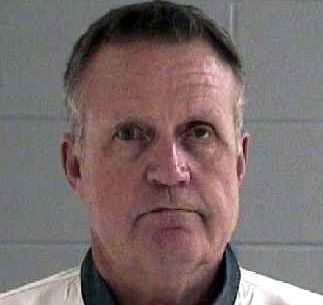
Billy Sunday Birt
Murderer Ervil LeBaron
Murderer · USA · 1972
Ervil Morrell LeBaron (1925 to August 16, 1981) was the leader of a polygamous…
35 victims
Ervil LeBaron
Murderer · USA · 1972
Ervil Morrell LeBaron (1925 to August 16, 1981) was the leader of a polygamous…
35 victims
 Marvin Gray
Murderer · USA · 1975
Marvin Gray was convicted killer who claimed responsibility for 23 slayings and…
23 victims
Marvin Gray
Murderer · USA · 1975
Marvin Gray was convicted killer who claimed responsibility for 23 slayings and…
23 victims
 Yahweh ben Yahweh
Murderer · USA · 1980
Yahweh ben Yahweh was born and legally named Hulon Mitchell Jr. (October 27, 19…
23 victims
Yahweh ben Yahweh
Murderer · USA · 1980
Yahweh ben Yahweh was born and legally named Hulon Mitchell Jr. (October 27, 19…
23 victims
 Charles Manson
Murderer · USA · 1969
Charles Milles Manson (born November 12, 1934) was an American criminal and mus…
9 victims
Charles Manson
Murderer · USA · 1969
Charles Milles Manson (born November 12, 1934) was an American criminal and mus…
9 victims
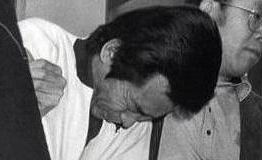 Kiyotaka Katsuta
Serial killer · Japan · 1972
Kiyotaka Katsuta (勝田 清孝; Katsuta Kiyotaka; August 29, 1948 - November 30, 2000)…
22 victims
Kiyotaka Katsuta
Serial killer · Japan · 1972
Kiyotaka Katsuta (勝田 清孝; Katsuta Kiyotaka; August 29, 1948 - November 30, 2000)…
22 victims
 Lisa Donlon
Homicide · USA · 2010
Lisa Donlon was a mother of three boys. Her sons were 11, 13, and 15. She was h…
1 victim
Lisa Donlon
Homicide · USA · 2010
Lisa Donlon was a mother of three boys. Her sons were 11, 13, and 15. She was h…
1 victim
 Jean Ann James
Murderer · Canada · 1992
Jean Ann James was an elderly Richmond woman who was convicted of the 1992 murd…
1 victim
Jean Ann James
Murderer · Canada · 1992
Jean Ann James was an elderly Richmond woman who was convicted of the 1992 murd…
1 victim
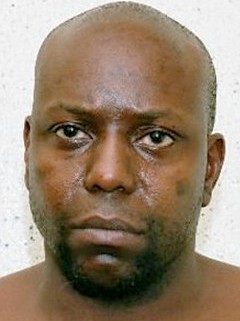 Peter Bryan
Homicide · United Kingdom · 1993
Peter Bryan was a schizophrenic cannibal who was sentenced to closed psychiatri…
3 victims
Peter Bryan
Homicide · United Kingdom · 1993
Peter Bryan was a schizophrenic cannibal who was sentenced to closed psychiatri…
3 victims
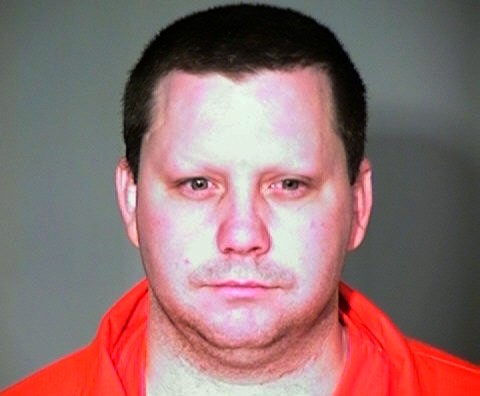 Chad Alan Lee
Murderer · USA · 1992
Chad Alan Lee was convicted in two separate proceedings involving kidnapping, s…
3 victims
Chad Alan Lee
Murderer · USA · 1992
Chad Alan Lee was convicted in two separate proceedings involving kidnapping, s…
3 victims
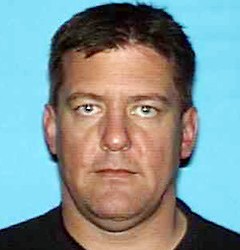 Bruce Pardo
Mass murderer · USA · 2008
Bruce Pardo was 45 years old. He dressed in a Santa suit while inside a house w…
9 victims
Bruce Pardo
Mass murderer · USA · 2008
Bruce Pardo was 45 years old. He dressed in a Santa suit while inside a house w…
9 victims
- Gender
- male
- Country
- USA
- Location
- Georgia, USA
- Date of birth
- 1937
- Age at first offence
- 35
- Characteristics
- torture, burglary, armed robbery
- Victim profile
- Donald Chancey / Lois, 72, and Reed Oliver Fleming, 75
- Method of murder
- Shooting / Strangulation
- Date(s) of murder
- 1972 - 1973
- Years active
- 1972–1973
- Date of arrest
- —
- Status
-
Sentenced to death
Sentenced to death in 1975; death sentences overturned in 1979 and 1980; sentenced to life in prison in 1980 for the 1972 murder of Donald Chancy; later removed from death row and moved to Georgia State Prison at Reidsville; as of the time of the report, serving life sentences for other crimes
Case Overview
Billy Sunday Birt was sentenced to death in 1975, for murder counts connected with the killings of Reid and Lois Fleming, in Jefferson County, Georgia. His death sentences were overturned in 1979 and 1980, and he was sentenced to life in prison in 1980 for the 1972 murder of Donald Chancy.
Later, in Georgia in the period described in the report, Billy Sunday Birt and Bobby Gene Gaddis were taken off death row and moved to Georgia State Prison at Reidsville. Prosecutors were still working on the cases of Mr. Birt, Mr. Gaddis, and others at that time, but no recent efforts had been made to resentence them since their death sentences were overturned.
Timeline
- 1972 — Billy Sunday Birt was convicted and sentenced to life in prison in 1980 for the 1972 murder of Donald Chancy.
- December 19, 1973 — Bethune followed Davis to Wrens.
- December 21, 1973 — Birt called Davis and asked him to come to a motel in Atlanta.
- December 22, 1973 — The Flemings were tortured and killed; the events were related to the murders of Mr. and Mrs. Fleming, with the murder counts tied to December 22, 1973.
- December 23, 1973 (early morning) — A disabled car situation occurred outside Wrens, where Birt was flagged down with car trouble.
- January 31, 1975 — A Jefferson County, Georgia, grand jury returned an indictment charging Birt and three others with one count of burglary, two counts of armed robbery, and two counts of murder in connection with the deaths of Reid and Lois Fleming.
- June 7, 1975 — Birt was transferred to Georgia shortly before arraignment.
- June 23, 1975 — A six-day trial in the Jefferson County Superior Court began.
- June 28, 1975 — The trial court imposed two sentences of death for the murder counts, two concurrent life sentences for the armed robbery counts, and twenty years imprisonment for the burglary count.
- April 20, 1976 — A decision in the Georgia appeal affirmed the death sentences (with dates and court details included in the case description).
- May 17, 1976 — Rehearing was denied.
- July 11, 1983 — A federal appellate decision vacated and remanded on federal habeas corpus proceedings (appeal described as United States Court of Appeals, Eleventh Circuit).
Background
Billy Sunday Birt was born in Borrow County in North Georgia in 1938. Former Douglas County Sheriff Earl Lee described Birt’s background as “from right poor people,” and said that Birt told him: “He'd heap rather kill a man than a dog.” Earl Lee also stated that Birt had killed 56 people, making him the number one multiple murderer in the state of Georgia. Earl Lee said: “As it is, he's kind to animals.”
Birt was described as a key member of Georgia’s notorious “Dixie Mafia” in the 1970s.
In the 1960s, Birt came to the attention of Georgia law enforcement as a runner in the North Georgia moonshine operation of Harold Chancey. Donald Chancey, Harold’s cousin, and Billy Wayne Davis were also involved. The men formed a loosely knit gang that dealt in illegal liquor and drugs and stolen gasoline; State Police knew them as the Dixie Mafia.
The offence
Victims and date of killings
The killings involved Mr. and Mrs. Reid Oliver Fleming Sr. Their ages were given as 75 and 72, and the related events occurred on December 22, 1973. A third man, Charles David Reed, was also involved; four other men included Charles Reed, and other men were granted immunity as described later.
Alleged robbery and violence
On the night of December 22, 1973, Birt, Gaddis, and Charles David Reed approached the Flemings’ house. Mr. Fleming, described as a retired car dealer, was known to keep large amounts of cash. The three men tortured and strangled the couple with coat hangers and made off with $4,000 in pennies, nickels and dimes buried in fruit jars in the Fleming’s smokehouse.
Authorities found the couple with their hands and feet bound and coat hangers wrapped around their necks.
Investigation
Police officers testified that the Flemings’ home had been completely ransacked, that the lock on the smokehouse door had been broken, and that fruit jars were found inside. The Flemings’ Ford automobile was found about 2 miles from their home.
Arrest / evidence gathering and witnesses
Immunity and testimony
Three other men, including the man who arranged the robbery-killings, were granted immunity. Tapley, Leisher and Davis testified for the state after being granted immunity. Neither Tapley nor Leisher identified defendant Birt in their testimony. According to Davis’ testimony, Birt had previously told Davis that he would be well paid for information, and Davis passed the information to Birt and instructed him how to contact Tapley.
The only witness for the state who testified as to the events of the night of December 22 and morning of December 23, with the exception of Mr. Alley and Mr. Chance, was Billy Wayne Davis.
Evidence and identification
Carswell Tapley was employed by George Leisher on Leisher’s farm in Washington County, Georgia. Leisher lived in Marietta and operated a used car lot. The narrative described Leisher informing Tapley that if Tapley knew anyone who had money, Leisher knew some men who would “look into it” and pay 20% for help in “setting up a job.” Tapley informed Leisher that a Mr. Fleming kept from $50,000 to $60,000 in his home.
Leisher saw Billy Wayne Davis and informed him that Tapley had information for him and gave Davis Tapley’s phone number and a means of identification, the code word “hogs.”
Late in the described sequence, a caller identified himself as Jim Gordon and stated he was calling from Leisher’s car lot, and said he would be by for Tapley at nine o’clock that evening “to go get the hogs.” Upon his arrival Tapley showed him the Flemings residence in Wrens.
Car trouble incident near Wrens
About 4 a.m. on December 23, 1973, Mr. John Alley was flagged down by at least two motorists with car trouble a few miles outside Wrens, Georgia. Mr. Edgar Chance worked with Mr. Alley and stopped. Birt accompanied Chance and Alley to obtain jumper cables at their place of employment. Both identified Birt. Mr. Chance identified the automobile used by Birt as a Cadillac and testified that Birt stated that they were going to Florida.
Discovery of bodies
On Sunday morning, December 23, 1973, Hugh Fleming drove to his parents’ home to investigate because his father failed to attend church services. Hugh recognized something was wrong when he found that the back door was unlocked and that the interior of his parents’ home had been ransacked. Hugh found his 73-year-old mother lying face down on her bed with a coat hanger twisted around her neck. Hugh reported to law enforcement officials and they found his 75-year-old father at the foot of his wife’s bed.
The elder Fleming had a coat hanger and the cords to an electric drill and an electric clock wrapped around his neck. The hands and feet of both victims had been bound by bedsheets.
Trial
Court and posture
The case included the following identifiers: “BIRT v. THE STATE. 30638. ( 236 Ga. 815 ) ( 225 SE2d 248 ) (1976) HILL, Justice. Murder. Jefferson Superior Court. Before Judge McMillan. This is a death case.”
Charges and verdict
Following trial by jury in Jefferson County, Billy Sunday Birt was found guilty of one count of burglary, two counts of armed robbery by use of offensive weapons, and two counts of murder. The offenses related to Mr. and Mrs. Reid Oliver Fleming Sr. and occurred on December 22, 1973. The defendant was found not guilty of the December 21st burglary of the home of Jerry Haymon.
Sentences imposed after trial
The trial court sentenced Birt to twenty years for burglary, to life for each of the offenses of armed robbery (to be served concurrently), and to death for each of the offenses of murder.
State’s evidence summary
The narrative recounted a series of meetings and trips involving Tapley, Leisher, Davis, Birt, Gaddis, and Reed, including plans to approach the Flemings’ house and take care of “the business.” Birt borrowed a car from Davis for the trip and also borrowed Davis’ pistol. Bethune followed Davis to Wrens on December 19, 1973.
Birt and others described events of the evening to Davis, including telling Davis that Mrs. Fleming’s hearing improved when a coat hanger was tightened about her throat. The narrative also stated that Gaddis and Birt told Davis that they obtained $4,000 from the Flemings and that the money had been buried in fruit jars in the Flemings’ smokehouse.
Davis drove the motor home and Birt and Gaddis followed. In Austell, Birt paid Davis $850 in cash for a car and insisted that the bill of sale be made out to his son.
Autopsy evidence
Dr. Larry Howard of the State Crime Laboratory performed the autopsies on Mr. and Mrs. Fleming.
Dr. Howard determined that Mr. Fleming’s death was due to strangulation performed “quite abusively.” Dr. Howard found severe abrasions and contusions around the throat of the deceased and observed two lines on Mr. Fleming’s throat caused by repeated applications of a ligature. Dr. Howard observed multiple hemorrhages about the throat, face and scalp, abrasions on the deceased’s right ear and cheek, and multiple contusions about Mr. Fleming’s eyes. Dr. Howard noted other head injuries possibly caused by multiple impacts of Mr. Fleming’s head against the floor, and noted that Mr. Fleming’s left thumb nail was split down the middle.
Dr. Howard stated that the injuries to the structure of Mr. Fleming’s throat and signs of oxygen deprivation indicated several episodes of asphyxia due to oxygen deprivation prior to Mr. Fleming’s death. Dr. Howard stated that the injuries around Mr. Fleming’s neck indicated his bonds were tightened, and loosened, only to be tightened again. Dr. Howard concluded that Mrs. Fleming’s death also resulted from strangulation, noting that her eyes were bulging and hemorrhaged, and that her tongue was pushed forward. Dr. Howard noted a bruise on her neck caused by friction created by the rubbing of the coat hanger around her neck. Dr. Howard found blood and fluid in Mrs. Fleming’s nose and mouth. Dr. Howard concluded the deaths were not instantaneous and resulted from prolonged episodes of abuse. Dr. Howard expressed the opinion that the time of death was about 10 to 11 p.m. on December 22.
Defense evidence
The defendant offered his own testimony and that of four alibi witnesses. His witnesses testified he was at his home in Winder from six p.m. until after eleven p.m. on the evening of December 22, 1973.
The defendant’s wife testified that he did not leave the house until 2:30 a.m. on December 23, 1973, when Davis arrived.
The defendant testified that he wanted to buy his fourteen-year-old son an automobile for Christmas. He said he went to Davis’ car lot on Thursday, December 20th to pick out a car needing body work, and that Davis agreed to have it done by Monday. He testified that Davis arrived at his home in Winder at 2:30 a.m. on Sunday morning and said he was about to leave town and that if Birt wanted the automobile he would have to come to the lot in Austell and get it now. The defendant testified that en route Davis asked Birt to look in the glove compartment for Davis’ pistol; Birt testified it was not there. He testified the car developed fan belt trouble, and that only the two of them were in the car. He testified that two passersby stopped, and he rode with them to get jumper cables. He testified that he said they were going to Florida because he would have appeared foolish to say he didn’t know where he was going. He testified that after they got the car started they drove to where a Ford was parked, that Davis retrieved the pistol, and that they then drove to Davis’ car lot. He testified that Birt paid $850 cash for the car, part of which amount he had borrowed earlier from OG Finance Company in Winder. He testified he returned to his home in Winder arriving about 9:30 or 10 a.m. Sunday morning. He acknowledged knowing Gaddis and Reed since childhood. He denied robbing or killing the Flemings.
In rebuttal, a witness for the state testified that he owned Colonial Finance Company, that Colonial acquired OG Finance three years earlier, that he searched the records, and that neither OG Finance nor Colonial made a loan to defendant Birt. The defendant took the stand again and testified that he got the loan from a Mr. Sheppard who used to work for OG Finance before he started his own finance company.
Appeals
Georgia direct appeal and issues raised
The case record described several enumerations of error raised by the defendant, including:
- Whether the trial court erred in admitting testimony from witnesses Tapley, Leisher and Davis, and in failing to strike their testimony, because they were alleged conspirators and alleged conspirators with defendant and there was no other evidence to prove the conspiracy independent of their testimony. The court addressed admissibility and cited Code sections including “Code Ann. 38-306,” stating:
"After the fact of conspiracy shall be proved, the declarations by any one of the conspirators during the pendency of the criminal project shall be admissible against all."
- Whether there was sufficient evidence corroborating accomplice Davis to connect the defendant with the crimes, including reference to Code Ann. 38-121. The opinion quoted in part from West v. State and addressed corroboration requirements, including:
"The law is settled in Georgia that the corroborating facts or circumstances must connect the defendant to the crime or lead to the inference that he is guilty, and that such corroboration must be independent of the accomplice's testimony."
- Whether the trial court erred regarding armed robbery counts, including the argument that there was no competent evidence showing that money was taken or the amount taken. The court addressed Davis’ testimony that $4,000 was found buried in fruit jars and that Davis was paid $850 cash later.
- Whether the state should be required to elect which armed robbery charge would be submitted to the jury, and whether one armed robbery conviction should be set aside upon remand. The court concluded: “one armed robbery conviction should be set aside upon remand.”
- Challenges regarding jury instructions on impeachment and “felony.”
- A constitutional challenge to Georgia’s death penalty statute.
- Sentence review under Code Ann. 27-2537(c)(1-3), including findings by the jury recommending death. The opinion stated that the jury found statutory aggravating circumstances, enumerated as:
- “The offense of murder was committed while the offender was engaged in the commission of another capital felony, armed robbery (Code Ann. 27-2534.1 (b) (2));”
- “The offense of murder was outrageously or wantonly vile, horrible or inhumane in that it involved torture or depravity of mind (Code Ann. 27-2534.1 (b) (7)); and”
- “The offender committed the offense of murder for himself or another, for the purpose of receiving money or any other thing of monetary value (Code Ann. 27-2534.1 (b) (4)).” The Georgia Supreme Court affirmed the death sentences and found them not excessive or disproportionate.
The record also included counsel listings: H. Reginald Thompson, District Attorney; Arthur K. Bolton, Attorney General; Lois F. Oakley, Assistant Attorney General, for appellee; O. L. Collins, for appellant. It also included argument and decision dates: “ARGUED JANUARY 13, 1976 — DECIDED APRIL 20, 1976 — REHEARING DENIED MAY 17, 1976.”
Federal habeas corpus and Eleventh Circuit proceedings
A separate procedural history described an Eleventh Circuit decision on July 11, 1983, involving federal habeas corpus challenges.
It stated that on January 31, 1975, the indictment charged Birt and three others with burglary, armed robbery, and murder connected to Reid and Lois Fleming. It stated that Birt was incarcerated in Illinois on an unrelated federal conviction at the time of the indictment and did not learn of the indictment until March or April of 1975. It also stated he was not transferred to Georgia until shortly before arraignment on June 7, 1975. After a six-day trial beginning June 23, 1975, the jury found him guilty and recommended death. On June 28, 1975, the trial court imposed death sentences, life sentences for armed robbery counts, and twenty years imprisonment for burglary.
The federal appellate decision described subsequent state habeas and U.S. district proceedings, including:
- After an evidentiary hearing in state court, the state habeas court determined that “the constitutional inadequacies of the sentencing phase jury instructions required vacating Birt’s death sentences and that a new sentencing hearing be held.”
- The Georgia Supreme Court upheld that decision.
- In federal district court, the court denied habeas relief on February 16, 1982, and held no evidentiary hearing because it found the state courts had accorded Birt a full and fair hearing and none of the statutory exceptions applied.
The Eleventh Circuit’s decision vacated and remanded. It held that “the factfinding procedure employed by the state habeas corpus court did not afford a full and fair hearing on this contention,” and therefore vacated the denial and remanded for further proceedings consistent with the opinion.
The decision described issues raised by Birt, including denial of the right to counsel of his choice, ineffective assistance, failure to investigate Jefferson County population figures and percentages of blacks and women on jury rolls, right to a jury pool, and security measures at trial.
The court instructed on what would follow:
- If it was determined that Birt’s right to counsel of his choice was denied, the district court should “issue a writ of habeas corpus discharging Birt from state custody subject to the state's right to retry him within a reasonable time.”
- If it was determined that appointed counsel’s ineffective assistance caused “actual and substantial detriment” and such detriment was not harmless beyond a reasonable doubt, the district court should issue a writ of habeas corpus subject to the same conditions.
The decision stated “VACATED and REMANDED.” A dissenting judge expressed disagreement and argued that new hearing was not required.
Sentencing
Georgia sentencing after trial
Following trial, Birt received:
- Death sentences for each of the offenses of murder.
- Two concurrent life sentences for the armed robbery counts.
- Twenty years imprisonment for the burglary count.
Overturning of death sentences and subsequent life sentence
Birt’s death sentences were overturned by a state judge reviewing fairness of the trials. Four years after Birt and Bobby Gene Gaddis were sentenced to death for killing the white couple, their sentences were overturned. The record also stated that nothing had been done since and that Department of Corrections moved Birt and Gaddis off death row.
In addition, the narrative stated that Mr. Birt was convicted and sentenced to life in 1980 for the 1972 murder of Donald Chancy, a former associate.
In the federal appellate narrative, it described that after state habeas proceedings, the constitutional inadequacies of the sentencing phase jury instructions required vacating Birt’s death sentences and a new sentencing hearing, and that the Georgia Supreme Court upheld the decision.
Outcome
At the time described in the report, Billy Sunday Birt and Bobby Gene Gaddis were off death row and were moved to Georgia State Prison at Reidsville. Their removal made room on death row for other convicts, and prosecutors were still working on their cases. It also stated that Birt and Gaddis had their death sentences overturned in 1979 and 1980, respectively, and that both were serving life sentences for other crimes.
Other details
Statements and quotations
Former Douglas County Sheriff Earl Lee described Birt and included the following verbatim statements:
- “from right poor people, ”
- “He'd heap rather kill a man than a dog. I believe him!” He also described Birt having killed 56 people.
A statement by Attorney General Mike Bowers included the following quotations:
- “it has taken so long for them to go through the justice system,”
- “It's just typical of everything that's wrong.”
Maj. Mark Williamson of the Jefferson County Sheriff’s Department included the following verbatim quotations:
- “It was tough on the community,”
- “I'd have volunteered to pull the switch on (him).” Rick Malone, district attorney in the Middle Judicial District, was quoted:
- “Billy Sunday Birt may be the worst murderer in Georgia history,”
Additional factual names and ages mentioned
- Bobby Gene Gaddis, age 56, was also sentenced to death in Jefferson County for the Dec. 22, 1973 torture and killing of Lois and Reed Oliver Fleming, ages 72 and 75.
- Charles Reed received four life sentences, as described in the report narrative.
- Charles David Reed was described as a third man involved in approaching the Fleming house and committing the torture and strangling.
- Hugh Fleming was described as the son of the victims and was 73-year-old’s son who discovered the bodies.
- Jerry Haymon was referenced in connection with the defendant being found not guilty of the December 21st burglary of the home of Jerry Haymon.
- John Alley and Edgar Chance were witnesses who identified Birt at the car trouble incident.
- George Leisher, Carswell Tapley, Billy Wayne Davis, Larry Bethune, OG Finance Company, Colonial Finance Company, and Mr. Sheppard were mentioned in the narrative of evidence and finance connections.
- The opinion referenced that Davis had pled guilty to possession of counterfeit money and was serving a 20-year sentence for bank robbery, including reference to “United States v. Gaddis, -- U. S. -- (96 SC 1023,47 LE2d 222) (1976).”
- The opinion described that the defendant’s wife testified about his whereabouts and that the defendant testified about trying to buy his fourteen-year-old son an automobile for Christmas.


Spotted an error, or have more information about this case?