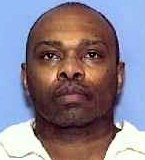
Christopher Black
Murderer Russell Ellwood
Murderer · USA · 1991
Russell Ellwood was a former taxi driver. Authorities suspected him of killing…
20 victims
Russell Ellwood
Murderer · USA · 1991
Russell Ellwood was a former taxi driver. Authorities suspected him of killing…
20 victims
 Robert Martines Perez
Murderer · USA · 1994
Name: Robert Martines Perez · Other name used in proceedings: Robert Martinez P…
15 victims
Robert Martines Perez
Murderer · USA · 1994
Name: Robert Martines Perez · Other name used in proceedings: Robert Martinez P…
15 victims
 Billy Frank Vickers
Murderer · USA · 1993
Billy Frank Vickers Vickers was executed by lethal injection in Texas on Januar…
14 victims
Billy Frank Vickers
Murderer · USA · 1993
Billy Frank Vickers Vickers was executed by lethal injection in Texas on Januar…
14 victims
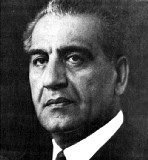 Gourgen Yanikian
Murderer · USA · 1973
Gourgen Mkrtich (Megerdich) Yanikian was an Armenian author, engineer, and an A…
2 victims
Gourgen Yanikian
Murderer · USA · 1973
Gourgen Mkrtich (Megerdich) Yanikian was an Armenian author, engineer, and an A…
2 victims
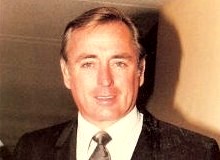 Jack Roland Murphy
Murderer · USA · 1967
Jack Roland Murphy (also known as “Murph the Surf”) was born in 1938 in Los Ang…
1 victim
Jack Roland Murphy
Murderer · USA · 1967
Jack Roland Murphy (also known as “Murph the Surf”) was born in 1938 in Los Ang…
1 victim
 Gary Edward Ladbrook
Murderer · New Zealand · 1992
Gary Edward Ladbrook was jailed for life after he raped and suffocated Mrs Sole…
1 victim
Gary Edward Ladbrook
Murderer · New Zealand · 1992
Gary Edward Ladbrook was jailed for life after he raped and suffocated Mrs Sole…
1 victim
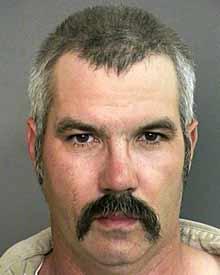 Scott Wilson Williams
Serial killer · USA · 1997
Scott Wilson Williams received three consecutive life sentences without parole…
3 victims
Scott Wilson Williams
Serial killer · USA · 1997
Scott Wilson Williams received three consecutive life sentences without parole…
3 victims
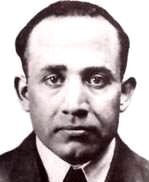 Earle Leonard Nelson
Serial killer · USA / Canada · 1926
Earle Leonard Nelson (May 12, 1897 – January 13, 1928) was an American serial k…
25 victims
Earle Leonard Nelson
Serial killer · USA / Canada · 1926
Earle Leonard Nelson (May 12, 1897 – January 13, 1928) was an American serial k…
25 victims
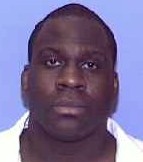 Corey James Jennings
Murderer · USA · 2000
Name: Corey James Jennings · TDCJ Number: 999382 · Date of Birth: 03/31/1975 ·…
1 victim
Corey James Jennings
Murderer · USA · 2000
Name: Corey James Jennings · TDCJ Number: 999382 · Date of Birth: 03/31/1975 ·…
1 victim
- Gender
- male
- Country
- USA
- Location
- Bell County, Texas, USA
- Date of birth
- August 2, 1959
- Age at first offence
- 39
- Characteristics
- parricide, domestic dispute, abuse, rape
- Victim profile
- H is estranged wife, his daughter and his step-granddaughter
- Method of murder
- Shooting (semiautomatic pistol)
- Date(s) of murder
- February 7, 1998
- Years active
- 1998
- Date of arrest
- Same day (surrenders)
- Status
-
Executed
Executed by lethal injection in Texas on July 9, 2003
Case overview
Christopher Black, Sr. was executed in Texas by lethal injection on July 9, 2003. He had been sentenced to death after a Texas jury convicted him of capital murder involving the killing of Katrese Houston, who was a child younger than six years of age.
Timeline
- February 7, 1998 — Christopher Black visited his estranged wife at her home in Killeen, Texas, where, in the presence of Deidre Blackburn, he shot his wife and his 19-month-old step-granddaughter as she sat in a high chair, and fired one round into his infant daughter; Blackburn escaped unhurt to a neighbor's house.
- February 7, 1998 — Immediately after the killings, Black called 911 and told a police dispatcher that he had just killed his wife, daughter and granddaughter, and that he had “ran out of bullets.”
- March 25, 1998 — A Bell County, Texas, grand jury indicted Black for intentionally and knowingly using a firearm to kill Katrese Houston, a child younger than six years of age.
- Aug. 5, 1998 — A guilty verdict was returned.
- Aug. 10, 1998 — Christopher Black, Sr. was sentenced to death for the capital murder of Katrese Houston; the capital murder occurred in Killeen, Texas, on Feb. 7, 1998.
- Sept. 13, 2000 — The Texas Court of Criminal Appeals affirmed the conviction and sentence in a published en banc opinion.
- Jan. 17, 2002 — The federal district court denied federal habeas relief.
- Dec. 11, 2002 — The Fifth Circuit Court of Appeals denied Black’s request for a certificate of appealability; the decision affirmed the district court’s decision.
- Jan. 15, 2003 — The Fifth Circuit denied Black’s petition for rehearing.
- Feb. 6, 2003 — The trial court set Black’s execution for July 9, 2003.
- Feb. 21, 2003 — Black petitioned the Supreme Court for a writ of certiorari.
- April 21, 2003 — The Supreme Court denied the petition.
- July 9, 2003 — Black was executed by lethal injection in Texas; he was pronounced dead seven minutes later.
The offence
In February 1998, angry about the end of his marriage, Christopher Black, Sr. recorded on cassette tapes why he wanted to kill his family and applied for the purchase of a handgun. He purchased a semiautomatic pistol and visited his estranged wife at her home in Killeen, Texas.
Black shot his wife and his 19-month-old step-granddaughter as she sat in a high chair, and he fired one round into his infant daughter. Deidre Blackburn, a friend of Black’s wife, was present when Black shot his wife and the step-granddaughter. Blackburn escaped unhurt to a neighbor’s house. All three victims died of their gunshot wounds.
Katrese Houston was found slumped in a high chair and had been shot five times in the chest. Black’s wife, Gwendolyn Black, was shot 10 times. Black’s daughter, Christina (Christina Marie) Black, was shot once.
Black told a police dispatcher that he had just killed his wife, daughter and granddaughter and that he had “ran out of bullets.”
“I ran out of bullets.”
Investigation, arrest and immediate aftermath
Immediately after the killings, Black called 911 and told a police dispatcher that he had just killed his wife, daughter and granddaughter and that he had “ran out of bullets.” Black was arrested at the scene and was later indicted by a Bell County grand jury for the murder of a person under the age of six years.
Officer Eric Bradley reported encountering Black after police arrived, describing Black as unarmed and holding Christina to his chest. Bradley reported that Black said he was not going to put the baby down on the cold ground. Bradley reported a further exchange and stated that when he pulled the baby toward him, the baby’s condition was consistent with death, describing “The eyes were open, fixed, no pulse, no respiration, no nothing.”
“We approached him and he said he wasn't going to put the baby down on the cold ground,”
“As I reached up to grab the baby from him, he said, 'I want to kiss my baby.' I said 'go ahead.'”
“As I pulled the baby toward me, the baby's head kind of just rolled to the left. ... The eyes were open, fixed, no pulse, no respiration, no nothing.”
Trial
Charges and plea
Black was indicted by a Bell County grand jury for intentionally and knowingly using a firearm to kill Katrese Houston, a child younger than six years of age.
Black pleaded “not guilty.”
Guilt phase
Black’s trial included testimony from Deidre Blackburn against him for the capital offense. The jury deliberated for about seven hours before returning its answers to the punishment-phase questions required by Article 37.071, Texas Code of Criminal Procedure, and convicted Black in a matter of minutes, with the jury deliberation described elsewhere as lasting 15 minutes for conviction.
Cassette tape recordings made by Black prior to the crime were introduced at the guilt stage. In those recordings, he expressed anger about the end of his marriage and discussed wanting to kill Gwendolyn and anyone else in the house. The recordings also addressed how he purchased a handgun after applying and waiting several days for a background check. Black mailed the tapes to relatives so they would receive them after the shooting.
Punishment phase and sentence
Black’s attorneys pursued a strategy focused on avoiding the death penalty, attempting to elicit testimony on cross that would support a picture of Black as a man with a distinguished military record who was distraught over marital problems and who erupted in a horrendous, self-destructive episode unlikely to make him dangerous in prison.
After a separate punishment hearing, the same jury answered the future dangerousness issue affirmatively and the mitigation issue negatively. In accordance with Texas law, the trial court sentenced Black to the death penalty.
Legal background noted in appellate discussions
The Texas Court of Criminal Appeals, on automatic appeal, held that the child capital-murder provision did not violate equal protection on the ground that it created a capital-murder offense which did not require proof of an aggravating element or defendant's knowledge of that element. The court also held that the trial court could sua sponte excuse a prospective juror with hearing impairment out of defendant’s presence.
Appeals
Direct appeal (state)
On Sept. 13, 2000, the Texas Court of Criminal Appeals affirmed the conviction and sentence in a published en banc opinion. Black did not seek a writ of certiorari in the Supreme Court at that time.
State habeas proceedings
On June 2, 2000, Black initiated state habeas proceedings by filing an 11-claim petition in the convicting court.
On March 7, 2001, the Court of Criminal Appeals denied Black’s application for state habeas relief.
Federal habeas proceedings (district court and Fifth Circuit)
Black’s federal habeas petition was denied on Jan. 17, 2002 by the federal district court.
In a published opinion issued on Dec. 11, 2002, the Fifth Circuit Court of Appeals denied Black’s request for a certificate of appealability, affirmed the district court’s decision, and on Jan. 15, 2003 denied Black’s petition for rehearing.
The Fifth Circuit opinion in 02-50455 described Black’s federal habeas claims as involving ineffective assistance of counsel, including:
- a claim that counsel denied him the right to testify in the punishment phase or was ineffective in adopting a trial strategy with which he did not agree; and
- a claim that the state trial judge denied him the right to counsel by excusing a member of the venire outside the presence of all counsel and Black.
The Fifth Circuit concluded that Black failed to make a substantial showing of denial of a constitutional right and denied his request for a certificate of appealability.
Ineffective assistance: right to testify / trial strategy
Judge Joe Carroll of the 27th Judicial District Court of Bell County presided at trial and at the later evidentiary hearing on Black’s state habeas petition.
At the outset, Judge Carroll appointed Frank Holbrook and Bob Odom as counsel to Black. After direct appeal, Black filed an application for a writ of habeas corpus, and on Oct. 17, 2000, Judge Carroll conducted an evidentiary hearing in which the issues included:
- whether Black’s attorneys refused to allow him to testify at his trial;
- whether Black’s attorneys followed a trial strategy that Black did not consent to or agree with; and
- whether Black’s attorneys followed a trial strategy forced upon him.
At that hearing, Black testified that he did not testify for several reasons, including relying heavily on testimony of Dr. Reid. Black also testified that he told Holbrook and Odom he could “rebut” testimony of his ex-wife by denying hitting her or using her alien status by threatening to report her to the INS, and he could deny that he pointed his gun at Deidre Blackburn. He testified that he wanted to explain the tapes introduced at the guilt stage but was unclear what his explanation would have been. Black denied that his counsel told him he had a right to testify or that he was otherwise aware of his right to do so.
Holbrook and Odom testified differently, stating they explained Black’s rights, that Black understood them, and that the decision not to testify was made by Black.
Judge Carroll filed detailed findings of fact and conclusions of law rejecting Black’s version, finding that the attorneys did not refuse to allow Black to testify but advised him that testifying would not be in his best interest. Judge Carroll also found that the attorneys discussed the law of the case, the State’s burden, and their trial strategy on more than one occasion and that Black understood the strategy and it was not forced upon him.
The Texas Court of Criminal Appeals adopted Judge Carroll’s findings, and the federal court was required to presume them correct absent “clear and convincing” evidence.
The Fifth Circuit described Judge Carroll’s hearing findings as including that “the Applicant's attorneys did not refuse to allow him to testify at the guilt/innocence or punishment stage of his trial, but advised him that testifying would not be in his best interest,” and also that the attorneys “discussed with [Black] on more than one occasion the law of the case, the State's burden in the case, and their trial strategy; and that he understood this strategy and it was not forced upon him in any way.”
Excusing a venire member outside counsel’s presence
Black claimed constitutional error in Judge Carroll’s decision to excuse out of his and all counsel’s presence a late arriving member of the venire who asked not to serve because she was hard of hearing.
Black’s counsel objected to the release of the venire member in their absence. Judge Carroll explained:
“There was a lady that came up and couldn't hear. And she said she had a doctor's excuse with her. I interviewed her and determined she couldn't hear and so I let her go. And she promised me that she would bring her excuse back. And I am sorry that I didn't do that in the presence in here awhile ago. It just caught me off-guard.”
Judge Carroll later found in habeas findings that because a trial court has broad discretion to excuse jurors for other than economic reasons without the parties being present, the court did not abuse its discretion in granting the juror’s request because she could not hear out of the presence of counsel for either side or the applicant.
The Fifth Circuit denied relief on this ground and treated it as not meeting the circumstances required for a presumed-prejudice analysis.
Petition for writ of certiorari (U.S. Supreme Court)
On Feb. 21, 2003, Black petitioned the Supreme Court for a writ of certiorari, and on April 21, 2003, the Supreme Court denied the petition.
Rehearing
On Jan. 15, 2003, the petition for rehearing for Christopher Black was granted in part and dismissed in part, and the opinion was modified to reflect that John R. Duer was counsel of record in the direct appeal in state court.
On rehearing, the court again rejected Black’s contention regarding disqualification of Wilma McKenney Bonds outside the presence of all counsel, discussing how Bonds arrived after exemptions or disqualifications, that she was not certified for the petit jury venire, and that her disqualification occurred during the timeframe preceding the case-focused voir dire.
Sentencing and execution
Death sentence
Black was sentenced to death by a Texas trial court following the punishment hearing in which the jury answered the future dangerousness issue affirmatively and the mitigation issue negatively.
Last meal and final statement
Black requested a last meal that included steak (medium well), fried chicken (wings and thighs), French fries, mushroom gravy, mixed steamed vegetables, chocolate fudge cake, peach cobbler, sweet tea, bread, and chef salad with Italian dressing.
At the execution, the warden asked if he wanted to make a final statement and Black declined.
Execution details and pronouncement
Christopher Black, Sr., was executed by lethal injection in Texas on July 9, 2003. He declined to make any statement before dying by injection. As the drugs began flowing, he made a groaning sigh and was pronounced dead seven minutes later. A report also stated the lethal injection began at 6:12 p.m. and that Black was pronounced dead at 6:19 p.m.
Other details
Family and relationships described in the case materials
The killings involved Black’s estranged wife, Gwendolyn Black, and his daughter, Christina (Christina Marie) Black, and his step-granddaughter, Katrese Houston.
Relatives claimed the triple homicide occurred after Black learned his wife planned to divorce him. The couple had married just over three years earlier, and relatives said Gwendolyn Black worked as an elementary school teacher after leaving the Army, and was seeking a divorce because she received little help from her husband with the children and he had moved out of town to take a security job.
Criminal background and counsel
The materials stated Black had no previous criminal record and had a distinguished military record.
At the guilt stage, defense counsel efforts were directed toward avoiding the death penalty, and they waived argument. After the trial, Judge Carroll appointed John R. Duer as appellate counsel.
Black did not seek a writ of certiorari in the Supreme Court after the Sept. 13, 2000 Texas Court of Criminal Appeals decision, but later petitioned for certiorari on Feb. 21, 2003.
Statements and demeanor while awaiting execution
Black declined to speak from death row with reporters and made no last statement at his execution.
A written statement attributed to him while awaiting execution described his days as “long and sad” and expressed that he wanted “a friend,” and included a web-site pen pal message and a signature of “Christopher” with “Christopher Black Senior # 999277 Polunsky Unit 3872 F.M. 350 South Livingston, Texas 77351 USA.”
“My days are long and sad.
The only thing that kept me living until yet was writing.
I do not want romance or money, the only thing that I want is a friend.
A friend to dream with, to talk to, to have fun with etc.
I am interesseted in literature, sports, jazz music, family, animals (cats), day dreaming and a lot more.
I would like everybody who writes to me and I am thankful if YOU write to me. I will answer all your letters.
It does not matter if you are female or male.
People with ideas and who are interesting are my friends.
Do not think, that you might be not interesting.
If you have sometimes strange ideas about future, religions, cooking and the world, please do not be shy and write to me.
I hope to hear soon from you out there in the living world.
Your new friend Christopher.”
“He made his choices,” officer Eric Bradley said.


Spotted an error, or have more information about this case?