
Johnny Black
Murderer Brian Kevin Rosenfeld
Murderer · USA · 1985
Brian Kevin Rosenfeld Brian Kevin Rosenfeld was sentenced to three concurrent l…
23 victims
Brian Kevin Rosenfeld
Murderer · USA · 1985
Brian Kevin Rosenfeld Brian Kevin Rosenfeld was sentenced to three concurrent l…
23 victims
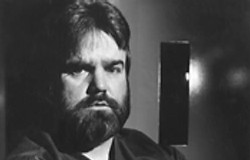 Marvin Gray
Murderer · USA · 1975
Marvin Gray was convicted killer who claimed responsibility for 23 slayings and…
23 victims
Marvin Gray
Murderer · USA · 1975
Marvin Gray was convicted killer who claimed responsibility for 23 slayings and…
23 victims
 Yahweh ben Yahweh
Murderer · USA · 1980
Yahweh ben Yahweh was born and legally named Hulon Mitchell Jr. (October 27, 19…
23 victims
Yahweh ben Yahweh
Murderer · USA · 1980
Yahweh ben Yahweh was born and legally named Hulon Mitchell Jr. (October 27, 19…
23 victims
 Russell Ellwood
Murderer · USA · 1991
Russell Ellwood was a former taxi driver. Authorities suspected him of killing…
20 victims
Russell Ellwood
Murderer · USA · 1991
Russell Ellwood was a former taxi driver. Authorities suspected him of killing…
20 victims
 Melissa Memmer
Murderer · USA · 2003
Melissa Memmer — defendant; former Shelby Township caregiver; she admitted disc…
1 victim
Melissa Memmer
Murderer · USA · 2003
Melissa Memmer — defendant; former Shelby Township caregiver; she admitted disc…
1 victim
 Joseph Trueblood
Murderer · USA · 1988
Joseph Trueblood was executed by lethal injection in Indiana on June 12, 2003.…
3 victims
Joseph Trueblood
Murderer · USA · 1988
Joseph Trueblood was executed by lethal injection in Indiana on June 12, 2003.…
3 victims
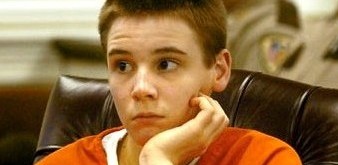 Tyler Edmonds
Miscarriage of justice · USA · 2003
Tyler Edmonds was a 19-year-old man from Mississippi who was tried and convicte…
0 victims
Tyler Edmonds
Miscarriage of justice · USA · 2003
Tyler Edmonds was a 19-year-old man from Mississippi who was tried and convicte…
0 victims
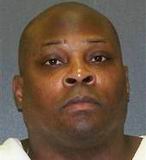 Gayland Bradford
Murderer · USA · 1988
Gayland Bradford was convicted of capital murder and sentenced to death in Texa…
1 victim
Gayland Bradford
Murderer · USA · 1988
Gayland Bradford was convicted of capital murder and sentenced to death in Texa…
1 victim
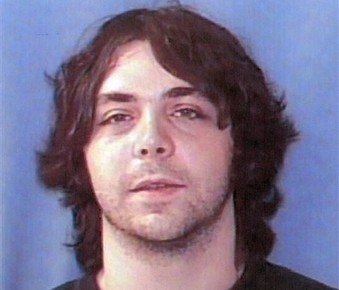 Wesley Higdon
Mass murderer · USA · 2008
Wesley Neal Higdon was a 25-year-old press operator from Henderson. He was desc…
5 victims
Wesley Higdon
Mass murderer · USA · 2008
Wesley Neal Higdon was a 25-year-old press operator from Henderson. He was desc…
5 victims
- Gender
- male
- Country
- USA
- Location
- Jefferson County/Stephens County, Oklahoma, USA
- Date of birth
- September 27, 1965
- Age at first offence
- 18
- Characteristics
- —
- Victim profile
- Cecil Martin, 49 / Bill Pogue, 54
- Method of murder
- Shooting / Stabbing with knife
- Date(s) of murder
- December 13, 1983 / January 4, 1998
- Years active
- 1983–1998
- Date of arrest
- —
- Status
-
Executed
Executed by lethal injection in Oklahoma on December 17, 2013
Case record: Johnny Black
Background
Johnny Dale Black was convicted of one count of Murder in the first degree (21 O.S. Supp. 1997, § 701.7(A)) and one count of Assault and Battery with a Deadly Weapon, After Former Conviction of a Felony (21 O.S. Supp. 1992, § 652), following a jury trial in the District Court of Stephens County, Case No. CF-99-01, the Honorable George W. Lindley, District Judge, presiding.
Offence
On January 4, 1998, Cal Shankles went to the trailer home of Jesse Black, where Jesse, his brothers Jimmy Black and Appellant, Robert Seale and several others were watching football playoffs. A nervous Shankles wanted the Black brothers and Robert Seale to accompany him while he went to find his brother. Shankles told the Blacks and Seale that he needed them to watch his back because Justin Hightower was looking for him over an affair he had been having with Hightower's soon-to-be ex-wife.
Thereafter, Shankles, the Black brothers and Robert Seale left the trailer in Shankles' mother's green Neon with Appellant driving and Shankles on the lookout for Hightower's black Blazer.
Meanwhile, Bill Pogue and his son-in-law, Rick Lewis, drove to Ringling in Pogue's black Blazer to buy some chewing tobacco at a local convenience store. On their way back to Pogue's home, they passed the Neon at an intersection and one of its passengers yelled something at Pogue's Blazer. The Neon turned around and pulled in behind Pogue traveling at a high rate of speed and flashing its lights. Shortly thereafter, the Neon passed Pogue's Blazer and stopped in front of it. It was disputed at trial whether the Neon blocked the roadway.
According to Rick Lewis, the surviving victim, he and Pogue exited the Blazer. Lewis went around the back of the Blazer and came up behind Pogue. The four doors of the Neon opened and Jimmy Black, who was seated in the rear on the driver's side, got out and ran barreling towards them. In response, Pogue hit Jimmy Black in the face and the two began to wrestle towards and into the east bar ditch. Jesse Black and Appellant then ran towards Lewis, who hit Jesse Black, momentarily knocking Jesse down. Lewis was able to sidestep Appellant and throw him into the front of the Blazer. Appellant and Jesse Black then began fighting with Lewis in the west bar ditch.
During the fight, Lewis looked up to see Cal Shankles with some type of club and felt a couple of blows to the head. Lewis did not remember seeing Shankles during the entirety of the fight and the evidence showed Shankles went from bar ditch to bar ditch alternately hitting Lewis and Pogue with some type of club. Lewis remembered seeing Robert Seale standing at the back of the Neon holding what looked like a tree branch, but never saw him fighting with anyone.
After several minutes of fighting, Lewis was able to break free and make his way to the east bar ditch where he saw Pogue on top of Jimmy Black and Appellant over Pogue's back. Lewis pushed Appellant off of Pogue and helped Pogue stand up and head toward the Blazer. Jesse Black then hit Lewis in the side of the head and said “that's for bustin' my lip.”
The Black brothers, Seale and Shankles then lined up behind the Neon yelling obscenities and taunting Lewis and Pogue. While Lewis assisted Pogue, who had been stabbed eleven times, into the Blazer, the Neon sped away. Although Lewis did not realize it during the fight, Appellant had stabbed him thirteen times with wounds to the back of Lewis' head, spine, chest, side, buttock, leg and arm.
After loading Pogue into the Blazer, Lewis raced him back to the Pogue barn, where family members took over and rushed both men to the Healdton hospital. Lewis was treated for his injuries and was later transferred to Ardmore for care. Pogue died at the Healdton hospital.
In a narrative of events developed during litigation, the attack involved a case of mistaken identity: the defendants had been searching for two men in a similar vehicle for a fight, stopped a sport utility vehicle on a dirt road, and dragged Bill Pogue and Rick Lewis from the vehicle. Testimony indicated that after the incident the defendants realized that they had attacked the wrong people.
Investigation
In Appellant's voluntary statement to police, he claimed he did not go with Shankles to fight, but to see “what the deal was.” He claimed he never intended to kill Pogue and he did not understand why Lewis and Pogue attacked his brothers. He maintained he did not remember stabbing Lewis and that he simply reacted because he was afraid for his brothers, Jesse and Jimmy.
He claimed that when he went to Jimmy's aid, he told Pogue to get off his brother or he would “stab” or “cut” him. When Pogue did not move, he stabbed him.
According to Appellant, he and Pogue began to wrestle and roll around and Pogue kept rolling onto the knife. He maintained there was no intent to kill anyone and that his brothers did not know he used his knife.
Arrest and flight
The morning after the fight Appellant fled to Texas, where he was later apprehended and voluntarily confessed. Jesse and Jimmy Black, Robert Seale and Cal Shankles were also arrested and made voluntary statements.
Trial
The jury recommended death for the murder after finding four aggravating circumstances, and it imposed fifteen (15) years imprisonment for assault and battery with a deadly weapon. The trial court sentenced Appellant accordingly.
In Appellant's defense, counsel argued that Appellant stabbed and killed Bill Pogue and that the issue for the jury was whether he did so with malice aforethought or in a heat of passion. Defense attorney Deborah Maddox told a jury pool that “Johnny Black killed Bill Pogue” but said she would debate whether he did it with “malice aforethought.” Prosecutors contended it was a case of mistaken identity and a dispute existed over intent.
At trial, testimony included medical evidence. Deputy Medical Examiner Larry Balding testified Pogue suffered blows to the left side of the face by a blunt force and 10 stab wounds, including a wound estimated to have penetrated the back about 5 inches and pierced a lung. Defense attorney John Albert asked whether Pogue showed any “defense wounds” on the hands or arms, suggesting he was fending off an attacker. Balding said only one wound might qualify, a cut on the left forearm.
In Rick Lewis's testimony, he said, “We are a close family” and glared at Black. Lewis then turned to the jurors and began to cry, stating, “Bill and I were fighting for our lives.”
Appellant was described as “a slim man” at trial, seated slightly slouched in his chair and never shifting his vision from the witness stand.
Appellant also faced penalty phase proceedings in which counsel raised heat of passion and adequate provocation issues.
Jury selection and voir dire (issues raised on appeal)
Appellant claimed he was denied due process when jury selection allegedly restricted voir dire and barred jurors with reservations about the death penalty. The trial court asked whether jurors could consider all three punishments for first-degree murder, including death, imprisonment for life without parole, or imprisonment for life.
In the appellate record, prospective juror Williams was dismissed after responding “No sir” to the question asking whether reservations about the death penalty were such that regardless of the law, facts and circumstances she would not consider inflicting a death penalty. Prospective juror Skiles answered “Yes sir” to essentially the same question and was also dismissed.
Defense counsel argued for juror questionnaires, and for access to district attorney criminal history records of potential jurors, as well as inquiry into jurors’ states of mind about the defense and meaningful question-and-answer process.
The appellate opinion stated that the trial court restricted repetitive, irrelevant, or legal-issue questions and that no abuse of discretion existed because the questioning was broad enough to afford a jury free of outside influence, bias or personal interest.
Appellant also claimed the trial court improperly excused four potential jurors for cause based on opposition to the death penalty. The appellate opinion described prospective jurors Skiles, Adams, Richard and Williams. For Skiles, Adams and Richard, the prospective jurors responded they could not consider the death penalty regardless of the facts and law, and they were removed for cause. For Williams, when asked whether, if law and evidence permitted, were Williams’ reservations such that regardless of the law, facts and circumstances she would not consider imposing the death penalty, Williams stated, “No sir.” The appellate opinion described the trial court’s handling of requests to rehabilitate and held that no abuse of discretion occurred in dismissing Williams.
Appellant also raised a Batson v. Kentucky claim, alleging a prosecutor used a peremptory challenge to remove a minority juror because of race. The prosecutor removed prospective juror Castle because Castle failed to disclose he had been accused of first degree burglary that was later dismissed and refiled as misdemeanor assault and battery. The appellate opinion stated that another white juror was also removed after belatedly disclosing a prior misdemeanor criminal record. The appellate opinion found no Batson error.
Evidence and sufficiency of intent (issues raised on appeal)
Appellant argued that his murder conviction should be reversed due to insufficient evidence to prove beyond a reasonable doubt that he intended to kill Bill Pogue, asserting the State was bound by his statement that he never intended to kill Pogue.
The appellate opinion described direct and circumstantial evidence, including that Appellant voluntarily accompanied Shankles to the arranged confrontation armed with his knife; that Appellant intentionally followed Pogue's Blazer; that Appellant forced the Blazer to stop rather than avoid a fight; that after cars stopped, Jimmy and Jesse Black jumped out and rushed Lewis and Pogue in a threatening manner demonstrating group intent to fight; that Appellant joined in a fight and stabbed Lewis thirteen times with wounds to the head and chest; and that Lewis identified defendants and accurately testified to their actions.
The appellate opinion also described a contradiction in Appellant's account regarding his encounter with Pogue as compared with his brother Jimmy's account, and it stated that a jury could disbelieve Appellant's account.
The appellate opinion also addressed that the physical injuries sustained by the Blacks did not match Appellant's claim that he acted out of fear for the safety of his brothers and himself, and it referenced Appellant disposing of the knife and fleeing the morning after the fight knowing, at the very least, Pogue had been seriously injured.
Heat of passion manslaughter and jury instructions (issues raised on appeal)
Appellant argued that the heat of passion manslaughter instructions were constitutionally deficient because they failed to inform the jury that heat of passion was Appellant's defense, that the State had the burden to disprove heat of passion beyond a reasonable doubt, and that heat of passion manslaughter should be considered in tandem with the charged crime of murder.
The appellate opinion relied on prior Oklahoma and Tenth Circuit analyses distinguishing Lofton, and it described the uniform instructions and the definitions used for malice aforethought and heat of passion.
The appellate opinion held that the jury was adequately instructed on heat of passion and adequate provocation and that no plain error occurred.
Adequate provocation and mutual combat (issues raised on appeal)
Appellant challenged the instruction defining adequate provocation for focusing on improper conduct of the victim rather than defendant’s state of mind, and he also argued that mutual combat could constitute adequate provocation.
The appellate opinion quoted the instruction defining “adequate provocation” and held that Appellant's claim did not show injury because, under the defense theory, the jury could find that the conduct of the victims was “improper” within the context of the instruction.
The appellate opinion also held that no plain error occurred regarding failure to specifically advise that mutual combat may constitute adequate provocation, given the jury was presented two versions of how the altercation began.
Self-defense and defense of another (issues raised on appeal)
Appellant challenged self-defense instructions, including claims about conflation of distinct defenses and failure to inform the jury of the law relating to defense of another, and a statement that “defense of a brother is not available as justification for homicide or assault and battery.”
The appellate opinion described that Appellant did not object to self-defense instructions on the grounds asserted on appeal other than the statement regarding defense of a brother. It concluded that because Appellant used deadly force when he stabbed Lewis and Pogue, he was not entitled to an instruction on justifiable use of non-deadly force, and it held the trial court’s instructions adequately stated that Appellant was not entitled to justification for assault and battery with intent to kill in the defense-of-a-brother context.
The appellate opinion noted that Appellant's primary defense was heat of passion manslaughter rather than self-defense and concluded no relief was required.
Assault and battery with deadly weapon (issues raised on appeal)
Appellant argued that the assault and battery with a deadly weapon conviction should be reversed because the State failed to prove he intended to kill Lewis. The appellate opinion held that evidence was sufficient to conclude Appellant intended to kill Lewis when he stabbed him thirteen times with wounds to the head and chest during what the opinion described as a three-on-one fight. It also stated that because lighting was good enough for Lewis to identify the defendants, the jury could infer Appellant would have been able to see that Jimmy was not seriously injured, which refuted fear-based claims.
Appellant also argued the trial court erred in instructing the jury that a knife is a deadly weapon. The appellate opinion held that no plain error occurred and noted that Appellant admitted using his pocket knife to stab both victims numerous times, and that such stabbing inflicted great bodily injury to Lewis and resulted in Pogue's death.
Prosecutorial misconduct (issues raised on appeal)
Appellant alleged prosecutors attempted to inject passion and sympathy, improperly impeached a defense witness, aligned themselves with the victim, jury and public, evoked sympathy, ridiculed the defense theory, impugned defense counsel’s character and credibility, expressed personal opinions, disparaged Appellant's family, equated Appellant with Charles Manson, misstated the law, and misrepresented evidence.
The appellate opinion described that remarks objected to were cured when the trial court admonished the jury and that remaining remarks were reviewed for plain error. It concluded that some comments invoking Charles Manson and personal digressions invoking victim sympathy were error, but that cumulatively they did not rise to reversible error.
Penalty phase aggravating circumstances (issues raised on appeal)
The jury found aggravating circumstances including:
- the murder was especially heinous, atrocious or cruel;
- during the commission of the murder, the Defendant knowingly created a great risk of death to more than one person;
- the Defendant, prior to the murder, was convicted of a felony involving the use or threat of violence to the person;
- at the present time there exists a probability that the Defendant will commit criminal acts of violence that would constitute a continuing threat to society.
The appellate opinion held that Appellant’s challenge to the “great risk of death to more than one person” aggravating circumstance was denied, describing that the evidence of stabbing Lewis multiple times in vital areas supported the finding of knowingly created great risk of death to more than one person.
The appellate opinion also rejected challenges to the “continuing threat” aggravator, and it reaffirmed holdings upholding the constitutionality of “especially heinous, atrocious or cruel.”
Notice for second-stage evidence (issues raised on appeal)
Appellant argued that the State failed to provide adequate notice of second-stage witness O.S.B.I. Agent Jack Daly, who testified to facts surrounding Appellant's prior violent felony conviction.
The appellate opinion described that after the jury rendered its verdict in the guilt/innocence phase and before the motion hearing preceding sentencing, the State provided defense counsel a file of 75-100 pages detailing Agent Daly's investigation and interview with Appellant. Defense counsel moved to quash the bill of particulars naming Daly, and sought a continuance. The trial court granted a continuance from 3:00 p.m. until 8:30 a.m. the next morning.
Defense counsel ultimately opted not to stipulate, and Daly testified regarding details Appellant gave in his statement to Daly. The appellate opinion denied relief, stating that the appellate court could not determine prejudice because the preliminary hearing transcript and Daly’s investigative file were not included in the materials and Appellant did not show how he would have defended differently.
Co-defendants’ confessions (issues raised on appeal)
Appellant argued that the trial court excluded co-defendants' confessions and thereby deprived him of the right to present a defense.
The appellate opinion described the trial court’s decision to exclude hearsay statements of Jimmy and Jesse Black due to lack of corroboration under 12 O.S.1991, § 2804(B)(3), while admitting Robbie Seale’s statement. It held that even assuming error, Appellant was not prejudiced because Jimmy testified voluntarily against counsel’s advice, and because Jesse's statement would have only corroborated sequence and lack of intent.
Sentencing
The jury recommended death for the murder and fifteen (15) years imprisonment for assault and battery with a deadly weapon.
The appellate opinion stated that the jury found four aggravating circumstances and it referenced the aggravators listed and evidence supporting them, including that Pogue was conscious and alive suffering pain during and after the attack.
Appeals
Oklahoma Court of Criminal Appeals
In its March 12, 2001 opinion, the Oklahoma Court of Criminal Appeals affirmed Appellant’s judgment and sentence, finding no error warranting relief. The appellate opinion held the Judgment and Sentence of the trial court is AFFIRMED.
Federal habeas proceedings
In Black v. Workman, the Tenth Circuit described the procedural history and issues raised in a federal appeal.
The Tenth Circuit stated that Defendant Johnny Black was convicted of first-degree murder and battery with a dangerous weapon due to his role in an assault that left Bill Pogue dead and Rick Lewis suffering from 13 stab wounds. The jury recommended death for the first-degree murder conviction, and the death sentence was imposed.
The Tenth Circuit stated:
- the convictions and sentence were affirmed by the Oklahoma Court of Criminal Appeals (OCCA);
- the United States Supreme Court denied certiorari in Black v. Oklahoma (534 U.S. 1004);
- the federal district court denied the 28 U.S.C. § 2254 application and denied relief on certain claims as procedurally defaulted;
- and the appeal was abated pending certification of a state-law question to the OCCA.
The Tenth Circuit discussed several categories of claims including:
- voir dire issues related to prospective jurors dismissed for cause;
- a Batson claim;
- jury instructions on first-degree murder and manslaughter;
- ineffective assistance of counsel claims including closing argument and failure to investigate;
- extraneous-evidence issues related to juror statements about the crime scene area;
- prosecutorial misconduct claims;
- cumulative error;
- procedural bar;
- and a certification request to resolve whether Oklahoma’s bar of a second postconviction application was independent of federal law.
The Tenth Circuit’s order stated: “We AFFIRM the district court's denial of the claims that it did not dispose of on the ground of procedural bar and ABATE the appeal pending consideration by the OCCA of our certification request.”
Outcome
Johnny Dale Black was executed by lethal injection in Oklahoma on December 17, 2013.
Statements made by Appellant in connection with his execution included:
- “I love you Momma.”
- “I love everybody. I love you. You can count on that, Momma.”
- “This isn't accomplishing anything,” and “It's just another death, another family destroyed.” He made eye contact with his mother, and both shook their heads affirmatively before the lethal drugs were administered.
Oklahoma Attorney General Scott Pruitt said Black was sentenced to death by a jury of his peers “for the murder of an innocent grandfather and upstanding member of the community.”
Aftermath
Witnesses to the execution included Black's mother, his attorney and a spiritual adviser. Four members of the victim's family also attended.
Other details
Victims and injuries
Bill Pogue was stabbed eleven times and died at the Healdton hospital. Rick Lewis suffered more than a dozen wounds, including thirteen stab wounds with wounds to the back of Lewis' head, spine, chest, side, buttock, leg and arm, and later recovered.
Other individuals mentioned
The group included Jesse J. Black, Jimmy Lee Roy Black, Cal Eugene Shankles, Robert William Seals, and Bill Pogue and Rick Lewis.
Related prior case and postconviction background mentioned in the record
The record described that Appellant had previously been convicted of manslaughter for the 1984 death of Cecil Martin, and that he served nine years of a 15-year sentence in that case.
The record also stated that Appellant escaped from Jefferson County Jail while awaiting trial and left a threatening, handwritten note for Sheriff Don Allen.
Co-defendants’ outcomes mentioned
The narrative included outcomes for other defendants:
- Shankles was serving a life sentence for the fatal beating plus 10 years for assault and battery with a dangerous weapon.
- Jesse Black and Jimmy Black were each serving 25 years for first-degree manslaughter and seven years for assault with a dangerous weapon.

Spotted an error, or have more information about this case?