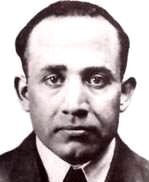
Earle Leonard Nelson
Serial killer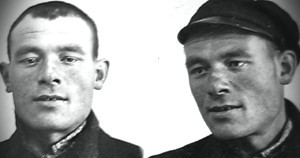 Bruno Lüdke
Serial killer · Germany · 1928
Bruno Lüdke (3 April 1908 – 26 April 1944) was an alleged German serial killer.…
84 victims
Bruno Lüdke
Serial killer · Germany · 1928
Bruno Lüdke (3 April 1908 – 26 April 1944) was an alleged German serial killer.…
84 victims
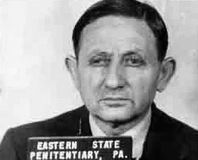 Morris Bolber
Serial killer · USA · 1932
Morris Bolber was prosecuted as part of a Philadelphia poison-murder ring invol…
50 victims
Morris Bolber
Serial killer · USA · 1932
Morris Bolber was prosecuted as part of a Philadelphia poison-murder ring invol…
50 victims
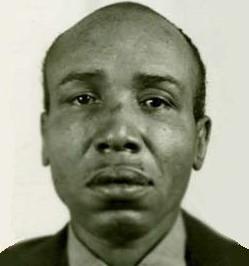 Jake Bird
Serial killer · USA · 1930
October 30, 1947 — Jake Bird broke into the home of Bertha Kludt and her daught…
44 victims
Jake Bird
Serial killer · USA · 1930
October 30, 1947 — Jake Bird broke into the home of Bertha Kludt and her daught…
44 victims
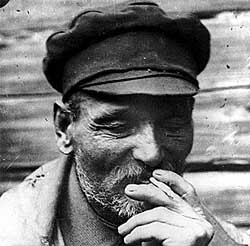 Vasili Komaroff
Serial killer · Russia · 1921
Vasili Komaroff was a horse-trader who maintained a stable at his home in Mosco…
33 victims
Vasili Komaroff
Serial killer · Russia · 1921
Vasili Komaroff was a horse-trader who maintained a stable at his home in Mosco…
33 victims
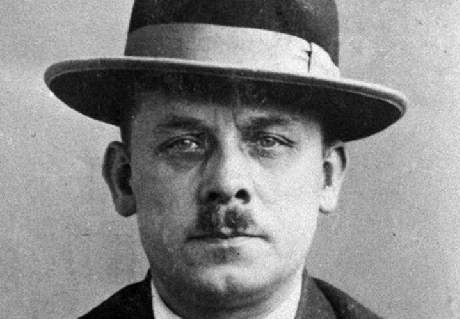 Friedrich Haarmann
Serial killer · Germany · 1918
Friedrich "Fritz" Haarmann (October 25, 1879 – April 15, 1925) was a serial kil…
27 victims
Friedrich Haarmann
Serial killer · Germany · 1918
Friedrich "Fritz" Haarmann (October 25, 1879 – April 15, 1925) was a serial kil…
27 victims
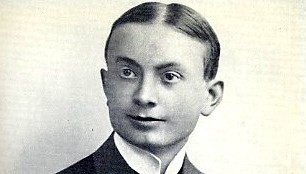 Karl Hau
Murderer · Germany · 1906
Karl Hau was accused of the murder of his mother-in-law, Frau Josephine Molitor…
1 victim
Karl Hau
Murderer · Germany · 1906
Karl Hau was accused of the murder of his mother-in-law, Frau Josephine Molitor…
1 victim
 Marvin Lee Irvin
Murderer · USA · 1979
Marvin Lee Irvin was a former police officer. West was last seen as leaving St.…
3 victims
Marvin Lee Irvin
Murderer · USA · 1979
Marvin Lee Irvin was a former police officer. West was last seen as leaving St.…
3 victims
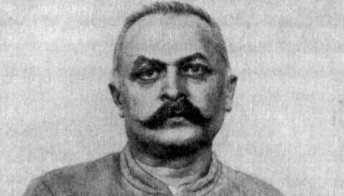 Ernst Wagner
Spree killer · Germany · 1913
Ernst August Wagner (September 22, 1874 – April 27, 1938) was a German spree ki…
14 victims
Ernst Wagner
Spree killer · Germany · 1913
Ernst August Wagner (September 22, 1874 – April 27, 1938) was a German spree ki…
14 victims
 Johannes de Jager
Murderer · South Africa · 2008
Johannes Christiaan de Jager was sentenced to life in prison on May 27, 2014. ·…
2 victims
Johannes de Jager
Murderer · South Africa · 2008
Johannes Christiaan de Jager was sentenced to life in prison on May 27, 2014. ·…
2 victims
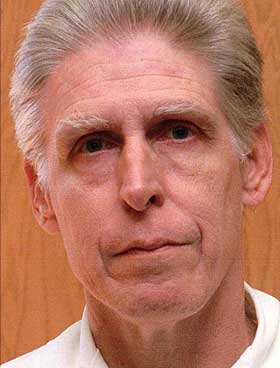 George Sibley
Murderer · USA · 1993
George Sibley Jr. was executed in Alabama on August 4, 2005. His common-law wif…
1 victim
George Sibley
Murderer · USA · 1993
George Sibley Jr. was executed in Alabama on August 4, 2005. His common-law wif…
1 victim
- Gender
- male
- Country
- USA / Canada
- Location
- USA / Canada
- Date of birth
- May 12, 1897
- Age at first offence
- 29
- Characteristics
- rape, necrophilia, mutilation
- Victim profile
- Women (mostly landladies)
- Method of murder
- Strangulation
- Date(s) of murder
- 1926 - 1927
- Years active
- 1926–1927
- Date of arrest
- June 10, 1927
- Status
-
Executed
Executed by hanging in Winnipeg, Canada, on January 13, 1928
Earle Leonard Nelson
Overview
Earle Leonard Nelson (May 12, 1897 – January 13, 1928) was an American serial killer, also known as “The Gorilla Killer.” His spree involved sex crimes, killings of women, and sexual activity with corpses. His known murders began on February 20, 1926 and ended with the murders of Lola Cowan and Emily Patterson in Winnipeg on June 9–10, 1927. He was executed by hanging in Winnipeg, Canada, on January 13, 1928.
Timeline
- February 20, 1926 — Nelson killed his first victim, Clara Newmann.
- March 2, 1926 — Four days after the murder of Laura Beal in San Jose, police arrested Joe Kesesek for acting suspiciously and for wearing similar clothes.
- August 19, 1926 — Two days after the murder of Isabel Gallegos, John Slivkoff was arrested but later released.
- June 15, 1927 — Nelson was first arrested in Wakopa, Manitoba, after murdering 14-year-old Lola Cowan and housewife Emily Patterson in Winnipeg; he gave police the alias Virgil Wilson.
- January 13, 1928 — Nelson was hanged in Winnipeg.
Background
Nelson’s childhood was described as difficult. His mother and father both died of syphilis before Nelson turned two. Nelson was sent to be raised by his maternal grandmother, described as a devout Pentecostal.
Around the age of 10, Nelson collided with a streetcar while riding his bicycle and remained unconscious for six days following the accident. After he awoke, his behavior became erratic, and he suffered from frequent headaches and memory loss. Nelson’s grandmother died when he was 14, and Nelson went to live with his aunt, Lillian, and her husband.
Nelson was described as a daydreamer and a compulsive masturbator. He began his criminal behavior early and was sentenced to two years in San Quentin State Prison in 1915 after breaking into a cabin he believed to be abandoned.
Later, he was committed to the Napa State Mental Hospital after behaving oddly and erratically during his short stint in the United States Navy. He managed to escape three times from the hospital before hospital staff stopped trying to find him.
Nelson began engaging in sex crimes when he was 21 years old. In 1921, he attempted to molest a 12-year-old girl named Mary Summers, but he was thwarted when she screamed and brought attention to him. He was committed once again to the Napa State Mental Hospital. After several escapes and attempted escapes, Nelson was released from the Napa mental institution in 1925 and started on his killing spree early in 1926.
Nelson was arrested twice in Canada, where his murder spree ended.
The offence
Nelson’s victims were mostly landladies whom he approached on the premise of renting a room. He studied his worn Bible and used it to keep his victim at ease and off-guard.
Once he gained their trust, he killed his victims, almost always by strangling them. He engaged in necrophilia with their corpses and then hid the bodies. He often left the corpse under the nearest bed. On at least one occasion, Nelson mutilated the body of his victim.
One described case involved 14-year-old Lola Cowen, whose body was mutilated in a manner reminiscent of Jack the Ripper. Nelson slept with Lola Cowen’s body under his bed for three nights.
In Winnipeg, housewife Emily Patterson was found underneath the bed after being bludgeoned and raped.
Named victims listed in the account
The account included a list of known victims attributed to Nelson, including the following:
- Clara Newman (60), San Francisco — killed 20 February 1926
- Laura E. Beale (60), San Jose — killed 2 March 1926
- Lillian St Mary (63), San Francisco — killed 10 June 1926
- Anna Russell (58), Santa Barbara — killed 24 June 1926
- Mary Nesbit (52), Oakland — killed 16 August 1926
- Beatrice Withers (35), Portland — killed 19 October 1926
- Virginia Grant (59), Portland — killed 20 October 1926
- Mabel Fluke (age listed as ?), Portland — killed 21 October 1926
- Blanche Myers (48), Oregon City — killed 15 November 1926
- Wilhelmina Edmunds (56), San Francisco — killed 18 November 1926
- Florence Monks (age listed as ?), Seattle — killed 24 November 1926
- Elizabeth Beard (49), Council Bluffs — killed 23 December 1926
- Bonnie Pace (23), Kansas City — killed December 1926
- Germania Harpin (age listed as 28), Kansas City — killed 28 December 1926
- Mary McConnell (60), Philadelphia — killed 27 April 1927
- Jenny Randolph (35), Buffalo — killed 30 May 1927
- Minnie May (53), Detroit — killed 1 June 1927
- Mrs Antwerp (a lodger; age listed as ?), Detroit — killed 1 June 1927
- Mary Sietsema (27), Chicago — killed 3 June 1927
- Lola Cowan (14), Winnipeg — killed 8 June 1927
- Emily Patterson (age listed as ?), Winnipeg — killed on June 9 and found after June 9/10
The account also stated that Nelson “also throttled Mrs Harpin’s eight-month-old baby.”
Winnipeg incidents and victim deaths
In Winnipeg, Nelson took a room in a boarding house. The landlady was described as Catherine Hill, and the neighborhood was described as Smith Street.
The account described Nelson murdering 14-year-old Lola Cowan and hiding her body under a bed in a spare room where it was found four days later. It also described the murder of Emily Patterson: William Patterson found his wife missing, feared the worst, telephoned police, and later found her dead underneath their bed after praying. The account described Emily Patterson as raped and bludgeoned to death before being pushed under her own bed. It also described Nelson stealing clothing and reselling items at a Winnipeg second-hand shop, and it described dried blood noticed by a barber.
Investigation
Police efforts were described as hampered by the fact that serial murder was relatively unknown as a crime at the time. The investigation was also slowed by mistaken arrests.
The account included mistaken arrests:
- Four days after the murder of Laura Beal in San Jose on March 2, 1926, police arrested an Austrian national named Joe Kesesek because he was “acting suspiciously” and wore similar clothes to those worn by the killer.
- Stephen Nisbet was held in jail for two days after the murder of his wife Mary.
- Two days after the murder of Isabel Gallegos on August 19, 1926, John Slivkoff was arrested but later released.
In Canada, Nelson was arrested twice. The account described that Nelson escaped from a jail in Wakopa, Manitoba, the same evening he was arrested, and was recaptured the next morning.
Arrest
Nelson was arrested twice in Canada after his spree ended.
First Canadian arrest and jail escape
The account described Nelson being first arrested on June 15, 1927 in Wakopa, Manitoba. It described that he had murdered two women in Canada, including 14-year-old Lola Cowan and housewife Emily Patterson. After giving police the alias Virgil Wilson, Nelson was incarcerated at the local jail.
The account described an escape that evening from the jail in Wakopa. It also described Nelson hopping the same train that was transporting members of the Winnipeg police, leading to his recapture and arrest the next morning by an officer from the Crystal City, Manitoba police department.
Trial location details
The account stated that Nelson’s trial began on November 1, 1927 in Courtroom Number One of the Manitoba Law Courts Building.
Trial
Nelson’s trial began on November 1, 1927 in Courtroom Number One of the Manitoba Law Courts Building. The account described that Nelson’s lawyers attempted to portray him as mentally ill and therefore not responsible for his crimes.
The jury found Nelson guilty of the Winnipeg slaying of Emily Patterson, found strangled underneath her own bed by her husband; the account described that the husband had knelt by the bed to pray for her safe return after finding her missing on the afternoon of June 9. The account stated that Patterson had been Nelson’s fifth victim in just 10 days.
The account also stated that Nelson pleaded insanity as a defence, supported by testimony from his aunt Lillian and his former wife. After a four-day trial, he was found guilty.
The account included a quote attributed to Nelson, given after his arrest:
“I only do my ladykillings on Saturday nights”
Sentencing
After less than an hour of deliberation, the jury returned a guilty verdict. Judge Andrew Dysart pronounced the death sentence.
The account also described that as the sixty days from the date of his conviction to the date of his execution passed, Nelson became increasingly adamant about his innocence. It stated that he appealed his sentence and granted interviews to journalists to try and win sympathy. The high court of Manitoba disagreed and ordered the execution to go forward post-haste.
Appeals
The account described that Nelson appealed his sentence. It stated that the high court of Manitoba disagreed and ordered the execution to go forward post-haste.
Outcome
Nelson was hanged at the Vaughan Street Jail, Winnipeg at 7:30 am on January 13, 1928.
Before his execution, the account included a quote attributed to Nelson:
“I am innocent. I stand innocent before God and man. I forgive those who have wronged me and ask forgiveness of those I have injured. God have mercy!”
The account described that Nelson met with family members of two of his victims, including Lola Cowan’s mother, but refused to yield in his claim of innocence. It stated that he stepped up to the gallows and went peacefully, still proclaiming that he was innocent and that he had made his peace with God.
The account further described that there was a misconception about hanging dying immediately due to cervical dislocation, and it discussed execution mechanics and possible timings. Those execution-mechanics statements were provided as explanatory context.
Spotted an error, or have more information about this case?