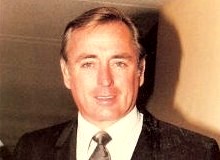
Jack Roland Murphy
Murderer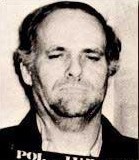 Ervil LeBaron
Murderer · USA · 1972
Ervil Morrell LeBaron (1925 to August 16, 1981) was the leader of a polygamous…
35 victims
Ervil LeBaron
Murderer · USA · 1972
Ervil Morrell LeBaron (1925 to August 16, 1981) was the leader of a polygamous…
35 victims
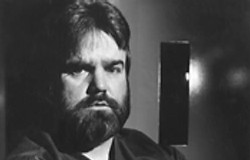 Marvin Gray
Murderer · USA · 1975
Marvin Gray was convicted killer who claimed responsibility for 23 slayings and…
23 victims
Marvin Gray
Murderer · USA · 1975
Marvin Gray was convicted killer who claimed responsibility for 23 slayings and…
23 victims
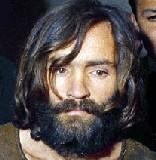 Charles Manson
Murderer · USA · 1969
Charles Milles Manson (born November 12, 1934) was an American criminal and mus…
9 victims
Charles Manson
Murderer · USA · 1969
Charles Milles Manson (born November 12, 1934) was an American criminal and mus…
9 victims
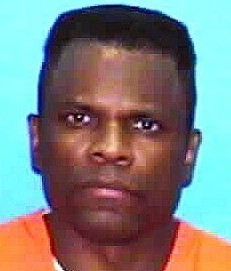 John Errol Ferguson
Murderer · USA · 1977
John Errol Ferguson was sentenced to death and was executed by lethal injection…
8 victims
John Errol Ferguson
Murderer · USA · 1977
John Errol Ferguson was sentenced to death and was executed by lethal injection…
8 victims
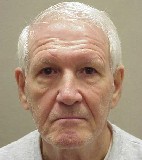 Robert Reldan
Murderer · USA · 1974
Name: Robert Reldan Robert Reldan was sentenced to life in prison on two counts…
8 victims
Robert Reldan
Murderer · USA · 1974
Name: Robert Reldan Robert Reldan was sentenced to life in prison on two counts…
8 victims
 Elizabeth Fenning
Attempted murder? · United Kingdom · 1815
Elizabeth Fenning was executed by hanging on July 26, 1815. Elizabeth Fenning (…
0 victims
Elizabeth Fenning
Attempted murder? · United Kingdom · 1815
Elizabeth Fenning was executed by hanging on July 26, 1815. Elizabeth Fenning (…
0 victims
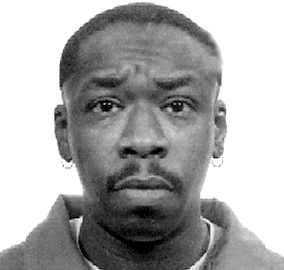 Greagree Davis
Murderer · USA · 1984
Greagree C. Davis told the roommate of his sexual interest in her. He had prior…
1 victim
Greagree Davis
Murderer · USA · 1984
Greagree C. Davis told the roommate of his sexual interest in her. He had prior…
1 victim
 Bongani Vilakati
Mass murderer · South Africa · 2000
Bongani Vilakati was implicated in killings that involved multiple victims disc…
6 victims
Bongani Vilakati
Mass murderer · South Africa · 2000
Bongani Vilakati was implicated in killings that involved multiple victims disc…
6 victims
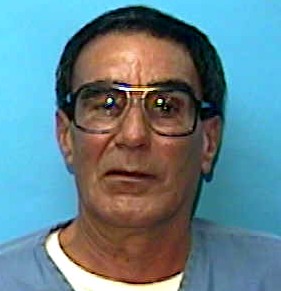 Joseph Spaziano
Murderer · USA · 1973
Joseph Spaziano was tried for the murder of a young woman that had occurred two…
2 victims
Joseph Spaziano
Murderer · USA · 1973
Joseph Spaziano was tried for the murder of a young woman that had occurred two…
2 victims
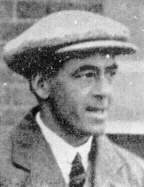 Thomas Henry Allaway
Murderer · United Kingdom · 1921
On 22 December 1921, an advertisement appeared in the “Morning Post” from Miss…
1 victim
Thomas Henry Allaway
Murderer · United Kingdom · 1921
On 22 December 1921, an advertisement appeared in the “Morning Post” from Miss…
1 victim
- Gender
- male
- Country
- USA
- Location
- Los Angeles County, Florida, USA
- Date of birth
- 1938
- Age at first offence
- 29
- Characteristics
- robbery, domestic violence, torture
- Victim profile
- Terry Rae Kent Frank, 24
- Method of murder
- Shooting
- Date(s) of murder
- December 8, 1967
- Years active
- 1967
- Date of arrest
- January 28, 1968
- Status
-
Life imprisonment
Paroled on September 11, 1986 after being sentenced to life in prison on March 1, 1969; in 1970 he received a second life sentence, plus 20 years, for conspiracy and assault to commit robbery against Olive Wofford
Overview
Jack Roland Murphy (also known as “Murph the Surf”) was born in 1938 in Los Angeles, California. He was a legendary surfer and convicted murderer.
Background
Murphy claimed he played with the Pittsburgh Symphony Orchestra at age 15. In 1962 and 1963, he was a state surfing champ in Florida. In 1963, he won the Hurricane National Surfing contest in Florida.
Murphy was described as impressed by visitors during his incarceration in Florida State prison in 1974, after Bill Glass, Roger Staubach, and McCoy McLemore visited as part of a Bill Glass Champions for Life weekend.
In later accounts, Murphy was described as a concert violinist, tennis pro, movie stunt man, and high-tower circus diver, along with being a jewel thief and convicted murderer and the subject of a 1974 feature film called “Murph the Surf” directed by Marvin Chomsky. The film starred Robert Conrad, Burt Young, and Don Stroud (as Murphy).
The offence
Star of India jewel theft (American Museum of Natural History)
In late October 1964, thieves stole 22 gems from New York City’s Museum of Natural History. On the evening of October 29, 1964, Murphy and his cohorts climbed through a bathroom window that they had unlocked during opening hours. The sapphire was described as the only gem in the collection protected by an alarm, and the battery for that alarm was dead.
The stones were valued at more than $400,000. The thieves stole the Star of India along with other precious gems including the Eagle Diamond and the de Long Ruby, and other gems described as part of the J.P. Morgan Collection.
The Star of India was recovered in a locker in a Miami bus station. Most of the other gems were recovered, except the Eagle Diamond.
Richard Duncan Pearson was also convicted. The heist was the subject of a 1975 movie, directed by Marvin Chomsky, called “Murph the Surf.”
Murphy was arrested two days after the theft, along with two accomplices: Alan Kuhn and Roger Clark.
Whiskey Creek murders
In 1967, two California secretaries’ bodies were found in Whiskey Creek near Hollywood, Florida. They were later referred to as the “Whiskey Creek murders.” The two women were described as being shot and bludgeoned to death and dumped in a creek near Hollywood, Florida. Concrete weights had been tied to their necks to sink them.
Murphy denied he had anything to do with the killings, but he was convicted in 1968 of first-degree murder of a California secretary, one of the two women whose bodies were found in Whiskey Creek near Hollywood, Florida, in 1967.
Murphy was convicted of first-degree murder and sentenced to life in prison in Florida. In 1969, he was convicted of killing Terry Rae Frank, 24, and sentenced to life in prison.
An additional statement in the case materials said the dispute involved nearly half a million dollars worth of securities stolen from a Los Angeles brokerage, and another statement said it involved $488,000 worth of securities stolen from a Los Angeles brokerage.
Investigation
Two men in New York and another two in Miami were arrested within 48 hours of the late October 1964 theft, aided in part by confidential police sources.
Murphy was tracked down by police in connection with the Wofford incident, involving a high-powered chase in which he drove his vehicle through a pair of French doors. When apprehended and found to be swathed in bandages, Murphy quipped: “I cut myself shaving.”
Arrest
Murphy was arrested two days after the October 29, 1964 theft of the Star of India sapphire, along with Alan Kuhn and Roger Clark.
Petitioner was also arrested with three other persons in January 1968 in Dade County, Florida, for the robbery of Mrs. Olive Wofford, described as a wealthy resident of Miami Beach, and for apprehension while fleeing the scene with three others.
In May 1968, before trial for the Wofford robbery, Murphy was arrested and indicted for double murder in Broward County, Florida, of Terry Rae Kent Frank and Annalie Mohn, described as the “Whiskey Creek Murders.”
In August 1968, Murphy and three others were indicted by a federal grand jury for conspiring to transport stolen securities in interstate commerce, charges related to the Whiskey Creek case.
Trial
Wofford robbery trial (breaking and entering; armed; assault with intent to commit robbery)
Petitioner was convicted in the Dade County, Florida, Criminal Court in 1970 of breaking and entering a home, while armed, with intent to commit robbery, and of assault with intent to commit robbery. The charges stemmed from the January 1968 robbery of a Miami Beach home and the petitioner’s apprehension with three others while fleeing the scene.
The robbery and petitioner’s arrest received extensive press coverage because petitioner had been in the news before. He was referred to in the media as “Murph the Surf.” Before the date set for his trial on the instant charges, he was indicted on two counts of murder in Broward County, Florida.
The Dade County court declared petitioner mentally incompetent to stand trial; he was committed to a hospital, and the prosecutor nolle prossed the robbery indictment. After petitioner was adjudged competent for trial, he was convicted on one count of murder in Broward County (March 1969) and pleaded guilty to one count of a federal indictment involving stolen securities (December 1969).
The indictment for robbery was refiled in August 1969 and came to trial one year later, and the events of 1968 and 1969 drew extensive press coverage. The robbery charges were described as including extensive press coverage of petitioner's trials and tribulations during the period in question.
Competency and venue motions; juror issues
Before Murphy’s trial for the Wofford robbery, there was a controversial ruling as to petitioner's competency to stand trial. The robbery charges in the Wofford case were nolle prossed to permit the Broward County trial for the Whiskey Creek murders to proceed.
In early July 1970 pre-trial proceedings, Murphy moved for change of venue based on prejudicial pre-trial publicity, including publicity attendant upon the earlier hearing in the Wofford robbery case, the Star of India theft, the Whiskey Creek Murders, and the federal conspiracy charges. The state trial judge deferred ruling pending voir dire examination of the jury panel.
Voir dire began on July 27 and was completed on August 10, 1970. Of 78 veniremen questioned, 12 were excused peremptorily by the petitioner and 8 by the state, 27 were excused for medical or economic reasons, 3 were excused for miscellaneous reasons, and 20 were excused because they stated that they had formed an opinion as to petitioner’s guilt and could not give him a fair trial. Eight jurors were selected to serve at trial, including 6 regular and 2 alternates.
Of the 8 selected, 5 had read or heard about facts surrounding the Wofford robbery through the media, from discussions with friends, or through discussions with other prospective jurors. Each of the eight knew Murphy had previously been convicted either in the Star of India theft or the Whiskey Creek Murders, but each assured the court he would reach a verdict based solely on evidence introduced at trial. The court denied the motion for change of venue and the trial proceeded.
Murphy’s plea of insanity was rejected. He was convicted on both counts and sentenced to life imprisonment and to a term of twenty years consecutive thereto.
Federal indictment plea
In December 1969, Murphy pled guilty to one count of the federal indictment.
Sentencing
Whiskey Creek murder sentence (Terry Rae Kent Frank)
Murphy was found guilty on March 1, 1969, of one of the Whiskey Creek murders, the murder of Terry Rae Kent Frank, and he was sentenced to life imprisonment.
Wofford robbery sentence (armed; assault with intent to commit robbery)
In 1970, Murphy received a second life sentence, plus 20 years, for conspiracy and assault to commit robbery against Olive Wofford.
The materials also stated that Murphy was convicted in 1970 of breaking and entering a home while armed with intent to commit robbery and of assault with intent to commit robbery, and that he was sentenced to life imprisonment and to a term of twenty years consecutive thereto.
Appeals
U.S. Court of Appeals for the Fifth Circuit
A habeas corpus proceeding addressed denial of a fair trial due to jurors learning from news accounts of prior felony convictions or certain facts about the charged robbery. The argument included denial of Fourteenth Amendment due process based on extensive pre-trial newspaper publicity and resultant prejudice to the Sixth Amendment right to trial before an impartial jury.
The lower court, and then the Fifth Circuit, denied relief. The Fifth Circuit affirmed the judgment appealed from as in all respects affirmed.
The Fifth Circuit addressed issues including:
- whether the Florida state trial court erred in denying a change of venue due to pre-trial publicity;
- whether the trial court erred in failing to dismiss for cause trial jurors who knew Murphy was a convicted felon; and
- whether the trial court erred in refusing to bifurcate the trial on the issues of guilt and sanity.
The Fifth Circuit described that the passage of time was crucial because newspaper articles were largely factual rather than inflammatory, and the dates were almost entirely between December 15, 1967 and January 24, 1969.
The Fifth Circuit addressed a contention regarding language used by Judge Eaton in granting a continuance in a federal conspiracy trial, stating it was irrelevant in the habeas corpus context. The Fifth Circuit also addressed that Marshall v. United States did not support issuance of the writ on the juror challenge ground because the Supreme Court’s action there was taken in direct criminal appeal under supervisory power and not in terms of due process standards. The Fifth Circuit stated that the claim regarding pre-trial publicity must fall, and it affirmed refusal of bifurcated trial, stating due process did not require a separate trial and states could determine whether issues should be tried separately or together.
U.S. Supreme Court
On June 16, 1975, the United States Supreme Court considered whether Murphy was denied a fair trial because jurors had learned from news accounts about a prior felony conviction or certain facts about the robbery charge.
The Supreme Court held that:
- juror exposure to information about a state defendant’s prior convictions or to news accounts of the crime charged does not alone presumptively deprive the defendant of due process; and
- under the totality of circumstances, the jury selection and voir dire did not show inherent prejudice or actual prejudice from the jury-selection process.
The judgment was affirmed.
Concurring and dissenting opinions
In a concurrence in the judgment, Chief Justice Burger agreed with Justice Brennan that the trial judge was “woefully remiss” in failing to insulate prospective jurors from media coverage and not taking steps to prevent pretrial discussion of the case among them.
Justice Brennan dissented. In the dissent, Justice Brennan stated:
- “Irvin v. Dowd, 366 U.S. 717, 81 S.Ct. 1639, 6 L.Ed.2d 751 (1961), requires reversal of this conviction.”
- The dissent stated that “the risk that taint of widespread publicity regarding his criminal background, known to all members of the jury, infected the jury’s deliberations is apparent,” and that “one juror freely admitted that he was predisposed to convict petitioner.”
- The dissent reproduced colloquy during voir dire with a juror, including:
“Q. Now, when you go into that jury room and you decide upon Murphy's guilt or innocence, you are going to take into account that fact that he is a convicted murderer; aren't you?
'A. Not if we are listening to the case, I wouldn't.
'Q. But you know about it? 'A. How can you not know about it? 'Q. Fine, thank you.
'When you go into the jury room, the fact that he is a convicted murderer, that is going to influence your verdict; is it not? 'A. We are not trying him for murder.
'Q. The fact that he is a convicted murderer and jewel thief, that would influence your verdict? 'A. I didn't know he was a convicted jewel thief.
'Q. Oh, I see. 'I am sorry I put words in your mouth.
'Now, sir, after two or three weeks of being locked up in a downtown hotel, as the Court determines, and after hearing the State's case, and after hearing no case on behalf of Murphy, and hearing no testimony from Murphy saying, 'I am innocent, Mr. (Juror)'—when you go into the jury room, sir, all these facts are going to influence your verdict?
'A. I imagine it would be.
'Q. And in fact, you are saying if Murphy didn't testify, and if he doesn't offer evidence, 'My experience of him is such that right now I would find him guilty.'
'A. I believe so.'” - The dissent also reproduced additional voir dire testimony including:
“A. Probably not.
'Q. And it would influence your verdict; right? 'A. Probably.'” - The dissent described that “Where so many, so many times, admitted prejudice, such a statement of impartiality can be given little weight,” and quoted “You can't forget what you hear and see.” and described that the trial judge had not instructed prospective jurors not to discuss the case among themselves and took no steps to insulate the jurors from media coverage.
Outcome
Murphy’s conviction and sentences were upheld on appeal, including affirmation by the U.S. Supreme Court.
Aftermath
Murphy was described as serving two life sentences and spending 19 years in Florida prisons. When Bill Glass, Roger Staubach, and McCoy McLemore visited Florida State prison in 1974, Murphy was impressed by the visitors and changed his attitude. The Florida Parole Board released Murphy on “parole with lifetime monitoring” in 1986.
Murphy began going back into prisons and jails all over the U.S. as a platform guest with Bill Glass in 1986. In 1990, he was hired on staff with Bill Glass Champions for Life. Murphy was described as a featured speaker for Kairos, Coalition of Prison Evangelists, Int'l Prison Ministries, Time for Freedom, and Good News Jail & Prison Ministry.
After visiting over 1,200 prisons, the Florida Parole Board terminated his “lifetime parole” in 2000.
Murphy authored a book of his experience and testimony titled “Jewels for the Journey.”
In later accounts, Murphy was described as international director for Champions for Life, visiting prisons, jails, and youth detention facilities all over the world.
Murphy lived in Crystal River and led a prison ministry.
Other details
Murphy was described as being released from Florida State Prison in 2000 “mainly because of his exemplary behaviour,” and it was stated that during his time in prison he became religious and assisted the prison’s chaplain and counseled young offenders.
Murphy was described as telling people: “To this day, that era pains me. I'm not at all pleased with my past, or the terrible mistakes that I did, the hurt that I caused people. I am ashamed and embarrassed by all of that.”
In later interview material, Murphy was quoted:
- “If you're not doing God's business, you are just doing time,”
- “To this day, that era pains me.
- “To this day, that era pains me.
- “They asked me to come on staff to help with banquets, youth work and prison counseling,”
- “Suddenly the pieces of the puzzle came together. I started to think differently. I began to really understand Christianity and how it could affect my life in a positive way,”
- “I started to be really understand Christianity and how it could affect my life in a positive way,”
- “Our country was founded on a book about a man who was executed on death row,”
- “Mankind wasn't created to build Superdomes and highways and get a lot of money. Your purpose is to represent God,”
- “If you don't deal with a person's heart, with their soul ... all you're doing is passing out Band-Aids.”
- “I hate going into prisons,”
- “They are the devil's junk pile. But I do it because people visited me and it meant a lot. I'm not doing anything different. It's just my turn. Jesus said, "You visited me when I was in prison,' so it is a command of God to go to prisons and anywhere people are down and out.”
Murphy was also quoted from a New York Times reporter reference:
- “I was supposed to be on my way to Hawaii to surf.”
- “But this inconvenience has fouled the whole thing up.”
Murphy was described as saying after leaving Rikers Island:
- “When I came out of prison in New York,” he says, “I didn't give a damn about anybody or anything.”
Murphy’s film and media presence included a statement that he said the film “Murph the Surf” released in the mid-1970s was inaccurate and that “they ruined it by trying to turn it into a comedy.”
The materials also included a reference to the case caption: “Jack Roland MURPHY, Petitioner-appellant, v. State of Florida, Respondent-appellee” from the United States Court of Appeals, Fifth Circuit, with “June 10, 1974” and “Rehearing and Rehearing En Banc Denied July 12, 1974.”
Spotted an error, or have more information about this case?