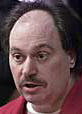
Joseph Trueblood
Murderer Brian Kevin Rosenfeld
Murderer · USA · 1985
Brian Kevin Rosenfeld Brian Kevin Rosenfeld was sentenced to three concurrent l…
23 victims
Brian Kevin Rosenfeld
Murderer · USA · 1985
Brian Kevin Rosenfeld Brian Kevin Rosenfeld was sentenced to three concurrent l…
23 victims
 Yahweh ben Yahweh
Murderer · USA · 1980
Yahweh ben Yahweh was born and legally named Hulon Mitchell Jr. (October 27, 19…
23 victims
Yahweh ben Yahweh
Murderer · USA · 1980
Yahweh ben Yahweh was born and legally named Hulon Mitchell Jr. (October 27, 19…
23 victims
 Russell Ellwood
Murderer · USA · 1991
Russell Ellwood was a former taxi driver. Authorities suspected him of killing…
20 victims
Russell Ellwood
Murderer · USA · 1991
Russell Ellwood was a former taxi driver. Authorities suspected him of killing…
20 victims
 Robert Martines Perez
Murderer · USA · 1994
Name: Robert Martines Perez · Other name used in proceedings: Robert Martinez P…
15 victims
Robert Martines Perez
Murderer · USA · 1994
Name: Robert Martines Perez · Other name used in proceedings: Robert Martinez P…
15 victims
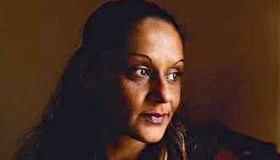 Anu Singh
Murderer · Australia · 1997
Anu Singh (born 3 September 1972) was an Australian of Indian descent who kille…
1 victim
Anu Singh
Murderer · Australia · 1997
Anu Singh (born 3 September 1972) was an Australian of Indian descent who kille…
1 victim
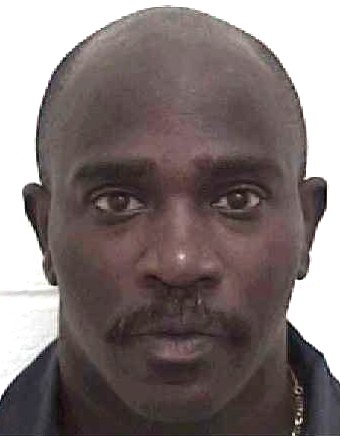 Keith Leroy Tharpe
Murderer · USA · 1990
Keith Leroy Tharpe, 39, was sentenced to death in January 1991 in Jones County…
1 victim
Keith Leroy Tharpe
Murderer · USA · 1990
Keith Leroy Tharpe, 39, was sentenced to death in January 1991 in Jones County…
1 victim
 Allyson McConnell
Murderer · Canada · 2010
Allyson McConnell was convicted of manslaughter in the bathtub drowning of her…
2 victims
Allyson McConnell
Murderer · Canada · 2010
Allyson McConnell was convicted of manslaughter in the bathtub drowning of her…
2 victims
- Gender
- male
- Country
- USA
- Location
- Tippecanoe County, Indiana, USA
- Date of birth
- December 26, 1956
- Age at first offence
- 32
- Characteristics
- parricide, revenge
- Victim profile
- Susan Bowsher Hughes, 23 (his ex-girlfriend); Ashlyn Bowsher, 2 and William Bowsher, 17 months (children of Susan)
- Method of murder
- Shooting
- Date(s) of murder
- August 15, 1988
- Years active
- 1988
- Date of arrest
- —
- Status
-
Executed
Executed by lethal injection in Indiana on June 12, 2003
Case record: Joseph Trueblood
Status and execution
Joseph Trueblood was executed by lethal injection in Indiana on June 12, 2003. Prison officials pronounced Trueblood dead at 12:24 a.m., about four hours after his final court appeal was rejected. Other accounts reported he was pronounced dead at 1:24 a.m. EDT following a lethal injection.
Timeline
- June 10, 2003 — Joseph L. Trueblood asked Gov. Frank O’Bannon for a polygraph test and read from his handwritten “dying declaration” at a news conference held at Indiana State Prison.
- June 11, 2003 — Gov. Frank O’Bannon denied clemency for Joseph Trueblood; he was scheduled to die early Friday at Indiana State Prison in Michigan City.
- June 12, 2003 — A laPorte Superior Court judge issued a temporary restraining order barring an autopsy; officials at Indiana State Prison pronounced Trueblood dead at 12:24 a.m. (another account gave 1:24 a.m. EDT).
Background
Joseph Trueblood was 46 years old at the time of execution. He was from Lafayette and had been a former Lafayette taxi driver. He had an abusive childhood.
Trueblood was condemned for the 1988 shooting deaths of Susan Bowsher of Lafayette and her children: 2-year-old Ashelyn Hughes and 1-year-old William E. Bowsher.
Trueblood’s family was not present for the execution. Indiana law did not allow anyone to view an execution without the condemned inmate’s consent.
The offence
Killing of Susan Bowsher and her children
According to court testimony and accounts of the crime, Trueblood became enraged in 1988 after learning Bowsher planned to leave him and return to her ex-husband. Trueblood shot Bowsher and her two children and buried their bodies in shallow graves in rural Fountain County in western Indiana.
Trueblood picked up Susan Bowsher and her two children while they were in his automobile. He shot each of them in the head, killing all three.
After the killings, Trueblood drove to the home of his twin brother to borrow a shovel and then drove to a secluded area and buried all three in a shallow grave.
Competing accounts given by Trueblood
Trueblood had told the parole board last month that he was driving with Bowsher and her children on a rural road outside Lafayette when Bowsher pulled out a handgun and shot Ashelyn. He claimed he tried to wrestle the gun from Bowsher with one hand as he drove with the other. He said the gun went off twice more, with the second shot hitting William in the head. He stated that Bowsher then shot herself twice and that he fatally shot her in an act of mercy.
In a final statement, Trueblood reiterated his innocence, asserting that Bowsher had killed herself and her children and that his attorneys had told him that pleading guilty was the best way to avoid the death penalty:
“That’s the only reason I pleaded guilty,” he said, in a statement given through attorney John Sommers. “If I had been given a lie detector test, it would have proven I was telling the truth.”
Throughout his appeals, defense lawyers claimed his trial attorney should not have allowed him to plead guilty because he had mental problems. Trueblood also sought to withdraw his guilty plea, but that request was denied.
Investigation and police actions
A detective named Jim Withers remembered the killings. Trueblood’s sister-in-law showed up to work the morning after the murders and claimed Trueblood had killed three people. After burying the bodies, she told police, Trueblood showered at his twin brother’s home before returning to rebury the bodies deeper in the woods.
Withers, described as then a Lafayette police captain, cornered Trueblood on a dead-end street. Withers said:
“His car was full of blood from one end to the other,” Withers said. “It was so bloody he cut out the fabric portion of the seats where the blood had soaked in.”
Trueblood first agreed to show Withers the bodies but took him beyond the wooded burial site and then asked for an attorney without revealing the grave. The next day, three days after the slayings, police found the bodies by spotting flies and signs of digging. Autopsies showed Bowsher was shot three times, and her children were each shot once.
On the night of the murders, witnesses had seen Trueblood burning things in an alley. Police found charred fabric and a pair of eyeglass frames that probably belonged to Bowsher.
Arrest and confinement before execution
Trueblood was moved into a holding cell at Indiana State Prison Thursday night. Shortly after midnight he was placed on a gurney and rolled to the white-painted execution chamber. Prison officials administered a lethal dose of drugs via intravenous feeds in each arm.
Trueblood had a television and a telephone to use. Prison officials said he spent his final hours visiting with family and friends and made no telephone calls.
Trueblood also rejected the prison’s customary practice of conducting an autopsy on executed inmates and rejected a last meal.
Trial and legal proceedings
Plea and sentencing in state court
Trueblood pleaded guilty to three counts of murder, and he was sentenced to death for the three murders.
On direct appeal, the Supreme Court held that:
- the trial court could refuse to permit withdrawal of guilty plea in a capital case if the guilty plea was reliable;
- the trial court did not abuse its discretion in refusing to permit Trueblood to withdraw his guilty plea;
- the trial court did not err in failing to consider available mitigating circumstances and did not err in finding an aggravating circumstance not supported by evidence; and
- the trial court properly imposed the death penalty. The Supreme Court affirmed.
In a separate state postconviction appeal, the Supreme Court held that:
- Trueblood was not denied effective assistance of trial or appellate counsel;
- the postconviction court’s exclusion of evidence was not an abuse of discretion; and
- evidence supported the conclusion that guilty pleas were voluntary and intelligent. The Supreme Court affirmed the denial of postconviction relief.
Federal habeas corpus proceedings
A federal district court held that Trueblood’s guilty plea was not knowing and voluntary. The court found ineffective assistance related to counsel’s failure to understand and advise about the consequences of the guilty plea, and required reweighing of aggravating circumstances against relevant mitigating circumstances. The district court granted the petition in part and denied it in part, and ordered relief conditioned upon release or retrial within 120 days.
The U.S. Court of Appeals reversed the district court’s grant of relief. The appellate court held that:
- the failure to advise him explicitly that conviction for murder of his girlfriend could be used as an aggravating circumstance at sentencing for murder of his girlfriend’s children did not violate due process rights;
- sentencing remarks about helplessness of victims and coldbloodedness did not indicate that the death sentence was based on improper factors; and
- Trueblood was not prejudiced by counsel’s failure to accompany him to the presentence interview by a probation officer. The appellate court reversed.
Appeals and clemency
Denial of clemency by Gov. Frank O’Bannon
Gov. Frank O’Bannon denied clemency for Joseph Trueblood. In his denial statement, O’Bannon said:
“Trueblood’s claims of legal error have received extensive consideration in state and federal courts, and all of them have been rejected.”
“He has presented no new evidence indicating that he is innocent or showing that a miscarriage of justice took place.”
Another account reported that O’Bannon rejected his clemency request Wednesday.
U.S. Supreme Court actions
The U.S. Supreme Court denied a stay of execution about 8 p.m. Thursday. It also refused without comment to reconsider Trueblood’s case earlier in the week.
Last meal, autopsy dispute, and witness decisions
Last meal
In Indiana, a condemned prisoner’s last meal was actually served two days before the execution. Prison officials said inmates ate regular prison fare the day they died. The only thing banned was alcohol.
Trueblood was served a bologna sandwich, a cheese sandwich, cookies, crackers, fruit and Kool-Aid. One account said he refused the option of a special meal before his scheduled execution and was served the same dinner as other inmates: a bologna sandwich, a cheese sandwich, cookies and fruit.
Autopsy
Trueblood asked the state not to perform an autopsy on his body. A LaPorte Superior Court judge issued a temporary restraining order Thursday barring the state from conducting an autopsy; a final ruling was expected Friday.
Joseph Trueblood’s attorneys said the state should turn Trueblood’s body over to his family. One attorney who witnessed the execution, Christopher Hitz-Bradley, said:
“Joe’s sentence was death. The state of Indiana has carried out its sentence, it has killed Joe,”
and that: “One of the things he was absolutely adamant about was that no autopsy be done on him.”
Don Pagos argued there was no point in an autopsy since the cause of death would be known. Prison spokesman Barry Nothstine said he could not remember a death row inmate ever fighting an autopsy in his 16 years with the prison.
Witnesses at execution
Trueblood said he did not want any of his family members to witness his execution. His witnesses were to be his three appeals lawyers and Rev. Thomas McNally, a Roman Catholic priest.
At his last full day on death row, McNally and family members were among visitors. Another account described Catholic priest involvement until Trueblood was strapped to a gurney.
People involved in accounts of the execution and aftermath
Attorneys
One of Trueblood’s attorneys, Christopher Hitz-Bradley, witnessed the execution and made statements about the autopsy request. Trueblood’s attorney Don Pagos argued against an autopsy. Another attorney, John Sommer, provided Trueblood’s final statement.
Prosecutor and others
Tippecanoe County Deputy Prosecutor John Meyers sought the death penalty only twice. Meyers said:
“This is not a case where there is any doubt about it,”
and described his view of the killings: “He shot the little girl last,”
“That little girl was looking down the barrel of the gun when he pulled the trigger,”
and that: “and that little girl never did anything to him. ”
“Anyone who feels any sympathy for him should remember that.”
Witnesses, relatives, and protesters
- Kevin Noringer (described as 50, a steel worker from Michigan City) attended a candlelight vigil hours before the execution and said:
“I’m sorry that the community that I live in does this,”
and that: “To me this is just as barbaric as the original crime.” - Mark Hamner (36), described as a death penalty supporter and off-duty police officer from Indianapolis, said:
“I think his crime definitely fits the criteria for the death penalty. And there’s no question that by far the majority of Hoosiers support the death penalty,”
and that: “We are standing up for the victims who can no longer speak for themselves.” - Kim Orrell, Bowsher’s friend, issued a statement that the victims had no appeals, parole hearings, or news conferences. Orrell wrote:
“Joe, you are about ready to answer to the highest authority there is, and he knows the whole truth in this matter,”
“You will once again answer for your wrongdoings.” - A visitor described as Katie Pawski (25, a University of Notre Dame graduate from Chicago) said:
“He’s a human being with humanity and compassion,”
and that: “Nobody deserves to die. Killing creates more victims,”
after meeting Trueblood during prison outreach while attending Notre Dame.
Other details
Prison last-meal practice in Indiana
A prison spokesman, Barry Nothstine, said the timing of the last meal in Indiana changed in 1995 because many inmates told officials they weren’t hungry in the 24 hours before their death. In Indiana, the last meal was served two days before execution, and on the day of death inmates ate regular prison fare.
Richard Dieter, executive director of the Death Penalty Information Center in Washington, D.C., said that an exact count of last-meal requests was difficult because the ritual was informal. Deborah Denno of Fordham University said giving prisoners a large, heavy meal raises the chance the inmate will choke or gag when the first chemical, sodium thiopental, is injected.
The record also described that in Indiana condemned inmates could ask for items from menus of four restaurants in Michigan City, and taxpayers had spent as much as $150 to meet requests.
Burial plans and body claim
Trueblood asked to be buried next to Bowsher and her children in Lafayette, but family members would claim his body. Trueblood was said he would be buried “near Lafayette” instead. One account stated his family would claim his body, and another said he would be buried “near Lafayette.”
Publications and references included in the record
The case narrative included references to other Indiana executions in 2003 and earlier, including:
- Tommie J. Smith (1996),
- James Lowery (2001),
- Kevin Hough (2003), and described last-meal examples for other executed inmates (Steven T. Judy, William Vandiver, Gregory Resnover, Gary Burris, Robert A. Smith, Gerald W. Bivins).
Additional litigation citations contained in the record
The record contained multiple case citations for Trueblood’s litigation, including:
- Trueblood v. State, 587 N.E.2d 105 (Ind. February 28, 1992),
- Trueblood v. State, 715 N.E.2d 1242 (Ind. September 9, 1999),
- Trueblood v. Anderson, 156 F.Supp.2d 1056 (N.D.Ind. 2001),
- Trueblood v. Davis, 301 F.3d 784 (7th Cir. 2002).
The record also included statutory references to Indiana law governing death sentencing, and quoted parts of the appellate opinions in full.

Spotted an error, or have more information about this case?