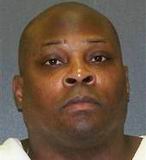
Gayland Bradford
Murderer Brian Kevin Rosenfeld
Murderer · USA · 1985
Brian Kevin Rosenfeld Brian Kevin Rosenfeld was sentenced to three concurrent l…
23 victims
Brian Kevin Rosenfeld
Murderer · USA · 1985
Brian Kevin Rosenfeld Brian Kevin Rosenfeld was sentenced to three concurrent l…
23 victims
 Yahweh ben Yahweh
Murderer · USA · 1980
Yahweh ben Yahweh was born and legally named Hulon Mitchell Jr. (October 27, 19…
23 victims
Yahweh ben Yahweh
Murderer · USA · 1980
Yahweh ben Yahweh was born and legally named Hulon Mitchell Jr. (October 27, 19…
23 victims
 Russell Ellwood
Murderer · USA · 1991
Russell Ellwood was a former taxi driver. Authorities suspected him of killing…
20 victims
Russell Ellwood
Murderer · USA · 1991
Russell Ellwood was a former taxi driver. Authorities suspected him of killing…
20 victims
 Robert Martines Perez
Murderer · USA · 1994
Name: Robert Martines Perez · Other name used in proceedings: Robert Martinez P…
15 victims
Robert Martines Perez
Murderer · USA · 1994
Name: Robert Martines Perez · Other name used in proceedings: Robert Martinez P…
15 victims
 Bryan Eric Wolfe
Murderer · USA · 1992
Bryan Eric Wolfe was convicted of capital murder and sentenced to death in Texa…
1 victim
Bryan Eric Wolfe
Murderer · USA · 1992
Bryan Eric Wolfe was convicted of capital murder and sentenced to death in Texa…
1 victim
 George Ochoa
Murderer · USA · 1993
Name: George Ochoa · Age: 38 (at execution) · Place: Oklahoma State Penitentiar…
2 victims
George Ochoa
Murderer · USA · 1993
Name: George Ochoa · Age: 38 (at execution) · Place: Oklahoma State Penitentiar…
2 victims
 John Martini
Serial killer · USA · 1977
John Martini Sr. was sentenced to death in New Jersey on December 12, 1990. The…
6 victims
John Martini
Serial killer · USA · 1977
John Martini Sr. was sentenced to death in New Jersey on December 12, 1990. The…
6 victims
 Jeffrey Motts
Murderer · USA · 1995
Jeffrey Brian Motts was executed by lethal injection in South Carolina on May 6…
3 victims
Jeffrey Motts
Murderer · USA · 1995
Jeffrey Brian Motts was executed by lethal injection in South Carolina on May 6…
3 victims
 Anthony Allen Shore
Serial killer · USA · 1986
Name: Anthony Allen Shore · TDCJ Number: 999488 · Date of birth: 06/25/1962 · A…
5 victims
Anthony Allen Shore
Serial killer · USA · 1986
Name: Anthony Allen Shore · TDCJ Number: 999488 · Date of birth: 06/25/1962 · A…
5 victims
 Abbas Baqir Abbas
Mass murderer · Sudan · 2000
Abbas Baqir Abbas was identified as a member of the militant Al-Takfir wa al-Hi…
23 victims
Abbas Baqir Abbas
Mass murderer · Sudan · 2000
Abbas Baqir Abbas was identified as a member of the militant Al-Takfir wa al-Hi…
23 victims
- Gender
- male
- Country
- USA
- Location
- Dallas County, Texas, USA
- Date of birth
- July 18, 1968
- Age at first offence
- 20
- Characteristics
- robbery, crack addict, history of mental illness, drug addict, escape
- Victim profile
- Brian Edward Williams, 29 (security guard)
- Method of murder
- Shooting
- Date(s) of murder
- December 28, 1988
- Years active
- 1988
- Date of arrest
- January 3, 1989
- Status
-
Executed
Executed by lethal injection in Texas on June 1, 2011
Case overview
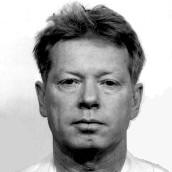
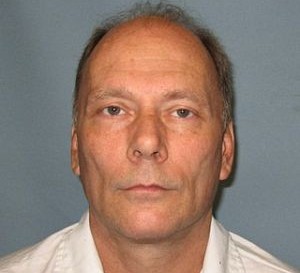
Gayland Bradford was convicted of capital murder and sentenced to death in Texas for robbing and killing Brian Williams, a security guard at a grocery store in Dallas. Bradford was executed by lethal injection in Texas on June 1, 2011.
Timeline
- 12/28/88 — Bradford told his girlfriend he was going to make some money.
- 12/29/88 (evening or early morning) — Bradford entered a grocery store and repeatedly shot security guard Brian Williams during an armed robbery.
- 01/10/89 — A Dallas County grand jury indicted Bradford for capital murder.
- 02/09/90 — A Dallas County jury convicted Bradford of capital murder.
- 06/09/93 — The Texas Court of Criminal Appeals reversed the conviction, ordering a new trial.
- 10/11/94 — The Supreme Court denied the State’s petition for certiorari.
- 05/15/95 — Bradford was re-convicted of capital murder.
- 02/17/99 — Bradford’s conviction and sentence were affirmed by the Texas Court of Criminal Appeals.
- 06/08/99 — Bradford filed an original application for a state writ of habeas corpus.
- 10/18/99 — Bradford’s petition for writ of certiorari to the United States Supreme Court was denied.
- 03/08/00 — The Texas Court of Criminal Appeals denied state habeas relief.
- 12/14/02 — Bradford filed a petition for a federal writ of habeas corpus.
- 01/16/03 — Bradford filed a successive state writ alleging mental retardation.
- 09/15/04 — The Texas Court of Criminal Appeals denied habeas relief.
- 10/18/04 — Bradford refiled his federal petition with a Dallas federal district court.
- 05/05/08 — The federal court denied habeas relief and issued final judgment.
- 02/17/10 — The United States Court of Appeals for the Fifth Circuit affirmed the denial.
- 03/26/10 — The court of appeals denied Bradford’s petition for rehearing by the full court.
- 05/20/10 — The Dallas County trial court scheduled Bradford’s execution for Thursday, October 14, 2010.
- 10/08/10 — The Supreme Court stayed Bradford’s execution.
- 01/18/11 — The Supreme Court denied Bradford’s petition for certiorari review.
- 02/25/11 — The Dallas County trial court rescheduled Bradford’s execution for June 1, 2011.
- 04/11/11 — Bradford filed a motion for rehearing and application for stay of execution.
- 06/01/11 — Bradford was executed.
The offence
On the evening of December 28, 1988, Bradford told a girlfriend he was going to make some money, and the girlfriend guessed Bradford was going to rob somebody. Later that evening, or in the early morning of December 29, 1988, Bradford entered a grocery store and repeatedly shot security guard Brian Williams. Bradford told an accomplice to take the fatally wounded guard’s money. The accomplice took seven dollars and some other personal items from the guard, including his hat and pipe. Bradford and the accomplice left the store without taking anything else. The store’s security camera recorded these events. The guard died about an hour later.
Bradford later confessed that he went to the store “to get some money,” and that he shot the guard. During the guilt phase of his trial, Bradford testified that he intended to commit a robbery.
Investigation and arrest
A Dallas police officer testified that during Bradford’s arrest for the capital murder of Brian Williams, officers found two guns in the dresser drawer in the same bedroom where Bradford had been sleeping. A total of three weapons, a baggie of crack cocaine, and two marijuana cigarettes were confiscated by officers.
Trial
Charge and conviction
Bradford was indicted for capital murder by a Dallas County grand jury on January 10, 1989. A Dallas County jury convicted Bradford of capital murder on February 9, 1990. During the guilt phase, Bradford testified he intended to commit a robbery. He was re-convicted of capital murder on May 15, 1995.
Procedural history through direct appeal
The Texas Court of Criminal Appeals reversed Bradford’s conviction on June 9, 1993 and ordered a new trial. The Supreme Court denied the State’s petition for certiorari on October 11, 1994. On February 17, 1999, Bradford’s conviction and sentence were affirmed by the Texas Court of Criminal Appeals.
Punishment phase evidence of future dangerousness
During the punishment phase, the State produced evidence that Bradford possessed a violent nature and posed a continuing threat to society. A Dallas police officer testified based on contacts with Bradford between 1983 and 1986 that Bradford had a reputation for not being peaceful and law abiding. A former West Dallas police officer testified he had contact with Bradford about twenty-five times and that Bradford had a reputation in the community for not obeying the law. A woman testified about a September 1984 criminal trespass in which she awoke to find Bradford standing beside her bed and he asked her to let him get in bed with her; she went to tell her stepfather and when she returned Bradford was gone. A juvenile probation officer testified she was assigned the probation file for Bradford’s juvenile conviction of criminal trespass regarding that incident, that neither Bradford nor his family attended orientation, and that Bradford and his family failed to appear for a required orientation meeting after a second referral in June 1985. The probation officer testified that the juvenile criminal trespass was not pursued because by the time it was received there was then a pending adult charge for burglary of a building against Bradford.
A Dallas police officer testified that in response to a March 1986 call about a burglary of a school building, the officer and another officer arrested Bradford and another individual following a chase, and Bradford was placed on probation for the burglary. A probation officer testified that Bradford violated his probation numerous times and did nothing to improve his station even though the probation officer tried to work with him. The probation officer testified that Bradford’s probation was revoked for a new aggravated robbery he committed on April 30, 1986 while using a knife. Bradford’s probation record shows he received four years in prison for the burglary of a building and two years in prison for his robbery conviction.
A warden testified that Bradford incurred numerous disciplinary infractions while in state prison. The warden testified about an incident involving Bradford being charged with, and found guilty of, inciting a riot and fighting without a weapon, in which Bradford and another inmate assaulted a third inmate. The warden testified about another occasion when Bradford was found guilty of being involved in a riot in state prison between black and Hispanic inmates in which several inmates were injured. The warden also testified to other incidents of disciplinary action and that Bradford’s records demonstrated a continuing course of action to violate disciplinary rules and cause trouble within the penitentiary.
Bradford’s parole officer testified that Bradford failed to report on some occasions and had not paid any restitution he was required to pay. The parole officer testified that he and another individual personally paid Bradford’s trade school enrollment fee and provided transportation to appointments at the trade school, but Bradford did not enroll until August 31, 1988, and in December 1988 the parole officer discovered Bradford had quit attending.
Additional testimony included:
- A woman testified that a few days after the shooting she heard Bradford bragging to a group of boys that he did not “give a damn” and that he had thrown the murder weapon in a lake; she also testified that on the night of Bradford’s arrest she viewed the videotape of the offense and identified Bradford in the tape as the shooter.
- Henry Cosby testified that while he was in the county jail in 1989 on a burglary charge, he was introduced to Bradford and Bradford admitted that he had committed a robbery and that a security guard was shot; Cosby testified Bradford showed no remorse, and that Bradford offered him $15,000–$20,000 to have the witness who turned in the victim’s gun killed.
- Tommy Adams testified that while he was in jail, he came into contact with Bradford and Bradford stated he was going to kill a man he believed had “snitched” on him for killing the security guard; Adams testified Bradford bragged about the capital murder and showed no remorse.
Psychiatric evidence issue on direct appeal
Bradford v. State, 873 S.W.2d 15 (Tex.Crim.App. 1993) (Direct Appeal) stated that the trial court’s requirement that Bradford submit to examination by the State’s psychiatrist as a condition for admission of Bradford’s psychiatric evidence improperly forced Bradford to choose between exercising his Fifth Amendment right against self-incrimination and his Sixth Amendment right to effective assistance of counsel. The Court of Criminal Appeals reversed and remanded.
The opinion described expert testimony at punishment:
- Points eleven, twelve, thirteen and fourteen involved refusal to allow certain expert psychiatric testimony proffered by a defense witness at punishment unless Bradford agreed to be examined by a State-selected expert.
- The defense’s witness, Dr. Wettstein, was questioned outside the presence of the jury, and the trial court ruled that Dr. Wettstein’s testimony would be restricted to exclude opinions based on the examination of Bradford, stating:
“[a]nything that he used in the examination of [appellant] in making his conclusions or opinions w[ould] not be allowed.... The results of an examination by a [d]efense psychiatrist and the statements given by the [d]efendant to that psychiatrist will not be admitted.”
The trial court also stated: “I'm just telling you, anything that Dr. Wettstein would testify to that would be based upon his personal examination of the [d]efendant would not be allowed.” - Bradford was ordered to submit to an examination by the State’s psychiatrist, and Bradford said:
“I do not want to talk to him [,]”
- The trial court ruled that Dr. Wettstein’s conditional testimony would not be admitted based on examination results if Bradford refused, and later allowed Dr. Wettstein testimony after Bradford agreed to be examined by Dr. Grigson with Dr. Wettstein present.
The opinion concluded that the trial court’s action in making the admissibility of portions of Dr. Wettstein’s proffered testimony contingent upon submission to the State-selected examination was erroneous, and that the admission of Dr. Grigson’s testimony violated Bradford’s Fifth Amendment right against self-incrimination. The Court conducted a harm analysis and concluded it was impossible to conclude beyond a reasonable doubt that Dr. Grigson’s testimony on future dangerousness did not contribute to the jury’s answering of the future dangerousness special issue at punishment, and reversed the conviction and remanded.
A dissent by Judge Campbell concluded the majority’s grounds were without merit and would have overruled points of error eleven through fourteen.
Sentencing
A jury assessed Bradford’s punishment at death by lethal injection. Bradford was sentenced to death in May 1995. He was executed on June 1, 2011.
Appeals
Direct appeal (Texas Court of Criminal Appeals)
Bradford’s first conviction in 1990 was reversed by the Texas Court of Criminal Appeals on June 9, 1993, ordering a new trial. Bradford was re-convicted on May 15, 1995.
Later appellate and habeas history (selected)
- Bradford’s conviction and sentence were affirmed on February 17, 1999.
- Bradford filed an original application for a state writ of habeas corpus on June 8, 1999.
- Bradford’s petition for writ of certiorari to the United States Supreme Court was denied on October 18, 1999.
- The Texas Court of Criminal Appeals denied state habeas relief on March 8, 2000.
- Bradford filed a petition for a federal writ of habeas corpus on December 14, 2002.
- Bradford filed a successive state writ alleging mental retardation on January 16, 2003.
- The Texas Court of Criminal Appeals denied habeas relief on September 15, 2004.
- Bradford refiled his federal petition with a Dallas federal district court on October 18, 2004.
- The federal court denied habeas relief and issued final judgment on May 5, 2008.
- The United States Court of Appeals for the Fifth Circuit affirmed denial on February 17, 2010.
- The Fifth Circuit denied Bradford’s petition for rehearing by the full court on March 26, 2010.
- The Supreme Court stayed Bradford’s execution on October 8, 2010.
- The Supreme Court denied Bradford’s petition for certiorari review on January 18, 2011.
Execution and final statement
Bradford was executed in Texas by lethal injection on June 1, 2011. He was pronounced dead at 6:25 p.m. local time.
Bradford spoke toward his only personal witness, Noel Martin, and said:
“[Noel], I love you, man,”
“You have been there for me, through thick and thin. I am at peace. We have no more worries, just as I have no more worries for the victim’s family. “May you be at peace, also.”
The statement also included:
“Victim's family, may you be at peace also,” he said.
Bradford’s last meal request included chicken with jalapenos, peanut butter cake, butter rolls, two steak and cheese omelets, hash browns and ketchup, and a root beer soda.
Other details
Victim
The victim was Brian Williams, described as a security guard.
Accomplice sentence
Bradford’s accomplice, Vandron Seymore, received 42 years in prison for aggravated robbery with a deadly weapon; he served 12 years and was paroled in 2002.
Drug and weapons evidence (as described)
Police found marijuana and guns in Bradford’s room when he was arrested for the shooting, and detectives found he was carrying two plastic bags of crack cocaine when he was booked.
Mental retardation habeas matter (Atkins)
A federal magistrate judge’s findings and recommendation described that after Atkins v. Virginia (June 20, 2002), Bradford sought federal consideration of whether execution of the mentally retarded would be unconstitutional. The magistrate judge noted Bradford’s IQ scores reported in filings included an I.Q. score of 68 and also referenced an I.Q. score of 75 from an evaluation retained by Bradford’s trial attorneys, and concluded the petition should be dismissed without prejudice for failure to exhaust state remedies, allowing Bradford to exhaust the Atkins claim in Texas state court.
Procedural setting for execution scheduling
The Dallas County trial court scheduled Bradford’s execution for Thursday, October 14, 2010, before the Supreme Court stayed it on October 8, 2010. The execution was later rescheduled for June 1, 2011 on February 25, 2011.
Spotted an error, or have more information about this case?