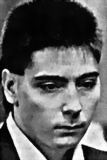
John Salvi
Murderer Brian Kevin Rosenfeld
Murderer · USA · 1985
Brian Kevin Rosenfeld Brian Kevin Rosenfeld was sentenced to three concurrent l…
23 victims
Brian Kevin Rosenfeld
Murderer · USA · 1985
Brian Kevin Rosenfeld Brian Kevin Rosenfeld was sentenced to three concurrent l…
23 victims
 Russell Ellwood
Murderer · USA · 1991
Russell Ellwood was a former taxi driver. Authorities suspected him of killing…
20 victims
Russell Ellwood
Murderer · USA · 1991
Russell Ellwood was a former taxi driver. Authorities suspected him of killing…
20 victims
 Robert Martines Perez
Murderer · USA · 1994
Name: Robert Martines Perez · Other name used in proceedings: Robert Martinez P…
15 victims
Robert Martines Perez
Murderer · USA · 1994
Name: Robert Martines Perez · Other name used in proceedings: Robert Martinez P…
15 victims
 Billy Frank Vickers
Murderer · USA · 1993
Billy Frank Vickers Vickers was executed by lethal injection in Texas on Januar…
14 victims
Billy Frank Vickers
Murderer · USA · 1993
Billy Frank Vickers Vickers was executed by lethal injection in Texas on Januar…
14 victims
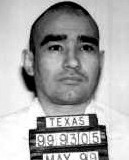 Joel Escobedo
Murderer · USA · 1998
Joel Escobedo (TDCJ Number 999305) · Date of Birth: 02/06/1962 · Race: Hispanic…
1 victim
Joel Escobedo
Murderer · USA · 1998
Joel Escobedo (TDCJ Number 999305) · Date of Birth: 02/06/1962 · Race: Hispanic…
1 victim
 Jerry Walter McFadden
Murderer · USA · 1986
Jerry Walter McFadden nicknamed himself "Animal". He was a former telephone cab…
3 victims
Jerry Walter McFadden
Murderer · USA · 1986
Jerry Walter McFadden nicknamed himself "Animal". He was a former telephone cab…
3 victims
 Debora Green
Murderer · USA · 1995
Debora Green (born Debora Jones, February 28, 1951) was an American physician.…
2 victims
Debora Green
Murderer · USA · 1995
Debora Green (born Debora Jones, February 28, 1951) was an American physician.…
2 victims
 Toronto Patterson
Homicide · USA · 1995
1994 — Patterson was charged as a juvenile for unlawful weapon possession; the…
3 victims
Toronto Patterson
Homicide · USA · 1995
1994 — Patterson was charged as a juvenile for unlawful weapon possession; the…
3 victims
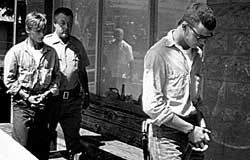 Thomas Eugene Braun
Spree killer · USA · 1967
Thomas Eugene Braun was sentenced to death in California. · Thomas Eugene Braun…
4 victims
Thomas Eugene Braun
Spree killer · USA · 1967
Thomas Eugene Braun was sentenced to death in California. · Thomas Eugene Braun…
4 victims
 Kang Ho-sun
Serial killer · South Korea · 2006
Kang Ho-sun was a Korean serial killer who was sentenced to death on April 22,…
10 victims
Kang Ho-sun
Serial killer · South Korea · 2006
Kang Ho-sun was a Korean serial killer who was sentenced to death on April 22,…
10 victims
- Gender
- male
- Country
- USA
- Location
- Brookline, Massachusetts , USA
- Date of birth
- March 2, 1972
- Age at first offence
- 22
- Characteristics
- —
- Victim profile
- Shannon Lowney, 25 / Lee Ann Nichols, 38 (receptionists abortion clinics)
- Method of murder
- Shooting ( .22-cal. semiautomatic rifle)
- Date(s) of murder
- December 30, 1994
- Years active
- 1994
- Date of arrest
- Next day
- Status
-
Life imprisonment
Sentenced to life in prison without parole on March 16, 1996; found dead in his prison cell on November 29, 1996
Case record: John Salvi
Background
John C. Salvi III (March 2, 1972 – November 29, 1996) was identified as an anti-abortion terrorist and a convicted murderer.
The offence
On December 30, 1994, Salvi carried out fatal terrorist attacks on two Planned Parenthood reproductive health clinics in Brookline, Massachusetts.
In the second attack, security guard Richard Seron returned fire. Salvi then dropped a bag containing a second gun and 700 rounds of ammunition and fled.
Salvi’s shooting rampage also included an attack at an abortion clinic picketed by Donald Spitz, a known supporter of anti-abortion terrorism.
Investigation
Police identified Salvi through a gun shop receipt in an abandoned bag.
A federal grand jury in Alexandria, Va., concluded in January that there was no nationwide conspiracy to commit violence against abortion clinics or their personnel.
Arrest
Salvi was captured in Norfolk, Virginia. The capture followed another abortion clinic shooting in Norfolk, Virginia, where he had begun shooting at an abortion clinic there.
Trial
On March 19, 1996, Salvi was found guilty of murdering receptionists Lee Ann Nichols and Shannon Lowney. Despite claims of schizophrenia, he was convicted in both killings.
The jury convicted Salvi, 24, of all charges against him: two counts of first-degree murder and five counts of armed assault with intent to murder, arising from the December 30, 1994 attacks on the two clinics. The verdicts followed a trial with more than 100 witnesses over six weeks in Norfolk County Superior Court.
Sentencing
Judge Barbara Dortch-Okara sentenced Salvi to life in prison without parole on March 16, 1996.
Salvi was ordered to serve two consecutive life prison terms, followed by 18 to 20 years for the assault convictions. Massachusetts does not have a death penalty. Under state law, a first-degree murder conviction sparked an automatic appeal.
Appeals
Salvi’s conviction was ultimately overturned by the sentencing judge. Judge Barbara Dortch-Okara invoked the legal principle that a conviction may not stand if the accused dies before his appeals are exhausted.
Outcome
With Salvi in custody, any threat he might pose was over.
Salvi was found dead in his prison cell on November 29, 1996. The official report stated that Salvi’s death was a suicide.
Other reports claimed he was found with his hands and feet tied together, with cotton shoved in his mouth and a bag placed and tied with a shoelace over his head. His lawyers said his body showed marks of having been beaten before his death.
Aftermath
During Salvi’s sentencing period, he was described as showing no remorse and continuing to request the chance to give interviews to the news media to discuss his views about a purported anti-Catholic conspiracy.
Salvi addressed the court. He said:
"As you know, I haven't pled guilty though I am against abortion," Salvi said. "My position is pro-welfare state, pro-Catholic labor union and, basically, pro-life."
Planned Parenthood of Massachusetts operated one of the clinics attacked by Salvi. Nicki Nichols Gamble, president of Planned Parenthood of Massachusetts, said the verdict:
"will help to de-escalate the climate of fear and violence that has surrounded the services we provide."
Mark Nichols, a brother of Lee Ann Nichols, said:
"Justice was done,"
Ruth Ann Nichols was allowed to deliver a victim impact statement to the court. She told Salvi:
"Without hesitation, I hope you have sheer misery every day of your life, as you have brought all the families," she said, addressing Salvi. "I request and hope that every December 30th they put you in solitary confinement."
Salvi’s lead defense attorney, J.W. Carney Jr., indicated his appeal would be based in part on the judge’s refusal to allow Salvi to testify.
Carney acknowledged in his opening statement that Salvi had fired the fatal shots and declined to challenge any of the prosecution’s witnesses. Carney argued that Salvi was a "sick, sick young man" who used careful tactics and foresight in pursuit of a delusional plan.
Assistant District Attorney John Kivlan portrayed Salvi as a cunning antiabortion zealot and a "terrorist" who plotted the murders, then evaded an elaborate police manhunt:
"terrorist"
Defense and psychiatric testimony addressed competence and schizophrenia. Several expert witnesses testified that Salvi exhibited schizophrenic behavior and was not competent to stand trial. Dr. Joel Haycock spent eleven days with Salvi out of his sixty days under observation at Bridgewater State Hospital. Dr. Haycock concluded Salvi had no mental disease and was competent to stand trial.
Salvi’s mother, Anne Marie Salvi, testified that Salvi had told her:
"was the thief on the cross with Jesus"
In cross-examination, defense brought forth accounts of Salvi telling his parents:
"...the mafia and KKK are out to get me"
The prosecution said Salvi purchased a .22-caliber Sturm Ruger semiautomatic rifle and customized it with a folding stock and pistol grip. The prosecution said he purchased 1,000 hollow-tip bullets designed to maximize injuries to human victims.
The prosecution presented evidence that Salvi attended meetings of antiabortion groups and had many pamphlets against abortion, but the trial never showed that Salvi had any links to the organized antiabortion movement.
Witnesses testified that Salvi had shouted:
"This is what you get! You should pray the rosary!"
He was described as firing 10 bullets into Nichols.
Time described Salvi acting cool and composed as he stepped up to the front desk at an abortion clinic on Beacon Street in Brookline, Massachusetts. Receptionist Shannon Lowney, 25, replied to his question "Is this Planned Parenthood?" The man then took a .22-cal. semiautomatic rifle from a black bag and shot her dead, sprayed the room with gunfire, and left.
Time described a second location, Preterm Health Services less than two miles away, where Salvi was identified as the person who fatally shot Leanne Nichols, 38, and continued shooting. It described the incident ending when a security guard returned fire; the rifleman dropped his bag and fled. Angel Rodriguez, who witnessed the escape, said:
"He was completely calm and took his time. He kept the gun low on his hip and ran backwards, firing at least five shots. He was trying to scare people, and it worked."
Time reported that Salvi was identified within hours through a gun-shop receipt in the bag he had left behind and that local, state, and federal law-enforcement officials mounted a multistate manhunt for a 5 ft. 11 in. curly-haired fugitive.
Time said the final toll in the two-day shooting spree was two dead and five wounded.
Time stated that Salvi’s abandoned satchel also contained a second gun and 700 rounds of ammunition and that Salvi’s rampage brought to five the number of abortion-clinic killings nationwide in the past two years.
Time also stated that there had been countless lesser acts of violence against abortion providers and their patients, including verbal and physical harassment, assaults and fire bombings.
Government officials and activists on both sides of the abortion issue condemned the killings. Rev. Flip Benham, director of Operation Rescue, said:
"You don't use murder to solve the problem of other murder. It is heresy,"
Eleanor Smeal, president of the Fund for the Feminist Majority, said:
"While there are two sides to the issue of abortion, there are no two sides to the issue of shooting people for their opinions. So far, there is no evidence formally linking Salvi with a particular antiabortion group. He had reportedly been seen demonstrating outside the Boston clinics, but aside from the picture of a fetus he had plastered on his pickup truck (his boss made him remove it), there was little to distinguish him from the vehement but otherwise nonviolent protesters who make up the vast majority of the movement."
Smeal added that people who knew Salvi said he often acted oddly, and referenced Karen Harris, who attended Portsmouth (New Hampshire) Beauty School with Salvi. Harris said:
"He never showed emotion. He always had a straight face. But the main thing was how he would stare at people. He'd just stare and stare and wouldn't look away."
Doreen Potter, manager of the Eccentric Beauty Salon where Salvi worked as a trainee, recalled Salvi flying into a rage a week before the shootings when she told him he couldn’t cut a client's hair. She said:
"this guy looked like he was ready to go off."
The Time account discussed Paul Hill, described as under a death sentence for a double murder at a Pensacola, Florida, clinic last summer. It reported Hill publicly advocated the doctrine of "justifiable homicide" against abortionists. It described a manual issued by a group known as the Army of God that was found buried in the backyard of Shelley Shannon, who was serving 10 years for wounding Wichita, Kansas, physician George Tiller in 1993. The account included the pamphlet’s advice:
"If terminally ill, use your final months to torch clinics; by the time the authorities identify you . . . you will have gone to your reward."
In response to rising antiabortion violence, President Clinton signed into law the Freedom of Access to Clinic Entrances (FACE) Act, prohibiting anyone from using force, threats or physical obstruction to injure, intimidate or interfere with a person trying to enter or leave an abortion clinic.
Immediately after the Pensacola murders, Attorney General Janet Reno created the Clinic Violence Task Force to determine whether there was a conspiracy against abortion clinics. U.S. marshals guarded nearly two dozen clinics, but by fall their contingent was cut on the grounds that the threat had abated.
Smeal disputed that, saying:
"As of today, there has not been one arrest for death threats, yet there are known extremists who are making these threats against doctors and clinics. We're not talking about the entire right-to-life movement. But for there to be so many threats, and for there to be so few arrests, it has to be a weak investigation."
The account described abortion activists denying that the threat had abated. It also reported Planned Parenthood spokesman insisting the Beacon Street clinic had been receiving more threats than usual over the past month, perhaps because it was one of 20 facilities around the country testing RU-486, the so-called French abortion pill.
It stated some Beacon Street clinic workers claimed they had asked the local Justice Department office to supply protection, and reported that the U.S. Attorney would not discuss the matter.
Other details
Spitz was never charged in connection with Salvi’s activities.
It was reported that Salvi had Spitz's name and an unlisted phone number on his person at the time of his arrest.
During the trial, it was stated that Salvi remained characteristically aloof, staring ahead and rarely blinking.
Cries of anguish were heard in court from families of the victims: Shannon Lowney, 25, and Lee Ann Nichols, 38. Their parents, brothers, sisters, fiances and friends wept during the trial.
Time described Salvi as a 22-year-old hairdresser from Hampton, New Hampshire.
It stated that Salvi had been arrested the next day in Norfolk, Va., after he began shooting at an abortion clinic there.
John Kivlan’s description of Salvi included that he plotted the murders and then evaded an elaborate police manhunt.
In the closing moments of the trial, Carney asserted Salvi’s right to testify, but tried to limit the areas in which the prosecution could cross-examine him; the judge turned him down.
The Washington Post described Salvi as showing no remorse and as having asked for the chance to give interviews about his views about a purported anti-Catholic conspiracy.
The Washington Post account also stated that Salvi had been taken quickly to state prison after the verdicts.
Spotted an error, or have more information about this case?