
Billy Wayne Waldrop
Murderer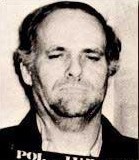 Ervil LeBaron
Murderer · USA · 1972
Ervil Morrell LeBaron (1925 to August 16, 1981) was the leader of a polygamous…
35 victims
Ervil LeBaron
Murderer · USA · 1972
Ervil Morrell LeBaron (1925 to August 16, 1981) was the leader of a polygamous…
35 victims
 Brian Kevin Rosenfeld
Murderer · USA · 1985
Brian Kevin Rosenfeld Brian Kevin Rosenfeld was sentenced to three concurrent l…
23 victims
Brian Kevin Rosenfeld
Murderer · USA · 1985
Brian Kevin Rosenfeld Brian Kevin Rosenfeld was sentenced to three concurrent l…
23 victims
 Marvin Gray
Murderer · USA · 1975
Marvin Gray was convicted killer who claimed responsibility for 23 slayings and…
23 victims
Marvin Gray
Murderer · USA · 1975
Marvin Gray was convicted killer who claimed responsibility for 23 slayings and…
23 victims
 Yahweh ben Yahweh
Murderer · USA · 1980
Yahweh ben Yahweh was born and legally named Hulon Mitchell Jr. (October 27, 19…
23 victims
Yahweh ben Yahweh
Murderer · USA · 1980
Yahweh ben Yahweh was born and legally named Hulon Mitchell Jr. (October 27, 19…
23 victims
 Russell Ellwood
Murderer · USA · 1991
Russell Ellwood was a former taxi driver. Authorities suspected him of killing…
20 victims
Russell Ellwood
Murderer · USA · 1991
Russell Ellwood was a former taxi driver. Authorities suspected him of killing…
20 victims
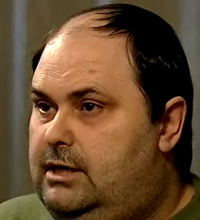 Nelson Hart
Murderer · Canada · 2002
Nelson Hart (born c 1968) was a Newfoundland, Canada resident. He lived with hi…
2 victims
Nelson Hart
Murderer · Canada · 2002
Nelson Hart (born c 1968) was a Newfoundland, Canada resident. He lived with hi…
2 victims
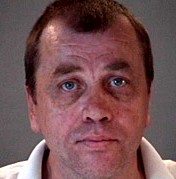 David William Tiley
Murderer · United Kingdom · 2007
David William Tiley was born in 1960. In 1995, he received a six-year jail term…
2 victims
David William Tiley
Murderer · United Kingdom · 2007
David William Tiley was born in 1960. In 1995, he received a six-year jail term…
2 victims
 Colin Howell
Murderer · United Kingdom · 1991
Colin Howell (born 14 March 1959) was a Northern Irish convicted double murdere…
2 victims
Colin Howell
Murderer · United Kingdom · 1991
Colin Howell (born 14 March 1959) was a Northern Irish convicted double murdere…
2 victims
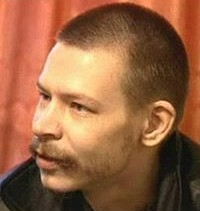 Alexander Spesivtsev
Serial killer · Rusia · 1991
Alexander Nikolayevich Spesivtsev (Russian: Александр Николаевич Спесивцев ), a…
19 victims
Alexander Spesivtsev
Serial killer · Rusia · 1991
Alexander Nikolayevich Spesivtsev (Russian: Александр Николаевич Спесивцев ), a…
19 victims
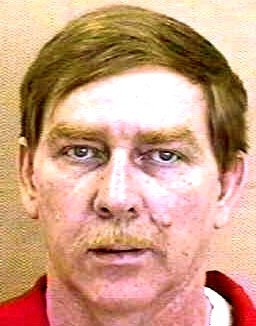 Ernest Basden
Murderer · USA · 1992
Ernest Basden was executed by lethal injection in North Carolina on December 6,…
1 victim
Ernest Basden
Murderer · USA · 1992
Ernest Basden was executed by lethal injection in North Carolina on December 6,…
1 victim
- Gender
- male
- Country
- USA
- Location
- Talladega County, Alabama, USA
- Date of birth
- 1952
- Age at first offence
- 30
- Characteristics
- robbery, arson
- Victim profile
- Thurman Macon Donahoo (male, 72)
- Method of murder
- Shooting
- Date(s) of murder
- June 3, 1982
- Years active
- 1982
- Date of arrest
- J uly 1982
- Status
-
Executed
Executed by electrocution in Alabama on January 10, 1997
Case information
- Name: Billy Wayne Waldrop
- Case: United States Court of Appeals for the Eleventh Circuit, No. 94-6687
- Federal circuit panel: KRAVITCH, EDMONDSON, and COX, Circuit Judges
- Related habeas case denial: Waldrop v. Thigpen, 857 F.Supp. 872 (N.D.Ala.1994)
- State trial: Talladega County, Alabama
- Trial court judge (habeas appeal): James Hughes Hancock
- District court: United States District Court for the Northern District of Alabama, (No. CV 90-H-1845-S)
Timeline
- June 2-3, 1982 — Thurman Macon Donahoo was robbed, beaten, shot, and left for dead in his house as it burned to the ground.
- July 1982 — Waldrop was arrested in California on a charge of driving under the influence of alcohol.
- August 19, 1982 — Waldrop was taken to Talladega County while incarcerated there.
- September 15, 1982 — While held in the Talladega County jail, Waldrop confessed.
- October 18, 1982 — Waldrop confessed again to participating in the robbery and murder of Donahoo.
- December 1982 — Waldrop was indicted on six counts of capital murder.
- February 18, 1983 — Waldrop was found guilty of the murder of Donahoo; the jury unanimously recommended the imposition of the death penalty.
- March 22, 1983 — The trial court sentenced Waldrop to death.
- June 1985 — Waldrop filed a petition for writ of error coram nobis in the Circuit Court of Talladega County.
- November 1988 — Waldrop filed a second petition for relief to vacate and set aside the conviction and death sentence pursuant to Rule 20 of the Alabama (Temporary) Rules of Criminal Procedure.
- September 1990 — Waldrop filed the present petition for a writ of habeas corpus in the Northern District of Alabama.
- May 1991 — Waldrop filed a second amended petition.
- 1994 — The district court granted the State’s motion for summary judgment and denied the petition for habeas relief (Waldrop v. Thigpen, 857 F.Supp. 872 (N.D.Ala.1994)).
- Feb. 26, 1996 — The Eleventh Circuit issued its opinion in No. 94-6687.
- January 9, 1997 — Waldrop filed an application for leave to file a second or successive petition for a writ of habeas corpus; this application was filed at 6:05 P.M. EST.
- January 10, 1997 — Execution was scheduled for 12:01 A.M. CST; Waldrop was executed by electrocution in Alabama on January 10, 1997.
- January 7, 1997 — Some relief was filed for in state court.
The offence
On the night of June 2-3, 1982, Thurman Macon Donahoo was robbed, beaten, shot, and left for dead in his house as it burned to the ground. Investigators found Donahoo’s body, charred almost beyond recognition, during their investigation of the fire.
Donahoo’s burned body was found in the charred ruins of his 100-year-old home after a robbery and arson in which $130 and a 5-carat diamond ring were stolen. Donahoo was fatally shot in the head before the fire was set.
Waldrop was convicted in Talladega County, Alabama, for murder and sentenced to death.
Investigation
Suspicion about the identity of the perpetrator focused almost immediately upon Billy Wayne Waldrop.
Investigators found Donahoo’s body during their investigation of the fire.
Arrest and custody
In July 1982, Waldrop was arrested in California on a charge of driving under the influence of alcohol. He waived extradition and was returned to Alabama based on a warrant issued by the Calhoun County Circuit Court charging him with receipt of stolen property. The property in question was that taken from Donahoo’s home on the night of his murder.
Although Waldrop was returned to Alabama on the basis of a Calhoun County warrant, he was taken to Talladega County on August 19, 1982.
While held in the Talladega County jail, Waldrop confessed on September 15, 1982, and again on October 18, 1982, to participating in the robbery and murder of Donahoo.
Charges and indictment
In December 1982, Waldrop was indicted on six counts of capital murder:
- The first four counts charged variations of murder during the course of a first degree robbery. (Ala.Code § 13A-5-40(a)(2).)
- Counts five and six charged murder during two separate types of first degree burglary. (Ala.Code § 13A-5-40(a)(4).)
Trial
On February 18, 1983, Waldrop was found guilty of the murder of Donahoo. On the same day, the jury unanimously recommended the imposition of the death penalty.
A separate sentencing hearing occurred on March 22, 1983, and the trial court sentenced Waldrop to death.
At his 1983 trial, jurors heard a sworn statement in which Waldrop said he took part in the robbery and arson with William Eugene Singleton and Henry Leslie Mays. Waldrop claimed Singleton shot Donahoo. In that statement, Waldrop also said that Mays died while awaiting trial.
The statement was presented in the context of Waldrop’s proceedings.
Sentencing
On March 22, 1983, the trial court sentenced Waldrop to death for the murder of Thurman Macon Donahoo.
Appeals
Direct appeal and state post-conviction
On direct appeal, the Alabama Court of Criminal Appeals affirmed the conviction and sentence and denied rehearing. Waldrop v. State, 459 So.2d 953 (Ala.Crim.App.1983).
The Alabama Supreme Court affirmed. Ex parte Waldrop, 459 So.2d 959 (Ala.1984). The United States Supreme Court denied certiorari. Waldrop v. Alabama, 471 U.S. 1030, 105 S.Ct. 2050, 85 L.Ed.2d 323 (1985).
In June 1985, Waldrop filed a petition for writ of error coram nobis in the Circuit Court of Talladega County. After an evidentiary hearing, the trial judge denied coram nobis relief. The Alabama Court of Criminal Appeals affirmed the denial of coram nobis relief. Waldrop v. State, 523 So.2d 475 (Ala.Crim.App.1987). The Alabama Supreme Court and the United States Supreme Court denied certiorari. Id.; Waldrop v. Alabama, 488 U.S. 871, 109 S.Ct. 184, 102 L.Ed.2d 154 (1988).
In November 1988, Waldrop filed a second petition pursuant to Rule 20 of the Alabama (Temporary) Rules of Criminal Procedure. The Circuit Court of Talladega County denied relief, and the Court of Criminal Appeals affirmed without opinion. Waldrop v. State, 564 So.2d 115 (Ala.Crim.App.1990). Waldrop did not file a petition for writ of certiorari with the Alabama Supreme Court.
Federal habeas corpus appeal (No. 94-6687)
In September 1990, Waldrop filed a petition for a writ of habeas corpus in the Northern District of Alabama, later filing an amended petition and then a second amended petition in May 1991. After construing the State’s answer as a motion for summary judgment, the district court granted the State’s motion and denied habeas relief. Waldrop v. Thigpen, 857 F.Supp. 872 (N.D.Ala.1994).
Waldrop raised several issues on appeal:
- Ineffective assistance of counsel for failing to present mitigating evidence during the penalty phase of the trial.
- Procedural default of the claim under Cage v. Louisiana, 498 U.S. 39, based on the jury instruction defining “reasonable doubt.”
- Admission of Waldrop’s confession, including claims that it was involuntary and/or obtained in violation of the Sixth Amendment right to counsel.
The Eleventh Circuit concluded that it would affirm the district court’s denial of habeas relief and stated, “We affirm.”
Second or successive petition application (97-1006)
Billy Wayne Waldrop, an Alabama inmate under a sentence of death, applied for permission to file a second habeas corpus petition challenging his 1982 death sentence for murder. His execution was scheduled for 12:01 A.M. CST, January 10, 1997. The application was filed at 6:05 P.M. EST, January 9, 1997.
The application presented two claims:
- A claim of “actual innocence.”
- A claim seeking to reopen the 1990 federal habeas proceedings based on allegations that the State suppressed documents corroborating testimony that Timothy Thomas and Cordell Smith were involved in the murder of Donahoo, and allegations that state officials “may have threatened and intimidated” Doris Thomas, a witness at the state coram nobis proceedings, if she failed to testify as instructed.
The Eleventh Circuit denied the application for an order authorizing the district court to consider the second or successive petition and denied the request for stay of execution, stating: “APPLICATION DENIED. THE REQUEST FOR STAY OF EXECUTION IS DENIED.”
Outcome
The Eleventh Circuit affirmed the denial of habeas corpus relief in No. 94-6687, and the execution proceeded.
Waldrop was executed by electrocution in Alabama on January 10, 1997.
Aftermath and statements
Just hours before execution, Waldrop, then 44, professed his innocence and Christian faith on a radio station.
When he was strapped into the electric chair just after midnight, Waldrop sang “Amazing Grace” and waved to a minister friend in the witness chamber.
His execution occurred at Holman Prison.
Waldrop was put to death for the murder of Thurman Macon Donahoo.
Verbatim quote:
- Waldrop said: "With Christ as my witness, I did not take this man's life," Waldrop said in a interview taped and aired on Christian radio station WDJC of Birmingham hours before he was executed. "For the last 11 years I have devoted my life to serving Christ."
Other details
Prior history referenced during proceedings
Donahoo’s killing was less than two years after Waldrop finished serving 7 1/2 years for the 1973 torture slayings of two men in Calhoun County.
Waldrop’s initials were carved in at least one of the bodies.
Waldrop long maintained his innocence.
At his 1983 trial, evidence included the sworn statement that he said he took part in the robbery and arson with William Eugene Singleton and Henry Leslie Mays. Singleton served 10 years for conspiring to burglarize Donahoo’s home and was paroled in 1994, and Mays died while awaiting trial.
Jury instruction and its contents
Waldrop challenged the trial court’s jury instruction on reasonable doubt that included the instruction:
- "A reasonable doubt means an actual, substantial doubt."
The trial court’s instruction also included the following quoted portion:
- "Now, you will want to know what a reasonable doubt is. When I say the state is under the burden of proving guilt beyond a reasonable doubt and to a moral certainty, that does not mean that the state must prove an alleged crime beyond every imaginable or speculative doubt, or beyond all possibility of mistake, because that would be impossible. It could arise out of the testimony in the case or a reasonable doubt could arise from a lack of testimony in the case. It is a doubt for which a reason can be assigned, and the expression "to a moral certainty" means practically the same thing as "beyond a reasonable doubt" because if you are convinced to the point where you no longer have a reasonable doubt, then you are convinced to a moral certainty. (Trial Tr., R. 4-16 at 576-77.)"
Confession suppression litigation details
The trial court held an evidentiary hearing on Waldrop’s oral motion to suppress the October 18, 1982, confession. In denying suppression, the trial court made implicit factual findings including that Waldrop:
- was advised of and understood his Miranda rights before making his statement;
- asserted he knew the rights better than the officers did;
- wished to talk to the authorities;
- asserted he did not want or need a lawyer;
- never requested counsel;
- had no threats or promises made to induce the statement;
- was not induced by telling him that it was necessary to prepare him for a polygraph examination; and
- had visiting privileges suspended because weapons were found on persons attempting to visit him at the jail, not as an inducement to confess.
Similar factual findings were made during the coram nobis proceedings. Additional coram nobis findings included that:
- Waldrop was never allowed conjugal visits and thus was not told that these visits would cease until he confessed;
- Waldrop was held on the Calhoun County receiving stolen property warrant;
- the Calhoun County warrant was obtained because there was sufficient evidence to prove the crime at that point and not to hold petitioner while the Donahoo investigation continued;
- the sheriff did not know Waldrop needed to go to Calhoun County and would have returned Waldrop had he known; and
- Waldrop never requested that he be returned to Calhoun County but preferred to remain in Talladega County.
The September 15, 1982, confession was not introduced at trial.

Spotted an error, or have more information about this case?