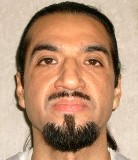
George Ochoa
Murderer Brian Kevin Rosenfeld
Murderer · USA · 1985
Brian Kevin Rosenfeld Brian Kevin Rosenfeld was sentenced to three concurrent l…
23 victims
Brian Kevin Rosenfeld
Murderer · USA · 1985
Brian Kevin Rosenfeld Brian Kevin Rosenfeld was sentenced to three concurrent l…
23 victims
 Russell Ellwood
Murderer · USA · 1991
Russell Ellwood was a former taxi driver. Authorities suspected him of killing…
20 victims
Russell Ellwood
Murderer · USA · 1991
Russell Ellwood was a former taxi driver. Authorities suspected him of killing…
20 victims
 Robert Martines Perez
Murderer · USA · 1994
Name: Robert Martines Perez · Other name used in proceedings: Robert Martinez P…
15 victims
Robert Martines Perez
Murderer · USA · 1994
Name: Robert Martines Perez · Other name used in proceedings: Robert Martinez P…
15 victims
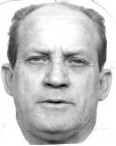 Billy Frank Vickers
Murderer · USA · 1993
Billy Frank Vickers Vickers was executed by lethal injection in Texas on Januar…
14 victims
Billy Frank Vickers
Murderer · USA · 1993
Billy Frank Vickers Vickers was executed by lethal injection in Texas on Januar…
14 victims
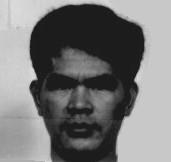 Hai Hai Vuong
Murderer · USA · 1986
Hai Hai Vuong challenged the dismissal of his petition for a writ of habeas cor…
2 victims
Hai Hai Vuong
Murderer · USA · 1986
Hai Hai Vuong challenged the dismissal of his petition for a writ of habeas cor…
2 victims
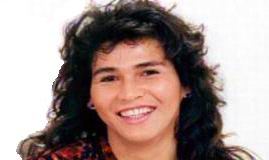 Yesenia Patino
Murderer · Mexico · 1991
Yesenia Patino was a transgender woman who was convicted in Mexico in connectio…
1 victim
Yesenia Patino
Murderer · Mexico · 1991
Yesenia Patino was a transgender woman who was convicted in Mexico in connectio…
1 victim
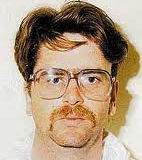 Shaun Anthony Armstrong
Murderer · United Kingdom · 1994
Shaun Anthony Armstrong was sentenced to life imprisonment on July 28, 1995. Sh…
1 victim
Shaun Anthony Armstrong
Murderer · United Kingdom · 1994
Shaun Anthony Armstrong was sentenced to life imprisonment on July 28, 1995. Sh…
1 victim
- Gender
- male
- Country
- USA
- Location
- Oklahoma City, Oklahoma County, Oklahoma, USA
- Date of birth
- August 6, 1964
- Age at first offence
- 29
- Characteristics
- burglary, drug addict, rape, alcohol
- Victim profile
- Francisco Morales, 38, and his wife Maria Yanez, 35
- Method of murder
- Shooting
- Date(s) of murder
- July 12, 1993
- Years active
- 1993
- Date of arrest
- Same day
- Status
-
Executed
Sentenced to death on March 21, 1996; executed by lethal injection in Oklahoma on December 4, 2012
Case information
- Name: George Ochoa
- Age: 38 (at execution)
- Place: Oklahoma State Penitentiary at McAlester, Oklahoma
- Co-defendant: Osbaldo Torres, 37
Timeline
- July 12, 1993 — Francisco Morales and Maria Yanez were shot and killed in the bedroom of their Oklahoma City home during the early morning hours.
- March 21, 1996 — George Ochoa was sentenced to death.
- April 1, 1996 — Ochoa was in custody with the Oklahoma Department of Corrections.
- June 20–21, 2005 — A jury trial was held on the issue of mental retardation in Ochoa’s post-conviction proceedings.
- July 20, 2005 — The trial court filed Findings of Fact and Conclusions of Law regarding the mental retardation jury verdict.
- September 16, 2005 — Ochoa filed a Supplemental Brief After Mental Retardation Jury Trial.
- September 23, 2005 — The State of Oklahoma filed its Supplemental Brief.
- April 15, 2004 — The case was remanded to the District Court for a jury trial on mental retardation.
- August 4, 1998 — Ochoa’s Original Application for Post-Conviction Relief was filed in Oklahoma.
- December 2, 2002 — Ochoa filed a Second Application for Post-Conviction Relief in a Death Penalty Case.
- February 3, 2003 — An evidentiary hearing was held before the Honorable Susan Bragg in the mental retardation post-conviction proceedings.
- March 27, 2003 — Further remand was required following the limited scope of the February 3, 2003 evidentiary hearing.
- December 17, 2002 — The court granted a limited relief and an evidentiary hearing request on Proposition One in Ochoa’s second application.
- March 21, 1996 — Ochoa received the death sentence.
- December 4, 2012 — George Ochoa was executed by lethal injection in Oklahoma; he was pronounced dead at 6:07 p.m.
- 2004 — Osbaldo Torres’s death sentence was commuted by then-Gov. Brad Henry to life without parole after Mexican government officials raised concerns related to consular access.
The offence
During the early morning hours of July 12, 1993, Francisco Morales (38) and Maria Yanez (35) were shot and killed in the bedroom of their Oklahoma City home.
Investigators said Morales was shot 12 times and Yanez was shot 11 times in their bedroom.
The couple’s three children were inside the house at the time of the shootings:
- Christina Yanez, 14 years old in the summer of 1993
- Francisco Morales, 11 years old in the summer of 1993
- The record also described a third child with ages stated as six (6), eleven (11) and fourteen (14) years in the discussion of the aggravator.
The jury found Ochoa knowingly created a great risk of death to more than one person.
Investigation
Christina was awakened by the sound of gunfire and called 911, telling the operator that she believed her step-father, Morales, may have been firing the gun.
After hanging up, Christina looked out her bedroom door and saw two men:
- One wore a white t-shirt
- The other wore a black t-shirt
Christina stated the man in the black t-shirt had something in his hand, but she did not know what it was.
Christina initially denied knowing the two men, but later identified:
- George Ochoa as the man in the black t-shirt
- Torres as the man in the white t-shirt
Francisco, Christina’s step-brother, was also awakened and saw the man in the black t-shirt shoot his father. Francisco could not identify the gunman.
Police quickly responded. While en route to the home, Officer Coats arrested Torres and Ochoa, who were walking together a short distance from the homicide. The men were sweating and nervous, and Coats claimed he observed blood on the clothing of the men.
A short time before the shootings, Torres and Ochoa parked their car at a friend’s house. A witness observed one of the men take a gun from the trunk of the car and put the gun in his pants. The gun was different from the gun used in the murders. The witness stated one of the men was Ochoa but asserted the other man—rather than Ochoa—put the gun in his pants. Another witness testified the man with Ochoa was Torres.
Arrest
Officer Coats arrested Torres and Ochoa while they were walking together a short distance from the homicide. Coats described them as sweating and nervous and claimed he saw blood on their clothing.
Trial
Charges and convictions
Ochoa was tried jointly with Osbaldo Torres by a jury in Oklahoma County District Court, Case No. CF–93–4302.
Ochoa was convicted of:
- Two counts of First Degree Murder with Malice Aforethought, in violation of 21 O.S.1991, § 701.7(A)
- One count of First Degree Burglary, in violation of 21 O.S.1991, § 1431
The defense and state arguments during the case included gang-related evidence and disputed issues concerning jury procedures, access to the crime scene for investigators, evidentiary rulings, and instructions.
Capital sentencing phase
At the conclusion of the capital sentencing phase, the jury found two aggravating circumstances:
- “there existed the probability that Ochoa would commit criminal acts of violence that would constitute a continuing threat to society”
- referenced statutory basis: 21 O.S.1991, § 701.12(7)
- “Ochoa knowingly created a great risk of death to more than one person”
- referenced statutory basis: 21 O.S.1991, § 701.12(2)
The jury recommended Ochoa be sentenced to death for both murders and to twenty (20) years imprisonment for burglary.
The Honorable Charles L. Owens sentenced Ochoa accordingly.
Competence to stand trial
Ochoa raised issues on direct appeal regarding competency determination.
Ochoa waived jury trial on competency. The proceedings involved stipulation to Dr. Warren Smith’s report. Dr. Smith found:
- Ochoa appreciated the nature of the charges, although he “cannot remember the event for which he is alleged responsible,”
- Ochoa could consult with his lawyer and rationally assist in his defense.
The trial court found Ochoa “able to appreciate the charges against him,” and “able to consult with his lawyer and rationally assist in the preparation of his defense,” and ordered the proceedings to resume.
The Court of Criminal Appeals affirmed, finding Ochoa competent to stand trial.
Evidence of gang membership during trial
During the first stage of trial, the trial court had ruled that gang evidence was inadmissible, but the prosecution elicited testimony suggesting the suspects might be gang members from Officer Tays and referenced gang membership during closing arguments. The appellate discussion stated this use of gang evidence was error but declined to find the error sufficiently prejudicial.
In the capital sentencing stage, Ochoa argued that gang affiliation was improper evidence to prove the continuing threat aggravating circumstance. The appellate analysis discussed Dawson v. Delaware and addressed the relevance and probative value of associational evidence involving the Southside Locos.
The appellate court’s findings included:
- The evidence of gang affiliation had, at best, marginal value.
- There was no evidence that the murders were connected to the gang.
- The appellate court concluded that evidence was insufficient to support the continuing threat aggravating circumstance.
- The court also addressed Ochoa’s lack of prior criminal record and the lack of evidence of criminal activity since the murders.
Despite concluding insufficient evidence for continuing threat, the appellate court reweighed aggravating and mitigating circumstances.
Prosecutorial misconduct and jury instructions
The appellate court described issues including prosecutorial comments during closing arguments, evidentiary rulings, and multiple jury instruction challenges, including instructions about aiding and abetting and causation.
The appellate decision affirmed the convictions and death sentence, sustaining aggravator of great risk of death to more than one person.
Mandatory sentence review after direct appeal
The appellate court conducted mandatory sentence review under 21 O.S.1991, § 701.13(C) and concluded that the sentence of death was not imposed under the influence of passion, prejudice, or any other arbitrary factor.
The court found the jury’s finding of aggravating circumstances:
- It found evidence insufficient to support the continuing threat aggravator.
- It found evidence sufficient to support the “risk of death to more than one person” aggravator.
- After reweighing, it sustained the death sentence.
Sentencing
Ochoa received the death penalty for the two murders and was also sentenced to twenty (20) years imprisonment for burglary.
His death sentence was carried out after the state’s Pardon and Parole Board rejected his request that it recommend Governor Mary Fallin reduce his death sentence to life in prison.
Appeals and post-conviction proceedings
Direct appeal
The Court of Criminal Appeals affirmed Ochoa’s conviction and sentence.
The court addressed:
- competence to stand trial,
- jury selection and peremptory challenges,
- voir dire issues,
- restrictions on defense investigators’ access to the crime scene,
- destruction of latent fingerprint evidence and instructions,
- continuance and severance issues,
- evidentiary issues including witness identification,
- photographic evidence,
- aiding and abetting instruction issues,
- insufficiency of evidence arguments,
- victim impact evidence,
- mitigation instruction issues,
- constitutionality challenges to Oklahoma’s death penalty and instructions.
Post-conviction: mental retardation jury trial after remand
After appellate affirmance, Ochoa filed post-conviction relief proceedings and federal habeas proceedings.
In the post-conviction proceedings, the Oklahoma Court of Criminal Appeals remanded for a jury trial on mental retardation.
A jury trial on mental retardation occurred on June 20–21, 2005, before the Honorable Virgil Black, District Judge.
The jury returned a verdict that Ochoa is not mentally retarded.
The court instructed the jury that Ochoa carried the burden of proving mental retardation by a preponderance of the evidence.
The appellate court affirmed denial of the second application for post-conviction relief and affirmed the death sentence.
Issues raised included:
- allocation of burden and standard of proof for mental retardation,
- whether mental retardation must be shown at the time of the offense rather than the time of the jury trial,
- alleged due process unfairness from the jury seeing Ochoa in jail overalls and wearing a “shock sleeve,”
- the cumulative effect of errors.
The appellate decision stated:
- The jury was properly instructed it must find Ochoa “is” mentally retarded.
- Ochoa did not meet his burden by a preponderance of the evidence.
- The court found that the trial court erred in ordering the shock sleeve, but Ochoa failed to prove prejudice or a substantial influence on the outcome.
- The single identified error did not render the proceeding fundamentally unfair.
Federal habeas
Ochoa filed federal habeas corpus relief after exhausting Oklahoma state post-conviction remedies.
The United States Court of Appeals for the Tenth Circuit affirmed the denial of habeas relief.
The federal appeals decision addressed claims including:
- admission of gang-related statements during the guilt phase and penalty phase,
- multiple prosecutorial misconduct allegations,
- denial of individualized culpability instruction arguments under Enmund/Tison principles,
- eyewitness identification issues,
- refusal to define the meaning of “life without the possibility of parole.”
The appellate court affirmed that Ochoa did not obtain relief.
Outcome
George Ochoa was executed by lethal injection.
On December 4, 2012, Department of Corrections officials carried out the execution process at the Oklahoma State Penitentiary.
The timing described included:
- At 6:01 p.m., blinds between the witness room and the death chamber were raised.
- Ochoa raised his head briefly and looked into the witness room.
- Oklahoma State Penitentiary officials asked Ochoa whether he had any last words.
Ochoa’s last words were: “I’m innocent”
A deputy warden said: “Let the execution begin.”
After the lethal dose was administered, the attending physician pronounced Ochoa’s time of death at 6:07 p.m.
Witnessing the execution included:
- two media representatives,
- 10 Department of Corrections officials,
- 19 members of the victims’ family.
It was also stated that:
- 12 of the 19 family members were in the witness chamber,
- the remaining witnesses watched via video tele-feed from one floor below the execution chamber,
- five members of Ochoa’s family were scheduled to witness, but none were in the witness room at the time of execution.
Ochoa requested a last meal of a large meat lover’s pizza and a large Coke, served around noon Tuesday, according to prison officials.
Other details
Co-defendant outcome
Osbaldo Torres was also convicted of two counts of first-degree murder and sentenced to death.
His death sentence was reduced by then-Gov. Brad Henry in 2004 to life without parole, after Mexican government officials raised concerns that Torres was not given a chance to speak with the Mexican consulate after being accused, as required by international conventions.
During his 2004 clemency hearing, Torres stated: “I never killed anyone. And I never knew George was going to kill anyone.”
Medication, injuries, and mental health-related claims
During later proceedings, Ochoa claimed he had been shocked and suffered injuries during incarceration. Prosecutors said his claims of hallucinations and harm were likely an attempt to feign mental incompetence.
The courts noted that psychological evaluations showed no evidence of delusions or hallucinations and that such claims did not start until he was charged.
Access to crime scene for defense investigators and fingerprint evidence issues on appeal
During direct appeal, the appellate decision described restrictions placed on defense investigators’ independent measurements of the crime scene for the second trial. The decision characterized the restrictions as improper but found Ochoa failed to show harm.
The appellate discussion also addressed the destruction of latent fingerprints and related jury instruction issues, referring to Arizona v. Youngblood and requiring a showing of bad faith for a due process violation.
Trial procedure and communications
Ochoa’s direct appeal materials also addressed:
- waiver of jury trial on competency,
- jury selection disputes including shared peremptory challenges and juror qualifications,
- evidentiary objections and claims of harmless error and plain error,
- denial of continuance and severance,
- identification evidence admissibility and alleged taint due to handcuffs at the crime scene,
- testimony concerns regarding whether an officer improperly testified about another witness’s identification,
- the failure to instruct jurors on an additional evidentiary inference instruction related to fingerprint destruction in certain circumstances,
- argument standards for prosecutorial misconduct and closing argument issues.
Mental retardation procedure and restraints
In Ochoa’s post-conviction mental retardation jury trial:
- the record described that Ochoa chose to appear in jail dress,
- the court ordered Ochoa to wear a “shock sleeve” during trial after concerns about behavior,
- the appellate court characterized the order requiring the shock sleeve as an abuse of discretion, but it found Ochoa did not establish prejudice or a substantial influence on the outcome.
Spotted an error, or have more information about this case?